Graduation Gifts
Chinese characters for the next chapter — virtue, courage, success, diligence, and the promise of a bright path ahead.
Recommended characters
德 (Dé) — Virtue
For a graduate entering a professional life where skill alone is insufficient. 德 names the underlying character that makes competence trustworthy and success worth having — not diligence (勤) or judgment (智) but the formation that makes both of those meaningful over time. A wish for the kind of person the years ahead will not diminish.
恒 (Héng) — Constancy
For the graduate who has demonstrated that the quality most careers are actually built on is not talent or intelligence but persistence — the willingness to return to difficult work day after day without external compulsion. 恒 is 持之以恒 in one character: the constancy that turns a year of effort into a decade of progress.
明 (Míng) — Clarity
For the graduate entering a professional life where the most distinguishing quality is often not analytical speed but perceptual accuracy — the ability to see what is actually happening in a situation, beneath how it is being presented. 明 names the specific resistance to being fooled: by consensus, by authority, or by one’s own hopes. A more pointed alternative to 智 (applied judgment) for the graduate whose strength has been accurate reading over rapid analysis.
毅 (Yì) — Resolve
For the graduate whose record demonstrates not just success but the ability to remain under genuine difficulty — who has shown, in conditions that tested commitment rather than just capability, that they will not look for a graceful way out. 毅 is the graduation character for the person whose resolve has already been proven in hard conditions rather than merely hoped for. A sharper alternative to 恒 for the graduate whose particular test was adversity, not duration.
强 (Qiáng) — Strength
For graduation when the gift should name the capacity the graduate has actually built, not what they might develop. 强 is the most active of the graduation characters — not the constancy (恒) that sustained the work or the resolve (毅) that held through difficulty, but the power itself: tested, assembled, and now ready to act. The gift for the graduate who is not starting from scratch but from genuine 自强不息 — ceaseless self-strengthening that has produced something real.
明德 (Míng Dé) — Manifest Virtue
For graduation when the gift should name a task rather than a quality. 明德 comes from the Great Learning’s first principle — 明明德 — and makes the structure of that instruction explicit: the work is not accumulating virtue but manifesting it, letting good formation become visible in what the graduate actually does in the world. A graduate who has received genuine formation has 德; the work now is to 明 it — to carry it forward rather than keep it in. More directive than 德 (which names accumulated character) and more grounded than 明 (which names perceptual clarity): the specific naming of what a professional life asks next.
才华 (Cái Huá) — Talent and Brilliance
For graduation when the gift should name not an aspiration but a quality already visible. 才华 is the recognition choice: not wishing the graduate diligence (勤) or resolve (毅) or clarity (明) for the road ahead, but naming the specific natural endowment that their years of work have brought forward into the open. Confucius said 才难 — talent is rare. Giving 才华 at graduation says: this is one of the rare ones. The most specific graduation character for the person whose work has had a quality that belongs distinctively to them.
栋梁 (Dòng Liáng) — Pillar of Strength
For graduation when the gift should name the structural role the graduate is being formed toward rather than a quality they already possess. 栋梁之才 — the talent of a ridgepole-and-beam — names the vocation of structural importance: the person who does not merely contribute to an organization but becomes the one it forms around. A sharper and more elevated graduation recognition than 德 (accumulated character) or 才华 (natural talent): the specific claim that the years of formation have prepared someone for a load-bearing role, not just a productive one.
前程似锦 (Qián Chéng Sì Jǐn) — A Brilliant Road Ahead
For graduation when the gift should describe the terrain opening rather than the student crossing the finish line. 前程似锦 names what the credential has put in front of the graduate — the structured professional path ahead, as luminous and detailed as brocade — rather than prescribing a quality to develop (明德) or recognizing one already formed (才华). The phrase for the graduate who has completed the preparation and is now standing at the entrance to the road itself.
步步高升 (Bù Bù Gāo Shēng) — Step by Step, Rising Higher
For the graduation gift that names the motion the credential has put into motion rather than the terrain or the quality. 步步高升 is the career-blessing phrase for the graduate who is already ascending: where 前程似锦 describes what the road ahead looks like and 明德 asks for the virtue to navigate it, 步步高升 names the movement itself — step by step, each one higher than the last. The graduation phrase for the person whose upward trajectory is already visible and the gift is a vote of confidence in that direction.
厚德载物 (Hòu Dé Zài Wù) — Deep Virtue Carries All Things
For graduation when the gift should name what a career will actually demand once the diplomas are filed: not brilliance but bearing. Half of the Tsinghua University motto — paired with 自强不息, ceaseless self-strengthening — 厚德载物 names the capacity to be loaded with responsibility, other people’s trust, and hard decisions, and to hold under it without dropping anyone. Where 明德 asks the graduate to manifest their virtue and 前程似锦 describes the road ahead, 厚德载物 names the depth of character that makes a heavy road survivable. A wish not for an easy career but for the kind of ground that holds others up.
自强不息 (Zì Qiáng Bù Xī) — Strengthen Yourself Without Rest
For graduation when the gift should speak to what changes the day the structure of school falls away. No more deadlines, grades, or anyone checking the work — what carries the graduate forward now is their own decision to keep strengthening themselves, unassigned. 自强不息 is the active half of the Tsinghua motto, the companion to 厚德载物, lifted from the 乾 hexagram of the Book of Changes where the model for human effort is heaven’s own ceaseless motion. The wish that the drive proven over four years becomes self-sustaining now that nothing external requires it — and that the graduate keeps moving when momentum is, for the first time, entirely their own to supply.
天道酬勤 (Tiān Dào Chóu Qín) — The Way of Heaven Rewards the Diligent
For graduation at the exact moment the guarantees end: no more grades that convert study into a number, no syllabus promising that work leads anywhere. Where 自强不息 wishes the graduate keeps moving, 天道酬勤 answers the fear underneath the move — whether the effort will ever be repaid once school stops keeping score. It hands over the one assurance that survives outside the gates: not that the road is fair every day, but that over a life, steady effort is the thing most reliably answered. Encouragement for the long game, given precisely when the rewards have gone quiet.
谦 (Qiān) — Modesty
For graduation when the gift should be the inward counterweight to every outward wish. 前程似锦 describes the brilliant road ahead; 谦 names the one habit that keeps an achievement from closing the door it opened. 满招损,谦受益 — fullness invites loss, modesty receives gain; the graduate who keeps saying “I still have a lot to learn” is the one who keeps learning. Where 才华 names the talent already visible and 明德 asks them to manifest their virtue, 谦 asks for the restraint that protects real ability from the person who has it. The gift for the new graduate whose best safeguard against their own gifts is the discipline of staying teachable.
朗 (Lǎng) — Brightness and Open Spirit
For graduation when the quality you most want to name is not the record but the temperament — the 开朗, frank, bright-spirited graduate who walks into a room and the air gets clearer. Where 前程似锦 describes the brilliant road ahead and 步步高升 names the upward motion, 朗 names the disposition the graduate carries into all of it: open, clear, with no haze and nothing hidden, the presence that will make every next room easier for the people in it. The gift for the new graduate whose brightness is the thing you would not want the new chapter to dim.
谦和 (Qiān Hé) — Modest and Amiable
For graduation when the gift should name a manner rather than a destination. 前程似锦 describes the brilliant road ahead; 谦和 names how to walk into every room on it. The professional world rewards the capable person who is also easy to work beside — who holds new credentials lightly (谦) and lets a team form around them without friction (和). Where 谦 names the modesty that keeps a graduate teachable and 才华 names the talent already visible, 谦和 names what makes both land well in practice: an approachability that keeps a door open instead of announcing that you have arrived. The gift for the new graduate whose best introduction to real ability is that nobody had to be told.
开卷有益 (Kāi Juǎn Yǒu Yì) — There Is Profit in Opening a Book
For graduation at the exact moment the assigned reading ends — no more syllabus, no more exam that turns a book into a grade. Where 前程似锦 describes the road ahead and 天道酬勤 promises that effort will be repaid, 开卷有益 names the one habit worth carrying past the gates: keep opening books, because from here on the reading that counts most is the kind no one requires. Emperor Taizong of Song, who read a thousand-volume encyclopedia through three scrolls at a time, gave the phrase its spirit — that reading is not a labor but a daily gain. The graduation gift that blesses not the credential just earned but the lifelong reading that has no finish line.
端 (Duān) — Uprightness
For graduation when the wish should be about how you carry yourself, not what you achieve. 前程似锦 describes the brilliant road ahead; 端 names the bearing to walk it straight — the composure to keep your conduct proper when leaning would be easier. It carries a second gift the moment deserves: 端 also means the beginning, the first sprout, which is what Mencius called conscience itself, the 四端, the four beginnings of virtue. Where 谦 names the modesty that keeps a graduate teachable and 明德 asks them to manifest their virtue, 端 asks for the upright footing to start from. The gift for the new graduate you want to send out standing straight.
慎 (Shèn) — Prudence
For graduation when the wish should be about judgment, not achievement — the counsel a new graduate needs at exactly the threshold where the world finally lets them act on their own decisions. 慎 asks them to weigh before they move and to be as careful at the end of a thing as at the start: 慎终如始,则无败事, Laozi’s line that stay careful all the way through, and nothing you undertake need fail. Where 前程似锦 describes the brilliant road ahead and 谦 keeps them teachable, 慎 gives them the careful footing to walk it — the discipline to act well, not just quickly. The gift for the new graduate you want to send out steady.
博 (Bó) — Breadth
For the graduate leaving a place that taught them one field and stepping into a world that will ask them to know many. 博 is the counsel for exactly that widening: reach broadly, take much in, let your knowledge cross the lines between subjects. Zixia’s line in the Analects reads almost as a graduation blessing on its own — 博学而笃志,切问而近思: learn widely and hold to your purpose, question closely and reflect on what is near. Where 智 names the insight to judge and 慧 the quick native cleverness, 博 names the wide foundation a real education is meant to lay.
鹏程万里 (Péng Chéng Wàn Lǐ) — A Flight of Ten Thousand Li
For graduation at its loftiest register. 前程似锦 describes the road ahead as brocade; 步步高升 counts the stairs; 鹏程万里 leaves the ground — the peng bird from the opening page of the 庄子, transformed from a fish too vast to measure, riding the whirlwind ninety thousand li up and setting out across the world. It is the phrase elders write for the young at a true beginning, and its social grammar only flows that way: downward and outward, from the ones who have traveled to the one just lifting off. The graduation gift for the student whose future you want measured in horizons, not steps.
远 (Yuǎn) — Far · Long Range
The characters on this page that promise an outcome all promise the same kind of thing: 前程似锦 paints the road as brocade, 步步高升 counts the stairs upward, 鹏程万里 puts the whole flight in the air. 远 makes no claim about how it turns out. It names only the range — and behind it sits 志存高远, the line written on school banners in every province: let the aim rest high and far. The classical counterweight is built in, from the 中庸: 行远必自迩, travel far by starting from what is near. Choose this one when the graduate’s plan is genuinely long and everyone knows it, and a promise of brocade would ring hollow next to it.
通 (Tōng) — Open · Connected
Everything else on this page faces forward. 通 turns around and looks at what just finished. It is the character in 融会贯通 — the point where separately learned things melt together and start running as one system — and the classical curriculum treated that, not the exam, as the finish line: 九年知类通达, in the ninth year he sorts things by kind and gets through. 博 was the four years of taking things in. 慎 is the care that comes next. 通 is the thing that happened in between, and it is the only part of a degree nobody can be examined on. The gift for the graduate whose field asked them to connect what they learned rather than collect it.
颖 (Yǐng) — The Tip That Shows
The graduate’s problem is rarely ability. It is a room full of people whose paper looks identical. 颖 is the character for exactly that moment — the sharp tip of an ear of grain, and the word in 脱颖而出, the standard Chinese phrase for being picked out of a crowd. Its source is a job application. In 257 BCE 毛遂, three years unremarked in his lord’s household, was told that a worthy man is like an awl in a bag: 其末立见, the point shows at once. He replied that had he been put in the bag sooner, the whole tip would have come through. He got the seat. Where 德 names the character the years will not diminish and 通 names what joined up during the degree, 颖 names the thing that has to happen next.
敏 (Mǐn) — Quick to Respond
敏 belongs beside 慎 on this page because Confucius put them in the same sentence: 敏于事而慎于言 — quick in action, careful in speech. It is the most practical advice here. A degree certifies knowing; the years after it test something a transcript has no column for — how long the graduate takes to do anything with what they know, and whether they can hold the tongue steady while the hands move fast. A separate passage adds the other guard. Asked why a Wei minister was given the posthumous name 文, Confucius answered 敏而好学,不耻下问: quick, fond of learning, and not too proud to ask someone junior. Speed licensed twice, and fenced both times. For the graduate leaving a place that rewarded being right for one that rewards responding.
顺遂 (Shùn Suì) — The Two Conditions a Plan Needs
A degree is the last thing most people finish on a schedule somebody else set. What follows is the first long stretch where the plan belongs to the graduate and nothing guarantees it gets finished at all — which is the gap 前程顺遂 was written to cover. 顺 takes the road: no friction, nothing that turns a workable plan into an exhausting one. 遂 takes the ending: that the thing gets carried through, and onto what the graduate actually meant rather than whatever was easiest to reach instead. The other wishes here for the road ahead set a scale — 前程似锦 makes it splendid, 鹏程万里 borrows Zhuangzi’s enormous bird and makes it long. This one sets none, and asks instead for the two conditions under which any scale is possible.
笃行 (Dǔ Xíng) — The Fifth Step
A degree is a receipt for four steps and silent on the fifth. 博学, 审问, 慎思, 明辨 — study widely, question closely, reflect carefully, judge clearly — are precisely what school examines and precisely what a transcript can record, and all four happen without leaving a chair. 笃行 is the one that requires going outside, which is why 《中庸》 places it last and why Sun Yat-sen brushed all ten characters as a university motto in 1924 rather than just the studious eight. The word is unsayable to anyone who has not done the reading yet — it presupposes there is something to act on — so a graduation is the first occasion in a life where it fits. 敏 above warns the graduate about how long they take to move and 顺遂 asks for the road to be clear. This one asks the question the road will actually put to them: what got done about all of it.
达 (Dá) — Arrive at What?
达 is a verb, and for sixteen years its object was supplied — the next year, the next exam, the place on the list — and the diploma is the last time anybody hands one over. From here the graduate names the destination, and 达 is the character that keeps score on it. Two sections above ask adjacent questions and stop short of this one. 笃行 asks whether what was learned ever turned into doing. 顺遂 is a wish rather than a test, and a wish is addressed to the road. 达 is the test, and it is taken at the far end — whether the doing reached anybody, which is the one question the graduate cannot mark for themselves. The Analects settled on that standard by refusing an easier one, which was simply being widely known, and it is the harder of the two to fake in a first job.
正直 (Zhèng Zhí) — Assessed by Strangers for the First Time
School grades against a rubric, and a rubric is published in advance. What replaces it in a first job is people: a manager, a client, three colleagues who will form a view inside a fortnight and never write it down. 正直 tends to be the earliest thing they form a view on, and the character explains why — 正 is measured against a standard outside the person, so this is not a quality anybody gets to assert about themselves. 端 higher up this page credits bearing, which is the part a graduate can control on the first morning, and 笃行 credits turning what was learned into doing. This is neither. It is what other people conclude once they have watched the graduate handle an answer that cost something to give, and it starts being written the week the studying stops.
学业有成 (Xué Yè Yǒu Chéng) — The Only One That Settles Up
Everything else on this page points forward or outward. 前程似锦 and 鹏程万里 describe the road and the flight. 达 higher up asks whether what a person sends ever reaches the far end, and 笃行 asks whether what they know ever touches the ground — both of them tests applied after the schooling, out in the world. These four characters are the one item here that settles the account behind the graduate instead of opening one in front of them. 学业 is the enrolled, examined, finishable thing; 有成 says it reached the end it was aimed at. That makes it the gift for the person who would like the four years acknowledged before everyone in the room starts asking what they plan to do next.
志 (Zhì) — The Form You Sign After the Exam
Chinese graduates meet this character as paperwork before they meet it as a virtue. The form filled in after the 高考 — ranking universities and majors, binding once submitted — is called 志愿, and 填报志愿 is one of the tensest weeks in a family’s year, because the score is already fixed and the only variable left is where you say you are going. That is the character doing its actual job: a heading, stated, signed. 远 higher up borrows the school-banner line 志存高远 and takes the 远 half, the range; this is the other half, and it is the prior one — 志存高远 asks that the aim rest high and far, but something has to have been aimed first. 学业有成 settles the account behind the graduate. 志 is the only character on this page that says a direction was chosen without also predicting how it turns out.
勉 (Miǎn) — Which of the Three
Graduation ceremonies are conducted almost entirely in the vocabulary of talent and promise, and a fair number of the people sitting through one privately know they got there by grinding. 《中庸》 has a phrase for those people — 勉强而行之, the ones who did it by making themselves — and it is set down beside the effortless and the self-interested without a word of ranking, because the chapter is interested in the outcome and not in the temperament that produced it. 毅 and 恒 higher up this page credit holding on, 笃行 asks whether any of the knowing reached the ground, and 志 turns to face what comes next. 勉 is the one that looks backwards at four years and is addressed specifically to whoever found them harder than they let on. Give it to the graduate who worked for it and suspects that counts against them.
笃志 (Dǔ Zhì) — Sayable on Arrival
学业有成 settles the course. 志 is the heading a student puts into words, including on a form. 笃行 asks whether the knowing will reach the ground once the chair is gone. 笃志 names the aim held firm and focused. Fudan’s ceremony on 13 September 2020 had the chairs of the student union and the graduate union lead the whole new class through an oath that includes 博学笃志,切问近思, so the pair is already in use on arrival. At a graduation it names the aim that carried the course. 程子’s clause, copied by 朱熹, keeps it short of the doing: 志不笃则不能力行.
平步青云 (Píng Bù Qīng Yún) — An Unforced Ascent
前程似锦 describes the terrain; 步步高升 counts stairs; 鹏程万里 leaves the ground; 学业有成 reports studies carried through. 平步青云 wishes the graduate a different quality for the rise that starts now: that entering the next station will feel like walking on level ground into the blue clouds of rank — not a cliff and not a spectacle.
财 (Cái) — Prosperity · Abundance · Success
For the graduate stepping into the world — 财 is the wish that their years of effort find real reward, that talent meets opportunity.
See 财 →瑞 (Ruì) — Good Tidings · Blessing · Promise of a Bright Year
For the graduate stepping into a new season — 瑞 is the wish for everything that's ahead to carry good things.
See 瑞 →勇 (Yǒng) — Courage · Strength · Bravery
For the student stepping into adulthood — "勇" is a quiet reminder of the strength they've already shown, and the strength ahead.
See 勇 →慧 (Huì) — Wisdom · Clarity · Discernment
慧 is a pointed graduation wish: not a general blessing, but a specific hope for the judgment that turns a degree into a career. What carries a person through the working years is less what they know than how clearly they can read a situation and respond to what it actually is.
See 慧 →勤 (Qín) — Diligence · Industriousness · Steady Effort
勤 is a pointed graduation gift because it names what actually carried the person across the finish line — the hours put in, the discipline maintained when the deadline was distant. It is recognition as much as wish, and it will still read clearly when the certificate is framed and the decade has passed.
See 勤 →诚 (Chéng) — Sincerity · Honesty · Integrity
诚 is a graduation gift that names what sustained the work — not talent or circumstance but the honest alignment of intentions with daily effort. For the graduate entering professional life, it is also a pointed wish: that they carry this quality into a world that will notice when it is missing.
See 诚 →智 (Zhì) — Intelligence · Wisdom · Practical Judgment
智 is a specific graduation wish: not for the knowledge the degree certifies, but for the judgment that applies it when conditions are unclear. A pointed alternative to 慧 for the graduate whose sharpness you have seen translate into action, not just analysis.
See 智 →如意 (Rú Yì) — As You Wish · Aligned with the Heart
For the graduate stepping into a future they alone can map, 如意 is a precise blessing: I trust where you are heading, and I hope it goes the way you want it to.
See 如意 →厚德 (Hòu Dé) — Deep Virtue · Generous Character · A Ground That Holds
厚德 is a serious graduation wish: not luck or success, but the quality of character that allows a person to carry whatever comes. The full I Ching line — 厚德载物 — names what the next chapters will ask of them.
See 厚德 →龙 (Lóng) — Dragon · Power · Auspicious Strength
The phrase 龙腾虎跃 — dragon soaring, tiger leaping — is the classical image of a person meeting their full potential. A 龙 at graduation is a bet on what someone is capable of becoming.
See 龙 →力 (Lì) — Strength · Force · The Power to Act
For someone stepping into a world that will test them. 力 is the wish that they have what it takes — not just the degree, but the force behind it.
See 力 →一帆风顺 (Yī Fān Fēng Shùn) — Smooth Sailing · A Steady Wind for the Journey Ahead
For the graduate stepping out into a future they alone can map, 一帆风顺 is a clean, traditional wish — the path opens, the wind stays with them.
See 一帆风顺 →心想事成 (Xīn Xiǎng Shì Chéng) — May Your Heart's Wishes Come True
For the graduate stepping into a future they alone can map, 心想事成 is a precise blessing: I trust what you are hoping for, and I hope it comes.
See 心想事成 →青青子衿 (Qīng Qīng Zǐ Jīn) — Your Blue-Green Collar · Longing for a Cherished One
The 子衿 — the blue-green scholar's collar — was the uniform of classical students. For a graduate, the phrase honors their identity as a person of learning while carrying the warmth of personal attachment.
See 青青子衿 →渐入佳境 (Jiàn Rù Jiā Jìng) — Gradually Entering a Beautiful Place · Getting Better and Better
For the graduate stepping out of the classroom and into real practice, 渐入佳境 acknowledges the gap between study and mastery — and blesses the crossing of it.
See 渐入佳境 →Bring a hand-brushed piece home — choose how you'd like it brushed.
-
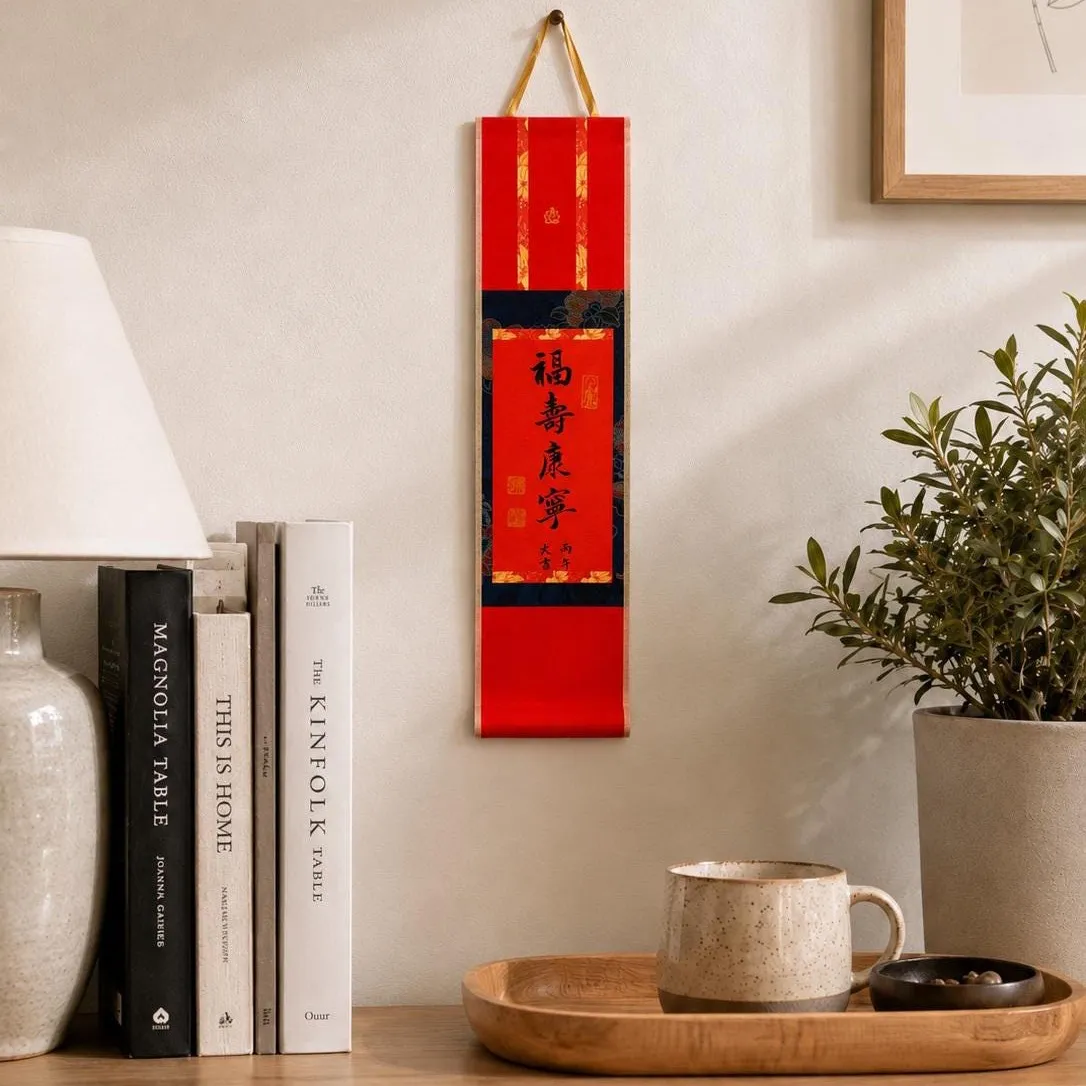
Photo shows a sample — yours will be brushed with the character you choose.
Wall Scroll — for walls & housewarmingsfrom $38→ -
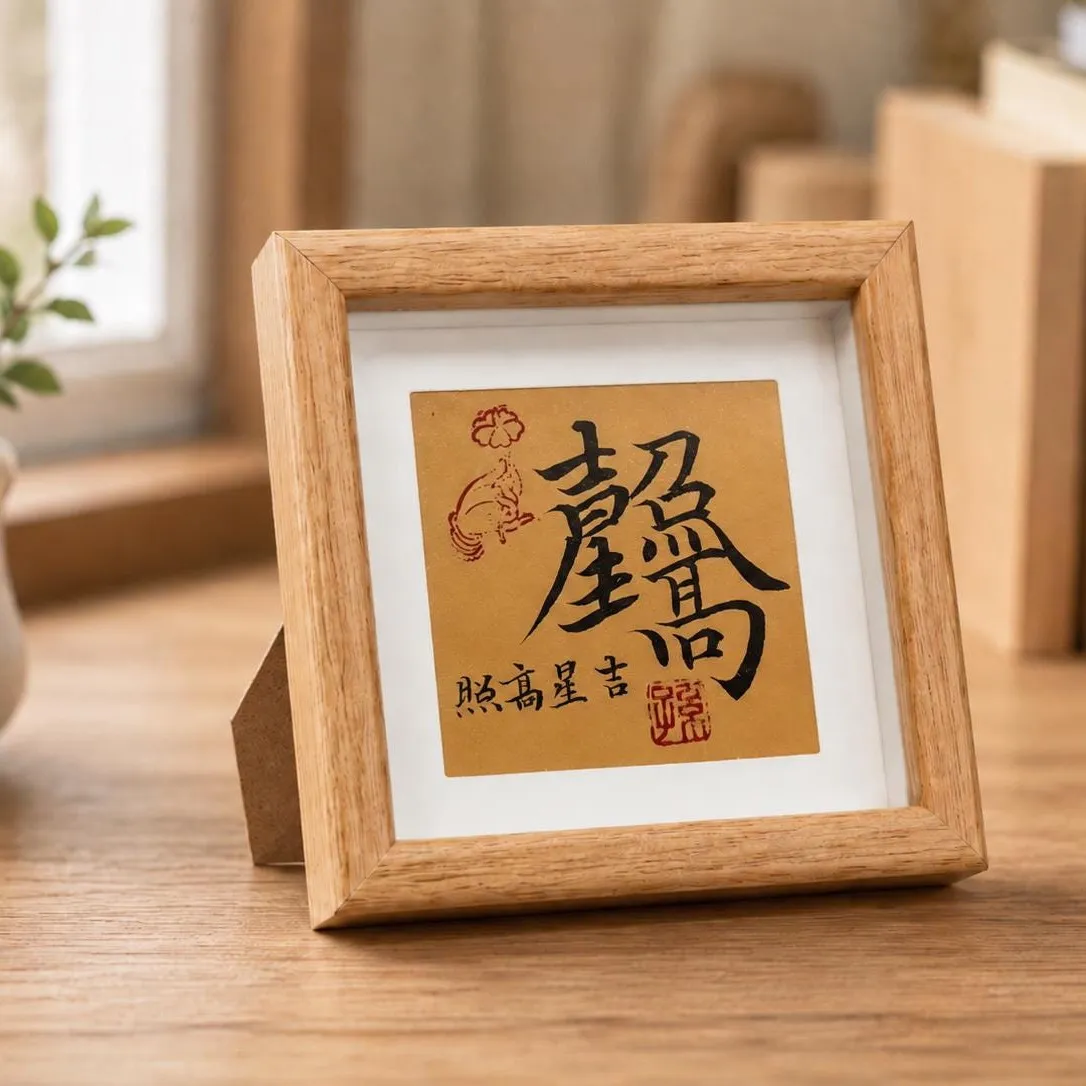
Photo shows a sample — yours will be brushed with the character you choose.
Desk Frame — for desks, studies & studiosfrom $44→ -
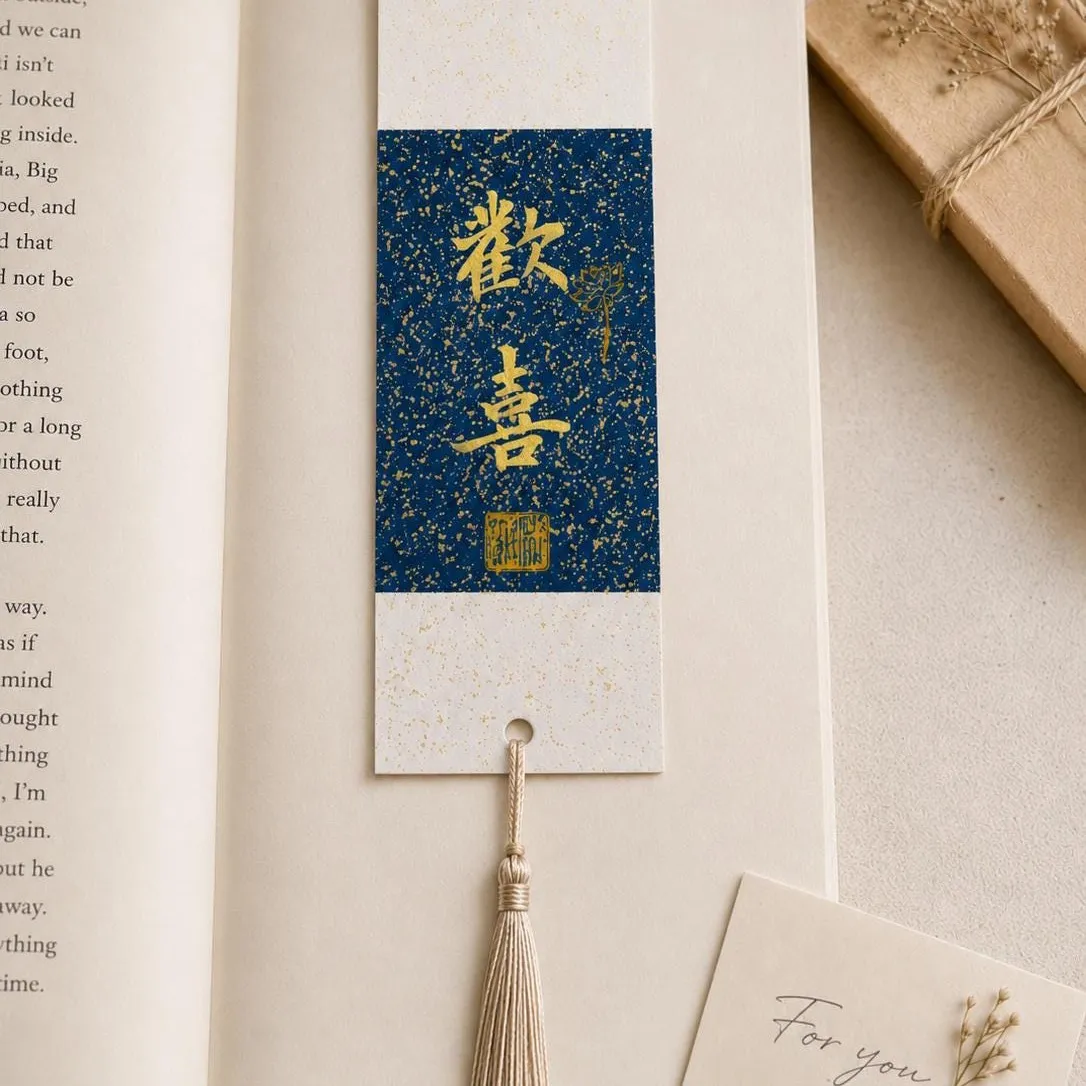
Photo shows a sample — yours will be brushed with the character you choose.
Bookmark — for readers & small thank-yousfrom $17→