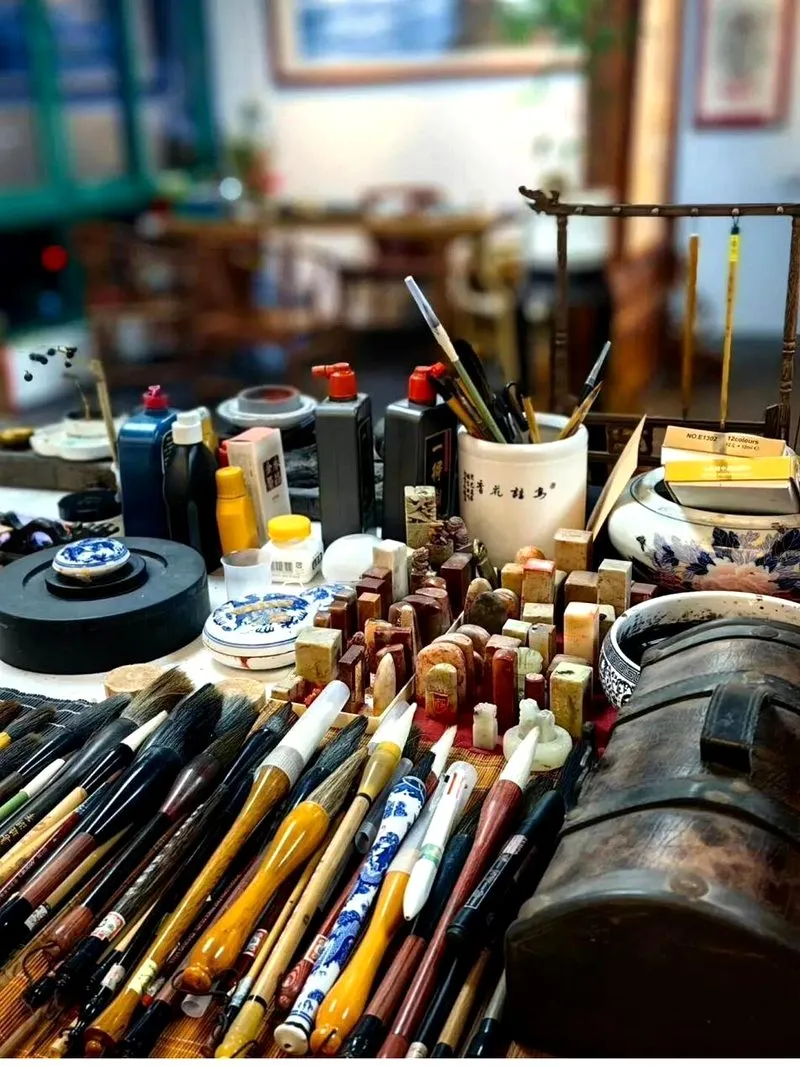
For Your Wife
Chinese characters for the partner you chose, and keep choosing.
Recommended characters
美 (Měi) — Beauty
For the wife whose quality has only become more specific with time. 美 is not given for appearance — it names what a partner recognizes after years of close attention: that the person they married has grown into something fully and visibly themselves. A considered choice from someone who has been paying that kind of attention.
和顺 (Hé Shùn) — Harmony and Smooth Going
For the wife who has built a shared household with you. 和顺 is the wish that it continues as it is — warm in its relationships (和) and unobstructed in its daily running (顺). More grounded than 和 alone, it names what long partnership actually produces: the habit of accord and the ease that comes from it.
恒 (Héng) — Constancy
For the wife whose steady presence has been the through-line of the years between you. 恒 does not wish for dramatic devotion — it names the quieter, more durable quality: the choice, made again and again, to remain fully in the relationship when other choices were available. On an anniversary, it is recognition rather than wish.
雅 (Yǎ) — Elegance
For the wife whose cultivated sensibility has become something you trust implicitly — the eye she applies to a room, a meal, a decision. 雅 does not name beauty in the abstract; it names the particular quality of someone who has internalized a standard through years of attention. The most specific of the recognition gifts for a partner: it requires having actually observed the quality it claims.
贤 (Xián) — Worthy Character
For the wife whose worth has accumulated into something you rely on — the combination of practical competence and moral reliability that 贤妻 has named in Chinese for two thousand years. 贤 does not wish for these qualities; it names them as already demonstrated. For the partner whose judgment, consistency, and character have been personally observed rather than imagined.
和美 (Hé Měi) — Harmony and Beauty
For the wife at a wedding anniversary, when the gift should name both what she has brought to the household and what the years have made it. 和美 names two things the marriage has required and produced: the working accord (和) — the daily tuning of two different people to each other — and the beauty (美) that this accord has produced over time, the quality visible in the household and the partnership that is the specific fruit of genuine consonance. More particular than 幸福 (happiness) and more complete than 如意 (things going as wished), 和美 is the anniversary recognition for the wife whose years of harmony have made something worth seeing.
花好月圆 (Huā Hǎo Yuè Yuán) — Flowers in Full Bloom · Moon Full and Round
For the wife at a wedding or anniversary, 花好月圆 offers something the recognition gifts do not: not a naming of her qualities but a framing of the occasion itself. Flowers at their best and moon at its fullest place the marriage inside natural completeness. Where 和美 names the beauty the relationship has made and 恒 names the constancy behind it, 花好月圆 is the phrase for when the right move is not to enumerate what she is but simply to mark the day as exactly what it is.
百年好合 (Bǎi Nián Hǎo Hé) — A Hundred Years of Harmonious Union
For the wife at a wedding or anniversary, 百年好合 is the blessing that names the union itself — not the beauty it has made (和美) or the harmony it has required (和顺), but the condition of the 合 (fitting-together) being genuinely 好 (good) across the full span of a lifetime. For the wedding: the full-life ask. For the anniversary: the question the years have been asked and the occasion is the moment to hear the answer.
龙凤呈祥 (Lóng Fèng Chéng Xiáng) — Dragon and Phoenix Display Auspiciousness
For the wife at a wedding or anniversary — the blessing that names her as the phoenix half of a cosmic pairing. 龙凤呈祥 assigns the phoenix (yin, beneficent, perfected) to her side of the union: the creature that appears only in ages of right order, that chooses where to land based on whether the place is worthy. Given at a wedding, it names the occasion as the meeting that makes the full cosmic sign possible; given at an anniversary, it names the phoenix’s continued presence as the confirmation that the pairing has maintained its right order.
温 (Wēn) — Warmth
For the wife whose tenderness has become the steady temperature of a shared life — not the heat of early romance but the warmth that outlasts it. 温 is the quality the Classic of Poetry compared to jade: 温润如玉, warm to the touch and smooth to be near. Where 美 names a quality you observe in her and 恒 names her constancy, 温 names how it feels to be loved by her day after day. It says something 爱 cannot: not how much, but at what temperature.
润 (Rùn) — Quiet Nourishment
For the wife whose presence has quietly made the whole of a shared life smoother and more alive — the partner Chinese would call 温润如玉, warm and lustrous as jade, with a glow that comes from within rather than across a room. Where 温 names the warmth you feel beside her and 美 names a quality you observe, 润 names what her care has done to the life around her: the steady, soaking nourishment you measure not in itself but in what it has left greener and more at ease. For the partner whose good is felt everywhere and announced nowhere.
圆满 (Yuán Mǎn) — Completeness · Perfect Wholeness
For the wife on an anniversary or Valentine’s Day, when the wish is for the life the two share to come full and whole rather than for a quality you observe in her. Where 美 names a beauty you see and 温 names the warmth of being beside her, 圆满 names the rounded completeness a long love hopes finally to become — the family circle unbroken, the measure reaching the brim. For the partner with whom you want the whole of a life to close round, full as the moon at the fifteenth.
清雅 (Qīng Yǎ) — Pure Elegance
For the wife whose refinement is the clean, fresh kind rather than the glamorous — the eye that reaches for a single sprig over a full bouquet, the rooms she keeps uncrowded, the taste you trust precisely because it never announces itself. Where 雅 names her cultivated sensibility in general and 美 names a beauty you observe, 清雅 names its particular register: elegance kept clear and understated, 清雅脱俗 — refined and standing a little above the common run. The recognition for the partner whose grace is cool and unforced.
温润 (Wēn Rùn) — Warm and Smooth as Jade
For the wife whose warmth has been smoothed by the years into something jade-like — not the heat of early romance but what is left once it has worn even and soft. 温润 binds two qualities the marriage already carries: the warmth of 温, the felt temperature of being beside her, and the smooth, nourishing luster of 润, the care that has quietly made the shared life easier. Where 温 names the warmth alone and 润 names the nourishment alone, 温润 names the single texture they make together — 温润如玉, warm to the touch and smooth to live with, a glow that comes from within and rewards being close. The recognition for the partner you can only really feel up close, after years of standing near.
容 (Róng) — The Capacity to Hold
For the wife whose steadiness has been the room a shared life is built inside — 包容, the capacity to take in your worst days, your wrong turns, your moods, and hold them without asking you to be someone else first. Where 温 names the warmth of being beside her and 恒 names her constancy, 容 names the act of holding itself: the room she has kept open for the whole of you. It is capacity worn outwardly, too — the 从容, the unhurried grace, of a partner nothing small can rattle. The recognition for the wife inside whose patience you have lived, and only measured once you had to try to match it.
秀 (Xiù) — Grace With Substance Behind It
For the wife whose loveliness has always been the kind that means something — not surface prettiness but the outward sign of real quality, the 秀外慧中 the phrase was built for: graceful without, wise within. 秀 began as a picture of grain coming into ear, the moment a plant finally shows what it has been growing toward, and that is the compliment it pays her: what shows in her is backed by what does not. Where 美 names beauty as you see it and 雅 names a refinement slowly cultivated, 秀 names distinction that simply emerged and came through. The recognition for the partner whose grace you have never once found to be only skin-deep.
睦 (Mù) — Household Harmony · Concord
For the wife who has been the concord of the household — the one who kept the home warm and unstrained through the small frictions of a shared life. 睦 is 和睦, harmony at close quarters, and the character locates that harmony somewhere concrete: in the eyes. Its left half is 目, an eye, and the oldest dictionary defines 睦 as 目顺 — “the eyes at ease.” Where 容 names her capacity to take everything in and 温润 the warmth she wore smooth, 睦 names the peace those made together: a house where the people are at ease with one another. The recognition for the partner in whose keeping the whole family stayed harmonious, and only noticed once they tried to keep it themselves.
清 (Qīng) — Clarity and Cleanness
For the wife whose particular quality is a kind of clarity — the fresh, uncluttered way she keeps a life, the clean judgment you have learned to trust, the unforced grace that never needed to perform. Where 清雅 names the clean register of her taste and 温润 names the jade-smooth warmth of her care, 清 names the quality underneath both: transparency, a nature with nothing murky stirred into it, clear to the bottom. The recognition for the partner whose clearness has quietly steadied the whole of a shared life.
美满 (Měi Mǎn) — Happy and Full
For the wife when the gift should look past her own graces to the life the two of you share — 婚姻美满, a marriage happy and full. Where the wife page names qualities in her — 秀 (grace with substance), 温润 (jade-smooth warmth), 清 (clarity) — 美满 names what those made together: a home warm as well as whole. It joins 美, good and fine, to 满, filled to the brim, and asks of a marriage the question a closed circle never can — not whether it is complete but whether it has been happy. The recognition for the partner with whom the shared life turned out full, and full of good things.
永恒 (Yǒng Héng) — Eternal · Everlasting
For the wife on an anniversary or Valentine’s Day, when the wish is not for a quality you observe in her but for the marriage itself to have no end. The wife page names what she is — 美 (beauty), 温 (warmth), 恒 (constancy), 温润 (jade-smooth warmth) — and 永恒 names how long you mean it all to last. Where 圆满 wishes the shared life its complete, rounded shape and 恒 names the steadiness within the years, 永恒 reaches past the years entirely: the forever the tradition swears by pointing at what would have to break first — 海枯石烂, till the seas run dry and the rocks crumble. For the partner you want to promise not a long time but the kind of forever the language keeps for heaven and earth.
端庄 (Duān Zhuāng) — Dignified Grace
For the wife whose composure you have come to rely on — the steady, dignified bearing that holds a room and a household without ever raising its voice. 端庄 is not beauty (that is 美) or elegance (that is 雅); it names the gravity beneath them, the self-possessed poise of someone settled in herself. A recognition, from a partner who has watched that composure hold through everything.
幸福美满 (Xìng Fú Měi Mǎn) — Happy and Complete
For the wife when the gift should bless the whole shared life rather than name a single quality in her. Where 美, 雅, and 端庄 recognize what she is, 幸福美满 wishes what the marriage becomes: a home happy and full, and fortunate in the having. It doubles the blessing — 幸福, happiness that is also good luck, harm kept from the door; 美满, a household good and filled to the brim. The four-character wish an elder speaks over a couple, given here to the wife as the thing you most want the years ahead to hold: a life together that turns out both blessed and complete.
婉 (Wǎn) — Gentle in the Turn
For the wife who has never once had to raise the temperature to change an outcome. This shelf is full of words for what she is — 美 the quality you observe, 雅 the taste, 端庄 the composure, 温 the warmth. 婉 is the rare one that credits a decision, and what it credits is the blunt version she did not use: the disagreement that never once became a scene, the correction you did not register as a correction. Chinese built its most-read school of love poetry on exactly this premise — 婉约, which got a thousand years of readers to feel a thing it declined to name. For the partner whose approach, more than any single quality of hers, is what you would name if someone asked.
同心 (Tóng Xīn) — Of One Heart
For the wife when the gift should stop describing her and start describing the two of you. This page is largely a list of qualities you can observe in one person — 美 the beauty, 雅 the taste, 温 the warmth, 端庄 the composure, 婉 the way she puts things. 同心 observes nothing about her at all. It is the one entry here that cannot be true of a single person: two hearts converged, wanting the same life. Where 圆满 wishes the shared life its whole, closed shape and 永恒 promises it no ending, 同心 makes the plainer claim that all of that rests on — that she and you are aimed the same way. For the partner whose agreement with you has never needed negotiating, and who would rather be told that than be told she is lovely.
相濡以沫 (Xiāng Rú Yǐ Mò) — What the Two of You Did in the Dry Year
Almost every character on this page names a quality visible in her on an ordinary day — 美 the beauty, 雅 the taste, 温 the warmth, 端庄 the composure, 婉 her way of putting things. 相濡以沫 cannot be given on an ordinary day, and that is its entire point: it requires that there was a bad one. The four characters come from a passage in 《庄子》 in which the water is gone and two stranded fish keep each other damp with what little is left in them, which is why the phrase is reserved rather than sentimental. It is not a word for closeness; Chinese has 恩爱 and 情深 for that and they need no occasion. This one says the supplies were thin, and that what she gave was given out of them. For the wife who was your water in the year you would rather not describe to anyone.
岁月静好 (Suì Yuè Jìng Hǎo) — The Quiet, Named as the Good Thing
The quiet in a house is usually work, and usually hers. 岁月静好 is the entry here that names that quiet as the good outcome rather than naming her as the reason for it — it says nothing about her at all, which is not what a gift for her usually does. It describes the years: that they went well, and went without incident, and that this is the result worth marking. The older half of the phrase comes from 《诗经·郑风·女曰鸡鸣》, a poem that opens with a wife and a husband arguing about whether the rooster has actually crowed and, one stanza on, sums up their household as 莫不静好 — nothing here that is not quiet and good. For the wife who would rather be told the years were good than be told she is.
柔 (Róu) — The Give That Keeps Things From Breaking
温润 further up this page is the texture the years have worn into her, and 容 is the room she has to take you in unchanged. 柔 names something narrower and more physical: what she does at the moment force actually arrives. There is a tree in the character, 木, because the property it started out describing belongs to green timber — worth cutting for a bow precisely because it bends, where dry stock is worth nothing. 柔情 is the Chinese word for what runs under a serious attachment, and it has never been the delicate half of one. It is the half that takes the weight. For the wife who has absorbed more in your house than anyone has ever thanked her for.
和睦 (Hé Mù) — The Word That Reports, and Never Praises
睦, further up this page, puts concord in her face — 目顺, the eyes at ease — and that section glosses it as 和睦, which is how dictionaries do it. The compound is not simply the character with more weight on it. Asked to cover a whole household it changes grammar: 一家和睦, 邻里和睦, 妯娌和睦 — the subject has more than one person in it, so the word can report that a household is at ease and can never say who kept it that way. That is the gap the gift is for. The language declines to put the credit anywhere; hung with her name under it, this does.
天长地久 (Tiān Cháng Dì Jiǔ) — The Promise, Reissued With Evidence
Somebody said something about duration at the wedding — a toast, or a sentence in the car on the way home — and then nobody ever wrote it down. These four characters are that promise put into writing years later, at the point where there is something to go on. It is a different act from making it the first time. A promise at a wedding is a guess, and everyone present knows it is a guess; the same words handed over in the eleventh year are a report on how the guess has been going, issued by somebody who now knows exactly what restating it costs. That is what makes it a gift for a wife rather than for a bride. For the woman who was in the car the first time it was said.
长情 (Cháng Qíng) — What She Has Never Stopped Keeping
温, further up this page, is the temperature of being loved by her, and it is legible on any ordinary Tuesday — you take the reading whenever you like, and it comes back the same. 长情 has no ordinary Tuesday reading at all. There is nothing to observe in a day or in a year, because the only evidence it ever produces is the length, and a length has to be looked back down after the fact. 雅 and 秀 elsewhere on this page take years to see properly too, but they are qualities of hers, and a quality is at least in the room. This is arithmetic performed on time. For the wife whose steadiness has never once been an event, and so has never once been mentioned.
琴瑟 (Qín Sè) — Two Registers, Still Answering
美 names a quality you have learned to see in her; 长情 names how long her feeling has kept going; 和美 asks for harmony that has become beautiful. 琴瑟 is the ensemble test. It does not ask whether she is lovely or loyal in isolation. It asks whether the two instruments in the house — hers and yours — are still in tune. That is why Chinese wedding language reaches for 琴瑟之好 when the praise is for the pair’s shared music rather than for one person’s virtue.
白头偕老 (Bái Tóu Xié Lǎo) — What the Years Are Allowed to Show
琴瑟 asks whether your registers still answer; 长情 says her feeling did not need a second subject; 百年好合 asks whether the union stayed good. This one skips the quality report and names the evidence the body will write: white hair, and both of you still there. It is the gift when the true thing to say is not how well the marriage scored, but that you mean to watch the colour change together.
福 (Fú) — Blessing · Good Fortune · Happiness
See 福 →爱 (Ài) — Love · Affection · Devotion
See 爱 →和 (Hé) — Harmony · Balance · Togetherness
See 和 →喜 (Xǐ) — Joy · Happiness · Celebration
See 喜 →信 (Xìn) — Trust · Faithfulness · Integrity
See 信 →静 (Jìng) — Stillness · Tranquility · Quiet
See 静 →喜乐 (Xǐ Lè) — Joy · Daily Gladness · The Quiet Warmth That Lasts
See 喜乐 →力 (Lì) — Strength · Force · The Power to Act
See 力 →真 (Zhēn) — Authenticity · Genuineness · True to Oneself
See 真 →Bring a hand-brushed piece home — choose how you'd like it brushed.
-
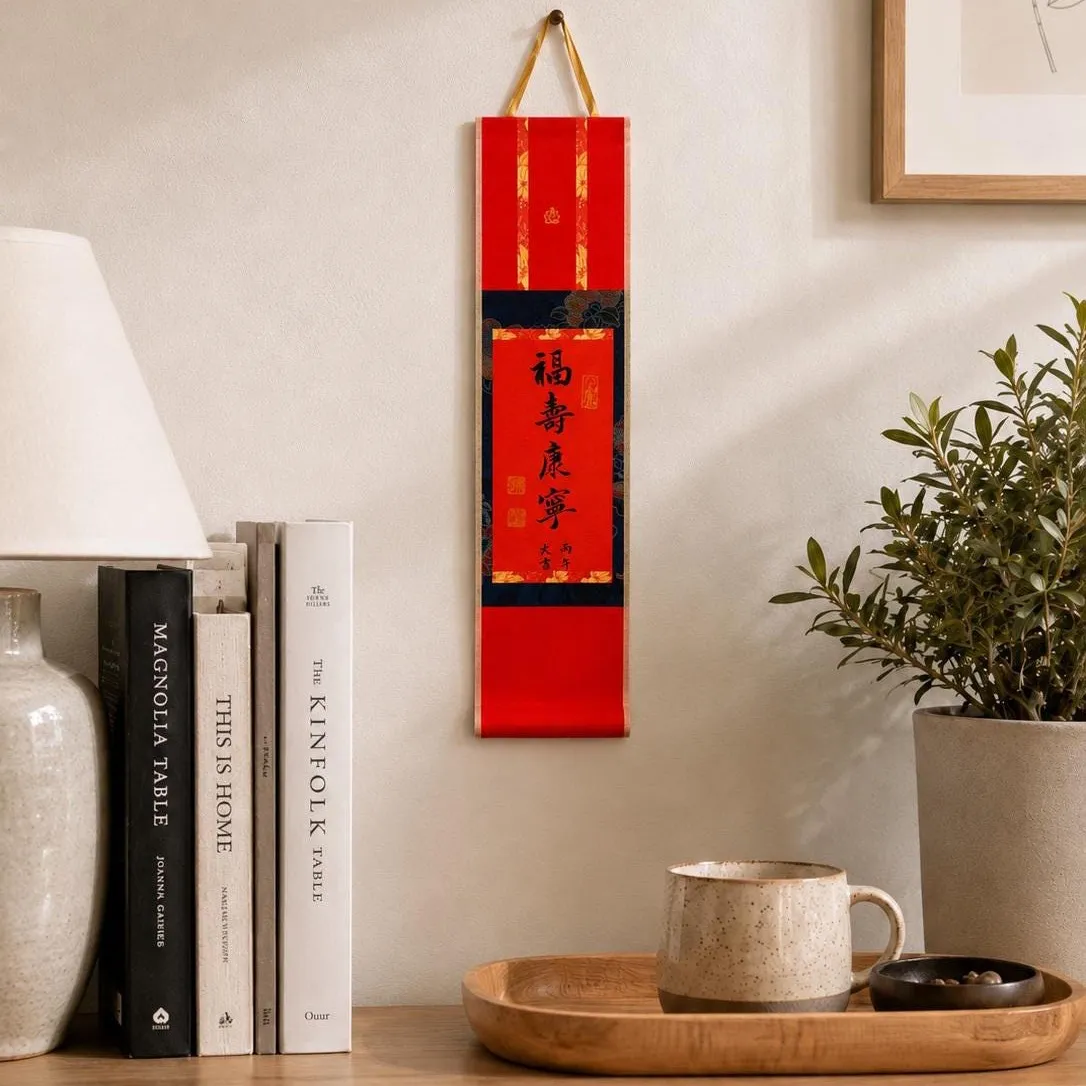
Photo shows a sample — yours will be brushed with the character you choose.
Wall Scroll — for walls & housewarmingsfrom $38→ -
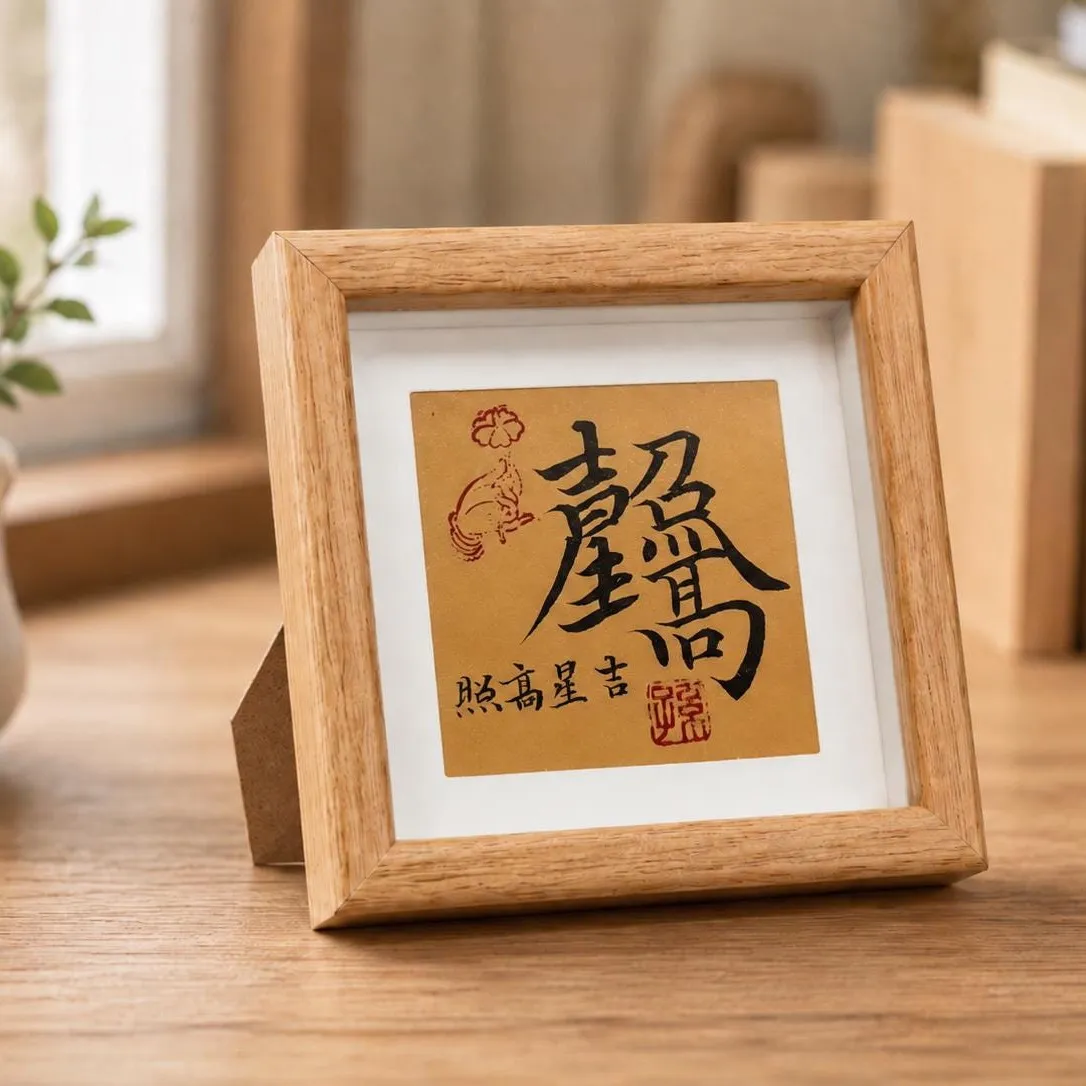
Photo shows a sample — yours will be brushed with the character you choose.
Desk Frame — for desks, studies & studiosfrom $44→ -
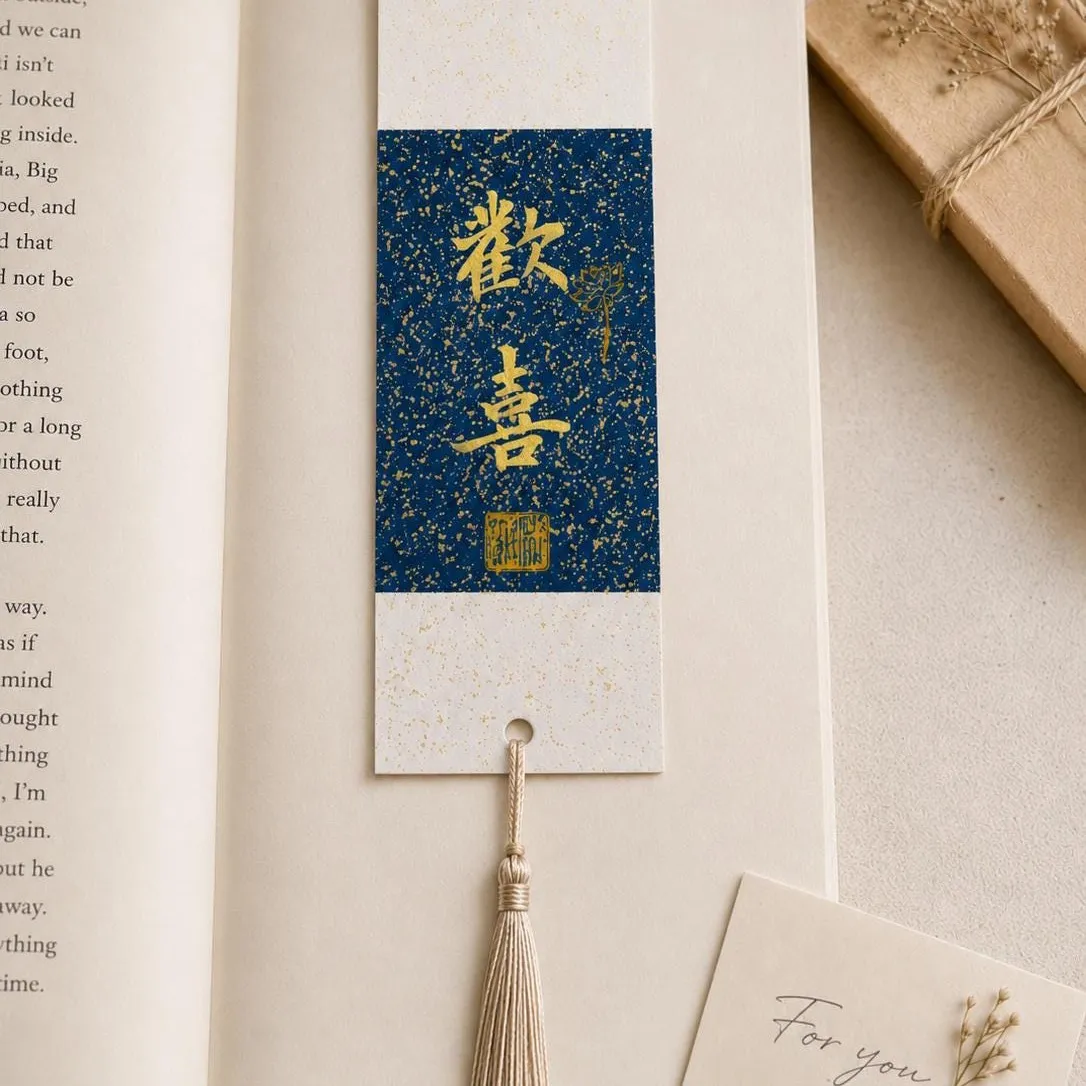
Photo shows a sample — yours will be brushed with the character you choose.
Bookmark — for readers & small thank-yousfrom $17→