同心 (tóng xīn) — Of One Heart · Two People Aimed the Same Way
A two-character word, not a single character.
同心 makes no promise about time, and that is the whole of its difference. 百年好合 counts out a hundred years; 永恒 lifts the love clear of the clock; 圆满 and 美满 each describe a shape the marriage is meant to end up in. 同心 describes neither a length nor a shape. It describes two people aimed the same way — the condition every one of those other blessings quietly depends on and none of them states. It is also the only one a couple can fail at while staying married, which is what gives it weight: two people can share an address for thirty years and want different lives. Written on red paper, 同心 says they did not.
At a Chinese wedding the phrase is on the wall before anyone says it aloud: 永结同心, forever joined of one heart, running down one of the red banners in the standard set. 永结 supplies the duration; 同心 is the thing being made to last. The knot is on the stationery and around the gift boxes — 同心结, two cords worked into a single form — so the claim is being made in cord as well as in ink. Against its neighbours on that same wall the line is clean. 和 is harmony among things that stay different, and Confucius was careful to keep it away from 同. See 和 → 恒 is one person’s constancy held over time. See 恒 → 同心 is neither tolerance nor endurance. It is agreement about where you are going.
A hand-brushed “同心” by Artist Lina Sun is the gift for the couple whose friends have noticed that the two of them decide things together — at the wedding, on the anniversary that came after a hard year, or on Valentine’s Day when the honest thing to say is not about feeling. It works for the pair who run something jointly as readily as for the pair who are married, because the word has always done both jobs. What it tells the people receiving it is not that they are lucky, or beautiful, or destined. It is that they are pointed the same way, and that somebody watching could tell.
- of one heart — two people wanting the same thing
- aligned in judgment and in feeling at once
- the condition a shared life runs on, not a quality it displays
- usable of two people or of a whole crew — 同心协力, 万众一心
- agreement 同意 is signing off on a particular decision, and it is over when the decision is. 同心 is a standing alignment underneath the decisions — the reason the agreements keep happening.
- 同 同 on its own can be a criticism: 和而不同 uses it for agreement that has stopped thinking. 同心 keeps the convergence and drops the uniformity — two people arriving at one place, not two people become identical.
- soulmates The English word claims a match that was there before either person did anything. 同心 claims nothing about fate and everything about direction: these two are aimed the same way, and could stop being.
The short arms are the point: these readings don’t reach it.
- 同 converged / brought together into one《说文》: 合会也 — to converge. A covering element over 口, the mouth: separate things brought under one roof and speaking with one voice. Convergence, not sameness.
- 心 heart-and-mindA picture of the organ, vessels running off the top. 《说文》: 人心,土藏,在身之中. In classical Chinese it is the seat of judgment as much as of feeling — what you think and what you want, in one place.
characters
- 永结同心 yǒng jié tóng xīn forever joined of one heart — the standard wedding-scroll phrase, of which 同心 is the substance
- 同心结 tóng xīn jié the knot of one heart — two cords worked into a single knot, a love token since the Six Dynasties
- 同心同德 tóng xīn tóng dé one heart and one purpose — the phrase King Wu set against 离心离德 in the Book of Documents
- 同心协力 tóng xīn xié lì of one heart, joining strength — a team pulling the same direction on a hard job
- 万众一心 wàn zhòng yī xīn ten thousand people of a single heart — the same alignment scaled to a country
The Story Behind the Character
On Shang and Zhou bronzes the character for the heart is less a symbol than a diagram: a rough sac with the great vessels running off the top, cut by someone who knew what one looked like. 《说文解字》 (c. 100 CE) files it without ornament: 人心,土藏,在身之中 — the human heart, the earth-organ, seated at the center of the body. What that organ was understood to do is the part English has no single word for. In classical Chinese, 心 is where thinking happens as well as feeling — 心 judges, 心 intends, 心 wants. So any phrase built on it makes a claim English has to split in two: of one mind, and of one heart, at the same time.
同 is the harder half, because sameness is not all it means. The Shuowen gloss is 合会也 — to converge, to come together — and the graph is read as 从𠔼从口, a covering element set over 口, the mouth: separate things brought under one roof and speaking with a single voice. That is convergence, not identity. Confucius made the distinction sharp when he warned that the noble person harmonizes without becoming 同, using the character as the name for agreement that has stopped thinking. 同心 is the redeemed use of it: not two people who have become the same person, but two hearts that have arrived at the same place from different directions.
The compound is old and it went in two directions at once. Its earliest home is the war council — 《尚书·泰誓》 has King Wu of Zhou set his ten aligned ministers against Shang's hundreds of thousands of divided ones, setting 同心同德 against 离心离德 — and 《周易·系辞上》 gave it its most quoted line, on what two people of one heart can cut through. By the Six Dynasties the same two characters had become an object: the 同心结, a knot worked from two cords, tied into a sash and given away. The political register and the love register both stayed live, and neither ever displaced the other. A Chinese speaker today meets 同心 on a wedding banner and in a meeting-room slogan without feeling the two are different words.
Classical lines
受有亿兆夷人,离心离德;予有乱臣十人,同心同德。 Shòu has men beyond counting, and they are of divided heart and divided purpose; I have ten ministers fit to govern, and they are of one heart and one purpose.
King Wu of Zhou totting up the odds before the battle that ended the Shang. He is outnumbered by a margin no army survives, and the only quantity he claims is alignment. This is where the phrase is anchored in the written tradition: as the thing that makes a small number count.
腰中双绮带,梦为同心结。 The two figured sashes at my waist
in the dream they had tied themselves into a knot of one heart. — An emperor writing about missing someone, and reaching not for a vow but for an object. By the sixth century 同心 had stopped being only a state of mind: it was something you could tie, hand over, and wear.
君泪盈,妾泪盈,罗带同心结未成,江头潮已平。 Your eyes fill and mine fill; the silk sash never got worked into its knot of one heart, and down at the riverside the tide has already come level.
A parting at a ferry, the full tide being exactly the signal that the boat is about to go. The knot stays unfinished, the poem explains nothing, and the unfinished knot is how you can tell what tying it would have meant.
Why This Character Matters
同心 is one of very few blessings in Chinese equally at home on a red wedding banner and on a banner in a government meeting hall. 永结同心 goes on the scroll at the banquet; 同心同德 goes in the speech; 同心协力 is what a work team gets told before a hard quarter, and 万众一心 is the country's version. Most blessing words are locked to one register — 美满 could never be said of a province, 繁荣 could never be said of a marriage — but these two characters cross the whole range without changing form, because what they name is structural rather than sentimental. Any number of people can be 同心. It happens to be most moving when the number is two.
The love branch produced an object. The 同心结 is a knot worked from doubled cord into a symmetrical form with the ends drawn back into the body of the knot, and from the Six Dynasties onward it is standing equipment in Chinese love poetry — tied into a 罗带, the silk sash, and given at partings. A related gesture arrived later. 结发 began as the hair-binding that marked coming of age, and by the Tang and Song it had produced the wedding rite of 合髻, in which bride and groom each cut a lock and wind the two together. The logic of both is identical: the bond is demonstrated by making two strands into something you cannot pick apart again without cutting. The knot survives on wedding stationery and in the red cord looped around gift boxes, alongside — but not descended from — the 盘长 knots hung at New Year. What has not survived is any confusion about what it means. The knot is not a wish for love; it is a picture of two things that have been made into one.
A few characters live near "同心" but mean something quieter, sharper, or more specific. Here's how to tell them apart.
two hearts converged on the same thing — alignment of what is wanted
different things getting along without merging — harmony that keeps the difference
direction — that both of you are pointed the same way
duration — that one of you keeps showing up, year after year
The four-character version, 永结同心 — forever joined of one heart — is on the standard red banner set at almost every traditional Chinese wedding, and 同心 is what that phrase is actually about; 永结 only says how long.
- The four-character version, 永结同心 — forever joined of one heart — is on the standard red banner set at almost every traditional Chinese wedding, and 同心 is what that phrase is actually about; 永结 only says how long. Given as two characters instead of four, it drops the promise about duration and keeps the condition: that these two want the same things. It is the least decorative wish on the wedding shelf. 百年好合 counts a hundred years, 花好月圆 draws the flowers and the full moon, 龙凤呈祥 sets a dragon and a phoenix over the couple. 同心 has no picture in it at all. For the wedding gift that would rather say the true thing than the pretty one — and for the couple whose friends already know the two of them decide things together.
- Some anniversaries land at the end of a year the two of them mostly spent deciding things — where to move, whether to take the job, how to handle the illness, whether the business was worth one more year. 同心 is the word for whatever carried them through that. It makes no claim about how long the marriage has run or what shape it has taken; it says only that through all of it both people wanted the same things. On an anniversary that reads less like a compliment than an observation, which is what gives it its weight. Where 恒 credits one partner for the constancy of showing up, 同心 credits both of them for having pulled the same direction while they did.
- Almost everything given on Valentine's Day is about feeling: how the person strikes you, how a room changes when they are in it, what they look like across a table. 同心 is the unromantic one, and for some couples that is precisely the register they trust. It says nothing about the feeling and everything about the fact that these two are building the same thing. There is even a physical version to point at: the 同心结, the knot of one heart, which Chinese love poetry treats as what you hand over when the thing itself cannot be said out loud. For the partner who would be more moved by being called a partner than by being called beautiful.
Husband · Wife · New Couple · or yourself
Looking for a name? See Western names written in Chinese →
-
What does 同心 (tóng xīn) mean?
同心 (tóng xīn) is a two-character Chinese word for of one heart, two people aimed the same way. 同心 makes no promise about time, and that is the whole of its difference. 百年好合 counts out a hundred years; 永恒 lifts the love clear of the clock; 圆满 and 美满 each describe a shape the marriage is meant to end up in. 同心 describes neither a length nor a shape. It describes two people aimed the same way — the condition every one of those other blessings quietly depends on and none of them states. It is also the only one a couple can fail at while staying married, which is what gives it weight: two people can share an address for thirty years and want different lives. Written on red paper, 同心 says they did not. 同心 is one of very few blessings in Chinese equally at home on a red wedding banner and on a banner in a government meeting hall. 永结同心 goes on the scroll at the banquet; 同心同德 goes in the speech; 同心协力 is what a work team gets told before a hard quarter, and 万众一心 is the country's version. Most blessing words are locked to one register — 美满 could never be said of a province, 繁荣 could never be said of a marriage — but these two characters cross the whole range without changing form, because what they name is structural rather than sentimental. Any number of people can be 同心. It happens to be most moving when the number is two.
-
What occasions is 同心 given for?
同心 is traditionally given for Wedding, Anniversary, Valentine's Day. The four-character version, 永结同心 — forever joined of one heart — is on the standard red banner set at almost every traditional Chinese wedding, and 同心 is what that phrase is actually about; 永结 only says how long. Given as two characters instead of four, it drops the promise about duration and keeps the condition: that these two want the same things. It is the least decorative wish on the wedding shelf. 百年好合 counts a hundred years, 花好月圆 draws the flowers and the full moon, 龙凤呈祥 sets a dragon and a phoenix over the couple. 同心 has no picture in it at all. For the wedding gift that would rather say the true thing than the pretty one — and for the couple whose friends already know the two of them decide things together. Some anniversaries land at the end of a year the two of them mostly spent deciding things — where to move, whether to take the job, how to handle the illness, whether the business was worth one more year. 同心 is the word for whatever carried them through that. It makes no claim about how long the marriage has run or what shape it has taken; it says only that through all of it both people wanted the same things. On an anniversary that reads less like a compliment than an observation, which is what gives it its weight. Where 恒 credits one partner for the constancy of showing up, 同心 credits both of them for having pulled the same direction while they did.
-
Who brushes the 同心 calligraphy?
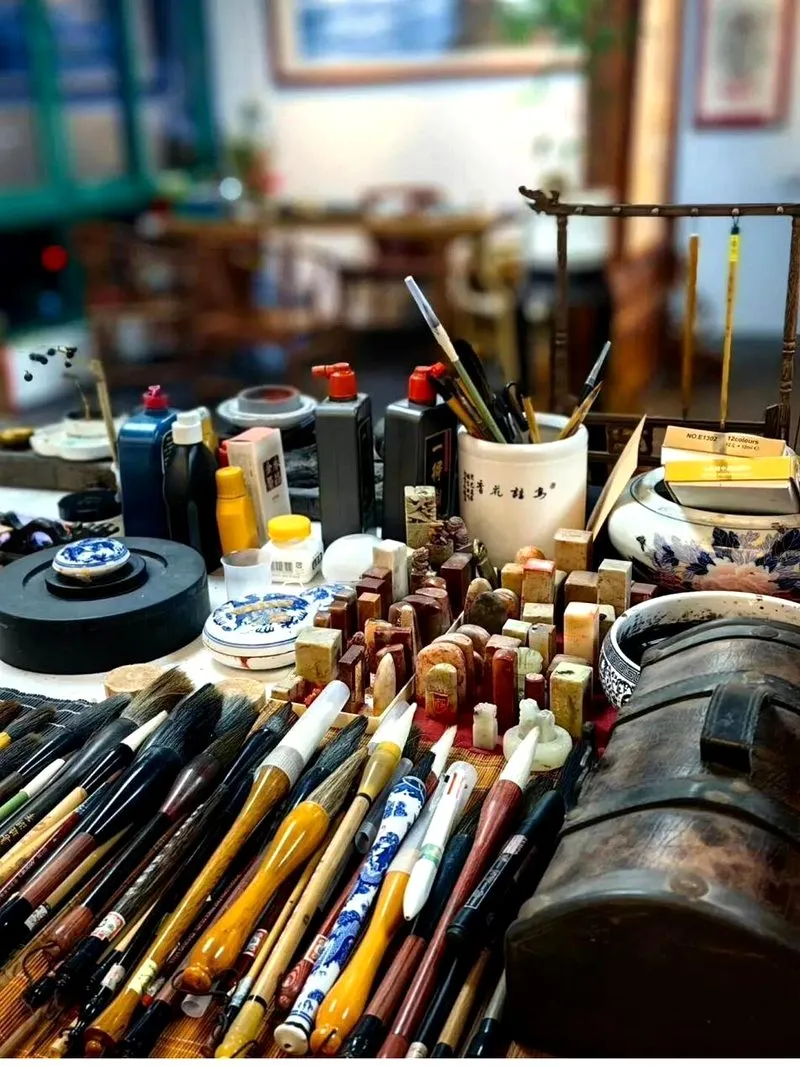
Each 同心 (Tóng Xīn) is hand-brushed to order by Artist Lina Sun in ink on rice paper — never printed, never repeated.
Bring 同心 home — choose how you'd like it brushed.
-
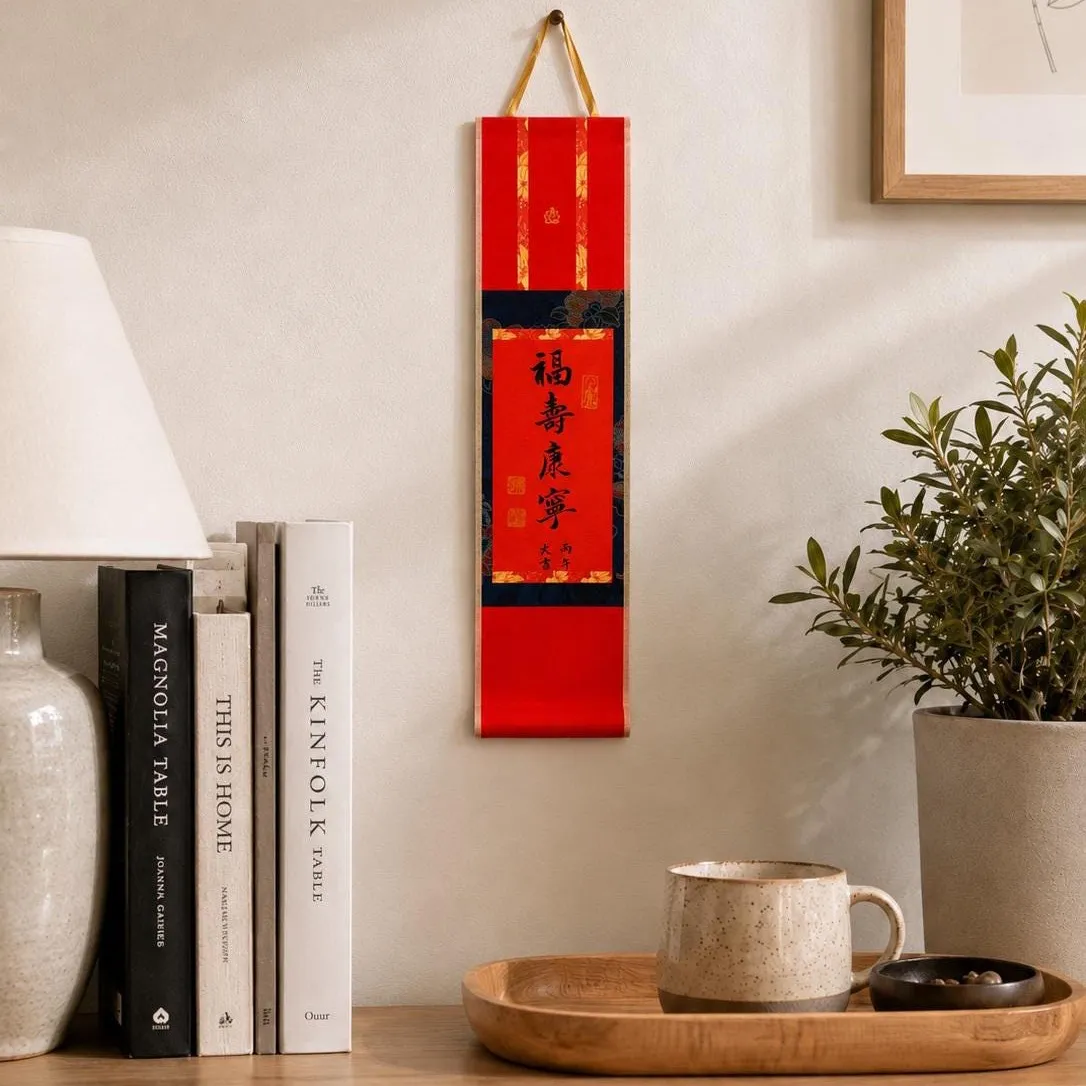
Photo shows a sample — yours will be brushed with 同心, or any character you choose.
Wall Scroll — for walls & housewarmingsfrom $38→ -
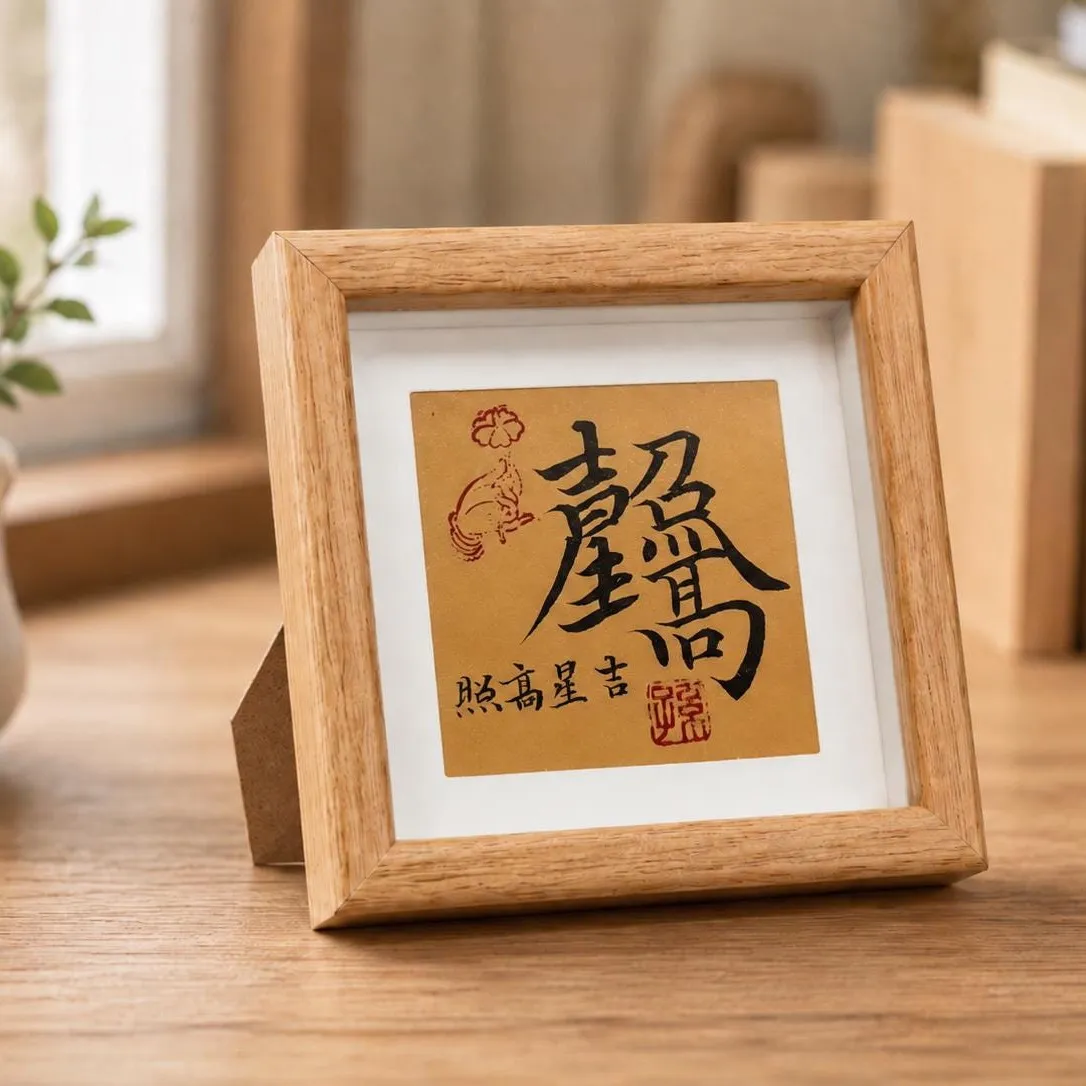
Photo shows a sample — yours will be brushed with 同心, or any character you choose.
Desk Frame — for desks, studies & studiosfrom $44→ -
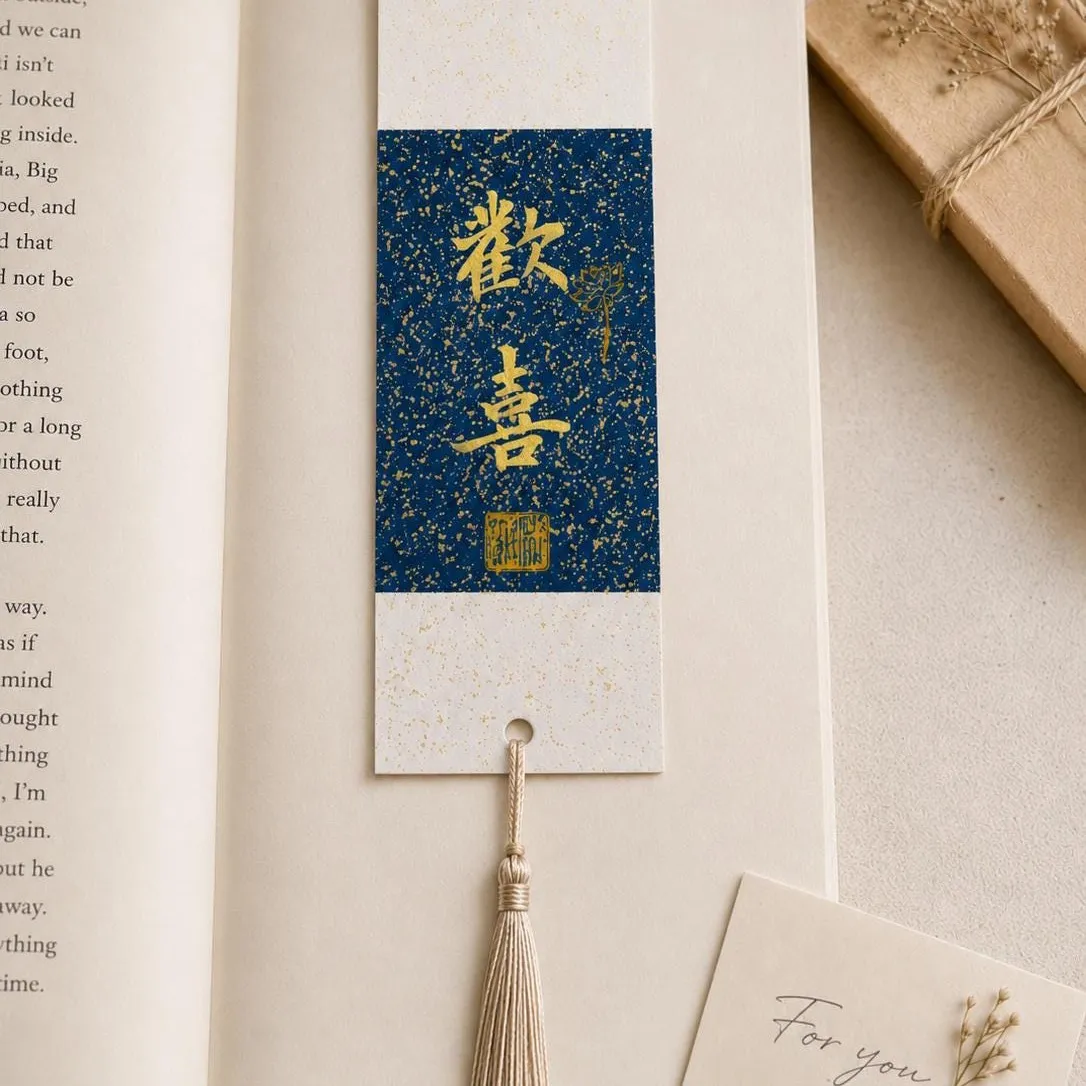
Photo shows a sample — yours will be brushed with 同心, or any character you choose.
Bookmark — for readers & small thank-yousfrom $17→
What people said after it arrived.
-
The item is fantastic. The customer service was genuine. Thanks!
— M.Verified purchase · from our Etsy shop reviews · -
They were great they gave me exactly what I asked for and then some. Thank you!!
— G.Verified purchase · from our Etsy shop reviews · -
It is well designed and customized. My daughter loves it. Amazing gift for family’s d friends
— S.Verified purchase · from our Etsy shop reviews ·
Each "同心" is hand-brushed by Artist Lina Sun on rice paper.
See 同心 (Tóng Xīn) on Etsy →