和美 (hé měi) — Harmony and Beauty · The Accord That Ripens Into Grace
A two-character word, not a single character.
和顺 asks that the marriage run smoothly. 幸福 asks that the couple be happy. 和美 asks for something more particular: that the harmony of two people who chose each other and keep choosing each other — two instruments learning their shared music — produces something genuinely beautiful. Not the beauty of a wedding day but the beauty of a household that has become, over years, worth entering. See 和 → See 美 → The distinction between the household that works and the household that has a quality is what 美 adds to 和.
In Chinese culture, 家庭和美 appears in wedding toasts, New Year cards to married couples, and anniversary inscriptions as the most complete household blessing available — naming both dimensions that a long marriage requires. At a wedding, it looks forward: the accord the couple is asked to build and the beauty they are asked to build it into. At an anniversary, it becomes retrospective: the 和 names what has been maintained (the daily adjustment, the long music of living together), and the 美 names what that maintenance has made — a household and a partnership that has a particular quality, visible even to those outside it, that is the specific fruit of years of genuine consonance.
A hand-brushed “和美” by FuBlessings is the wedding or anniversary gift that names the full arc — not the luck or the years or the vows alone, but the working accord and what it asks to become: the irreplaceable beauty of two people who have, over time, learned to play their music together.
- harmony that becomes beautiful
- the accord a marriage keeps and the grace it produces
- a household that both works and has a quality
- the particular beauty of a life built in genuine consonance
- harmony That is 和 alone. 和美 adds 美 — what the harmony produces over time, the beauty visible in the household and the couple.
- happiness Too interior. 和美 is not a feeling but a condition with two components: working accord (和) and the beauty (美) that this accord makes possible and visible.
- love Love (爱) names the orientation toward the other. 和美 names what that orientation, sustained and calibrated across years, produces in the household and the marriage.
The short arms are the point: these readings don’t reach it.
- 和 accord / the music of two different natures playing togetherReed pipes (龠) beside grain (禾) or a mouth — voices agreeing across the table, instruments tuned to each other. The working condition of the couple: not sameness but consonance.
- 美 beauty / the quality that sustained accord producesA person (大) crowned with a sacrificial sheep (羊) — fully adorned, fully celebrated, at the peak of what they have become. What the household achieves over years of genuine harmony.
characters
- 和顺 hé shùn harmony and smooth flow — the household that runs without friction, the practical working-out of daily life together
- 琴瑟和鸣 qín sè hé míng the qin and se singing together — the classical image of a harmonious marriage, two instruments producing what neither can alone
- 家庭和美 jiā tíng hé měi the household in harmony and beauty — the complete blessing, naming both the working accord and what it produces
- 相敬如宾 xiāng jìng rú bīn to treat each other with the respect due a guest — the Confucian ideal of marital courtesy
Cinnabar marks the characters 和美 actually contains. The dark row is a relative by meaning or by sound, not one shared stroke.
The Story Behind the Character
In the oldest anthology of Chinese poetry, the Book of Songs (《诗经》), the image chosen to describe a marriage in its fullest and most celebrated state was not a declaration of love but two instruments playing together. The qin (琴) and the se (瑟) were the actual instruments played at wedding ceremonies in the Zhou dynasty; their ensemble was not just accompaniment but a representation of the ideal marriage itself — two distinct voices, each with its own range and character, producing together something neither could produce alone. 和 entered the marital vocabulary through this image. The word for harmony was also the word for what happened when the instruments were right.
美 contributed what 和 alone does not contain: the fruit of the harmony, rather than its working condition. 和 asks that the couple be in accord — that the different notes they bring find a way to sound right together. [See 和 →](/library/he/) 美 asks what that accord produces when it is maintained over years. In classical Chinese, 美 named the quality of something that has become fully what it is: Mencius defined it as 充实 (fullness, completeness), Zhuangzi observed that heaven and earth possess great beauty without announcing it. [See 美 →](/library/mei/) 家庭和美 — "the household in harmony and beauty" — became one of the most durable Chinese marriage blessings because it names both registers: the working accord and the grace it produces.
和美 as a pair is distinguished from its near neighbors by what its second character requires. 和顺 (harmony and smooth flow) asks that the household run without friction — the practical working-out of daily life together. 和美 asks for something more: that the harmony ripens into genuine beauty, that what the couple has built together becomes, over time, worth seeing. A marriage with 和顺 functions well. A marriage with 和美 functions well and has become, in the process, something particular. The distinction is the difference between a household that works and a household that has a quality.
Classical lines
- roughly 1,600 years
- c. 800 BCE 《诗经·周南·关雎》
- 809 CE 元稹《离思五首·其四》
- c. 839 CE 李商隐《无题·昨夜星辰昨夜风》
窈窕淑女,琴瑟友之。窈窕淑女,钟鼓乐之。 The graceful and lovely lady
befriend her with the qin and se playing together. The graceful and lovely lady — celebrate her with bells and drums. — The opening poem of the Book of Songs, which Confucius placed first in the anthology for its perfect balance of desire and restraint. 琴瑟友之 — to befriend with harmonized instruments — became the classical image of marital accord: not the conquest of love but the long music of it.
身无彩凤双飞翼,心有灵犀一点通。 Though our bodies lack the wings of the colorful phoenix to fly side by side, our hearts share the single point of the rhinoceros horn, where the slightest touch is felt by both.
Li Shangyin's most celebrated couplet, naming the intimacy of two people whose inner accord has become so fine-grained it needs no external display. The 彩凤 (colorful phoenix) names 美 — the irreplaceable beauty of this specific pairing; the 灵犀 names 和 — the deep consonance that has no equivalent. At an anniversary, together they name what years of genuine harmony produce: an accord so attuned it is felt without effort.
曾经沧海难为水,除却巫山不是云。 Having known the vast ocean, no other water measures up; having seen the clouds of Wushan, no other cloud is real.
Yuan Zhen wrote these lines after losing his wife. The metaphor is the 美 in 和美 at its fullest: a specific love that has made the world look different, that has become the scale against which everything else is measured. At an anniversary, these lines name what years of genuine harmony produce — an irreplaceable beauty that no substitute can approximate.
Why This Character Matters
The phrase 家庭和美 — "the household in harmony and beauty" — appears in Chinese New Year greetings, wedding toasts, and housewarming inscriptions with a frequency that makes it almost invisible. What makes it worth recovering is the precision of its second word. 和气 (harmonious spirit) and 和谐 (in accord) both describe the working condition; 和美 alone insists on the beauty. The household that has 和美 is not merely functional — it has a particular quality visible to anyone who enters: the unhurried tone of it, the way the couple moves together, the sense that this is a place that has accumulated something. Chinese speakers will tell you immediately which households they know that have 和美 and which merely get along.
The qin-and-se (琴瑟) metaphor for marriage is so old and so embedded that the phrase 琴瑟和鸣 — "the qin and se singing together" — became a classical standard for a happy marriage. The qin has seven strings and a clearer, more brilliant register; the se has twenty-five strings and a fuller, lower resonance. Separately they are complete instruments; together they produce intervals and harmonics impossible for either alone. When classical Chinese poets and ritualists chose this image for marriage, they were making an argument: the ideal couple is not two halves of one thing but two complete people who produce, together, something not otherwise available. 和美 names this outcome — the harmony that creates beauty rather than merely preventing conflict.
A few characters live near "和美" but mean something quieter, sharper, or more specific. Here's how to tell them apart.
harmony that ripens into beauty — asks what the accord produces, not just that it flows smoothly
harmony and smooth daily flow — the practical condition of the household running without friction
the specific quality of a marriage that has found its sound — accord plus beauty, not just wishes fulfilled
things going as wished — a general blessing that applies to any good outcome, not particular to the couple's relation
At a wedding, 和美 names both what is wished for the day itself (和 — the accord of two different natures, like two instruments beginning to play together) and what is asked of the decades ahead (美 — the beauty that sustained accord produces, visible in what the household becomes).
- At a wedding, 和美 names both what is wished for the day itself (和 — the accord of two different natures, like two instruments beginning to play together) and what is asked of the decades ahead (美 — the beauty that sustained accord produces, visible in what the household becomes). More complete than 和顺 (which asks only for smooth daily life) and more specific than 幸福 (which names the feeling of happiness).
- At an anniversary, 和美 shifts register entirely: from wish to recognition. The 和 names what the couple has maintained — the working accord of two people who have chosen to keep adjusting to each other. The 美 names what that maintenance has made the marriage — the particular quality that years of genuine accord produce and that is distinct from any happiness they simply fell into.
New Couple · Wife · Husband · or yourself
Looking for a name? See Western names written in Chinese →
-
What does 和美 (hé měi) mean?
和美 (hé měi) is a two-character Chinese word for harmony and beauty, the accord that ripens into grace. 和顺 asks that the marriage run smoothly. 幸福 asks that the couple be happy. 和美 asks for something more particular: that the harmony of two people who chose each other and keep choosing each other — two instruments learning their shared music — produces something genuinely beautiful. Not the beauty of a wedding day but the beauty of a household that has become, over years, worth entering. See 和 → See 美 → The distinction between the household that works and the household that has a quality is what 美 adds to 和. The phrase 家庭和美 — "the household in harmony and beauty" — appears in Chinese New Year greetings, wedding toasts, and housewarming inscriptions with a frequency that makes it almost invisible. What makes it worth recovering is the precision of its second word. 和气 (harmonious spirit) and 和谐 (in accord) both describe the working condition; 和美 alone insists on the beauty. The household that has 和美 is not merely functional — it has a particular quality visible to anyone who enters: the unhurried tone of it, the way the couple moves together, the sense that this is a place that has accumulated something. Chinese speakers will tell you immediately which households they know that have 和美 and which merely get along.
-
What occasions is 和美 given for?
和美 is traditionally given for Wedding, Anniversary. At a wedding, 和美 names both what is wished for the day itself (和 — the accord of two different natures, like two instruments beginning to play together) and what is asked of the decades ahead (美 — the beauty that sustained accord produces, visible in what the household becomes). More complete than 和顺 (which asks only for smooth daily life) and more specific than 幸福 (which names the feeling of happiness). At an anniversary, 和美 shifts register entirely: from wish to recognition. The 和 names what the couple has maintained — the working accord of two people who have chosen to keep adjusting to each other. The 美 names what that maintenance has made the marriage — the particular quality that years of genuine accord produce and that is distinct from any happiness they simply fell into.
-
Who brushes the 和美 calligraphy?
FuBlessings hand-brushes each 和美 (Hé Měi) to order, in ink on rice paper — never printed, never repeated.
Bring 和美 home — choose how you'd like it brushed.
-
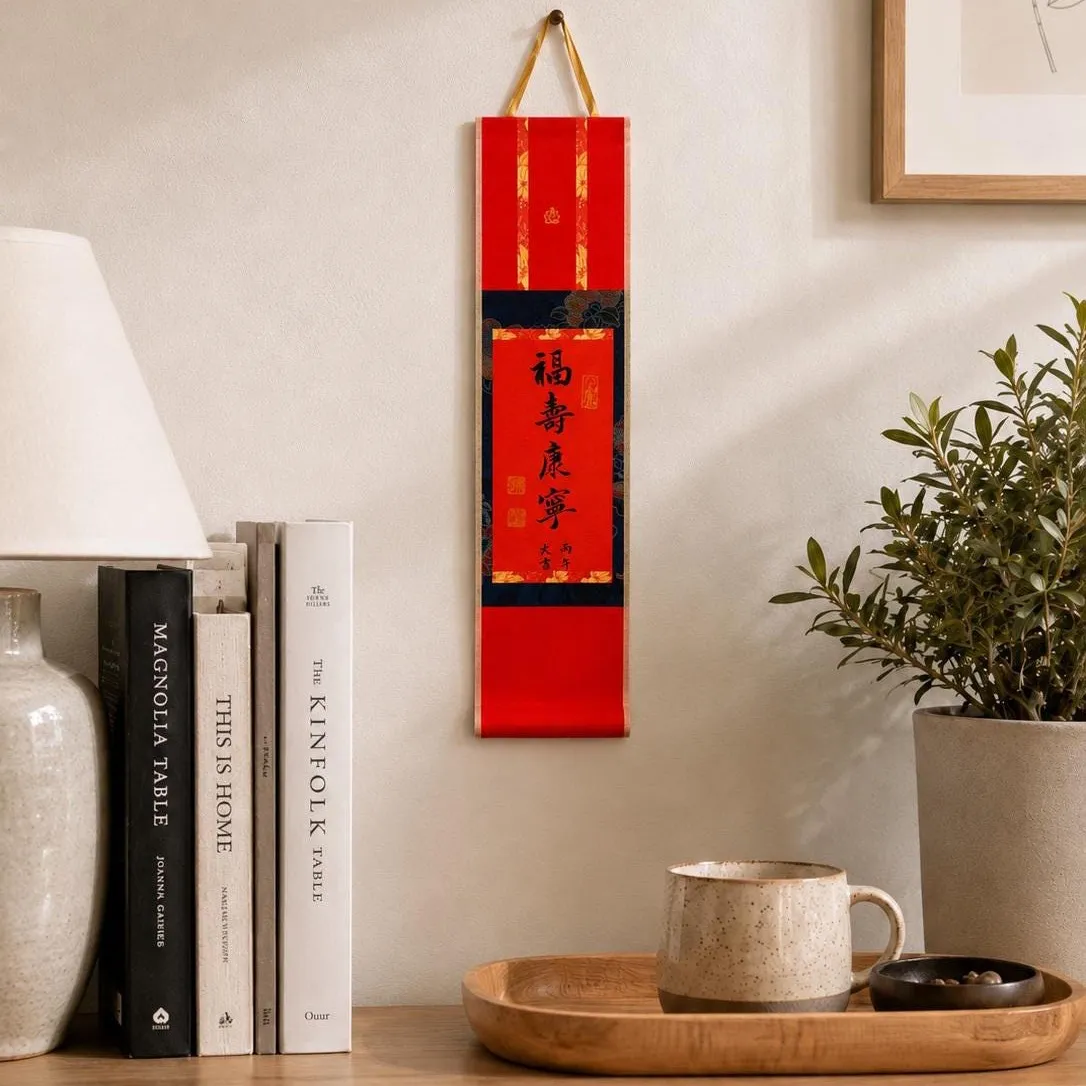
Photo shows a sample — yours will be brushed with 和美, or any character you choose.
Wall Scroll — for walls & housewarmingsfrom $38→ -
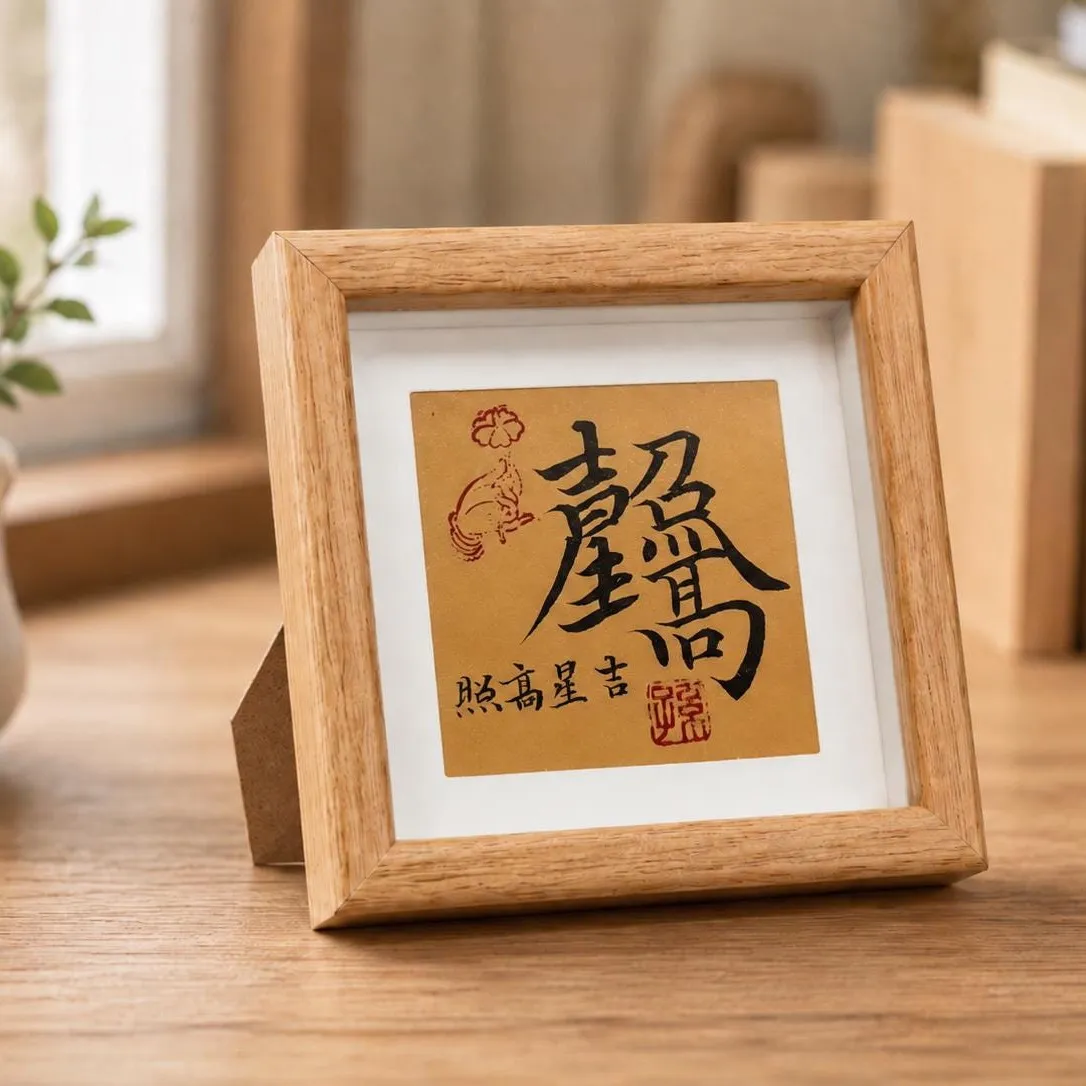
Photo shows a sample — yours will be brushed with 和美, or any character you choose.
Desk Frame — for desks, studies & studiosfrom $44→ -
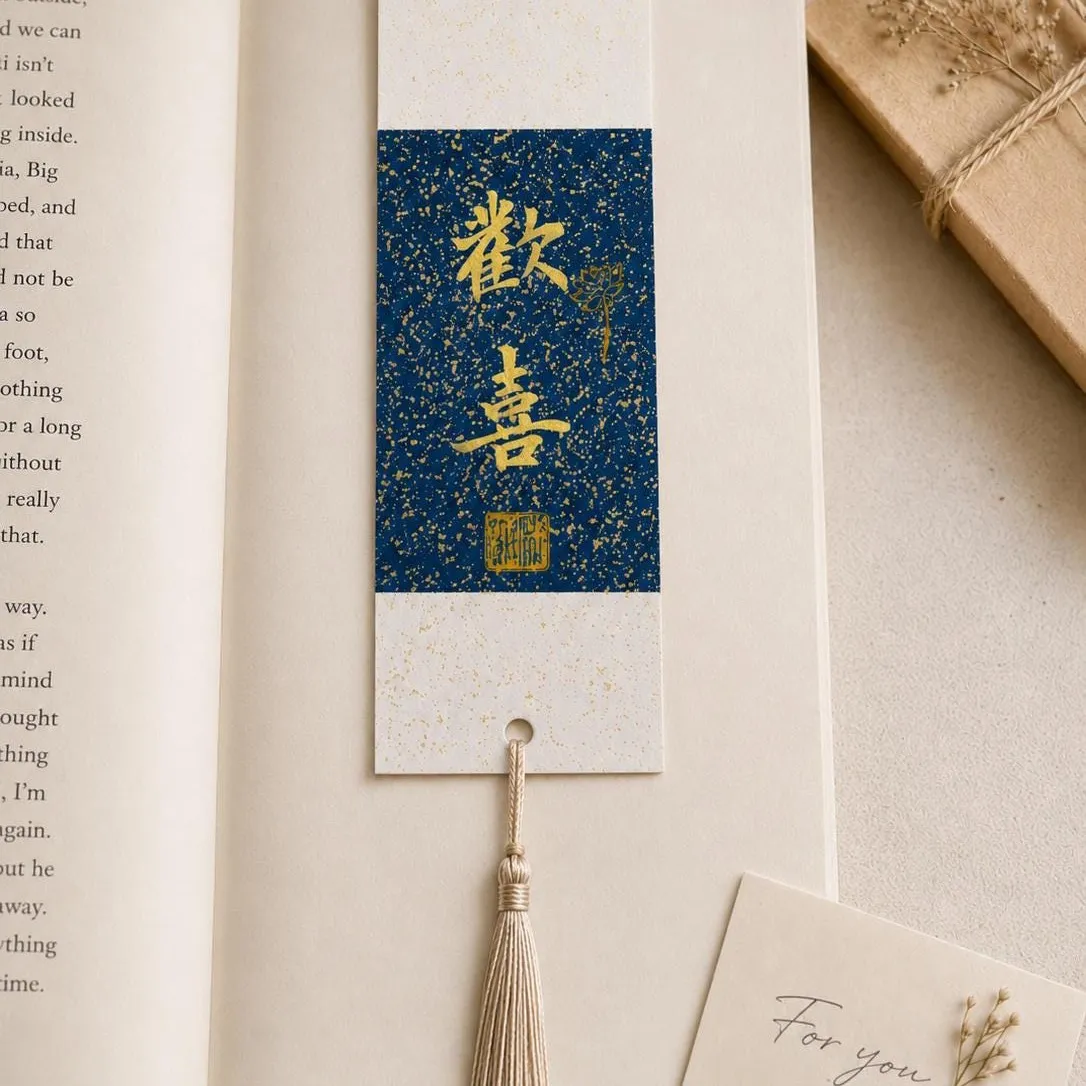
Photo shows a sample — yours will be brushed with 和美, or any character you choose.
Bookmark — for readers & small thank-yousfrom $14→
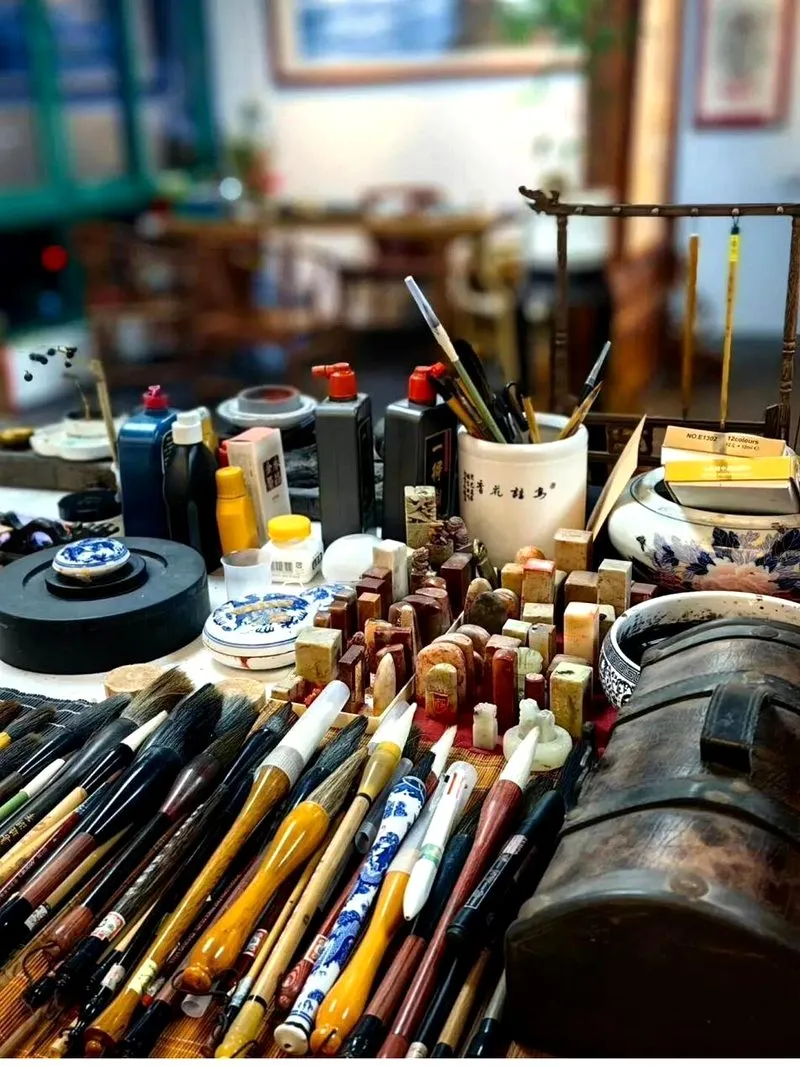
What people said after it arrived.
-
The item is fantastic. The customer service was genuine. Thanks!
— M.Verified purchase · from our Etsy shop reviews · -
They were great they gave me exactly what I asked for and then some. Thank you!!
— G.Verified purchase · from our Etsy shop reviews · -
It is well designed and customized. My daughter loves it. Amazing gift for family’s d friends
— S.Verified purchase · from our Etsy shop reviews ·
Each "和美" is hand-brushed by FuBlessings on rice paper.
See 和美 (Hé Měi) on Etsy →