Hua Hao Yue Yuan (花好月圆) — Flowers in Full Bloom · Moon Full and Round
A 4-character phrase, not a single character.
Huā hǎo yuè yuán (花好月圆) is a four-character Chinese phrase that means flowers in bloom, moon full — a complete happy gathering. 花 (huā) is flower; 好 (hǎo) is at its best; 月 (yuè) is moon; 圆 (yuán) is round and full. Read as two pairs, 花好 names the season at its peak and 月圆 names the circle unbroken. The same four characters mark a wedding day, a Mid-Autumn family reunion, and an anniversary: they confirm that this evening is already complete, rather than asking for what the years should become. It remains a common request for wedding calligraphy. FuBlessings hand-brushes 花好月圆 in Shenzhen, ink on rice paper — living craft, one sitting, never printed.
The Story Behind the Character
Imagine a Chinese painting from the Song dynasty: in the foreground, plum blossoms at their peak; above them, a perfectly round moon against dark sky. That visual pairing — earth's flowers at their best, sky's moon at its fullest — appears in Chinese aesthetic culture centuries before it crystallized into the fixed phrase 花好月圆. The painter was naming a state of double completeness: below, the seasonal; above, the cyclical; both arriving at their maximum at the same moment.
The phrase analyzes into two paired halves: 花好 (flowers good — meaning at their best, neither past their prime nor not yet open) and 月圆 (moon round — meaning full, the circle unbroken). Each names a different kind of completeness: 花好 is seasonal and earthly, the particular peak of a flowering cycle; 月圆 is monthly and celestial, the lunar cycle at the point where the circle closes. In Chinese lunar culture, 月圆 has always been associated with 团圆 (tuán yuán, reunion, the family circle complete) — the full moon is the reunion moon, the moon that means everyone has arrived. 花好 adds the earthly counterpart: the season is right, the occasion has reached its finest point. Together they name a state where both registers are simultaneously at their fullest.
The phrase migrated from landscape imagery into wedding convention through the vocabulary of the 洞房花烛夜 — the traditional wedding night, literally "flower-candle night in the bridal chamber." The 花烛 (flower candles) lit at Chinese weddings gave 花 its ceremonial wedding association; the full moon above completed the image. By the Ming and Qing dynasties, 花好月圆 had become a standard set phrase in the auspicious speech delivered at weddings, appearing in classical Chinese opera texts alongside 人寿年丰 (rén shòu nián fēng) and 白头偕老. The phrase names the ideal starting condition: the moment when earth, sky, and occasion have all arrived at their most complete together.
Classical lines
- roughly 1,700 years
- c. 600 BCE 《诗经·陈风·月出》
- c. 300 BCE 《礼记·中庸》第十二章
- c. 1098 CE 秦观《鹊桥仙》
月出皎兮,佼人僚兮,舒窈纠兮,劳心悄兮。 The moon rises luminous; how beautiful she is, how gracefully she walks
my heart aches quietly for her. — The oldest moon-beauty pairing in Chinese literature. The full moon appearing alongside the image of a woman at the peak of her grace has been a fixed association in the Chinese imagination since the Book of Songs; 花好月圆 inherits that visual link and redirects the longing into celebration.
君子之道,造端乎夫妇;及其至也,察乎天地。 The way of the noble person begins at the couple; at its fullest reach, it illuminates heaven and earth.
The Doctrine of the Mean placing the marriage relationship at the origin of all larger order: the couple is the starting point, and what they build together expands outward until it encompasses everything. 花好月圆 names the starting condition — the moment when earth (花) and sky (月) are both complete, which is the ideal setting for what is beginning.
两情若是久长时,又岂在朝朝暮暮。 If what the two of them share is truly lasting, why must it depend on daily togetherness?
Qin Guan inverting the Qixi separation myth to make the most celebrated claim about enduring love in Chinese poetry: what lasts does not require constant proximity to prove itself. For a wedding, it promises the marriage can outlast any particular evening; for an anniversary, it confirms that it has.
Why This Character Matters
花好月圆 crosses cultural calendars in a way that most Chinese blessing phrases do not: the same four characters appear at 中秋节 (Mid-Autumn Festival), at weddings, and at anniversaries, because all three occasions carry the same reading — the circle is full, the moment is complete. The round moon cake eaten at Mid-Autumn is not decorative; it is a visual enactment of 月圆 and the 团圆 (family reunion) it stands for. When 花好月圆 blesses a wedding, it carries that roundness into the ceremony: the couple's circle is just beginning, and the moon above marks it complete.
In traditional Chinese wedding calligraphy, 花好月圆 was commonly paired with 人寿年丰 (rén shòu nián fēng — long life for the people, abundant years ahead) as a matched couplet. The pairing is revealing: 花好月圆 alone covers only the present moment — the occasion at its peak; 人寿年丰 adds the temporal dimension, the decades. Chinese wedding culture understood 花好月圆 as the blessing of the beginning and paired it with a wish for what follows, which is why the phrase alone — without the temporal extension — reads as a recognition of this particular evening rather than a wish for the marriage's entire span.
花好月圆 doesn't prescribe what the marriage should become — it identifies the wedding day itself as the kind of moment the phrase describes: flowers at their best, moon at its fullest, everything arrived at its most complete simultaneously.
- 花好月圆 doesn't prescribe what the marriage should become — it identifies the wedding day itself as the kind of moment the phrase describes: flowers at their best, moon at its fullest, everything arrived at its most complete simultaneously. Where 和美 makes a wish and 百年好合 asks for duration, 花好月圆 confirms the present: this is already that occasion.
- On an anniversary, 花好月圆 shifts from recognition of a beginning to recognition of a circle held: the moon is full again, the flowers have returned, and the couple's circle is still unbroken. More apt than a prospective blessing, it names what the anniversary already is — a point where the year has come round and everything is, for this evening, complete.
- For Valentine's Day, 花好月圆 places the occasion in a larger frame than the feeling between two people: the flowers are at their best, the moon is full, and the relationship exists inside that natural completeness. It recognizes the day itself as one of those evenings when the world outside cooperates with what is happening inside.
New Couple · Husband · Wife · or yourself
Looking for a name? See Western names written in Chinese →
-
What does each character in Huā hǎo yuè yuán (花好月圆) mean?
Huā hǎo yuè yuán (花好月圆) is four characters, read as two paired halves. 花 (huā) means flower. 好 (hǎo) means good, here at their best: neither past their prime nor not yet open. Together 花好 is flowers in bloom. 月 (yuè) means moon. 圆 (yuán) means round and full, the circle unbroken. Together 月圆 is the moon at its fullest. The phrase does not name a quality of a relationship or a wish for later years. It names a double completeness: earth at its seasonal peak, sky at the closed lunar circle. English speakers gloss it as flowers in bloom, moon full — a complete happy gathering. The two halves arrive at the same moment.
-
When is Huā hǎo yuè yuán (花好月圆) given?
Chinese speakers give Huā hǎo yuè yuán (花好月圆) for a wedding, an anniversary, and Valentine's Day. At a wedding it names the day itself as complete: flowers at their best, moon at its fullest, everything arrived. It is the phrase that does not ask for duration or later beauty. At Mid-Autumn Festival the same four characters sit with 团圆 (tuán yuán, reunion): the full moon marks the family circle closed. On an anniversary it shifts from a beginning to a circle held — the moon is full again, the flowers have returned. FuBlessings brushes each piece to order in Shenzhen for a new couple, a husband or wife, or the wall that already holds that evening.
-
How is Huā hǎo yuè yuán different from 百年好合, 和美, and 团圆?
Huā hǎo yuè yuán (花好月圆) names the occasion as complete. 百年好合 (bǎi nián hǎo hé) asks for a hundred years of genuinely good union — the span and the quality of what follows the ceremony. 和美 (hé měi) asks for harmony that ripens into beauty over years. 白头偕老 asks that the couple grow old together. 团圆 (tuán yuán) is reunion: people gathered in one room after being apart. 花好月圆 shares 圆's roundness with 团圆, but it is not a headcount of who came home; it is flowers and moon arriving at their fullest together. Choose 花好月圆 for the wedding evening or the reunion night as it stands. Choose 百年好合 when the gift should look forward across a life.
-
How is a hand-brushed Huā hǎo yuè yuán different from a printed poster?
A printed poster repeats the same file of 花好月圆. FuBlessings brushes each Huā hǎo yuè yuán (花好月圆) once, in one sitting, in ink on rice paper in Shenzhen. Stroke weight, ink tone, and the spacing of the four characters belong to that sitting and do not recur. The two pairs — 花好 and 月圆 — have to sit as one complete line, not as clip-art stacked from a font. FuBlessings is a living-craft studio, not a print shop. What you hang is a wall piece written for one recipient and one occasion, never printed and never repeated.
Bring 花好月圆 home — choose how you'd like it brushed.
-
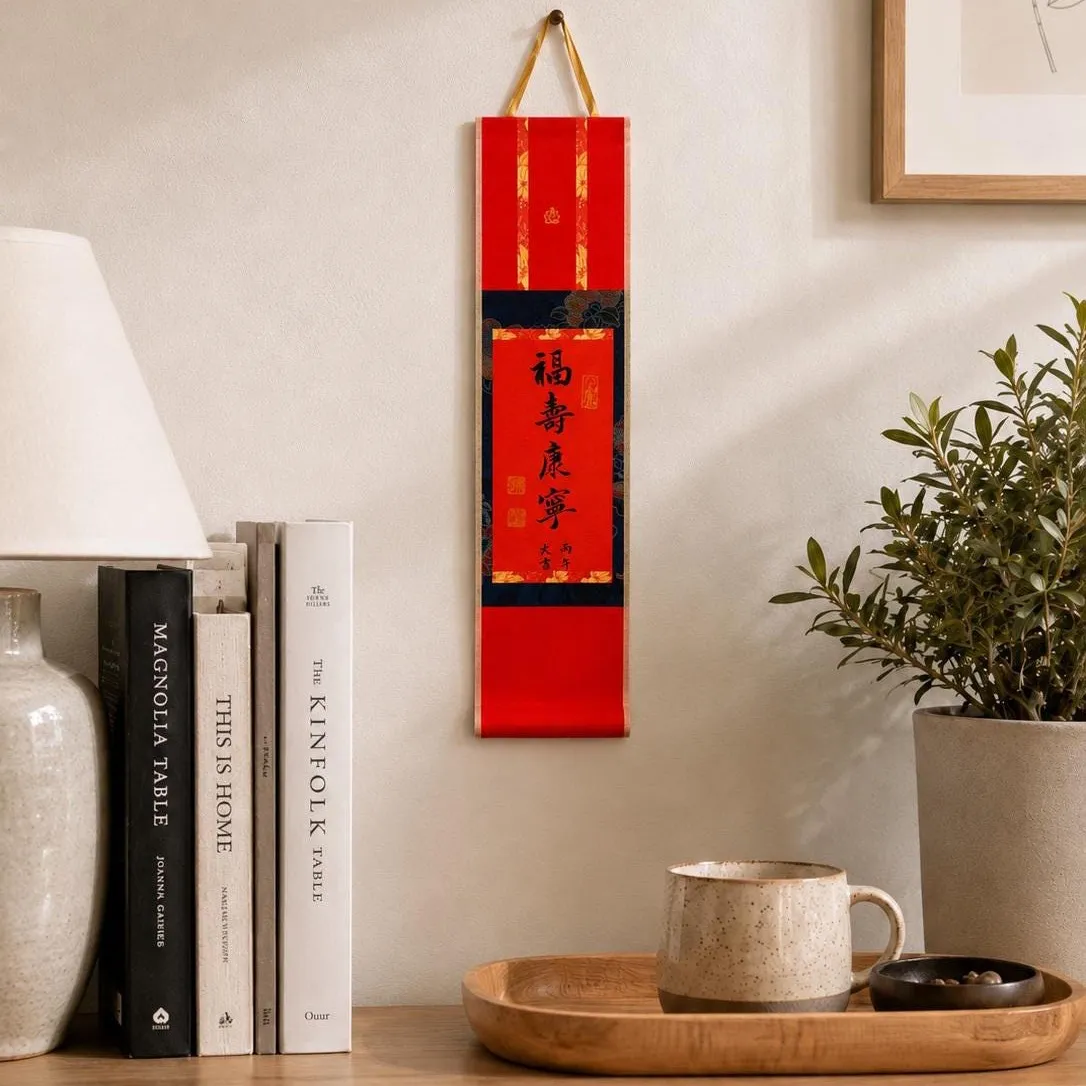
Photo shows a sample — yours will be brushed with 花好月圆, or any character you choose.
Wall Scroll — for walls & housewarmingsfrom $38→ -
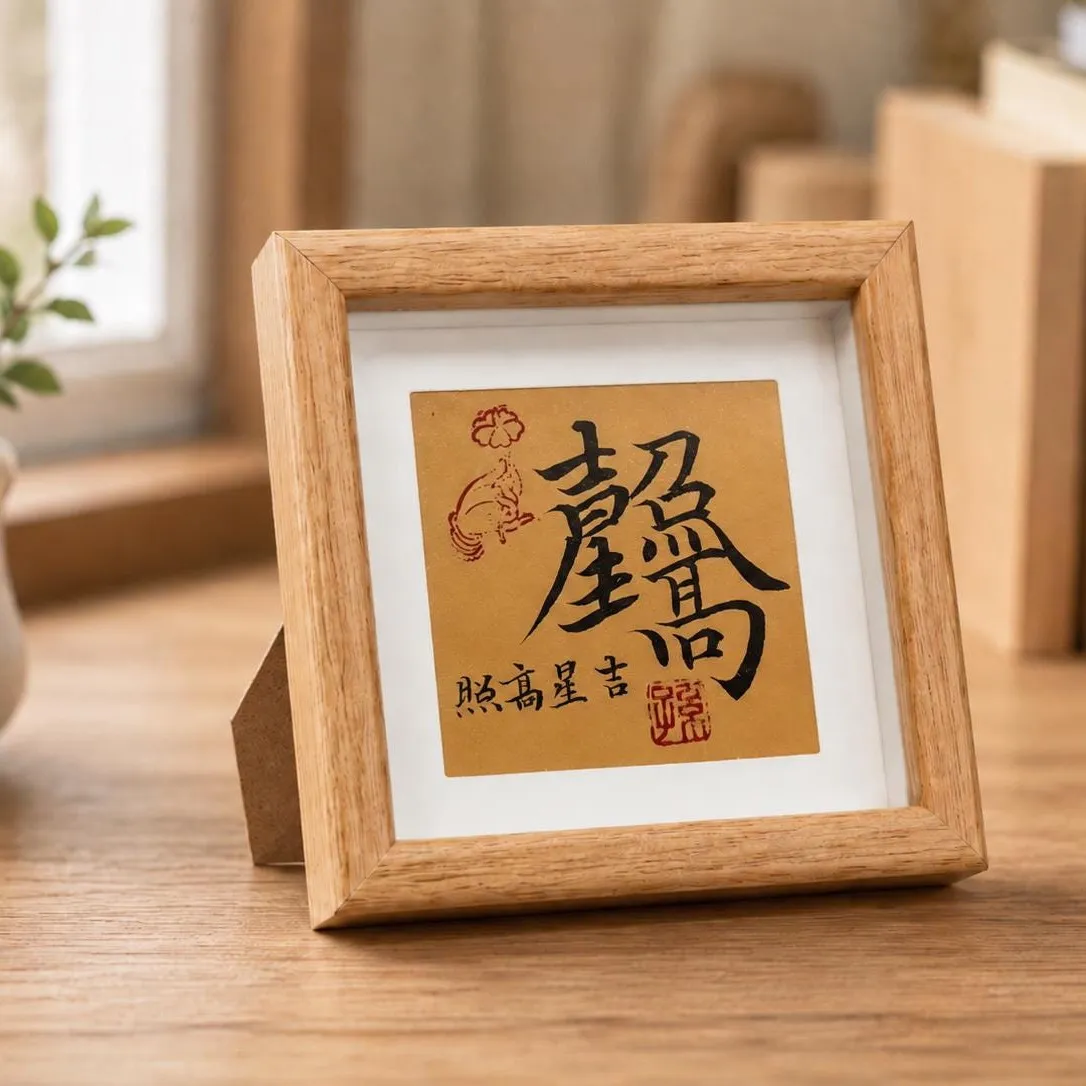
Photo shows a sample — yours will be brushed with 花好月圆, or any character you choose.
Desk Frame — for desks, studies & studiosfrom $44→ -
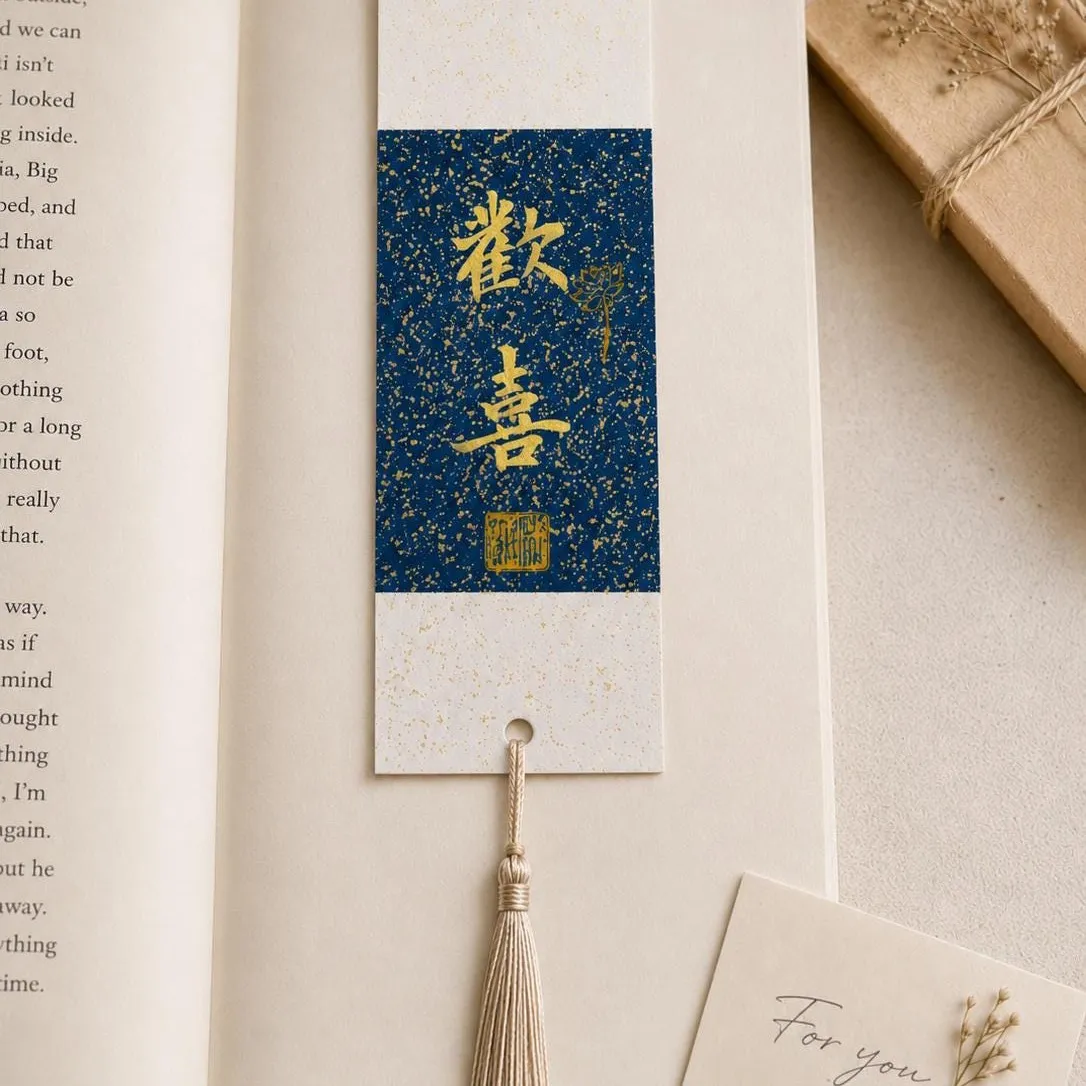
Photo shows a sample — yours will be brushed with 花好月圆, or any character you choose.
Bookmark — for readers & small thank-yousfrom $14→
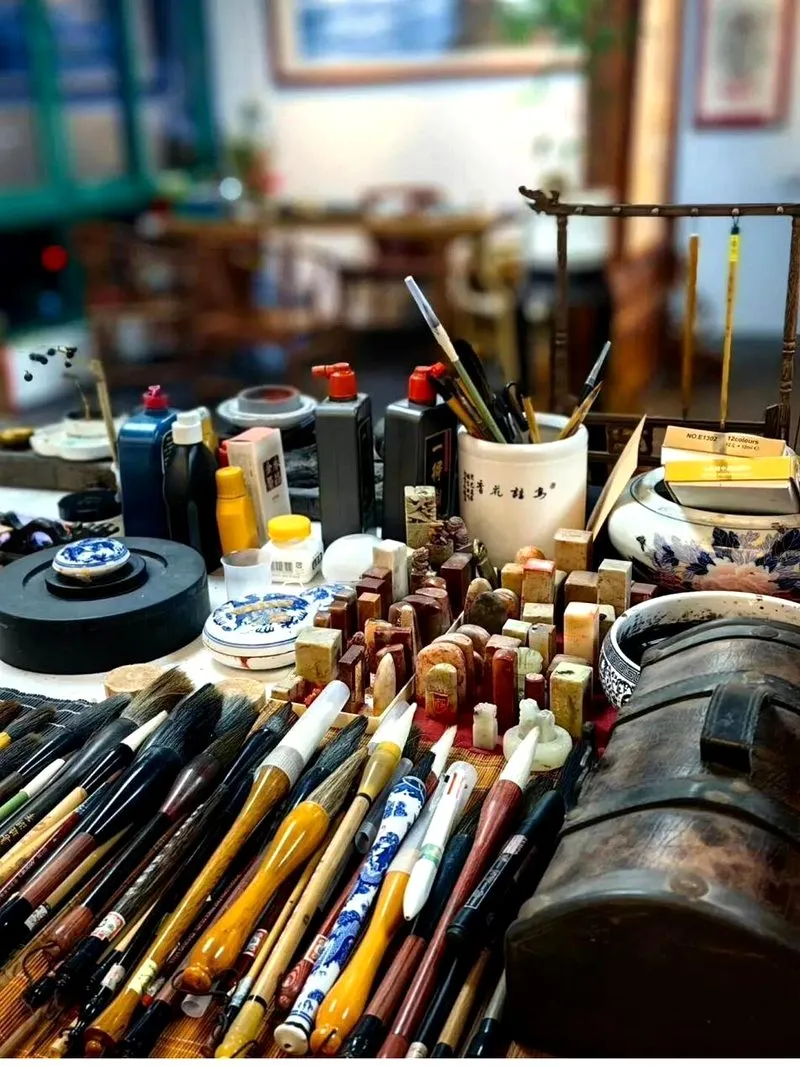
What people said after it arrived.
-
The item is fantastic. The customer service was genuine. Thanks!
— M.Verified purchase · from our Etsy shop reviews · -
They were great they gave me exactly what I asked for and then some. Thank you!!
— G.Verified purchase · from our Etsy shop reviews · -
It is well designed and customized. My daughter loves it. Amazing gift for family’s d friends
— S.Verified purchase · from our Etsy shop reviews ·
Each "花好月圆" is hand-brushed by FuBlessings on rice paper.
See 花好月圆 (Huā Hǎo Yuè Yuán) on Etsy →