温 (wēn) — Warmth · Gentleness · Mild Kindness
A single character.
Of all the words for kindness, 温 is the only one that is really a temperature. 善 names goodness as a moral fact; 仁 names benevolence as a principle; 慈 names the protective love that flows downward, from elder to child. 温 names what any of these feel like to the person standing in front of you. A warm person in the Chinese sense is not necessarily the most virtuous one in the room, but the one whose presence is easiest to be near: mild, even, never running hot or cold.
That quality runs through the way Chinese describes people at their best. 子贡 summed up Confucius in five words and led with 温; the Classic of Poetry fixed the image for good with 温其如玉, gentle as jade — warm to the touch, smooth to be near. A 温柔 manner, a 温和 temperament, a person who is 温润如玉: these are among the highest things you can say about how someone carries themselves. And the warmth is never weakness. The Analects is careful on this point — 温而厉, warm yet stern. The warm person is the one whose firmness never turns cold, not the one who has no firmness at all.
A hand-brushed 温 by FuBlessings is the gift for the person whose warmth is the first thing anyone names about them — the mother whose presence felt like being warmed, the partner whose tenderness became the steady temperature of a shared life, the grandparent people are simply glad to sit beside. It does not wish them anything. It names what they have given everyone around them all along: care that stays even, and asks nothing back.
- warmth of manner
- gentleness
- mild, even kindness
- the felt temperature of someone's care
- hot The opposite extreme. 温 is mild warmth — body temperature, not heat (热). Its whole character is that it never runs hot.
- kind Kindness names the intention; 善 names it as moral goodness. 温 names how that kindness registers to others — the warmth they actually feel in your presence.
- soft Softness yields. 温 does not — Confucius was 温而厉, warm yet stern. Warmth can sit beside firmness; softness cannot.
The short arms are the point: these readings don’t reach it.

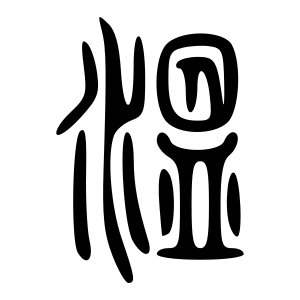
- 氵 waterThe water radical. The full character 溫 was first the name of a river in the southwest; the water side is a fossil of that origin, kept long after the meaning shifted to warmth.
- 昷 the bowl of care (meaning + sound)A person enclosed (囚) above a vessel of food (皿) — a meal offered to someone confined. China's first dictionary glossed it as 仁, benevolence: 'giving food to a prisoner.' This is where the warmth actually lives.
character
- 温暖 wēn nuǎn warmth — both the physical kind and the warmth of feeling cared for
- 温柔 wēn róu gentle and tender — warmth in how someone treats you
- 温和 wēn hé mild and even-tempered — said of a person's nature or a climate
- 温润 wēn rùn warm and smooth, like jade — the classical ideal of a cultivated character
- 温故知新 wēn gù zhī xīn to warm over the old and find the new in it — Confucius on learning
The Story Behind the Character
The oldest layer of this character has nothing to do with weather. The element at its heart, 昷, shows a person shut inside a walled enclosure (囚) with a vessel of food set before them (皿) — a hand offering a meal to someone confined. China's first dictionary (说文解字, c. 100 CE) glossed 昷 in a single word: 仁也 — benevolence, "giving food to a prisoner." Warmth, in the character's earliest reading, was not a temperature at all. It was an act of care directed at someone who could not repay it.
The water radical 氵 came later, and by an accident of geography. The same dictionary defines the full character 溫 not as "warm" but as the name of a river — 溫水 — that rose in the southwest and joined a larger stream. For a time, the warmth lived in 昷 and the river in 溫. When 昷 fell out of everyday writing, 溫 quietly absorbed both its sound and its meaning, and the river name became the word for gentle warmth. The simplified form 温 keeps the same two parts: water beside the bowl of food once offered through the bars.
What the character settled into is a very particular kind of warmth — mild, never hot. 温 is body-temperature warmth, the warmth you feel standing near a kind person rather than a fire. That sense of warmth-as-manner was fixed early: the Classic of Poetry's 温其如玉, "gentle as jade," gave China its lasting image of the warm person — not dazzling, not cold, but smooth and warm to be near. The bowl of food offered through the bars and the warmth of a well-tempered character turn out to be the same thing: care that stays even, and asks nothing back.
Classical lines
- roughly 400 years
- c. 600 BCE 《诗经·秦风·小戎》
- c. 500 BCE 《论语·述而》
- c. 200 BCE 《礼记·聘义》
言念君子,温其如玉。 When I think of my lord, he is gentle as jade.
A woman remembering the man away at war. The line gave Chinese its most enduring image of warmth in a person — 温润如玉, warm and smooth as jade — the standard a cultivated character has been measured against ever since.
子温而厉,威而不猛,恭而安。 The Master was warm yet stern, dignified but not fierce, respectful yet at ease.
The disciples' portrait of Confucius leads with 温. It is the answer to anyone who mistakes warmth for softness: 温 sits comfortably beside 厉 (sternness). The warm person is not the one who never says no, but the one whose firmness never turns cold.
夫昔者君子比德于玉焉:温润而泽,仁也。 The gentleman of old compared his virtue to jade: warm, smooth, and lustrous
this is benevolence. — The Book of Rites assigns each quality of jade to a human virtue, and gives its warmth (温润) to 仁, benevolence. It is the same equation the character's oldest form already made: warmth is care made visible.
Why This Character Matters
The same character that means warm kindness also means to gently reheat — and the overlap is not a coincidence. 温故知新 (Analects) is to warm over what you have already learned and find something new in it; 温书 is to review your lessons; 温酒 is to warm wine to drinking temperature. In every case the heat is low and sustained, never scorching — it brings something back to life without burning it. The warmth of 温 as a human quality works the same way: steady, mild, and patient rather than intense.
When 子贡 was asked how Confucius learned what was happening in every state he visited, he answered with five words: 温良恭俭让 — warm, good, respectful, frugal, deferential — and put 温 first. To be 温 in the Confucian sense is not to be meek; it is to carry a warmth so even that people open up to you without being asked. Paired with jade in 温润如玉, it became the quiet ideal of the cultivated person: someone you are simply glad to stand near.
A few characters live near "温" but mean something quieter, sharper, or more specific. Here's how to tell them apart.
the warmth others feel in your manner — benevolence made visible
benevolence itself — the principle of care, before it is felt
how kindness registers — the warmth in someone's presence
goodness as a moral quality — being good, whether or not it feels warm
warmth — the quality that makes a person easy to be near
refinement — the cultivated taste that makes a person admired
温 names the temperature of a mother's care rather than its quantity — the warmth you felt in the room before you had a word for it.
- 温 names the temperature of a mother's care rather than its quantity — the warmth you felt in the room before you had a word for it. It is more specific than 爱 (which names the love itself) and warmer than 慈 (which can stay dignified and distant). For the mother whose defining quality was that being near her felt like being warmed, not the grand gestures but the steady, mild warmth that never ran hot or cold.
- For the person whose warmth is the first thing anyone says about them. 温 on a birthday is recognition rather than wish — it names a quality the recipient already carries and that others have felt for years. Best when the warmth is genuinely characteristic: the friend, parent, or partner people describe as easy to be around long before they describe anything else.
- Not the heat of new romance but the warmth that outlasts it. 温 is the quality the Classic of Poetry compared to jade — 温其如玉, gentle as jade, warm to the touch and smooth to be near. For a partner whose tenderness has become the steady temperature of a shared life, it says something 爱 cannot: not how much, but how it feels to be loved by you.
Mom · Wife · Grandparent · or yourself
Looking for a name? See Western names written in Chinese →
-
What does 温 (wēn) mean?
温 (wēn) is the Chinese character for warmth, gentleness, mild kindness. Of all the words for kindness, 温 is the only one that is really a temperature. 善 names goodness as a moral fact; 仁 names benevolence as a principle; 慈 names the protective love that flows downward, from elder to child. 温 names what any of these feel like to the person standing in front of you. A warm person in the Chinese sense is not necessarily the most virtuous one in the room, but the one whose presence is easiest to be near: mild, even, never running hot or cold. The same character that means warm kindness also means to gently reheat — and the overlap is not a coincidence. 温故知新 (Analects) is to warm over what you have already learned and find something new in it; 温书 is to review your lessons; 温酒 is to warm wine to drinking temperature. In every case the heat is low and sustained, never scorching — it brings something back to life without burning it. The warmth of 温 as a human quality works the same way: steady, mild, and patient rather than intense.
-
What occasions is 温 given for?
温 is traditionally given for Mother's Day, Birthday, Valentine's Day. 温 names the temperature of a mother's care rather than its quantity — the warmth you felt in the room before you had a word for it. It is more specific than 爱 (which names the love itself) and warmer than 慈 (which can stay dignified and distant). For the mother whose defining quality was that being near her felt like being warmed, not the grand gestures but the steady, mild warmth that never ran hot or cold. For the person whose warmth is the first thing anyone says about them. 温 on a birthday is recognition rather than wish — it names a quality the recipient already carries and that others have felt for years. Best when the warmth is genuinely characteristic: the friend, parent, or partner people describe as easy to be around long before they describe anything else.
-
Who brushes the 温 calligraphy?
FuBlessings hand-brushes each 温 (Wēn) to order, in ink on rice paper — never printed, never repeated.
Bring 温 home — choose how you'd like it brushed.
-
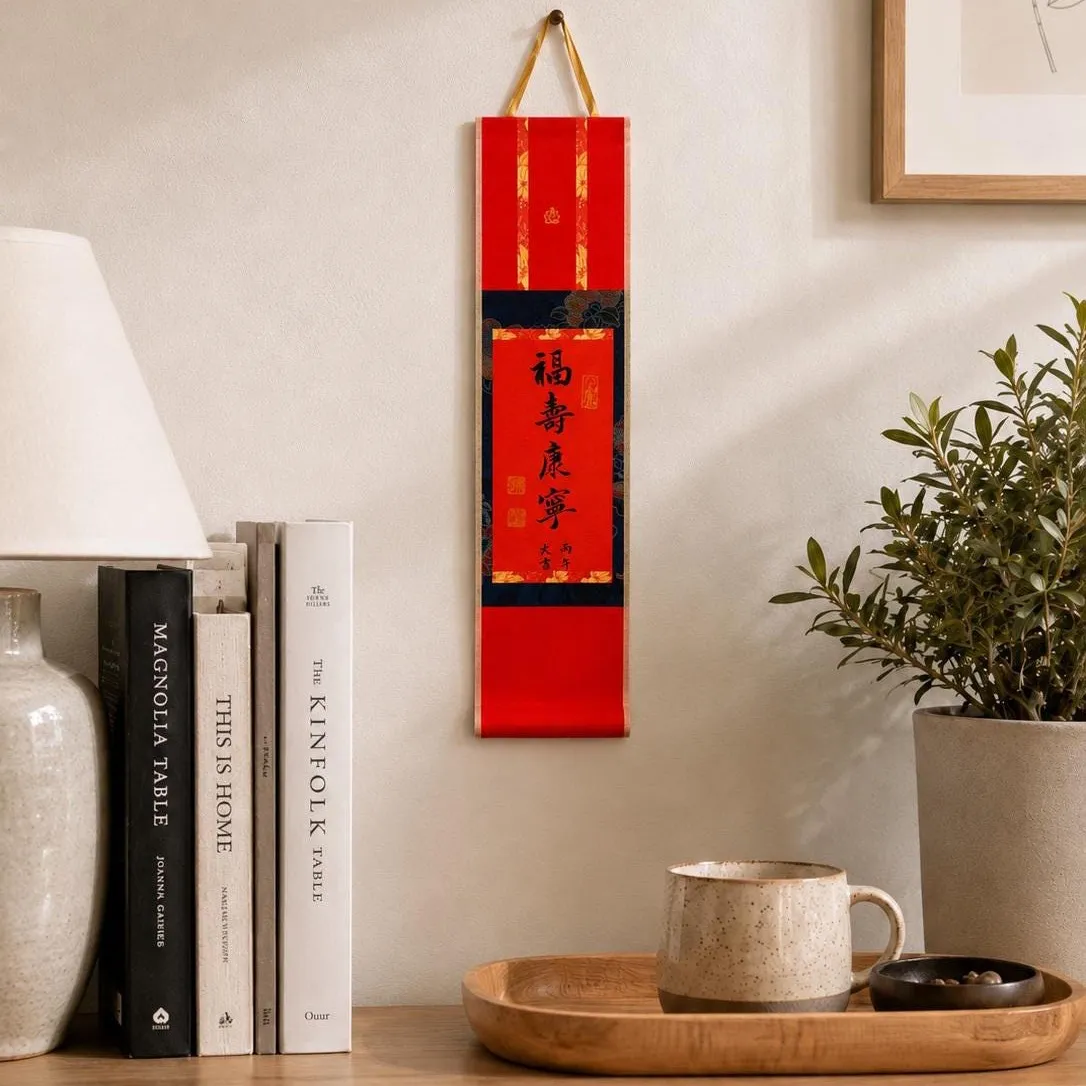
Photo shows a sample — yours will be brushed with 温, or any character you choose.
Wall Scroll — for walls & housewarmingsfrom $38→ -
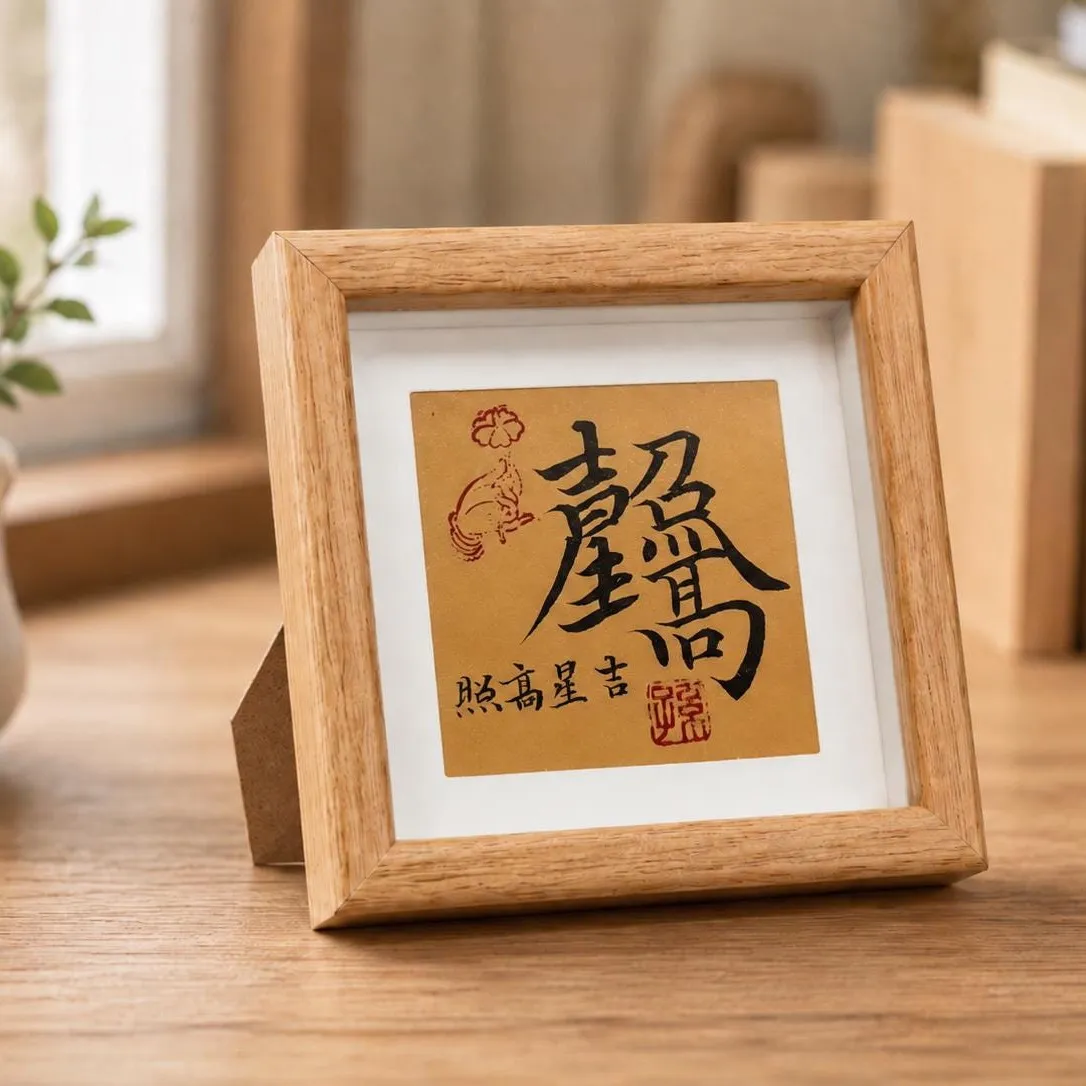
Photo shows a sample — yours will be brushed with 温, or any character you choose.
Desk Frame — for desks, studies & studiosfrom $44→ -
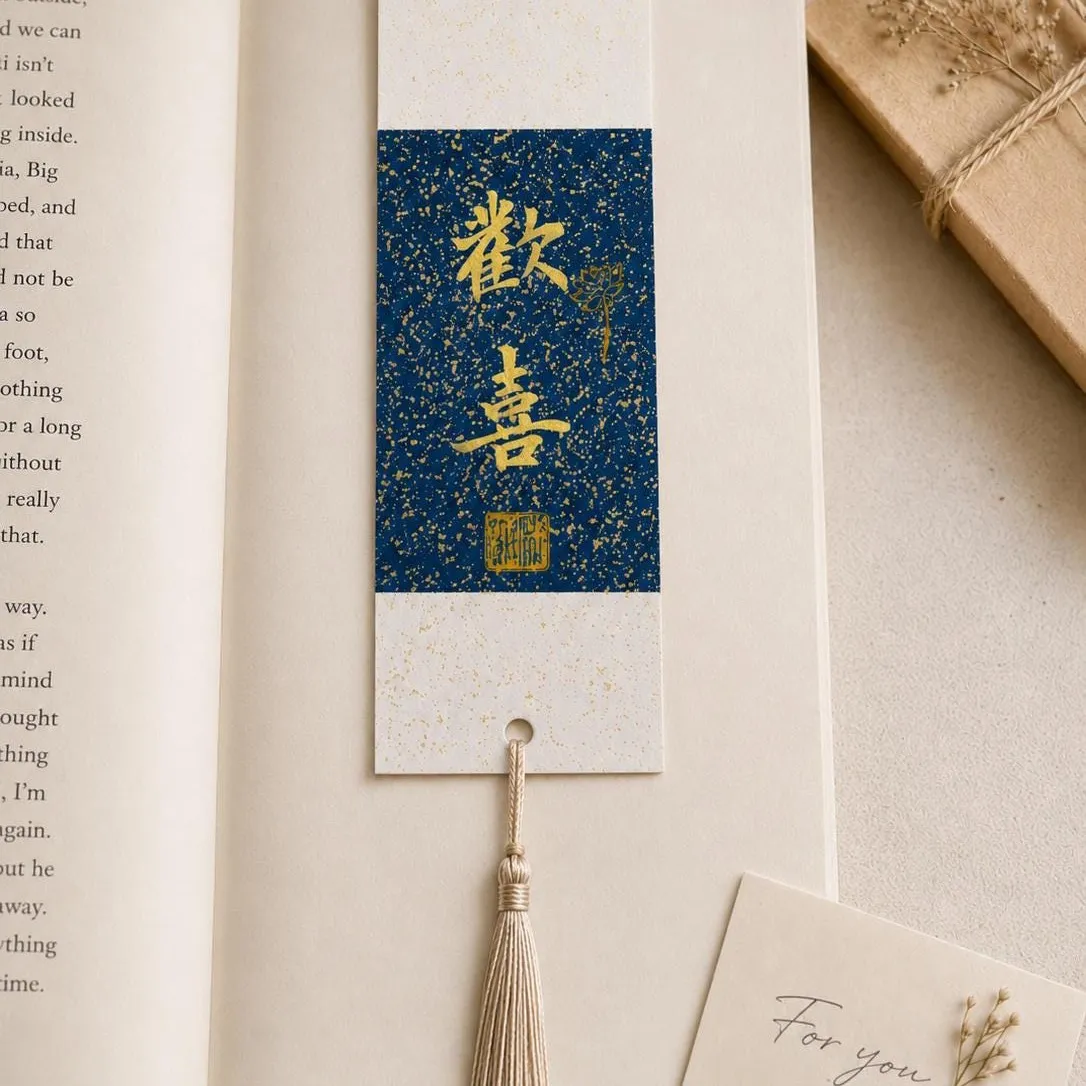
Photo shows a sample — yours will be brushed with 温, or any character you choose.
Bookmark — for readers & small thank-yousfrom $14→

What people said after it arrived.
-
The item is fantastic. The customer service was genuine. Thanks!
— M.Verified purchase · from our Etsy shop reviews · -
They were great they gave me exactly what I asked for and then some. Thank you!!
— G.Verified purchase · from our Etsy shop reviews · -
It is well designed and customized. My daughter loves it. Amazing gift for family’s d friends
— S.Verified purchase · from our Etsy shop reviews ·
Each "温" is hand-brushed by FuBlessings on rice paper.
See 温 (Wēn) on Etsy →