Xing Fu Mei Man (幸福美满) — Happy · Complete · A Life Both Blessed and Full
A 4-character phrase, not a single character.
Xìng fú měi mǎn (幸福美满) is a four-character Chinese phrase for a couple’s life both happy and full. It joins 幸福 (xìng fú) — happiness as good fortune, well-being arrived and harm kept away — to 美满 (měi mǎn), a home good and filled to the brim. 祝你们幸福美满 says that wish twice, as fortune and as fullness. 美满 alone is the two-character verdict on a home. 福 (fú) is blessing as a whole good life, of which a happy home is one chamber. 阖家幸福 blesses the household; this phrase blesses the couple. You would not wish a business a 幸福美满 year — 圆满 fits there. FuBlessings hand-brushes 幸福美满 in Shenzhen, ink on rice paper — living craft, never printed.
See 美满 → · See 福 → · See 阖家幸福 →
- a couple's happy, complete life together — 祝你们幸福美满
- the four-character close of a wedding toast
- a marriage both blessed and full
- domestic happiness that is fortunate as well as complete
- 美满 美满 is the two-character core — a home good and full, completeness measured as happiness. 幸福美满 fronts it with 幸福, adding the note of fortune: not only that the home is full but that the couple were lucky in it, spared the worst. The four-character form is the toast; the two-character word is the plain verdict.
- 阖家幸福 阖家幸福 is addressed to the whole household — everyone inside, no one missing — and wishes a family a good life. 幸福美满 is addressed to the couple, the two the marriage joins; it blesses a union rather than a household, which is why it belongs to the wedding and the anniversary.
- 圆满 圆满 is completeness as a closed circle, right for any finished thing — a meeting, a deal, a ceremony. 幸福美满 is completeness as a happy shared life, reserved for a couple and a home; it asks not whether the circle closed but whether the two inside it were happy and lucky.
The short arms are the point: these readings don’t reach it.
- 幸福 happiness as good fortune — well-being that is both full and unthreatened幸 is the luck of harm passed over (《说文》: 吉而免凶也, 'auspicious, and sparing the ominous'); 福 is blessing as fullness, the brimming vessel raised at the altar. Together, a happiness that has arrived and that misfortune has stayed away from.
- 美满 a home good and filled to the brim — completeness measured as happiness美 (羊 over 大; 《说文》: 甘也, sweet) supplies the goodness of what fills a life; 满 (滿), a vessel level with its lip, supplies the fullness. Not merely full, but full of what is fine — the particular completeness of a happy household.
characters
- 幸福 xìng fú happiness as an enduring, fortunate well-being — modern Chinese's ordinary word for a whole, contented life
- 美满 měi mǎn happy and complete — said above all of a home: 婚姻美满, 家庭美满
- 阖家幸福 hé jiā xìng fú happiness for the whole family — the household-directed cousin of this couple-directed phrase
- 百年好合 bǎi nián hǎo hé a hundred years of loving accord — the wedding-scroll poetry 幸福美满 speaks plainly
- 白头偕老 bái tóu xié lǎo grow old together to white hair — the long duration a happy, full marriage hopes to reach
Cinnabar marks the characters 幸福美满 actually contains. The dark row is a relative by meaning or by sound, not one shared stroke.
The Story Behind the Character
A four-character auspicious phrase is usually built the way a couplet is — two two-syllable halves set side by side, each carrying weight, the pair ringing louder than either alone. 幸福美满 is that construction at its plainest: it joins 幸福 and 美满, two disyllables that each already mean "a happy, complete life," and lets them stand together. The doubling is not redundancy but emphasis — the phrase says the same warm wish twice, from two directions, the way a toast lingers on the thing it most wants to be true.
The two directions matter. 幸福 blesses from the side of fortune. 幸 is defined in the 《说文解字》 as 吉而免凶也 — "auspicious, and sparing the ominous" — so it carries at its root the luck of harm passed over; 福 is the brimming vessel raised at the altar, the 示 of the spirits beside 畐, a jar full of grain and wine, blessing pictured as fullness offered and returned. [See 福 →](/library/fu/) Together 幸福 is well-being both arrived and unthreatened. 美满 blesses from the side of fullness: 美, whose oldest form stacks 羊 over 大 and which 《说文》 reads 甘也, "sweet," began as good-to-eat and widened to good in every sense [See 美 →](/library/mei/); 满 (滿) is a vessel filled level with its lip, brimming in the most physical way. So one half wishes a life lucky and whole, the other a home good and full.
Neither half comes from a single classical source, and neither does the four-character phrase — 幸福美满 is folk speech, the everyday blessing painted on wedding scrolls and stitched into red couplets rather than quarried from a canonical text. It settled early onto one subject: the marriage and the household. 幸福 became modern Chinese's ordinary word for "happiness" — a 幸福的家庭, a happy family; 美满 narrowed to the particular completeness of a home. Fused, they became the standard four-character close of a wedding toast, the fullest thing an elder can wish a couple in a single breath: be happy, be whole, be lucky, be full.
Classical lines
- roughly 1,000 years
- c. 900 BCE 《诗经·大雅·假乐》
- c. 9th c. BCE 《诗经·小雅·常棣》
- c. 1st–2nd c. CE 《古诗十九首·客从远方来》
假乐君子,显显令德。宜民宜人,受禄于天。 Fine and joyous is the noble one, shining his excellent virtue; he suits the people, suits all others, and receives his blessing from Heaven.
The poem sets joy (假乐, 'fine and glad') beside 受禄于天, blessing granted from above — the very two ideas 幸福 fuses: happiness that is also good fortune, gladness that is also grace received.
宜尔室家,乐尔妻帑。 Bring accord to your home and household, take joy in your wife and children.
One of the oldest and plainest wishes for domestic happiness in Chinese verse: not wealth or rank but a home in harmony and delight taken in one's own family, exactly the full and happy household 美满 names inside 幸福美满.
以胶投漆中,谁能别离此。 Glue dropped into lacquer
who could ever pull the two apart? — A Han poem's image for a bond that cannot be undone; the wife sews a 'quilt of shared joy' and describes her marriage as glue mixed into lacquer. It is the unbreakable union 幸福美满 wishes to last the whole of a life.
Why This Character Matters
Look at a pair of red wedding scrolls and the large characters running down them are likely 百年好合 or 龙凤呈祥 — the couplet's poetry. But the wish the family actually speaks aloud, in the toast and on the smaller banner, is 幸福美满: 祝你们幸福美满, four syllables that close more wedding speeches than almost any rival. It is the everyday blessing rather than the literary one, and it says the whole thing at once — happy, complete, blessed, full.
The phrase keeps close company with two near neighbors and divides the warmth with them. 美满 is the two-character core — a home good and full — and 幸福美满 is simply that core with 幸福 set before it, adding the note of fortune: happiness that is also luck, a home that is not only full but safe from harm. 阖家幸福, its other cousin, is addressed to the whole household, everyone inside and no one missing; 幸福美满 is addressed to the couple, the two whom the marriage joins. So one blesses a family and the other a union — which is why 幸福美满 belongs to the wedding table, the anniversary, and the Valentine's card, wherever the wish is for two people specifically to have a full and fortunate life together.
A few characters live near "幸福美满" but mean something quieter, sharper, or more specific. Here's how to tell them apart.
the happiness of a marriage specifically — a couple's full, fortunate life built together
blessing as the whole good life — health, peace, family, a good end — of which a happy home is one warm chamber
a whole shared life come out good and full, measured over the years two people spend together
the fineness of one thing or person — the good of a face, a character, a thing done well; 幸福美满 is a life made of it
祝你们幸福美满 — an elder raises a glass at the wedding table and closes on these four syllables, and the whole room hears the fullest wish a marriage can be sent.
- 祝你们幸福美满 — an elder raises a glass at the wedding table and closes on these four syllables, and the whole room hears the fullest wish a marriage can be sent. Where 百年好合 is the poetry on the red scroll and 美满 is the plain two-word verdict, 幸福美满 is the toast that doubles the blessing: happiness said twice, once as fortune (幸福, well-being with calamity kept away) and once as fullness (美满, a home good and brimming). It asks not one thing of the new marriage but both — that it be lucky and that it be full.
- On an anniversary a couple counts the years they actually lived — and 幸福美满 is what those years are called when they came out both full and unharmed. 美满 alone would say the home was good and complete; 幸福 adds the harder thing, that the two were fortunate in it: the illnesses that passed, the lean stretches survived, the trouble that never came through the door. It is the blessing that quietly grants a marriage can be full and still have needed luck, and wishes the couple both at once — 婚姻幸福美满, a long life together that stayed happy and stayed safe.
- Most Valentine's words reach for romance; 幸福美满 answers with something steadier and larger — a whole shared life rather than a single feeling. It is the wish a couple grows toward: a home together that turns out full (美满) and fortunate (幸福), harm kept from its door across all the ordinary years. Given on a day usually about passion, it names the quieter thing passion hopes to become — not the heat of one evening but a life built and kept, happy and complete. The gift for the partner you mean to spend that whole life with, not only the night.
Husband · Wife · New Couple · or yourself
Looking for a name? See Western names written in Chinese →
-
What does each character in Xìng fú měi mǎn (幸福美满) mean?
Xìng fú měi mǎn (幸福美满) is four characters, not one. 幸 (xìng) is the luck of harm passed over — China's first dictionary reads it 吉而免凶也, "auspicious, and sparing the ominous." 福 (fú) is blessing as fullness, the brimming vessel. Together 幸福 is modern Chinese's ordinary word for a whole, contented life: happiness that is also good fortune. 美 (měi) is good and fine (甘也, "sweet"). 满 (mǎn) is a vessel filled level with its lip. Together 美满 is a home good and full — completeness measured as happiness. The four-character phrase sets the two halves side by side, so the wish arrives from both directions at once: that a couple be lucky, and that their home be full.
-
How is 幸福 different from 福 and from 美满?
These three sit in one phrase, but they are not the same wish. 福 (fú) is blessing as the whole good life — health, peace, family, a good end — of which a happy home is one warm chamber. 幸福 (xìng fú) is the felt, fortunate side of that: well-being arrived and unthreatened, modern Chinese's ordinary word for a contented life. 美满 (měi mǎn) is narrower: a home good and filled to the brim, the two-character verdict on a marriage. 幸福美满 (Xìng fú měi mǎn) fronts 美满 with 幸福 — the couple's four-character toast, not 福 for anyone, not 美满 as the plain two-word verdict, and not 阖家幸福, which blesses a household rather than the two a marriage joins.
-
When do people say or give Xìng fú měi mǎn (幸福美满)?
Xìng fú měi mǎn (幸福美满) belongs to moments about two people. A wedding toast closes on 祝你们幸福美满; a red invitation (请柬) or banner carries it; an anniversary card offers it as the verdict the years have earned; a Valentine's card names the far shore a shared life hopes to reach. Where 百年好合 is the poetry on the red scroll and 美满 is the two-word verdict, 幸福美满 is the spoken toast that doubles the wish: fortune and fullness at once. You would not wish a business a 幸福美满 year — 圆满 fits there. Recipients here are a husband, a wife, a new couple, or yourself. FuBlessings brushes each piece to order in Shenzhen for one recipient and one occasion.
-
Who brushes 幸福美满, and how is it different from a printed poster?
Each 幸福美满 (Xìng fú měi mǎn) is hand-brushed to order by FuBlessings in ink on rice paper — never printed, never repeated. A poster repeats a file. This is living craft from a Shenzhen studio: one sitting, with stroke weight and spacing that belong to that sitting only. Four characters need wall width; they sit poorly as tattoo flash, and they are first a spoken toast and a couple's inscription, not a stencil. FuBlessings is not a print shop. Hang it as wall art for the two people the phrase addresses. One gift, for one occasion — a wedding table, an anniversary, or a Valentine's wall — brushed once and not copied.
Bring 幸福美满 home — choose how you'd like it brushed.
-
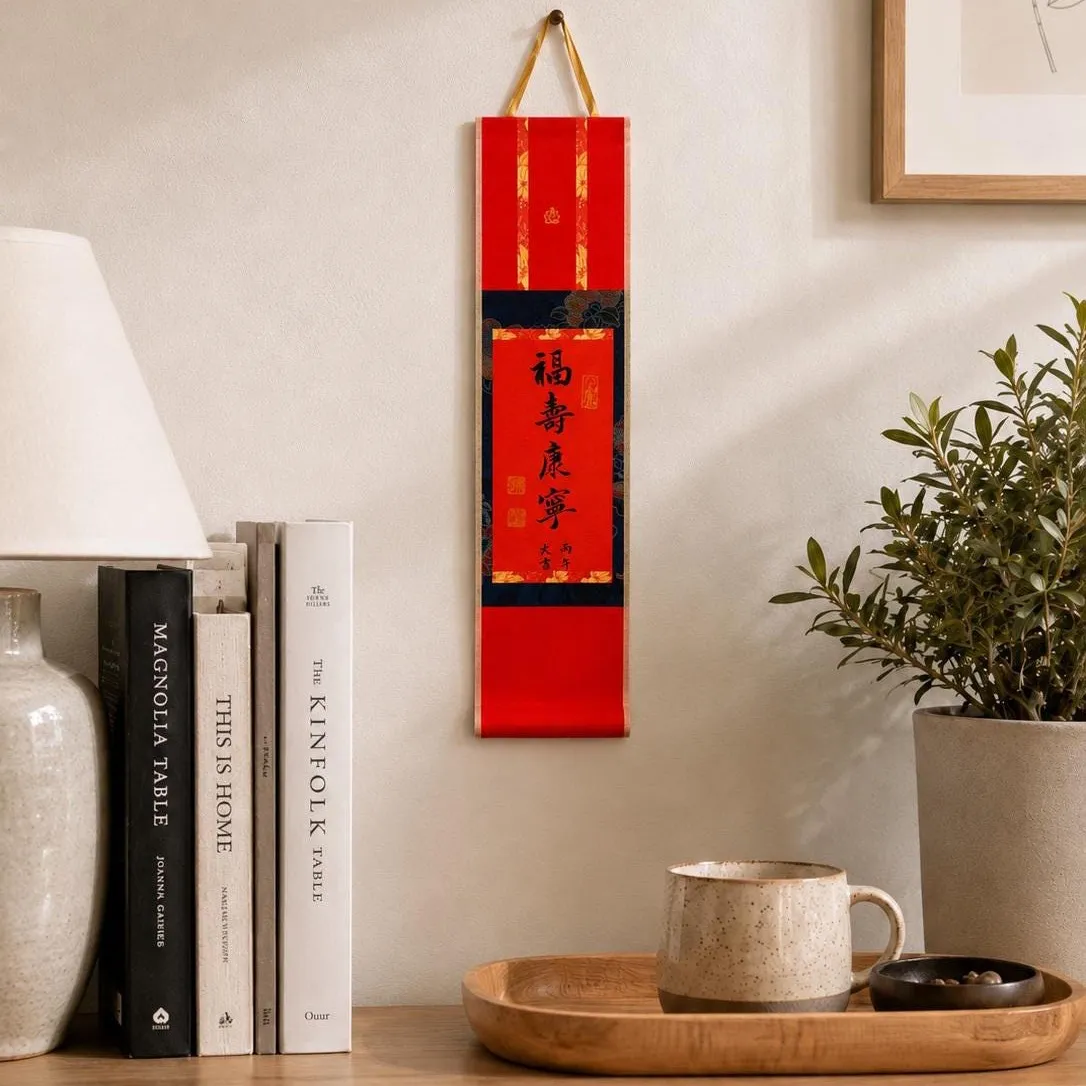
Photo shows a sample — yours will be brushed with 幸福美满, or any character you choose.
Wall Scroll — for walls & housewarmingsfrom $38→ -
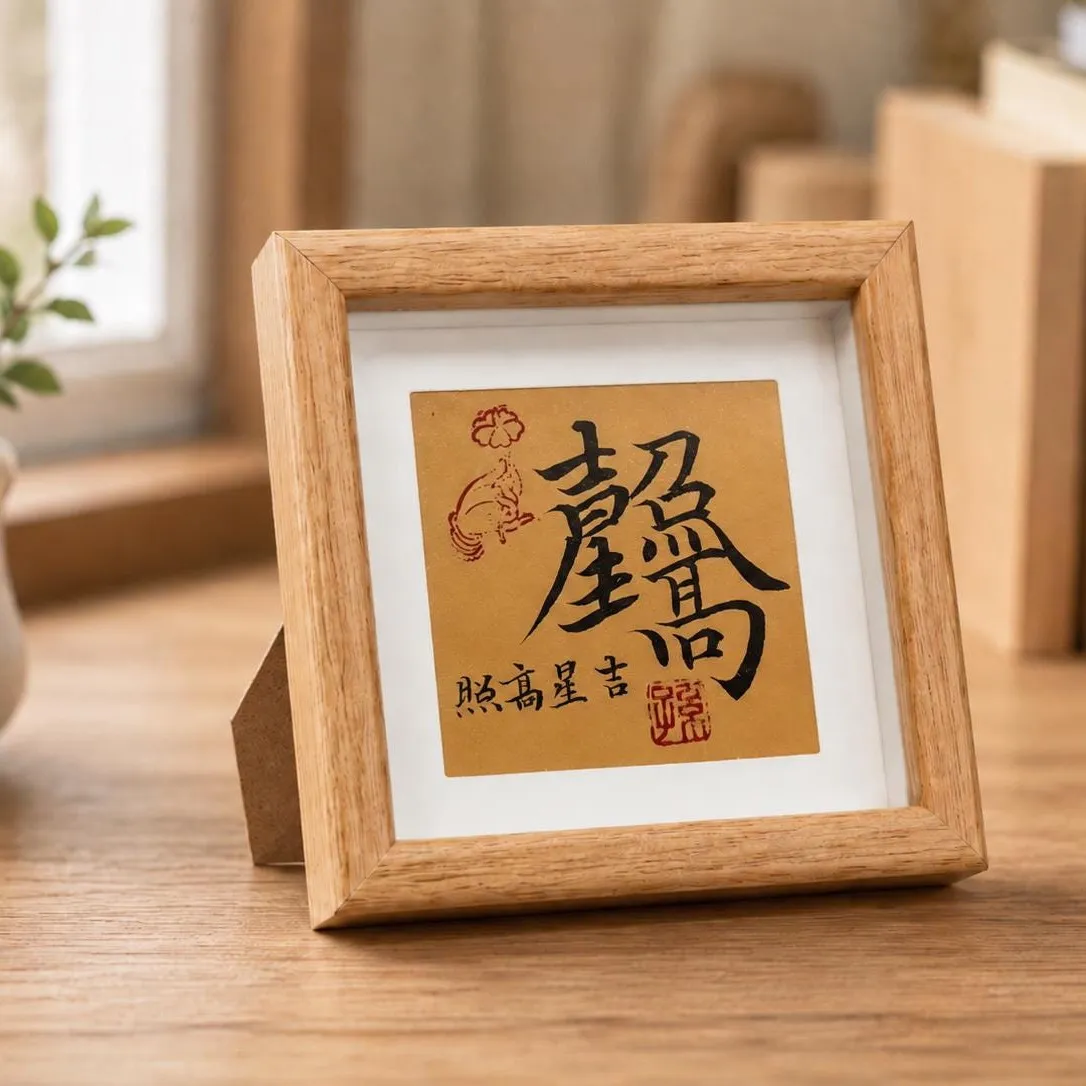
Photo shows a sample — yours will be brushed with 幸福美满, or any character you choose.
Desk Frame — for desks, studies & studiosfrom $44→ -
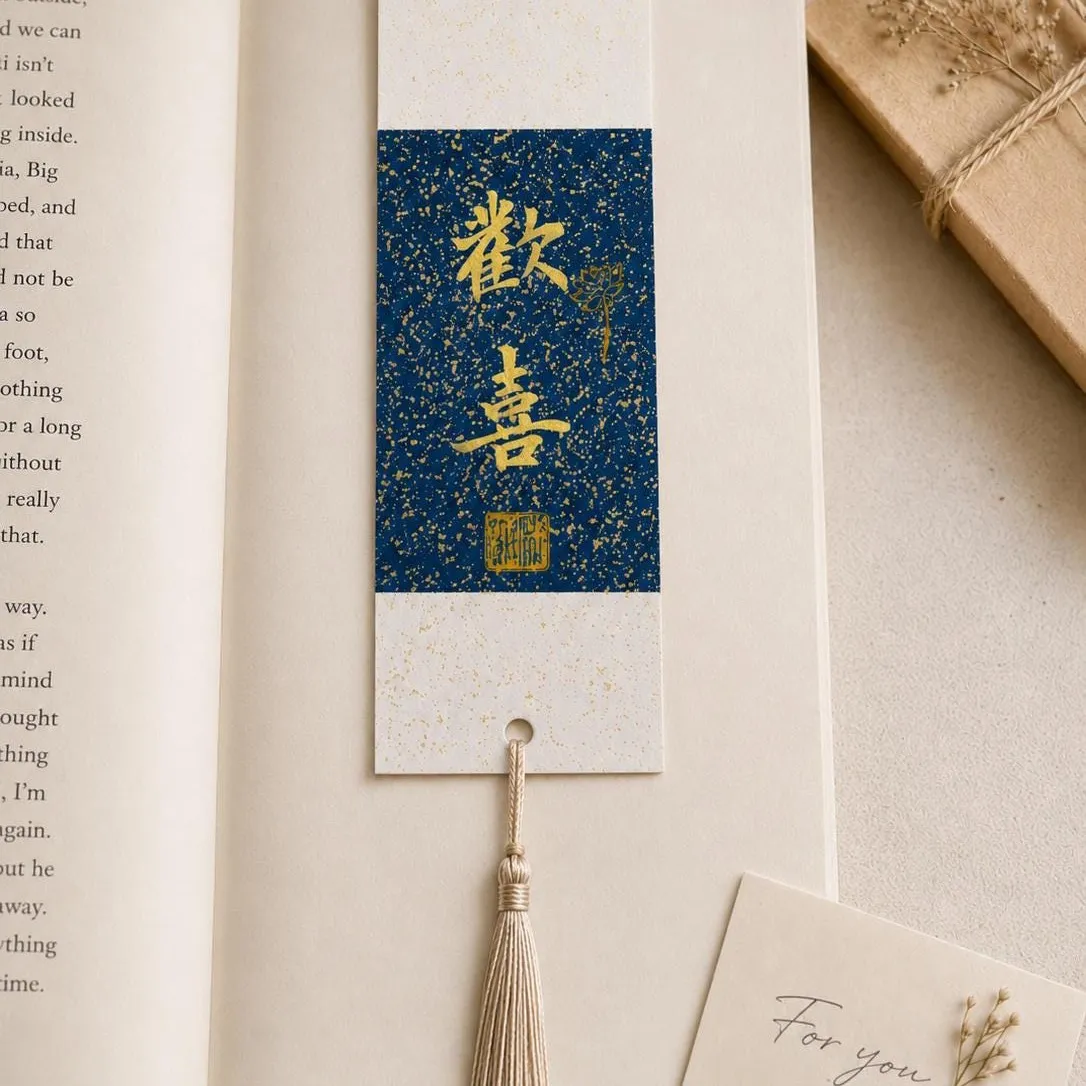
Photo shows a sample — yours will be brushed with 幸福美满, or any character you choose.
Bookmark — for readers & small thank-yousfrom $14→
What people said after it arrived.
-
The item is fantastic. The customer service was genuine. Thanks!
— M.Verified purchase · from our Etsy shop reviews · -
They were great they gave me exactly what I asked for and then some. Thank you!!
— G.Verified purchase · from our Etsy shop reviews · -
It is well designed and customized. My daughter loves it. Amazing gift for family’s d friends
— S.Verified purchase · from our Etsy shop reviews ·
Each "幸福美满" is hand-brushed by FuBlessings on rice paper.
See 幸福美满 (Xìng Fú Měi Mǎn) on Etsy →