美满 (měi mǎn) — Happy · Fulfilled · A Life Full and Good
A two-character word, not a single character.
祝你们婚姻美满 — at a Chinese wedding an elder lifts a glass and speaks those four syllables, and everyone at the table hears the whole wish in them: a marriage that is happy and full. The word joins 美, good and fine, to 满, filled to the brim, so it asks for a home not merely full but full of what is worth having. It belongs to one thing above all — the life two people build under a single roof — and it puts to that life the question a closed circle never can: not whether it finished, but whether the people inside it were happy. See 美 →
The word almost never leaves the household. A wedding scroll closes with 幸福美满; a parent’s plainest wish for a grown child is 家庭美满, a warm and whole home; a life shared under one roof is called 生活美满 when it turns out well. You would not call a business deal or a public ceremony 美满 — 圆满 fits there instead — and that narrowness is exactly the word’s warmth: it names the one kind of completeness measured not by whether something finished but by whether a shared life turned out good.
A hand-brushed “美满” by FuBlessings carries that wish in two characters — a home happy and full, good as well as complete. Given at a wedding, an anniversary, or a Valentine’s it says the thing every couple hopes to hear looking back: that the life they made together came out brimming, and brimming with the right things.
- a marriage that is happy and complete — 婚姻美满
- a household warm and whole — 家庭美满
- a shared life brimming with good — 幸福美满
- domestic happiness that is full as well as good
- 圆满 圆满 is completeness as shape — a circle closed, nothing left out — and can crown any finished thing: a meeting, a deal, a ceremony. 美满 is completeness as happiness, reserved almost wholly for a marriage or a home; it asks not whether the circle closed but whether the people inside it were happy.
- perfect Perfection implies a flawless surface. 美满 is about a life full of good things, not one without flaw — a home can be 美满 and still know hard years; what makes it 美满 is that on balance it came out full and warm.
- prosperous 富足 and 兴旺 name abundance of means. 美满 names abundance of happiness — a home may be modest and still be 美满 if the life inside it is good and full; wealth is neither the measure nor the point.
The short arms are the point: these readings don’t reach it.
- 美 good / fine / beautiful — the quality of what fills the life羊 (sheep) over 大 (large). 《说文》: 甘也 — sweet; the sheep chiefly furnishes the table, so 美 began as good-to-eat and widened to good in every sense. It supplies not the fullness but the worth of what a home is full of.
- 满 full / brimming / filled to the rim — the measure of the life氵 (water) beside 㒼 (a vessel filled to its lip). Fullness in the most physical sense, level with the brim. Where 圆满 pairs 满 with a closed circle, 美满 pairs it with goodness — full, and full of what is fine.
characters
- 圆满 yuán mǎn round and complete — completeness as a closed circle, of any finished thing; 美满 is its warmer, home-bound cousin
- 幸福美满 xìng fú měi mǎn happy and fulfilled — the standard four-word close of a wedding toast, 美满 with 幸福 before it
- 美好 měi hǎo fine and good — the everyday word for a life or a time that is lovely, 美 paired with 好 rather than 满
- 和美 hé měi harmonious and good — a home at peace and well, near neighbor to 美满 with harmony in place of fullness
- 美满姻缘 měi mǎn yīn yuán a happy, fated match — the set phrase for a marriage both well-matched and full of joy
The Story Behind the Character
Fill a bowl to the brim and you have 满 — but a bowl can brim with anything. 美满 answers the question that matters at a table: filled, yes, and filled with good. That is what sets it apart from its near-twin 圆满, which draws a circle and closes it — completeness as shape, right for a meeting that went off cleanly or a deal that left no one short. 美满 is completeness as happiness, and it belongs to what a circle cannot measure: whether the life inside it was warm. A ceremony can be 圆满; only a marriage, a home, a life is 美满.
美 supplies the goodness. Its oldest form stacks 羊 (a sheep) over 大 (large), and 《说文》 reads it 甘也 — "sweet" — noting that of the six domestic animals the sheep is the one that chiefly furnishes the table, so 美 began as good-to-eat and widened to good in every sense: fine, lovely, admirable. 满 (滿) supplies the fullness. Its 氵 is water and its 㒼 a vessel filled to the lip, so the character means brimming in the most physical way — level with the rim, unable to take one more drop. Set together they wish a thing be filled, and filled with good: not merely full, but full of what is fine.
The pair settled early onto one subject above all — the household. By the time it was common speech, 美满 had narrowed from "happy and complete" in general to the particular happiness of a marriage and a home: 婚姻美满, a marriage happy and full; 家庭美满, a household warm and whole; 幸福美满, the two-word blessing painted on wedding scrolls and stitched into New Year couplets. Where 圆满 can crown any finished thing, 美满 belongs to the life two people build together — which is why it is the word an elder reaches for when wishing a couple well.
Classical lines
- roughly 900 years
- c. 900 BCE 《诗经·大雅·既醉》
- c. 9th c. BCE 《诗经·小雅·常棣》
- c. 1st c. BCE 《礼记·昏义》
妻子好合,如鼓瑟琴。 When wife and children live in loving accord, it is like the music of zither and lute.
One of the oldest images of domestic harmony in Chinese verse; a household in tune is likened to two instruments played together, exactly the accord 美满 wishes a home.
昏礼者,将合二姓之好,上以事宗庙,而下以继后世也。 The marriage rite unites the good of two families
above, to serve the ancestral temple; below, to continue the generations. — The classical definition of marriage names its aim as 合二姓之好, joining the good of two houses; 美满 is that joining come true, the good of both proving full.
既醉以酒,既饱以德。君子万年,介尔景福。 Filled with wine, filled with kindness
may the noble one live ten thousand years, and great blessing be given him. — A banquet blessing built on 既饱, "filled to the full"; the poem wishes a life brimming with good and long in years, the fullness 满 carries and 美满 hopes a home will hold.
Why This Character Matters
Look at a pair of red wedding scrolls and the large characters running down them are likely 百年好合 and 永结同心 — the couplet's poetry. But the wish a family actually repeats, in speech and on the smaller banner above the door, is 美满: 婚姻美满, 家庭美满, 幸福美满. It is the everyday blessing, plainer than the verse on the scrolls, and it says the whole thing in two syllables — good, and complete.
The word almost never wanders from home. You will hear 婚姻美满 of a marriage, 家庭美满 of a household, 生活美满 of a life shared under one roof, and 幸福美满 as the standard four-character close of a wedding toast — but you would not call a business deal or a public ceremony 美满, where 圆满 fits instead. That narrowness is the point: 美满 is reserved for the one kind of completeness that is measured not in whether a circle closed but in whether the people inside it were happy. A home is 美满 when it is full and the fullness is good.
A few characters live near "美满" but mean something quieter, sharper, or more specific. Here's how to tell them apart.
domestic happiness specifically — a marriage or home that is happy and full
the whole good life — health, peace, family, a good end — of which a 美满 home is one warm chamber
the settled fullness of a happy home, measured over a shared life
joy as felt in the moment — the lightness and delight of an hour, whether or not a whole life is full
An anniversary looks back on the years a couple has actually lived, and 美满 is the word for the verdict a good marriage earns — not just that it lasted but that it was happy, a home full of the right things.
- An anniversary looks back on the years a couple has actually lived, and 美满 is the word for the verdict a good marriage earns — not just that it lasted but that it was happy, a home full of the right things. Where 圆满 wishes the circle closed and 长寿 wishes the years themselves, 美满 wishes the texture of them: a shared life that turned out warm as well as whole, sweet as well as long. It is the plainest praise a marriage can be paid — 婚姻美满, a marriage happy and full.
- A wedding is the day a marriage begins, and 美满 is the single hope every guest and elder holds for it: 婚姻美满, that the union prove happy and complete. The word joins 美 — good, fine, the beauty of a thing done well — to 满, filled to the brim, so it wishes the new household not only harmony but abundance of it: a life together that comes out full of good things, with nothing sweet left wanting. It is what a red wedding couplet most often promises the couple for the years ahead.
- Valentine's Day celebrates love near its start, and 美满 names the far shore it hopes to reach — not the spark of romance but the settled, brimming happiness of a shared life that turned out well. The wish is domestic and long: not the thrill of the first night but the fullness of a home built together, 幸福美满, happy and complete. It is love grown into a life, and a good one — the beauty of the thing and the fullness of it, arrived at together.
Husband · Wife · New Couple · or yourself
Looking for a name? See Western names written in Chinese →
-
What does 美满 (měi mǎn) mean?
美满 (měi mǎn) is a two-character Chinese word for happy, fulfilled, a life full and good. 祝你们婚姻美满 — at a Chinese wedding an elder lifts a glass and speaks those four syllables, and everyone at the table hears the whole wish in them: a marriage that is happy and full. The word joins 美, good and fine, to 满, filled to the brim, so it asks for a home not merely full but full of what is worth having. It belongs to one thing above all — the life two people build under a single roof — and it puts to that life the question a closed circle never can: not whether it finished, but whether the people inside it were happy. See 美 → The word almost never wanders from home. You will hear 婚姻美满 of a marriage, 家庭美满 of a household, 生活美满 of a life shared under one roof, and 幸福美满 as the standard four-character close of a wedding toast — but you would not call a business deal or a public ceremony 美满, where 圆满 fits instead. That narrowness is the point: 美满 is reserved for the one kind of completeness that is measured not in whether a circle closed but in whether the people inside it were happy. A home is 美满 when it is full and the fullness is good.
-
What occasions is 美满 given for?
美满 is traditionally given for Anniversary, Wedding, Valentine's Day. An anniversary looks back on the years a couple has actually lived, and 美满 is the word for the verdict a good marriage earns — not just that it lasted but that it was happy, a home full of the right things. Where 圆满 wishes the circle closed and 长寿 wishes the years themselves, 美满 wishes the texture of them: a shared life that turned out warm as well as whole, sweet as well as long. It is the plainest praise a marriage can be paid — 婚姻美满, a marriage happy and full. A wedding is the day a marriage begins, and 美满 is the single hope every guest and elder holds for it: 婚姻美满, that the union prove happy and complete. The word joins 美 — good, fine, the beauty of a thing done well — to 满, filled to the brim, so it wishes the new household not only harmony but abundance of it: a life together that comes out full of good things, with nothing sweet left wanting. It is what a red wedding couplet most often promises the couple for the years ahead.
-
Who brushes the 美满 calligraphy?
FuBlessings hand-brushes each 美满 (Měi Mǎn) to order, in ink on rice paper — never printed, never repeated.
Bring 美满 home — choose how you'd like it brushed.
-
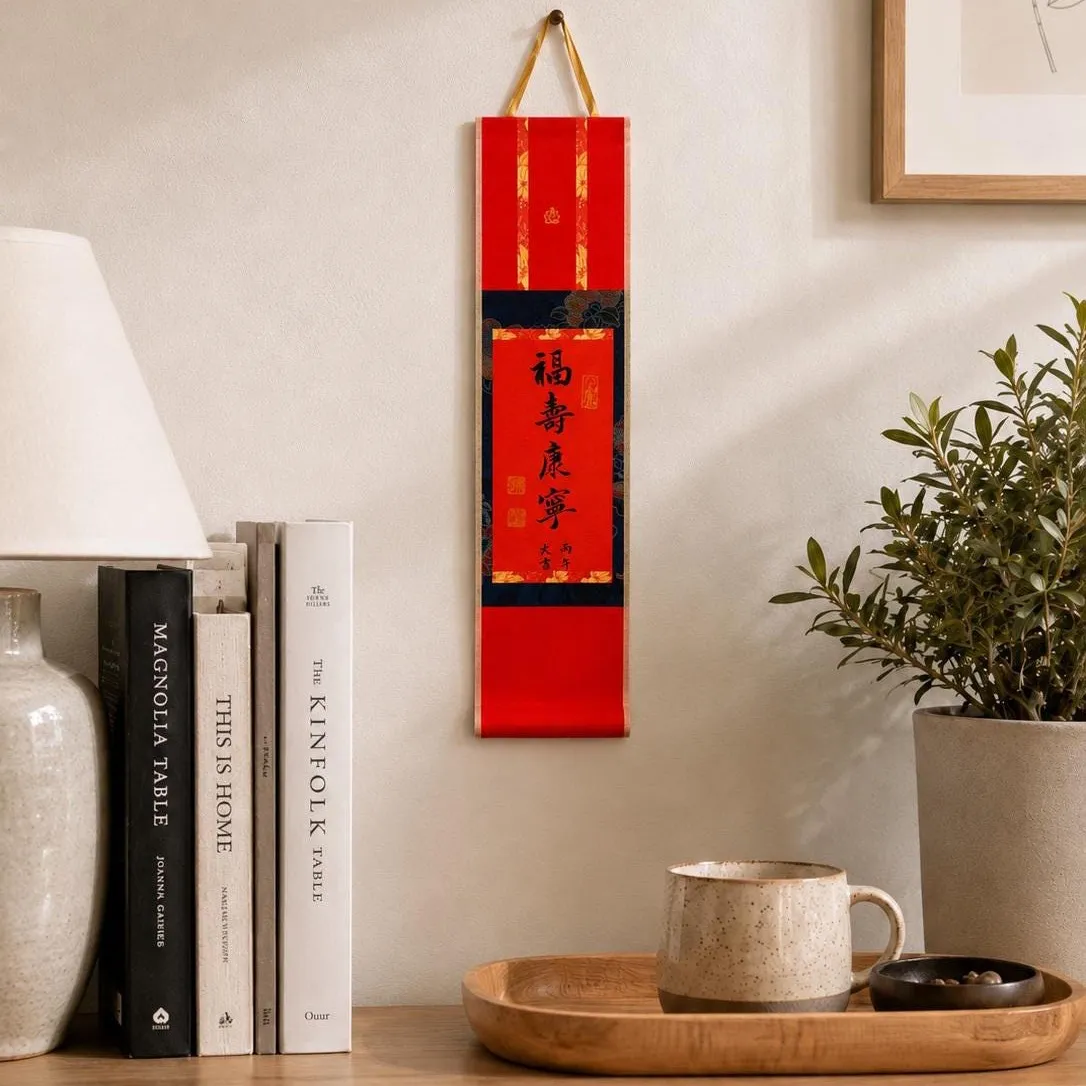
Photo shows a sample — yours will be brushed with 美满, or any character you choose.
Wall Scroll — for walls & housewarmingsfrom $38→ -
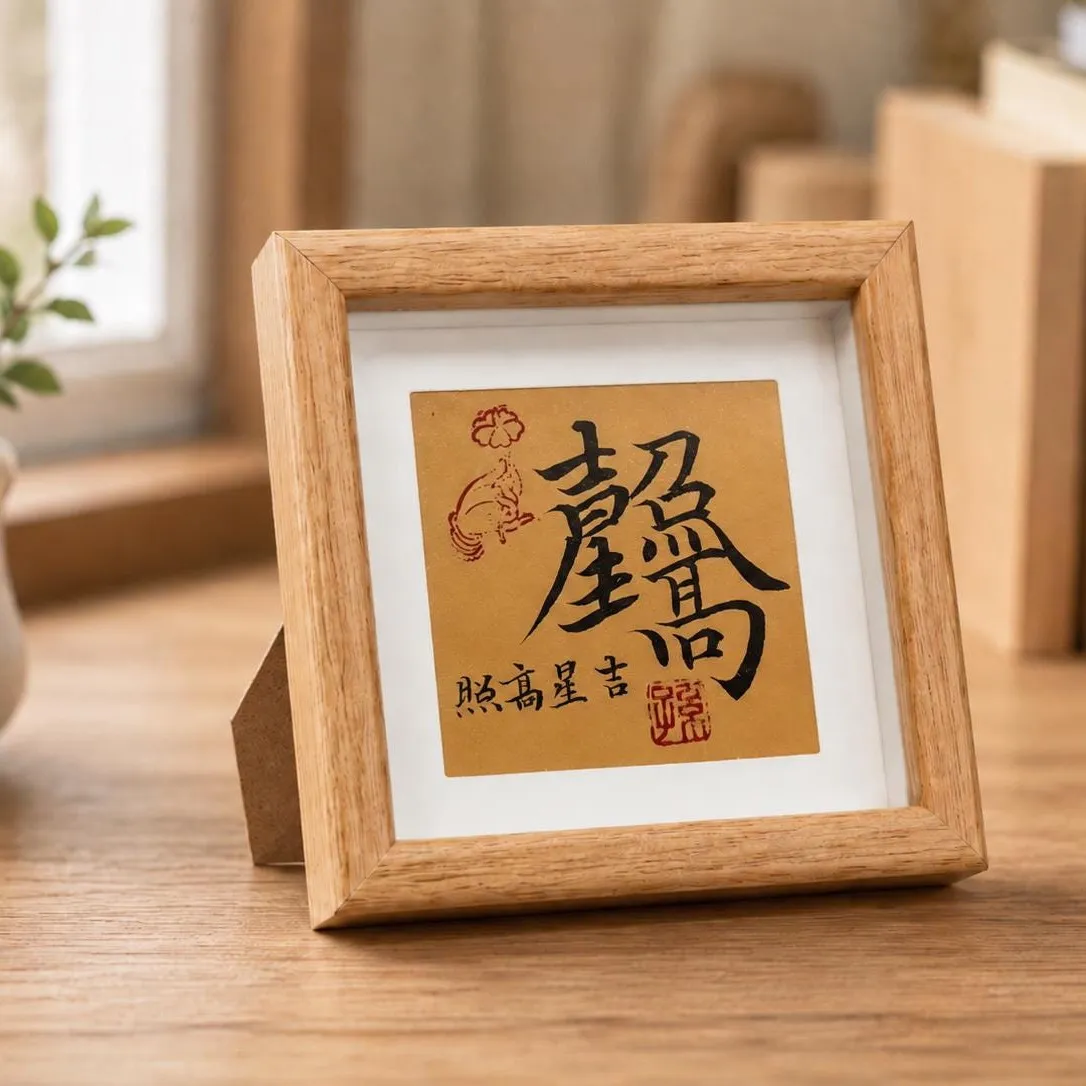
Photo shows a sample — yours will be brushed with 美满, or any character you choose.
Desk Frame — for desks, studies & studiosfrom $44→ -
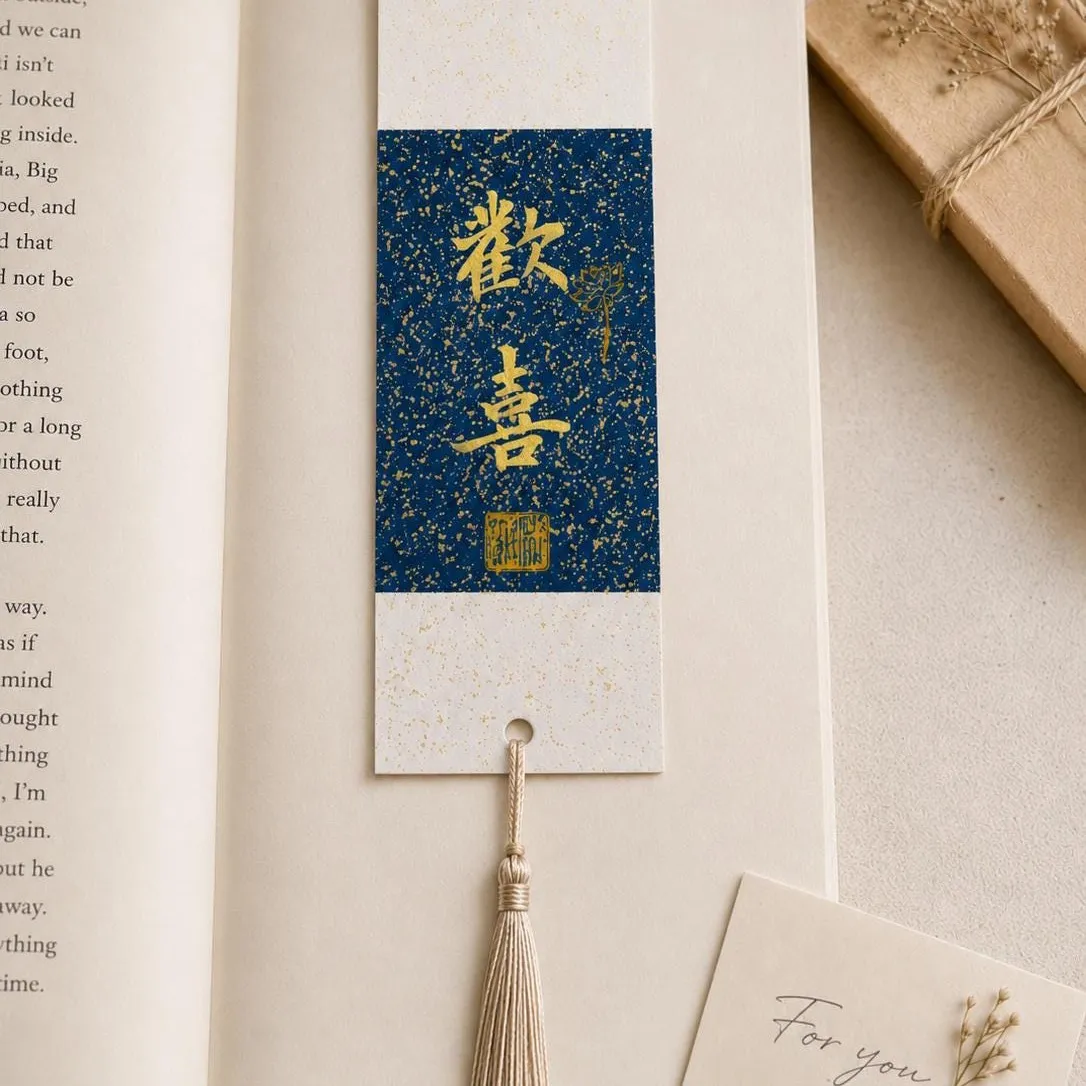
Photo shows a sample — yours will be brushed with 美满, or any character you choose.
Bookmark — for readers & small thank-yousfrom $14→
What people said after it arrived.
-
The item is fantastic. The customer service was genuine. Thanks!
— M.Verified purchase · from our Etsy shop reviews · -
They were great they gave me exactly what I asked for and then some. Thank you!!
— G.Verified purchase · from our Etsy shop reviews · -
It is well designed and customized. My daughter loves it. Amazing gift for family’s d friends
— S.Verified purchase · from our Etsy shop reviews ·
Each "美满" is hand-brushed by FuBlessings on rice paper.
See 美满 (Měi Mǎn) on Etsy →