Bai Nian Hao He (百年好合): A Hundred Years of Harmonious Union
A 4-character phrase, not a single character.
百年好合 is the most demanding of the traditional wedding blessings — and the most honest. Where 花好月圆 names the perfection of the wedding day itself, 和美 asks for harmony to ripen into beauty over time, and 百年偕老 asks simply that the couple grow old together, 百年好合 asks for both: the full span of a life (百年) and the quality of living inside it (好合, genuinely good union). It does not ask for happiness or for romance or for fortune. It asks that the joining (合) remain good (好) — which is the more difficult and more lasting of all the things a marriage can be.
In Chinese wedding culture, 百年好合 appears on the red banners hung at the ceremony, is written on the red packets that guests present to the couple, and is one of the four or five phrases most commonly requested for handwritten calligraphy gifts. At anniversary celebrations — a fifth anniversary, a twenty-fifth, a fiftieth — it resurfaces, no longer as a wish but as a question the years have answered. The most common toast at a milestone anniversary in Chinese families is precisely this phrase, used retrospectively: the couple has demonstrated it; the toast acknowledges the fact.
A hand-brushed “百年好合” by FuBlessings gives the couple the oldest and most complete of the traditional wedding blessings — the one that asks for everything the marriage will be asked to sustain, named in four characters at the beginning. For the new couple on the wedding day, or the partners whose anniversary proves that what was asked for has been given — it is the phrase that covers the full arc.
The Story Behind the Character
At traditional Chinese weddings, red banners carry four standard auspicious phrases; 百年好合 appears on one panel, 百年偕老 on another. The two phrases are often treated as near-synonyms, but they ask for different things. 百年偕老 asks only for longevity: that the couple grows old side by side, that neither is left alone. 百年好合 asks for more — the quality of those years: that across the entire span of a life, the union (合) remains genuinely good (好), not merely intact. It is the more demanding of the two blessings, and the one that requires the most from both people over time.
The character 合 (hé) used in 好合 is not 和 (the harmony of accord between people) but 合 (the joining, the fitting-together). 合 is the character of 契合 (qì hé, to fit perfectly), 合心 (hé xīn, to be of one mind), and the wedding ceremony itself: 合卺 (hé jǐn), the ritual sharing of wine from halved gourds, described in 《礼记·昏义》 as the moment of formal marital union. In 合卺, two separate halves of a gourd become one cup; in 百年好合, the wish is that two separate people remain in that state of fitting-together across an entire lifetime. The 合 in both is the same character, and the same intent.
百年 in Chinese carries a double register: in 百年之后 (after a hundred years), it is a euphemism for death — the end of a life. In a wedding blessing, 百年 is the opposite: the maximum possible span of a human life, the full arc from the ceremony to the end of old age, every year of it named. 百年好合 stakes the wish on the maximum: not just the years of vitality, not just the years that are easy, but the whole span. The traditional phrase understands that the most honest wedding blessing is the one that asks for everything, because anything less is already compromised.
Classical lines
- roughly 300 years
- c. 600 BCE 《诗经·唐风·绸缪》
- c. 600 BCE 《诗经·郑风·女曰鸡鸣》
- c. 300 BCE 《周易·系辞上传》第八章
二人同心,其利断金;同心之言,其臭如兰。 Two people of one heart
their combined strength can cut through metal; their words, from the same heart, are fragrant as orchid. — The Book of Changes naming the specific power of two people in genuine union: the capacity to cut through what neither could alone, and the quality of what passes between them. 好合 asks for this state to last; the verse names what the state, when real, is able to do.
绸缪束薪,三星在天。今夕何夕,见此良人? Bundles of wood bound tight, three stars in the sky above
what night is this, that I see this good person beside me? — The Book of Songs' wedding-night poem, one of the oldest in Chinese literature. The star witnesses, the bound bundles (binding as a metaphor for the marriage's holding), the speaker's almost disbelieving joy: 今夕何夕 — what night is this? 百年好合 asks that the wonder of that first night remain the baseline of the life that follows.
琴瑟在御,莫不静好。 The lutes and zithers in their music
nothing is not quiet and good. — From a poem about an ordinary morning in a long marriage: two people in their daily accord, described not through dramatic declaration but through the sound of music in a house that is at peace. The 静好 (quiet goodness) of this domestic scene is what 百年好合 is, at its most concrete, asking for.
Why This Character Matters
百年好合 is one of only a handful of Chinese phrases that carry the same weight at both the beginning and the end of a marriage. At the wedding, it is prospective — the full-life wish. At the fiftieth anniversary (金婚, the golden wedding), it returns as retrospective measurement: have these fifty years been 好合? The phrase's structure makes it suited for both moments precisely because 好合 is not a feeling (which fades) but a condition (which either holds or does not). Chinese couples who have lasted fifty years often receive 百年好合 as their anniversary toast — at the 金婚, the phrase is no longer a request. It names what the fifty years have demonstrated.
The traditional four-phrase wedding banner set — 百年好合, 百年偕老, 永结同心, 相亲相爱 — covers four different registers of what a marriage needs: the lasting union (百年好合), the growing old together (百年偕老), the joined hearts (永结同心), and the mutual affection (相亲相爱). 百年好合 is considered first among them not because it appears first on the banner but because it is the most comprehensive: it subsumes the others. If the union is genuinely good across a hundred years, the couple is necessarily growing old together, their hearts are joined, and their affection is mutual. Good union is the one condition from which all others follow.
百年好合 is the most direct of the traditional wedding blessings — the one that names both what is being asked for (the union, 好合) and the duration of the ask (the whole span of a life, 百年).
- 百年好合 is the most direct of the traditional wedding blessings — the one that names both what is being asked for (the union, 好合) and the duration of the ask (the whole span of a life, 百年). Unlike 花好月圆, which confirms that the wedding day itself is a perfect moment, 百年好合 looks forward from it: may the union that begins today remain genuinely good for every year that follows.
- For the anniversary when the gift should ask about the union itself, not its products. 百年好合 is specific in a way that 和美 (which names the beauty the harmony has made) and 恒 (which names the constancy of choosing to return) are not: it asks whether the 合 — the fitting-together of two people — has remained genuinely 好 across the years. For the long marriage, it is the question only the years can answer, and the anniversary is the occasion to ask it.
New Couple · Husband · Wife · or yourself
Looking for a name? See Western names written in Chinese →
-
What does 百年好合 (bǎi nián hǎo hé) mean?
百年好合 (bǎi nián hǎo hé) is a 4-character Chinese phrase for a hundred years of harmonious union. 百年好合 is the most demanding of the traditional wedding blessings — and the most honest. Where 花好月圆 names the perfection of the wedding day itself, 和美 asks for harmony to ripen into beauty over time, and 百年偕老 asks simply that the couple grow old together, 百年好合 asks for both: the full span of a life (百年) and the quality of living inside it (好合, genuinely good union). It does not ask for happiness or for romance or for fortune. It asks that the joining (合) remain good (好) — which is the more difficult and more lasting of all the things a marriage can be. 百年好合 is one of only a handful of Chinese phrases that carry the same weight at both the beginning and the end of a marriage. At the wedding, it is prospective — the full-life wish. At the fiftieth anniversary (金婚, the golden wedding), it returns as retrospective measurement: have these fifty years been 好合? The phrase's structure makes it suited for both moments precisely because 好合 is not a feeling (which fades) but a condition (which either holds or does not). Chinese couples who have lasted fifty years often receive 百年好合 as their anniversary toast — at the 金婚, the phrase is no longer a request. It names what the fifty years have demonstrated.
-
What occasions is 百年好合 given for?
百年好合 is traditionally given for Wedding, Anniversary. 百年好合 is the most direct of the traditional wedding blessings — the one that names both what is being asked for (the union, 好合) and the duration of the ask (the whole span of a life, 百年). Unlike 花好月圆, which confirms that the wedding day itself is a perfect moment, 百年好合 looks forward from it: may the union that begins today remain genuinely good for every year that follows. For the anniversary when the gift should ask about the union itself, not its products. 百年好合 is specific in a way that 和美 (which names the beauty the harmony has made) and 恒 (which names the constancy of choosing to return) are not: it asks whether the 合 — the fitting-together of two people — has remained genuinely 好 across the years. For the long marriage, it is the question only the years can answer, and the anniversary is the occasion to ask it.
-
Who brushes the 百年好合 calligraphy?
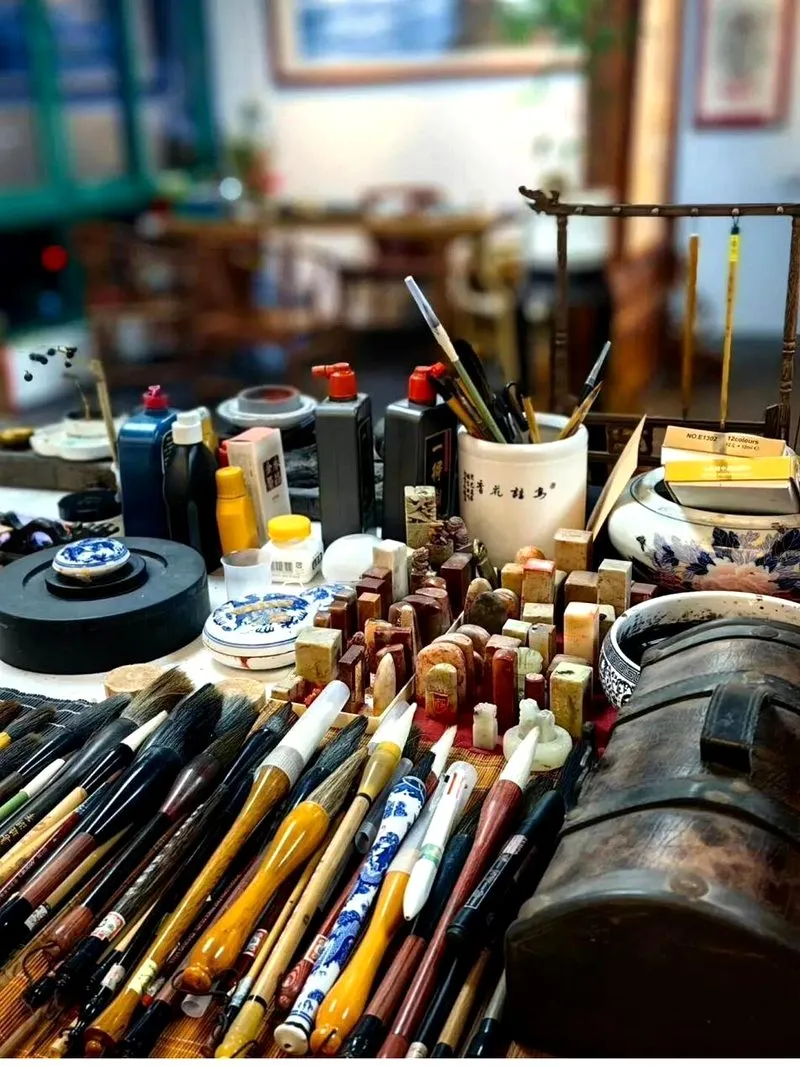
FuBlessings hand-brushes each 百年好合 (Bǎi Nián Hǎo Hé) to order, in ink on rice paper — never printed, never repeated.
Bring 百年好合 home — choose how you'd like it brushed.
-
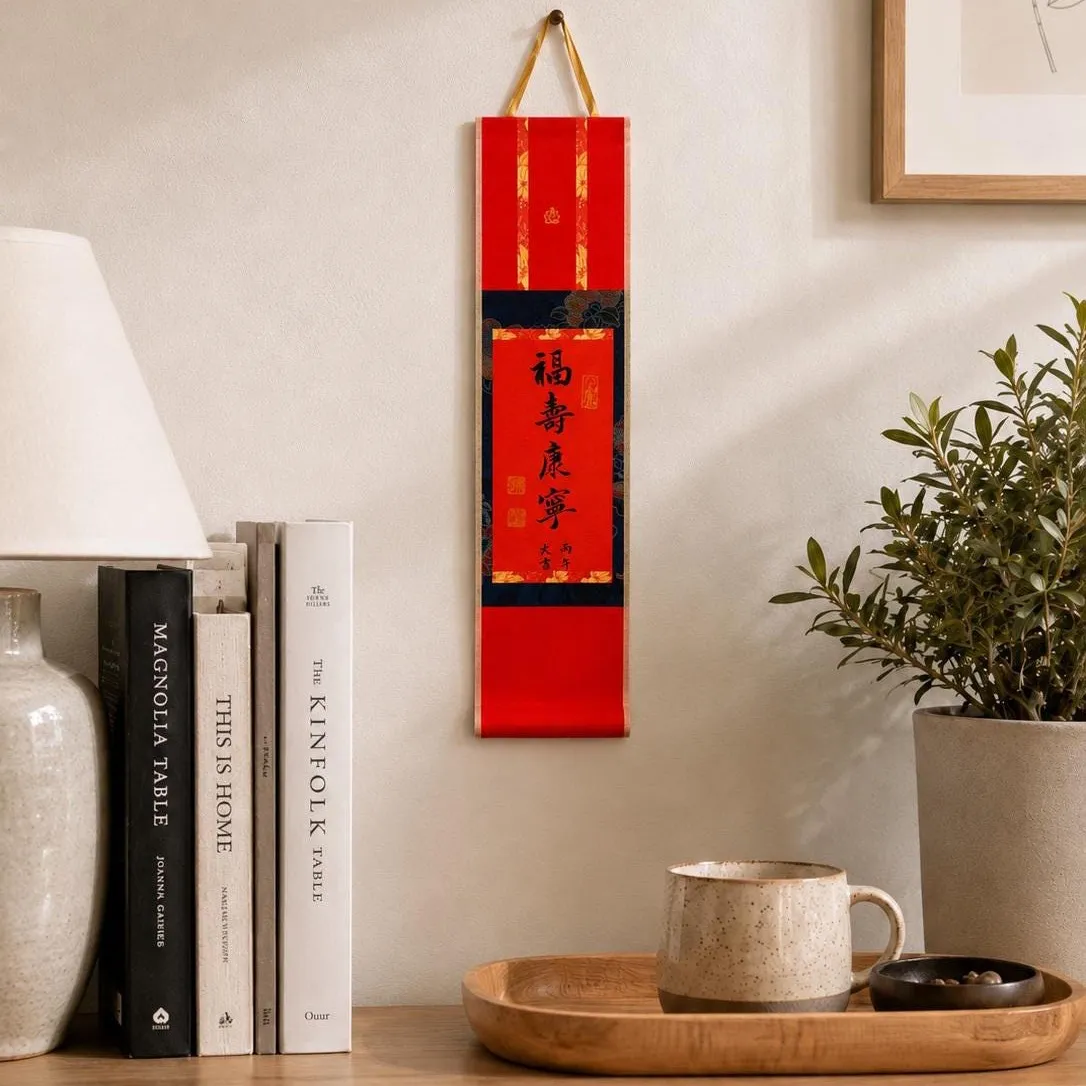
Photo shows a sample — yours will be brushed with 百年好合, or any character you choose.
Wall Scroll — for walls & housewarmingsfrom $38→ -
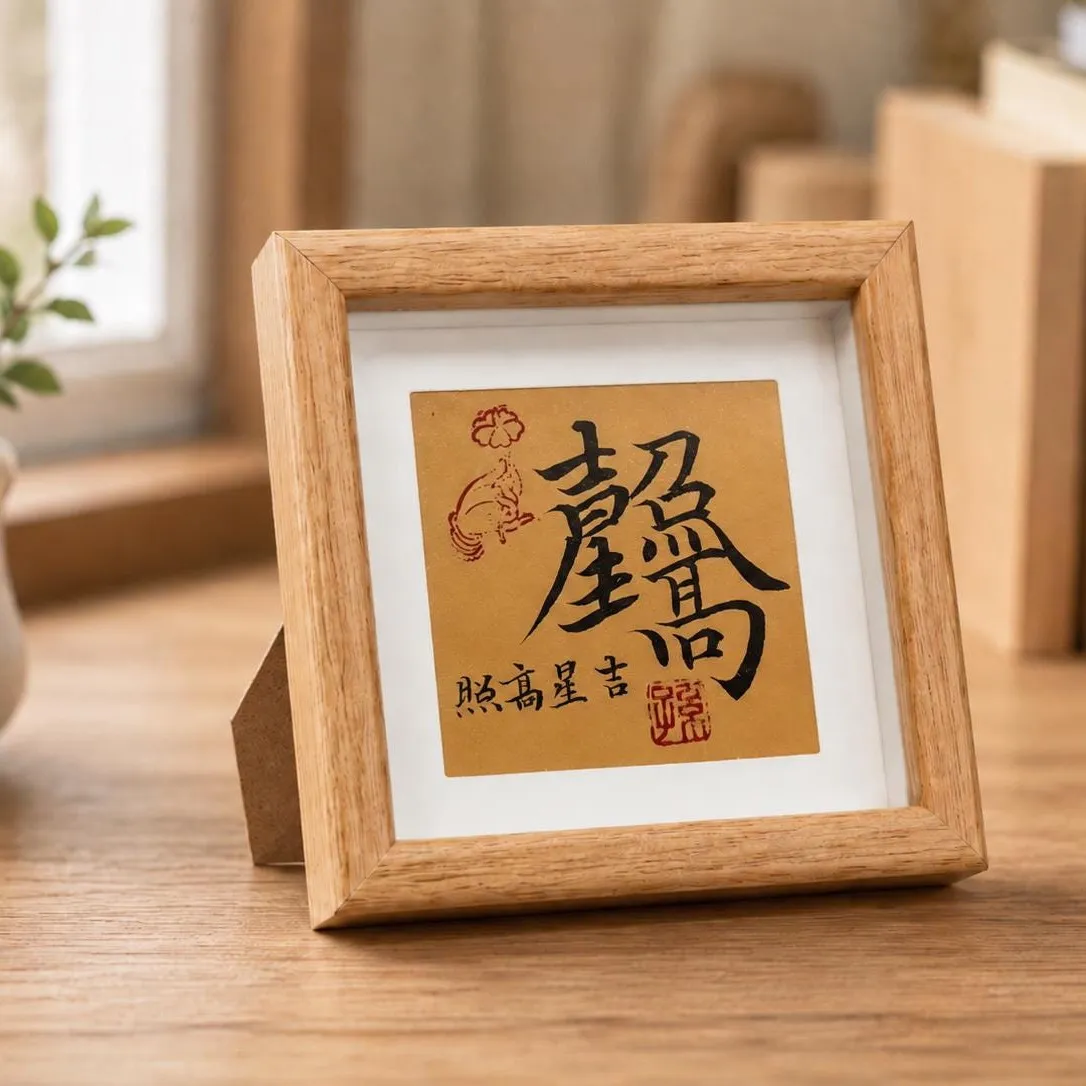
Photo shows a sample — yours will be brushed with 百年好合, or any character you choose.
Desk Frame — for desks, studies & studiosfrom $44→ -
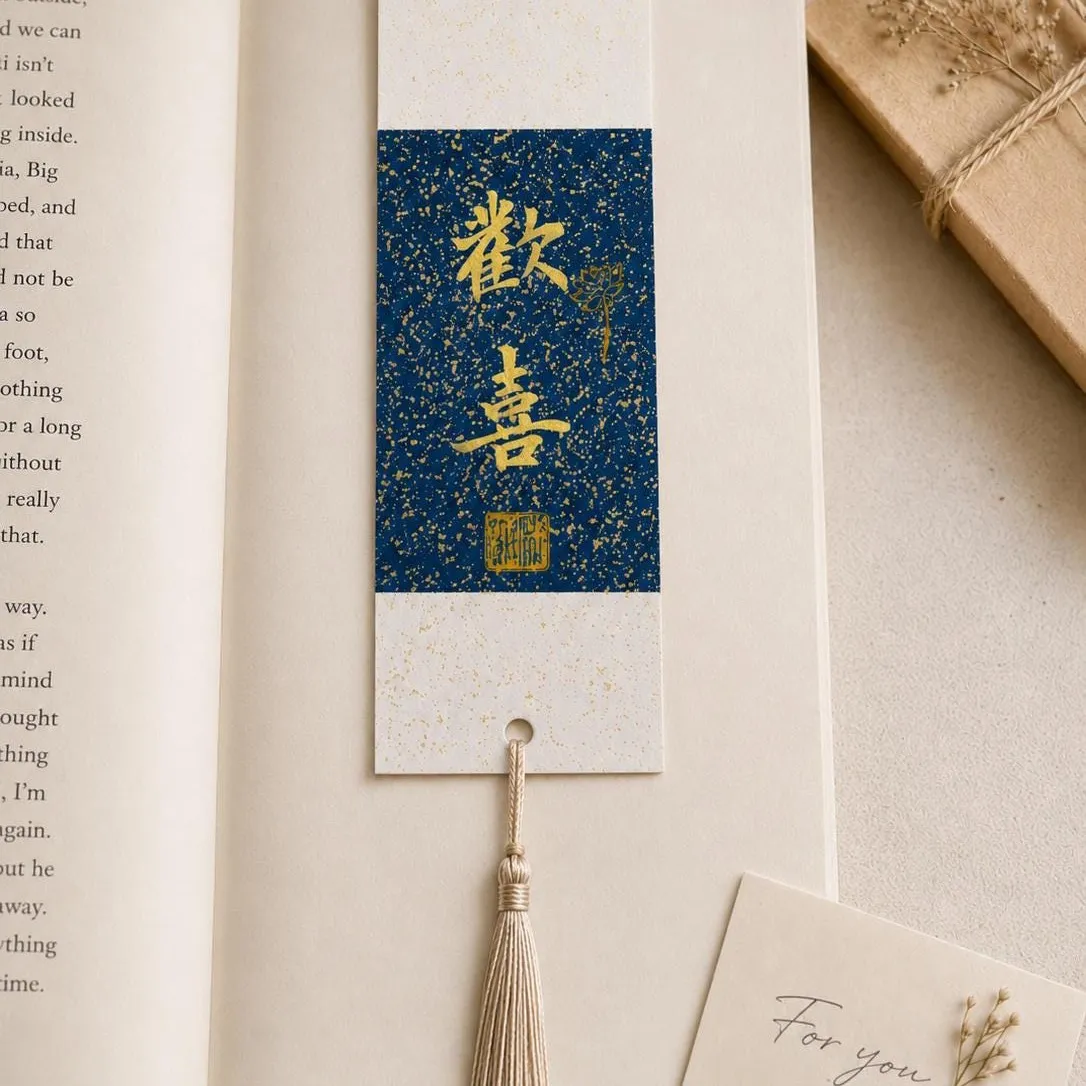
Photo shows a sample — yours will be brushed with 百年好合, or any character you choose.
Bookmark — for readers & small thank-yousfrom $14→
What people said after it arrived.
-
The item is fantastic. The customer service was genuine. Thanks!
— M.Verified purchase · from our Etsy shop reviews · -
They were great they gave me exactly what I asked for and then some. Thank you!!
— G.Verified purchase · from our Etsy shop reviews · -
It is well designed and customized. My daughter loves it. Amazing gift for family’s d friends
— S.Verified purchase · from our Etsy shop reviews ·
Each "百年好合" is hand-brushed by FuBlessings on rice paper.
See 百年好合 (Bǎi Nián Hǎo Hé) on Etsy →