For Your Husband
Chinese characters for the partner you built a life with.
Recommended characters
和顺 (Hé Shùn) — Harmony and Smooth Going
For the husband who has built a shared household with you. 和顺 names the two qualities that make that household work — the warmth between you (和) and the ease of the days you share (顺). A more specific choice than 和 alone, it recognizes that what sustains a marriage over time is both the relationship and the daily life that runs inside it.
恒 (Héng) — Constancy
For the husband whose commitment has held not through dramatic gesture but through consistent choice. 恒 names the quality that makes long partnership work — the will that does not erode with familiarity or difficulty. On an anniversary, it is the most honest recognition available: that he has shown up, in the particular way that the years asked of him.
忠 (Zhōng) — Loyalty
For the husband whose faithfulness has been a fact rather than a declaration. 忠 names the centered-heart orientation that makes long partnership run deeper than habit: not the pattern of showing up (that is 恒) but the whole-person direction from which that pattern arises. Most appropriate when the marriage has been long enough to recognize the difference.
刚 (Gāng) — Principled Firmness
For the husband whose position in the marriage has not been moved by convenience. 刚 names the interior firmness that keeps a standard consistent over years — not the visible rigidity of inflexibility, but the quality of the person who does not need what accommodation would provide. Where 恒 names the constancy of showing up and 忠 names the whole-person faithfulness, 刚 names what those qualities rest on: an interior that was not bent in the first place.
坚 (Jiān) — Tenacity
For the husband whose presence in the marriage held through the difficult stretches — the unrewarded years, the sustained pressure that would have been a reasonable justification for pulling back. 坚 names the material quality that didn’t crack: not the dramatic gesture of holding firm in crisis (that is 毅) or the principle that didn’t compromise (that is 刚), but the foundational solidity that simply persisted. The quality Confucius named when he observed that the pine and cypress are the last to wither — visible only when the cold holds long enough for others to fail first.
伟 (Wěi) — Greatness
For the husband whose years in the marriage have produced something visible in its effects — not the interior quality of his faithfulness (that is 忠) or the pattern of his constancy (that is 恒), but the stature that accumulation over decades finally produces. 伟 names the scale at which a partner’s presence becomes undeniable: the person whose way of occupying the shared life has shaped its form in ways that become fully legible only in retrospect.
强 (Qiáng) — Strength
For the husband whose sustained contribution to the partnership has required genuine capacity — the combination of ability and directed will that makes the work of a shared life possible across years. 强 names the underlying power that makes constancy (恒) and faithfulness (忠) something the other person can actually rely on: not the pattern of showing up but the strength from which that pattern is possible.
和美 (Hé Měi) — Harmony and Beauty
For the husband at a wedding anniversary, when the gift should name both the working accord he has maintained and what that accord has made the marriage over time. 和美 names both registers: the 和 — the steady adjustment and responsiveness of a man committed to his marriage — and the 美 — the beauty that genuine consonance produces in a household across years, visible in its tone and the way the two people in it relate. More complete than 如意 (things going as wished) and more personal than 福 (the general blessing), 和美 is the recognition for the husband whose years of harmony have produced something worth naming.
担当 (Dān Dāng) — Taking Responsibility
For the husband whose reliability in the marriage has taken a specific form: when something needed to be handled and there was no obvious assignment, he was the one who stepped in. 担当 names this pattern rather than the quality of his faithfulness (忠) or the steadiness of his constancy (恒) — it names what came first, the initial act of picking up the load. For the birthday or anniversary when the right recognition is not what he has sustained but how and when he chose to begin: without being asked.
刚毅 (Gāng Yì) — Firm Resolve
For the husband whose years demonstrate a specific compound: the principled firmness (刚) that kept the marriage’s standard consistent when accommodation was available, AND the determination (毅) that held the commitment when the years were genuinely hard. 刚毅 names a quality that 刚 alone and 毅 alone do not: the proof that both types of intactness were present across the same life. Where 忠 names the wholehearted faithfulness and 恒 names the daily constancy of showing up, 刚毅 names the interior compound that makes both of those qualities more than habit.
坚强 (Jiān Qiáng) — Resilient Strength
For the husband whose years in the marriage have required both types of strength: the structural holding (坚) that did not crack under what accumulated against it, and the continued capacity (强) to keep building after the hard years rather than simply conserving what remained. 坚强 is the recognition that requires knowing the full record — knowing the difficulty was real, knowing it was not chosen, and knowing the person who went through it held and came through it still able to act. More complete than either quality alone, and more specific than general strength or general endurance: the compound recognition that difficulty finally shows.
花好月圆 (Huā Hǎo Yuè Yuán) — Flowers in Full Bloom · Moon Full and Round
For the husband at a wedding anniversary, 花好月圆 names the occasion rather than enumerating his qualities. It says: this anniversary is one of those evenings when the flowers have returned and the moon is full, and the couple’s circle is still unbroken. Where 恒 recognizes the constancy of his showing up and 忠 names the whole-person faithfulness behind the years, 花好月圆 steps back from recognition and offers the larger image: the circle is complete, and this is the right evening to mark it.
百年好合 (Bǎi Nián Hǎo Hé) — A Hundred Years of Harmonious Union
For the husband at a wedding or milestone anniversary, 百年好合 is the blessing that asks about the union itself rather than its products. Where 和美 names the beauty the years of accord have made and 恒 names the constancy of his choosing to return, 百年好合 asks the more specific question: has the 合 — the fitting-together — remained genuinely 好 across the time you have shared? For the husband whose years in the marriage have answered that question, it names the answer.
龙凤呈祥 (Lóng Fèng Chéng Xiáng) — Dragon and Phoenix Display Auspiciousness
For the husband at a wedding or anniversary — the blessing that names him as the dragon half of a cosmic pairing rather than naming a quality he should have or a commitment he should sustain. 龙凤呈祥 works at the wedding because it names the union itself as the auspicious sign: the dragon (his) and the phoenix (hers) meeting at the threshold present their complementarity as the omen. Given to a husband on an anniversary, it recognizes that the conjunction has held — the two forces still in the right relation, still presenting their combined auspiciousness.
圆满 (Yuán Mǎn) — Completeness · Perfect Wholeness
For the husband at an anniversary, when the wish is for the shape of the marriage rather than a quality in him — that the life the two have built comes out whole, the circle closing with nothing left wanting. Where 百年好合 wishes a hundred harmonious years and 恒 names the constancy behind them, 圆满 wishes the satisfying roundness of the years themselves: full as well as long, complete as the harvest moon. The gift for the husband whose shared life you want to see arrive full, with no gap where something should be.
温润 (Wēn Rùn) — Warm and Smooth as Jade
For the husband whose firmness has, over the years, been matched by a warmth that wore smooth alongside it. The husband page is full of the hard virtues — 刚 (firmness), 坚 (tenacity), 强 (strength) — and 温润 names the quality that keeps those from turning cold: jade is prized because it is firm and warm and smooth at once. 温润 binds the warmth of 温, the temperature of his presence, to the smooth, nourishing luster of 润, the care that has eased the shared life without announcement. 温润如玉 — warm and smooth as jade — is the highest thing Chinese says of a tender character, and the recognition for the partner whose strength never came at the cost of warmth.
淳 (Chún) — Genuine and Unadorned
For the husband whose defining quality was that he was straight with you — honest, warm, without pretense, the same man in private as in company. The husband page is full of the firm virtues — 刚 (firmness), 坚 (tenacity), 强 (strength) — and 淳 names the plainer one that carries them: 淳厚, a nature genuine and warm, honesty with kindness folded in. Where 忠 names the faithfulness that ran deep and 温润 names the warmth that wore smooth, 淳 names the raw grain of the man — someone who could have learned to perform and simply never did. The recognition for the husband whose whole strength is that there was never anything added.
睦 (Mù) — Household Harmony · Concord
For the husband whose quiet achievement has been a home without friction — the one who kept the peace rather than won the arguments. The husband page is full of the firm virtues — 刚 (firmness), 坚 (tenacity), 强 (strength) — and 睦 names the softer thing that makes a household livable: 和睦, the warm, unstrained concord between two people and both their families. Where 温润 names the warmth he wore smooth and 淳 the honesty at his grain, 睦 names the accord he keeps — harmony you could read in a single glance across the room, since the character puts concord in the eyes (目顺, “the eyes at ease”). The recognition for the husband whose real strength was making a house where everyone is at ease.
美满 (Měi Mǎn) — Happy and Full
For the husband when the gift should name not a quality of his but the life the two of you have built together — 婚姻美满, a marriage that turned out happy and full. The husband page is full of words for the man himself — 刚 (firmness), 坚 (tenacity), 温润 (warmth worn smooth) — and 美满 names what those virtues added up to: a home good as well as whole. Where 圆满 would wish the marriage its complete shape, 美满 wishes its warmth — 美, good and fine, joined to 满, filled to the brim, the completeness measured not by whether the circle closed but by whether the years inside it were happy. The recognition for the husband with whom the shared life came out brimming, and brimming with the right things.
永恒 (Yǒng Héng) — Eternal · Everlasting
For the husband at a milestone anniversary, when the gift should reach past what the years have built and name how long the marriage is meant to last. The husband page is full of words for what he has done — 恒 (the constancy of showing up), 忠 (the faithfulness beneath it), 坚 (the tenacity that held) — and 永恒 names what none of those do: not the record but the vow, the register of 天长地久 and 永结同心 carried back into the anniversary as a renewal. Where 恒 recognizes that he showed up year after year and 圆满 wishes the shared life its whole, rounded shape, 永恒 answers with the promise underneath — a love placed beyond the reach of time, meant to have no end.
幸福美满 (Xìng Fú Měi Mǎn) — Happy and Complete
For the husband on the day the wish is for the whole of the marriage, not one of its parts. The husband page names what he has done — 恒 (constancy), 忠 (faithfulness), 坚 (tenacity) — and 幸福美满 names what those were for: a shared life that came out happy and full, and lucky to have been. It is the four-character close of a wedding toast carried into the years, blessing the marriage from two directions at once — 幸福, well-being with harm kept away, and 美满, a home good and brimming. Where 永恒 promises the years and 和顺 names the daily accord, 幸福美满 wishes their sum: that the life the two of you built be fortunate as well as full.
宏 (Hóng) — Grand Scale · Vast Vision
For the husband still drawing the long plan. This page is mostly about what has held — 恒 constancy, 忠 faithfulness, 永恒 the years themselves — and 宏 is the one character on it that faces the other way, toward what is being attempted rather than what has lasted. 宏图 is a design spread wide, and giving it is a way of saying you have been watching his and think it is the right size. The choice for the partner whose thinking has always been larger than the room he was in, on the one day a year it is fair to say so.
同心 (Tóng Xīn) — Of One Heart
For the husband when the true thing to say is not about him. Nearly every character on this page credits something he did — 恒 the constancy of showing up, 忠 the faithfulness beneath it, 坚 the tenacity that held, 担当 the weight he took on. 同心 credits nobody singly. It is a two-person word, and it would be false said of one: it claims that across the moves, the jobs, the hard years, the two of you have wanted the same things. Where 和顺 names the daily accord of the household and 永恒 promises how long the marriage is meant to last, 同心 names the alignment underneath both — the reason the decisions kept coming out the same way. The gift for the partner you would describe, if pressed, not as the man who stayed but as the one who was pulling in your direction the whole time.
相濡以沫 (Xiāng Rú Yǐ Mò) — The Year You Got Each Other Through
This page is largely an inventory of what he withstood on his own — 坚 the tenacity, 刚 the principled firmness, 担当 the weight he took on, 恒 the constancy of showing up. 相濡以沫 is the one entry here that does not credit his strength, because it describes a stretch when neither of you had much of it: the layoff year, the illness, the run of months when the plan came apart. The image behind it is two fish left on dry ground after the spring failed, keeping each other alive with the little moisture they have left, and what makes it land is the cost — what one gives is the same thing that is keeping the other from drying out. 同心 also refuses to credit either partner singly, but it credits direction, and a couple can be 同心 through a life that was never hard. Nobody is 相濡以沫 without something having gone badly wrong first.
岁月静好 (Suì Yuè Jìng Hǎo) — The Year With Nothing to Report
For the husband who measures a year by what got finished in it. 岁月静好 counts a year that produced nothing — no move, no promotion, no emergency — as a good one, which is a hard thing to say convincingly to a man who reads an uneventful stretch as a stall. 和顺, further up this page, describes the same ease but credits the marriage for producing it; 岁月静好 credits nobody and describes the time instead. Nothing about it assumes the quiet is automatic, either — a settled year is something a household produces, and he is half of the household that produced this one. For the anniversary, or the ordinary week, when what you want to tell him is that this was a good stretch rather than a slow one.
和睦 (Hé Mù) — He Is in None of the Seats
睦, further up this page, credits him with a conduct — the peace he keeps, readable in how he meets your eyes — and glosses it as 和睦, the way dictionaries do. The two-character word is not the same thing, and it credits nobody: its subjects are households, neighbourhoods, ranks, 婆媳. Look at that last one. 婆媳和睦 is his mother and his wife; the two parties are named and he is in neither seat, and the outcome lands on him regardless. Chinese has no phrase at all for the man standing between them. That is the case for handing him this one — not because he is 和睦, which nobody is, but because the household that is has been resting on somebody who is nowhere in the sentence.
丹心 (Dān Xīn) — Nobody Else Is Qualified to Sign It
和睦 and 同心, further up this page, both describe something a visitor could verify — a household that runs without friction, two people plainly aimed the same way. 丹心 cannot be verified from a doorway. 丹 is cinnabar, an ore rather than a shade, and the compound is a claim about the colour on the inside of one person, which means the reading has to be taken by somebody who was close enough to see the cut. In the classical uses that job fell to the historian, working from the record with the man safely dead. A marriage has one reader and she was in the room at the time. The word is normally aimed upward, at a state; handing it sideways across a marriage is a deliberate borrowing, and what comes with it is the condition that it cost him something.
事业有成 (Shì Yè Yǒu Chéng) — A Receipt, Not a Demand
Everything else on this page reports on the two of you — 同心 on the shared direction, 相濡以沫 on the year you got each other through, 岁月静好 on the year with nothing to report. This is the one that looks out the door. The obvious worry with giving a partner a career phrase is that it reads as a scorecard, and what keeps 事业有成 off that footing is the clock sitting inside 有成: it can only be said to someone who has already put the years in, which makes it a receipt for work done rather than a demand for work to come. 身体健康、事业有成 is the stock New Year line a wife sends a husband, and a formula reads as a formula. Hung on a wall it says the part that usually goes unsaid at home — that the household knows what those years went into, and counts the thing they paid for as standing.
天长地久 (Tiān Cháng Dì Jiǔ) — He Has Said It for Twenty Years and Never Been Given It
By middle age a man has stood up at a great many other people’s weddings, and these four characters are what he has reached for at most of them — the line you use when the toast has to be serious and the fancier ones are spent. Almost nobody hands it back to him. 恒 and 丹心, further up this page, are both readings taken on him: what the constancy was worth, what a hard year found when it leaned. This is not a reading of anything. It is the biggest thing he has spent twenty years saying about other people’s marriages, aimed for once at his own, by the person who has been inside it with him.
笃 (Dǔ) — The Question Still Open at Year Thirty
For the husband whose marriage has been settled long enough that the usual compliments have gone quiet. 恒 says he kept showing up and 忠 says which direction he was facing; both were answered years ago and neither moves much afterward. 笃 is the rare one that admits of more and less — 甚笃, 益笃, thick and thicker than before — so it stays capable of a different answer long after the others have run out of anything new to report. The standing phrase, 伉俪情笃, is honorific and describes other people’s marriages — 贤伉俪 is how you address a couple, never how either of them speaks of themselves. So the assessment exists in Chinese and has no ordinary route to the person it is about. Handing it over is the route.
长情 (Cháng Qíng) — Nobody Asked Him To
He can probably tell you the year you moved, the year the job changed, the year the car finally went. Ask him what he did to keep feeling this way about you and there is no answer, because there is no list — 情 sits in the group 《礼记》 files as 弗学而能, the responses nobody is taught and nobody can be set. So this is not a compliment on anything he managed, and there is no version of the last twenty years in which he could have done it better. What it credits is the one part of him that was never his to arrange. For the husband who goes quiet when he is thanked, because from where he is standing none of it ever looked like work.
琴瑟 (Qín Sè) — The Other Instrument in the Room
和美 on this page praises the beauty a marriage can grow into; 同心 asks whether the two of you still want the same life; 长情 credits how long his feeling has run without being asked. 琴瑟 names something those three leave open: whether his register and yours still answer each other. The word begins as two instruments, and the toast 琴瑟和鸣 keeps that picture. For the husband with whom the household already has a sound — not a solo, and not a wish that one of you disappear into the other.
白头偕老 (Bái Tóu Xié Lǎo) — The Check You Can Take on His Head
恒 and 忠 on this page credit what he kept doing; 长情 credits a feeling that never needed managing; 天长地久 hands him the toast he has spent on other people’s weddings. 白头偕老 does none of that. It names the far end you will both be able to see — white hair — and keeps him inside a two-person sentence. For the husband you intend to still be looking at when the colour has gone, on the anniversary or the ordinary Tuesday that already points that way.
福 (Fú) — Blessing · Good Fortune · Happiness
See 福 →爱 (Ài) — Love · Affection · Devotion
See 爱 →和 (Hé) — Harmony · Balance · Togetherness
See 和 →喜 (Xǐ) — Joy · Happiness · Celebration
See 喜 →信 (Xìn) — Trust · Faithfulness · Integrity
See 信 →喜乐 (Xǐ Lè) — Joy · Daily Gladness · The Quiet Warmth That Lasts
See 喜乐 →龙 (Lóng) — Dragon · Power · Auspicious Strength
See 龙 →力 (Lì) — Strength · Force · The Power to Act
See 力 →真 (Zhēn) — Authenticity · Genuineness · True to Oneself
See 真 →Bring a hand-brushed piece home — choose how you'd like it brushed.
-
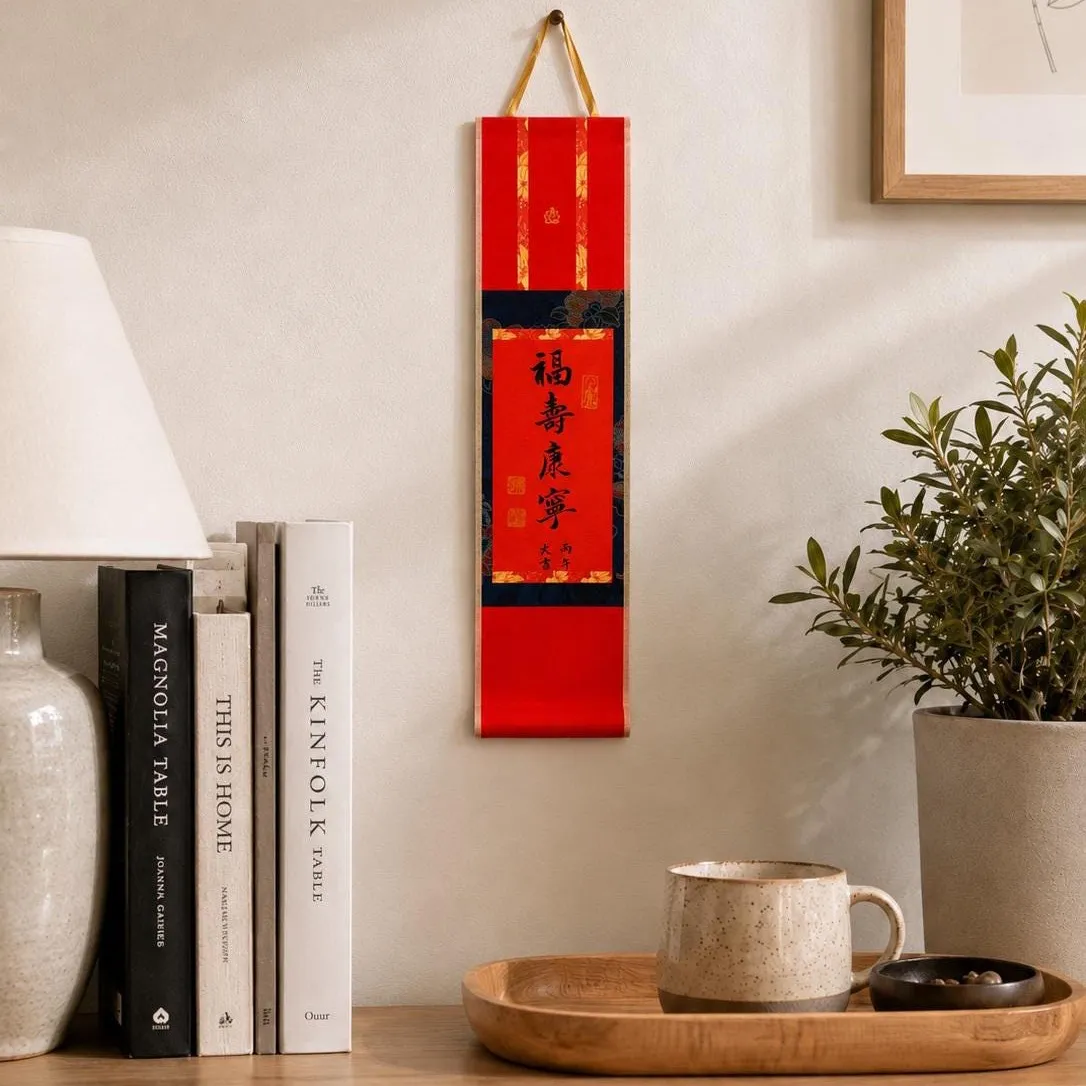
Photo shows a sample — yours will be brushed with the character you choose.
Wall Scroll — for walls & housewarmingsfrom $38→ -
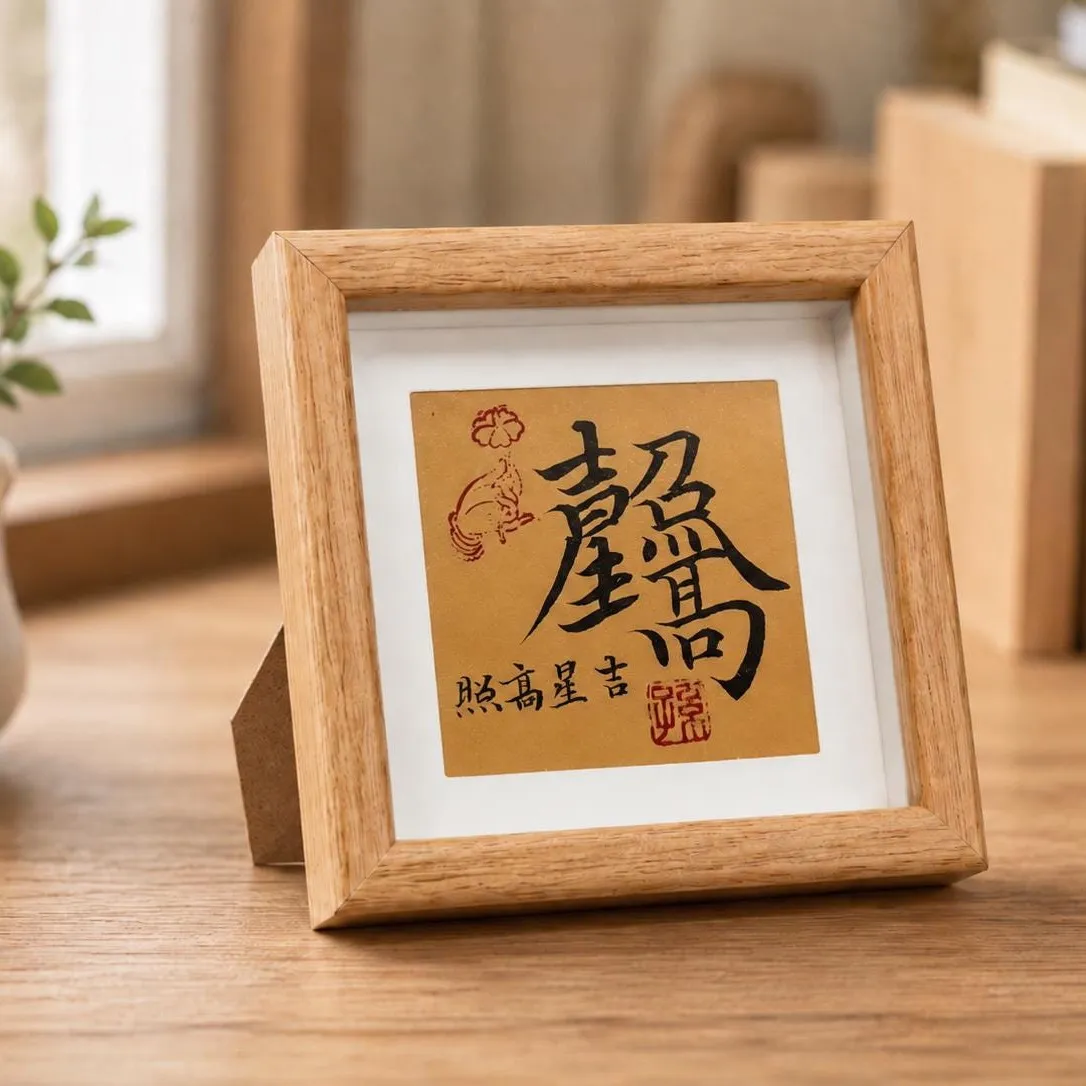
Photo shows a sample — yours will be brushed with the character you choose.
Desk Frame — for desks, studies & studiosfrom $44→ -
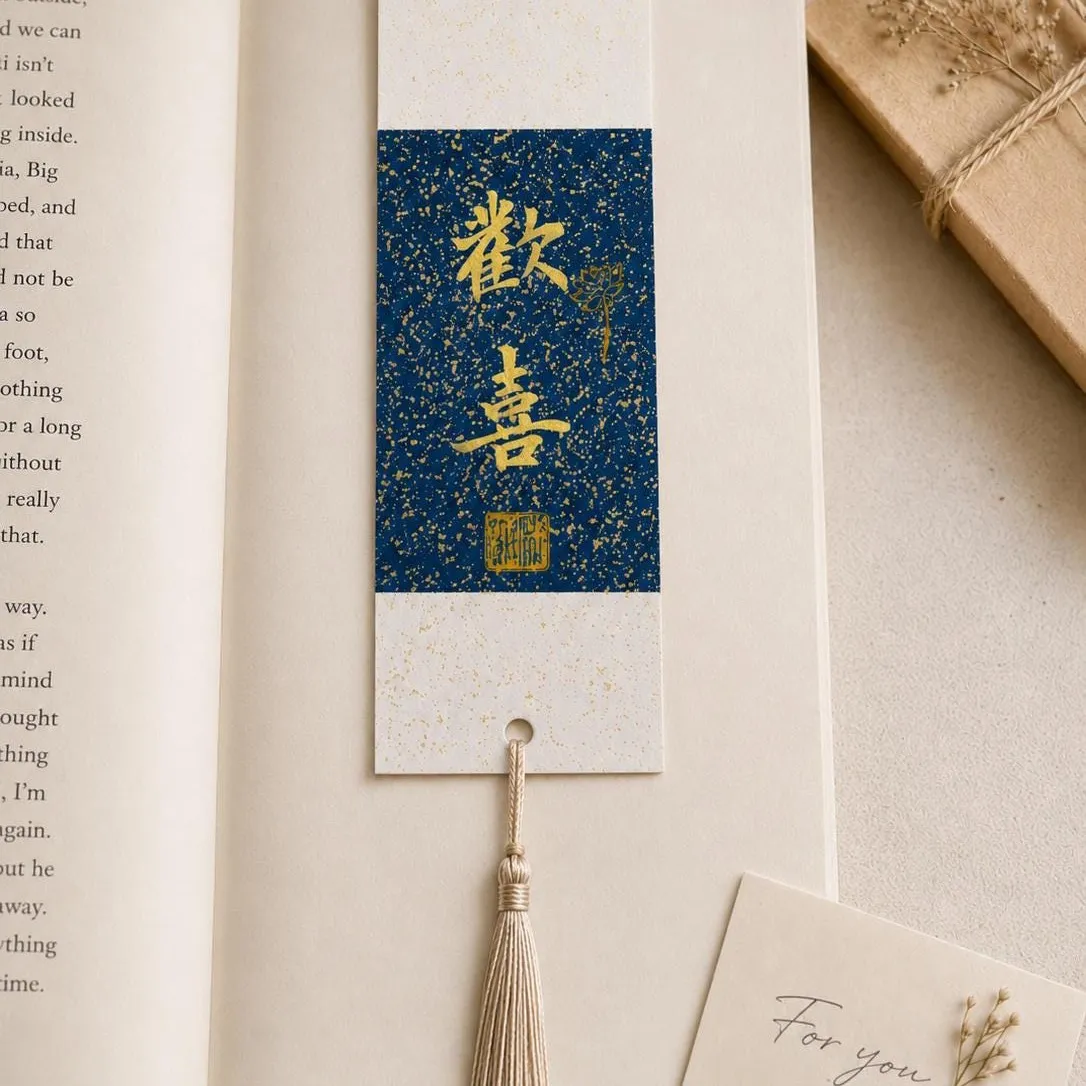
Photo shows a sample — yours will be brushed with the character you choose.
Bookmark — for readers & small thank-yousfrom $17→