Wedding Gifts
Chinese wedding gift ideas for the ceremony — characters for the wedding day, not the couple's first year.
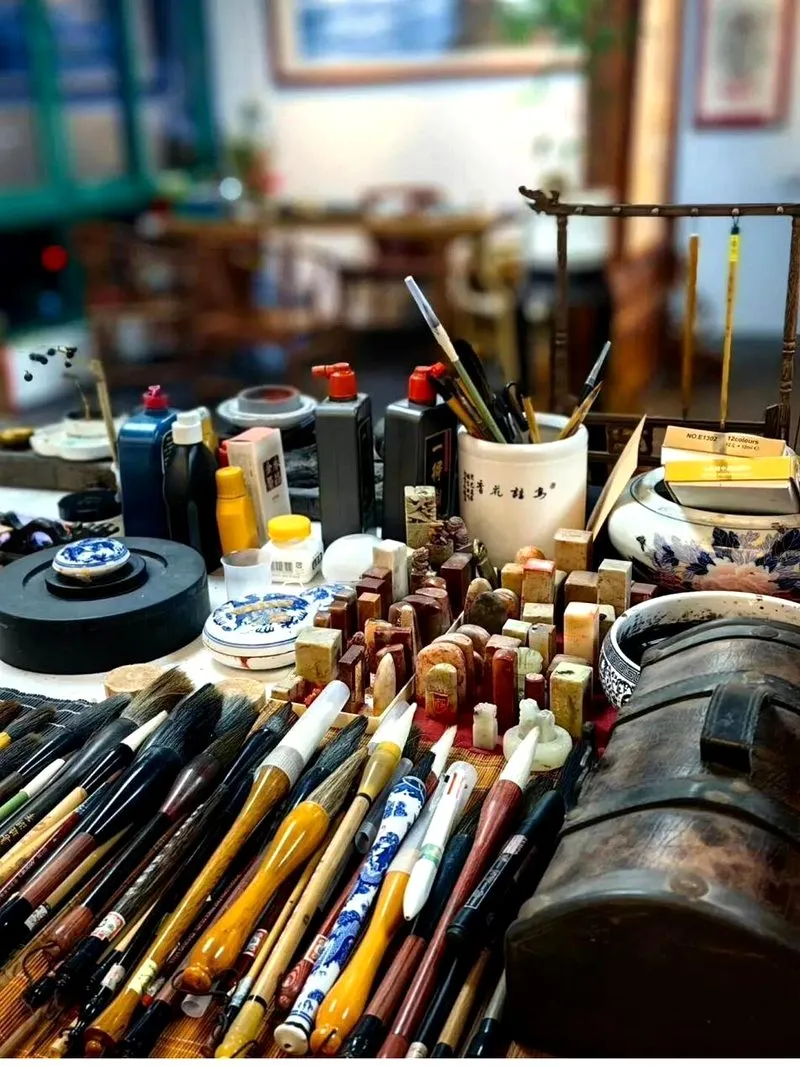
Chinese wedding gift ideas in calligraphy are wishes written for the ceremony, not objects for the couple's first year. Guests often choose 百年好合 for a long union, 花好月圆 for the day itself, or 喜, the character already on the invitation. Artist Lina Sun hand-brushes them on rice paper. The new couple guide covers engagement through the new home.
Recommended characters
This is the wedding-day occasion guide — characters guests give at the ceremony. For the couple across engagement, the wedding, and the new home, use the recipient guide.
和顺 (Hé Shùn) — Harmony and Smooth Going
For the wedding when you want to name what the household will need, not just the feeling of the day. 和顺 — the warmth of shared life (和) paired with the ease of daily passage (顺) — is the inscription Chinese families give newlyweds when they want to wish for something more specific than happiness: a home that is both genuinely warm and genuinely unobstructed.
家和 (Jiā Hé) — Family Harmony
For the wedding when the wish is for the household the couple is founding, not only the romance between them. 家和 names the foundational condition of the home — the people inside in accord — before any particular outcome is attached to it. An older and more structural blessing than 幸福, it addresses what marriages are sustained by over decades.
家和万事兴 (Jiā Hé Wàn Shì Xīng) — When Family is Harmonious, All Things Flourish
For the wedding when the gift is an argument, not just a wish. 家和万事兴 gives both halves of the proverb: the condition (家和) and the consequence (万事兴). Where 家和 alone names the foundational state of the household, 家和万事兴 states why that state matters — because everything the marriage will produce over the years depends on it first being in accord.
丰 (Fēng) — Abundance
For the wedding when the gift should name the household’s abundance rather than its harmony. A wedding feast in Chinese is 丰盛 (fēng shèng) when the table has more than needed — not merely sufficient but genuinely overflowing. 丰 extends that image from the feast to the household being founded: the wish that what the couple builds together will have more than enough, in every dimension. A more concrete alternative to 福 for the couple at the beginning of their household.
和美 (Hé Měi) — Harmony and Beauty
For the wedding gift that names both what the couple is asked to build (和 — the working accord of two different natures learning their shared music) and what that accord is asked to become (美 — the beauty visible in a household where genuine harmony has been sustained). More complete than 和顺 (which asks that the household run smoothly) and more particular than 幸福 (which names a feeling), 和美 is the blessing for the couple ready to be told not just that their accord is wished for but what it is meant to ripen into.
花好月圆 (Huā Hǎo Yuè Yuán) — Flowers in Full Bloom · Moon Full and Round
For the wedding when the gift should name the occasion rather than wish for what comes after. 花好月圆 is not prospective — it doesn’t ask for harmony, longevity, or prosperity. It identifies the moment: the flowers are at their best, the moon is at its fullest, and the wedding is exactly the kind of occasion those images have named in Chinese culture for five hundred years. For the couple who doesn’t need to be told what to hope for, but deserves to have their day recognized as the complete thing it is.
百年好合 (Bǎi Nián Hǎo Hé) — A Hundred Years of Harmonious Union
For the wedding when the gift should name the full span of what is being asked for. 百年好合 is more complete than 花好月圆 (which names the present occasion as perfect) and more specific than 幸福 (which names a feeling): it asks that the union (合) remain genuinely good (好) for the entire arc of a lifetime. The most traditional and direct of the wedding blessings — the one that makes no qualification about which years the wish applies to.
龙凤呈祥 (Lóng Fèng Chéng Xiáng) — Dragon and Phoenix Display Auspiciousness
For the wedding gift that names the couple not as the recipients of a blessing but as its form. 龙凤呈祥 places the dragon (cosmic yang) and phoenix (cosmic yin) at the wedding threshold and says their meeting is itself the auspicious sign: the union is the omen, not its object. Unlike 百年好合 (which asks for the quality of the union across time) or 花好月圆 (which names the day as complete), 龙凤呈祥 names what the pairing of this man and this woman cosmologically IS — the conjunction of the two forces whose meeting announces that conditions are right. The most cosmologically complete of the wedding calligraphy phrases — and the one with the longest continuous history.
富足 (Fù Zú) — Abundance · Well-Provided
For the wedding when the gift should name the new household’s larder rather than its harmony or its romance — the wish that the two never want for the basics, that the home rests on a provided foundation from day one. Where 丰 names the overflowing feast and 家和 names the household in accord, 富足 names the steady material sufficiency a marriage can settle into: not a windfall to chase but plenty that registers as enough, a stocked floor under everything else the couple will build. The wedding choice for the gift-giver who wants to wish the new home security in the basics before anything grander.
圆满 (Yuán Mǎn) — Completeness · Perfect Wholeness
For the wedding when the gift should wish the new marriage wholeness rather than name its larder or its accord — that the life beginning today comes out full and round, the circle closing cleanly with no part missing. Where 富足 names the household’s material floor and 龙凤呈祥 names the union as an auspicious sign, 圆满 wishes the satisfying shape of the whole: the round-moon wish behind 花好月圆 said plainly, a union complete in measure and in shape. The wedding choice for the gift-giver who wants to wish the new home not a windfall but a life that comes full.
阖家幸福 (Hé Jiā Xìng Fú) — Happiness for the Whole Family
For the wedding when the gift should widen from the couple to the two families the marriage now joins. Where 百年好合 asks that the union stay good across a lifetime and 圆满 wishes the marriage its complete shape, 阖家幸福 wishes the larger circle a lasting well-being: not a feeling between the two people but a good life shared by both households now bound together. It is the inscription in-laws commission over 阖家欢乐 when the wish is the years rather than the wedding day — the whole joined family well, and staying well. The wedding choice for the gift-giver thinking past the couple to the family the day creates.
睦 (Mù) — Household Harmony · Concord
For the wedding when the gift should name the daily substance of a marriage rather than its shape or its larder — 和睦, the warm concord of two people at ease under one roof, and of the two 姓 (surnames) a wedding joins. Where 富足 names the new household’s material floor and 圆满 wishes its complete shape, 睦 wishes the harmony inside it: not a windfall or an omen but the unstrained peace a home is actually kept by. The character puts that peace in the eyes — its left half is 目, an eye, and the oldest dictionary reads it as 目顺, “the eyes at ease.” The wedding choice for the gift-giver who wants to wish the new house not fortune but concord — a marriage, and two families, harmonious from the first day.
美满 (Měi Mǎn) — Happy and Full
For the wedding when the gift should speak the wish every guest holds for the day — 婚姻美满, a marriage happy and full. Where 圆满 wishes the union its complete shape and 阖家幸福 widens to the two families, 美满 wishes the warmth of the life beginning today: 美, good and fine, joined to 满, filled to the brim, a home that comes out not merely whole but full of good things. It is the two-word blessing an elder speaks over the couple, plainer than the poetry on the red scrolls and saying the whole of it — happy, and complete. The wedding choice for the gift-giver who wants to wish the new marriage not fortune or shape but a life that turns out good.
幸福美满 (Xìng Fú Měi Mǎn) — Happy and Complete
For the wedding toast itself — 祝你们幸福美满, the four syllables an elder closes on with a raised glass. Where 美满 gives the plain two-word verdict (a home good and full) and 阖家幸福 widens to the two families, 幸福美满 is 美满 fronted with 幸福, and the addition is fortune: not only that the home be full but that the couple be lucky in it, harm kept from the door. It is the fullest wish a marriage can be sent in a single breath — happy and whole and blessed and safe — and it is addressed to the two people specifically, not the households around them. The wedding choice for the gift-giver who wants to give the toast itself, in ink.
同心 (Tóng Xīn) — Of One Heart
For the wedding gift that names what the ceremony itself keeps acting out. A traditional Chinese wedding is full of two-made-one gestures: 合卺, the couple drinking from halves of one gourd; 合髻, each cutting a lock of hair and winding the two together; the 同心结 worked into the cord on the gift table, two strands you cannot pick apart again without cutting. 同心 is the phrase all of those are illustrations of. It is also the least ornamental thing on this shelf — 百年好合 counts a hundred years, 花好月圆 draws the flowers and the full moon, 龙凤呈祥 sets a dragon and a phoenix above the couple, and 同心 carries no image at all. Two characters, one claim: these two want the same things. For the guest who would rather give the true wish than the decorative one.
喜气洋洋 (Xǐ Qì Yáng Yáng) — The Air of the Whole Room
For the wedding gift addressed to the room rather than to the marriage. 喜 is already the day’s own character — 喜事 for the event, 喜帖 for the invitation, 喜酒 for the banquet, 囍 on every pane of glass — so 喜气 needs no translating at a Chinese wedding; it is simply the air of it. The work is done by 洋洋, the doubling Chinese reaches for when a thing has stopped having edges: the joy did not stay with the two people it belonged to, but reached the aunt who flew in, the colleagues at table nine, the neighbours who came out to watch the car. Where 百年好合 speaks to the century ahead and 同心 to the pair themselves, this one describes everybody else — which is what makes it worth handing over once the day is done, since the couple were the two people least able to see it. The gift that gives them back the hall as their guests had it.
和睦 (Hé Mù) — Addressed to the Set, Not the Pair
Most of this page speaks to the two people: 百年好合 to the century ahead of them, 同心 to their shared direction, 睦 to the concord inside the marriage itself — and that section glosses 睦 as 和睦, the way dictionaries do. 和睦 is the one addressed to everybody else. The compound has no singular. Its subject is collective, paired, or supplied by a 与-phrase — 一家和睦, 邻里和睦, 婆媳和睦, 与邻居和睦相处 — and nearly every relationship on that list arrives attached to a decision somebody else made. A wedding is the hour a person acquires the whole set at once: a second mother, siblings by marriage, a neighbourhood, a table of people they will see every New Year for forty years. 和顺 asks whether this household runs warm and unobstructed; 和睦 asks the wider and harder question of whether the assembly holds.
缘 (Yuán) — What the Banner Over Their Heads Already Says
喜结良缘 is on the banner and on the invitation, and the word carrying it is the only one at the wedding that is not a promise. Everything else the day produces points forward: 百年好合 at the century, 同心 at the direction, 和睦 at the household the two of them just acquired. 缘 points the other way. It names the run of ordinary accidents that had to go exactly as it went — a job advertised for eleven days, a wedding neither of them wanted to attend, a later train taken because the earlier one was full — before either of them was ever in the room. And it does not stop at the couple. A Chinese wedding is also the afternoon two families meet for the first time and a hundred people who would otherwise never have shared a table sit down together; 有缘千里来相会, with 缘 two people meet across a thousand li, is said of the guests too, not only of the pair. The one word on the table that reports something already settled, on a day otherwise spent asking.
天长地久 (Tiān Cháng Dì Jiǔ) — What a Guest Can Say Without Presuming
A wedding collects givers at wildly different distances from the couple: parents who have watched one of them since birth, and a colleague who met the other last spring. Most of what gets written on the day is a forecast about a specific pair, which sits oddly in the hands of somebody not close enough to make it — 百年好合, above, stakes a claim on the quality of a hundred specific years, and to make that claim about two people you barely know is to guess out loud. These four characters guess at nothing, because their subject is the sky and the ground. The same wish carries identical weight from the mother of the bride and from the man at the far table, and neither has to pretend to knowledge they do not have. It is the wording on the banner set that nobody needs standing to use.
琴瑟 (Qín Sè) — What the Toast Still Means
Guests already have 百年好合 for the long span and 花好月圆 for the perfection of the day. 琴瑟 is what many of those toasts are quietly borrowing: the qin and the se as the picture of two people who will have to keep time together. On the wedding day the word is prospective without being empty — the instruments are named before the years have tuned them. For the ceremony gift that wants the ensemble said out loud, in the same register as 琴瑟和鸣.
白头偕老 (Bái Tóu Xié Lǎo) — The Blessing Guests Still Say
百年好合 asks for a century of good union; 龙凤呈祥 hangs an emblem over the pair; 花好月圆 says tonight is already complete. 白头偕老 is the plainer guest sentence that survives all of those: may you reach white hair together. The Ministry files it as living wedding congratulations, and calligraphy keeps it because four characters need no extra picture — the hair is the picture.
福 (Fú) — Blessing · Good Fortune · Happiness
A blessing for two people building a life together — for harmony, prosperity, and the years ahead.
See 福 →爱 (Ài) — Love · Affection · Devotion
A blessing for two people building a life together — for love that deepens through the years.
See 爱 →和 (Hé) — Harmony · Balance · Togetherness
A blessing for two people choosing each other — and the harmony they will build, day after day.
See 和 →喜 (Xǐ) — Joy · Happiness · Celebration
The most traditional moment for "喜" — especially in its doubled form 囍, the symbol of joy multiplied by being shared.
See 喜 →信 (Xìn) — Trust · Faithfulness · Integrity
信 is a pointed wedding gift because it names what every marriage will eventually be tested on. Love and joy are easy to promise at the altar; trust is what must be maintained in the ordinary years that follow. Giving 信 is a wish for the more difficult and more necessary thing.
See 信 →吉祥 (Jí Xiáng) — Auspiciousness · Good Omen · The Promise of Good Things
For a new marriage, 吉祥 is the wish that the union itself carries good fortune — that the home being built is one good things will find their way into.
See 吉祥 →如意 (Rú Yì) — As You Wish · Aligned with the Heart
如意 is a traditional wedding inscription — a wish that the life being built unfolds the way the couple themselves are hoping, not the way anyone else expects.
See 如意 →喜乐 (Xǐ Lè) — Joy · Daily Gladness · The Quiet Warmth That Lasts
Where 喜 alone marks the bright joy of the wedding day, 喜乐 wishes for the gentler, repeating joy of the years that follow — the kind that returns on quiet evenings without needing a reason.
See 喜乐 →阖家欢乐 (Hé Jiā Huān Lè) — Joy for the Whole Household
A traditional gift between in-laws — 阖家欢乐 wishes the new joined family the wholeness that makes a marriage more than a couple.
See 阖家欢乐 →真 (Zhēn) — Authenticity · Genuineness · True to Oneself
真 at a wedding is a wish that what is genuine between this couple now does not require the years ahead to manufacture. The quietest of the wedding characters, and in that quietness, the most specific.
See 真 →福至 (Fú Zhì) — Blessings Arrive · Fortune Has Come
For a new couple, 福至 is the declaration that the marriage itself is the arrival of blessing — not a wish for future happiness but a recognition of present fortune.
See 福至 →吉祥如意 (Jí Xiáng Rú Yì) — Auspicious · As You Wish · A Year That Unfolds Well
A classical inscription for a new marriage — the wish that the union itself carries good fortune, and that the life being built unfolds the way the couple are hoping.
See 吉祥如意 →-
What are good Chinese wedding gift ideas?
Chinese wedding gift ideas in calligraphy are wishes written for the ceremony, not objects for the couple's first year. Guests often choose 百年好合 for a long union, 花好月圆 for the day itself, or 喜, the character already on the invitation. Artist Lina Sun hand-brushes them on rice paper. The new couple guide covers engagement through the new home.
-
Which Chinese characters do people often choose for a wedding?
People often choose 百年好合, 花好月圆, 龙凤呈祥, 和顺, 家和, and 同心 for a Chinese wedding. 百年好合 asks that the union stay good across a lifetime. 花好月圆 names the wedding day. 龙凤呈祥 names the pairing. 和顺 and 家和 speak to the household. 同心 says the two want the same things. For engagement, the wedding, and the new home together, read the new couple guide.
-
Are there Chinese wedding gifts to avoid?
Households do not share one list of Chinese wedding gifts to avoid, and this answer does not ban clocks, pears, sharp objects, or the number four. A family has to confirm any custom; it is not stated here as a rule. A calligraphy gift can stay with a wish the couple can read: 百年好合, 花好月圆, or 喜. If a custom is unclear, ask the family before you give.
Bring a hand-brushed piece home — choose how you'd like it brushed.
-
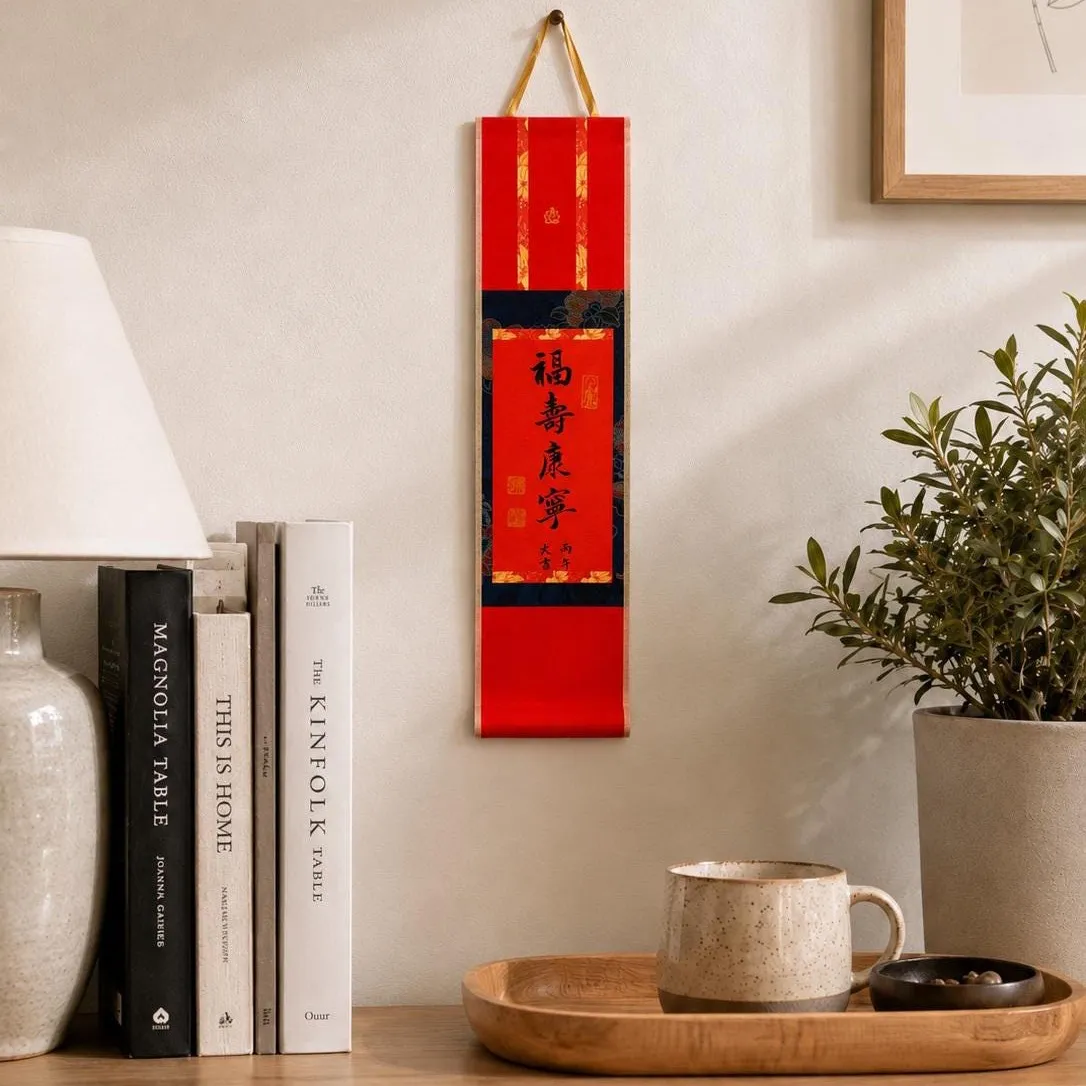
Photo shows a sample — yours will be brushed with the character you choose.
Wall Scroll — for walls & housewarmingsfrom $38→ -
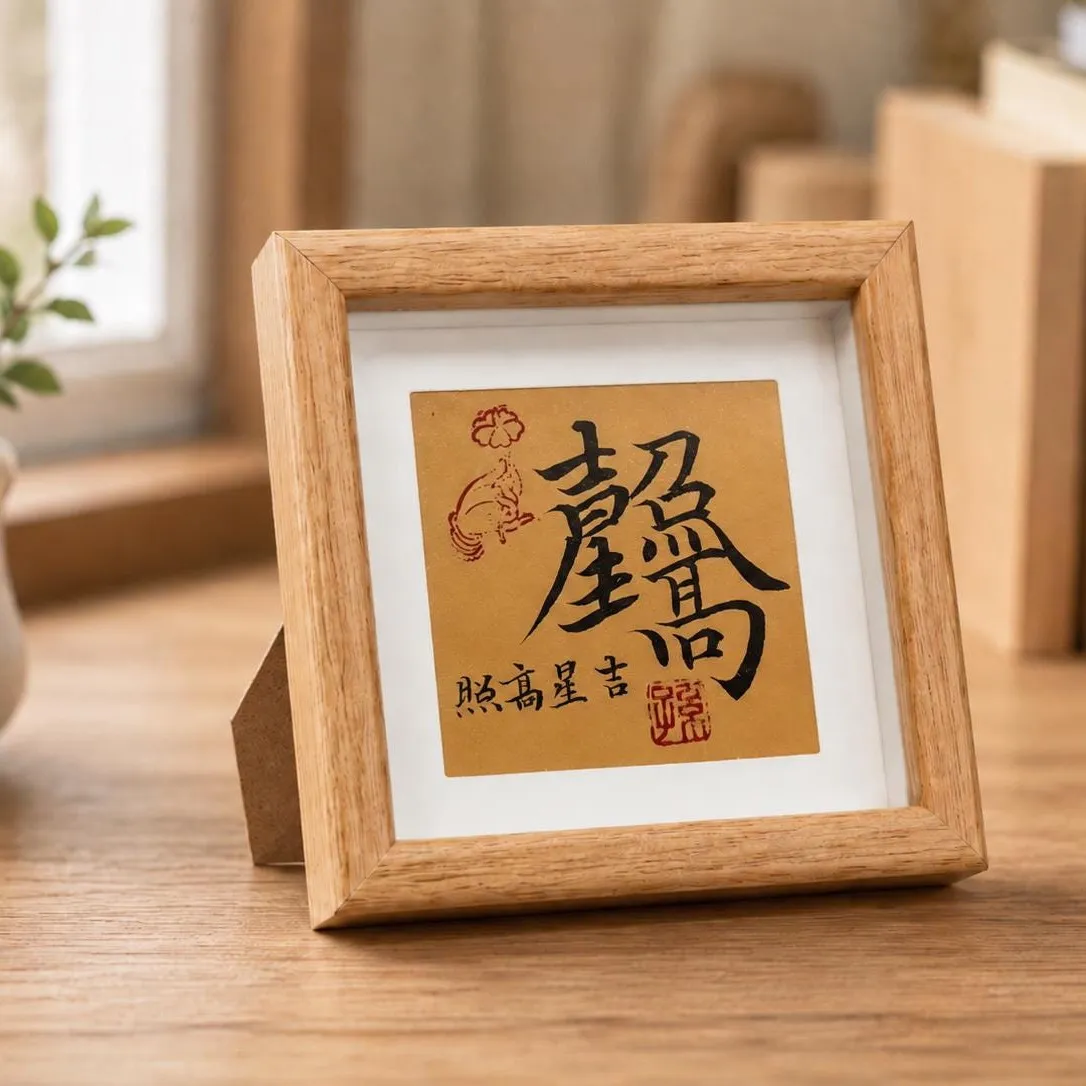
Photo shows a sample — yours will be brushed with the character you choose.
Desk Frame — for desks, studies & studiosfrom $44→ -
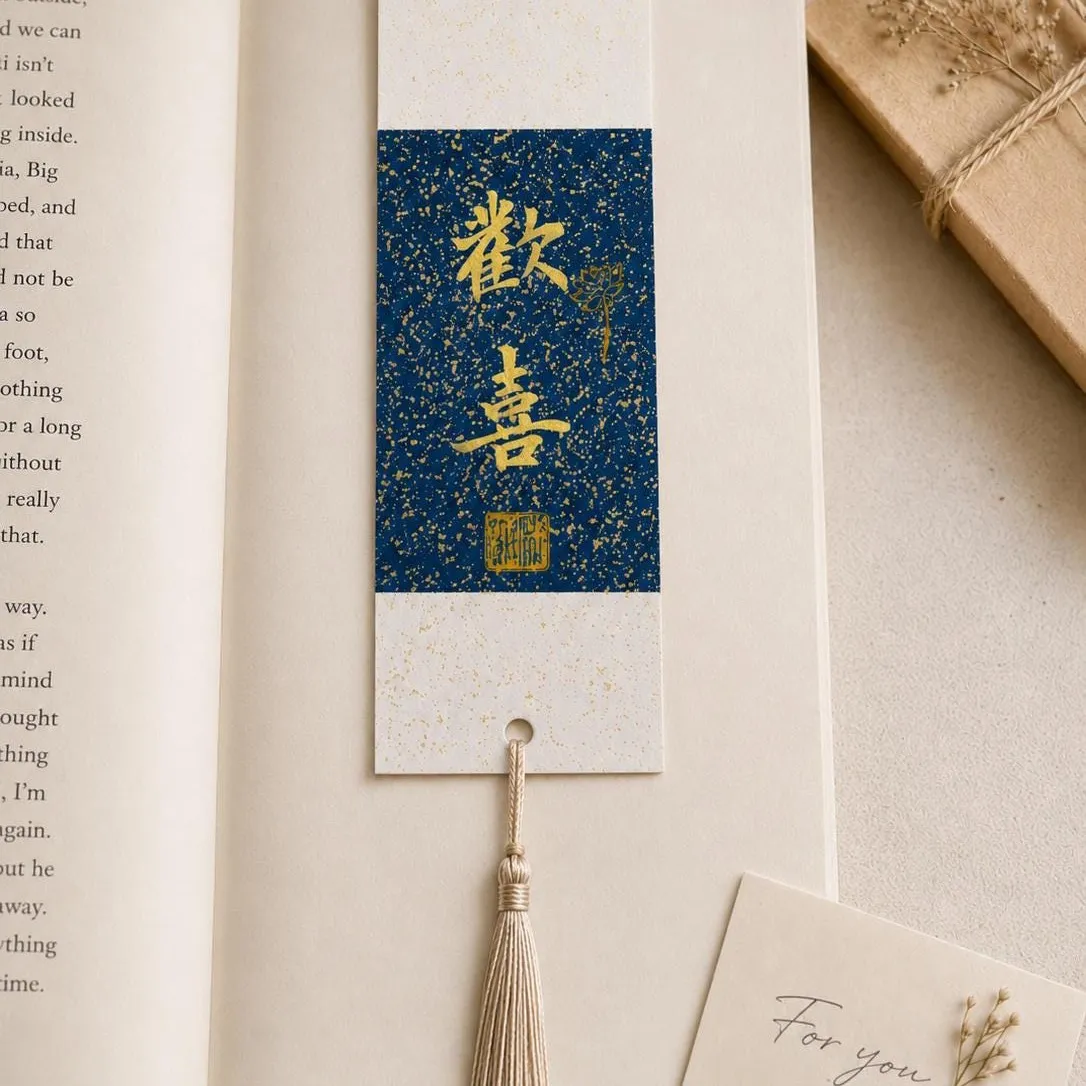
Photo shows a sample — yours will be brushed with the character you choose.
Bookmark — for readers & small thank-yousfrom $17→