睿 (ruì) — Depth of Thought · Clarity Dug Down To · Understanding That Had to Be Reached
One character, and the radical misleads: the 目 (eye) at the base is why the gloss is clarity rather than getting-through, but the top is what says where the clarity came from — 谷, a valley written short, under an element for cutting through.
深明. Two characters, and it is the first one that does the work. The 说文解字 could have glossed this character 明 and left it there — clear, perceptive, quick to see — but 明 was already spoken for by the eyes and 聪 by the ears before anybody wrote this entry. What it put down instead was depth, and depth is not a measure of how well a person sees. It is a measure of how far down they went. The 《洪范》 had made the same call earlier by filing the character under 思, thinking, rather than under sight or hearing, and the graph makes it a third time: a channel cut through a valley, with the eye set at the bottom of it. What is being described is not brightness. It is distance travelled downward, and the clarity is what turns up at the end.
In ordinary Chinese the character travels in one compound, 睿智, and it delivers a particular verdict: that somebody’s reading of a situation went several layers below everyone else’s, and that the layers turned out to be there. It is what gets said about an elder — 老人家很睿智 — about a teacher, about a negotiator whose position made no sense to anyone until it did. See 智 → is the neighbour to keep it apart from, and the difference is not about who ended up right. 智 is the call made under pressure: something a room can watch happen and put a date on. This is the understanding that was already finished before any call was required, which is why it usually has to be established from outside, by somebody else. The court compounds went the other way, fixing for a thousand years on a single subject in the country, and none of that ever stuck to the bare character.
A hand-brushed 睿 by FuBlessings is for the person whose thinking you found the bottom of only later. For a manager that is a working habit rather than a compliment about rank: the one who comes back with the consideration that was in nobody’s brief. For a father it is not the same thing as care — See 慎 → names the caution taken in the doing, and a person can be careful and still shallow. And for a grandparent it lands on the thinking rather than on the years or the manner — a claim that somebody’s understanding went further down than anyone else’s, which needs a long acquaintance before it can be made at all.
- 深明 — clarity arrived at by going down, the 说文's own two-character gloss
- the thinking faculty rather than the seeing or the hearing one — 思曰睿
- far-seeing judgment — 睿智, the compound the word actually lives in today
- understanding that was there before anyone could see it — 颜子终日不违如愚
- clever 聪明 is a claim about intake — how fast the ears and eyes take a thing in, and 聪 is the hearing word doing that job literally. This character makes no claim about intake at all, which is why a person can be conspicuously 聪明 and not 睿, and why the classical formula 聪明睿知 needs all three words rather than one.
- wise The nearest English word, and it collapses a distinction Chinese keeps. 智 is the call made when the situation is unclear, and it happens at a particular hour in front of witnesses. 睿 is the floor reached before any call was required, and it can be complete without a decision ever being taken.
- far-sighted 远 supplies range: how far out the sight or the plan reaches. This character supplies depth, which is a different axis. 深谋远虑 needs both words and uses them for different jobs — 深 for the scheming, 远 for the looking ahead.
The short arms are the point: these readings don’t reach it.


- 目 an eye — the base of the character, and the radical it is filed under in the modern 214-radical systemThe eye is what makes the gloss 明 rather than 通 — 段玉裁's point exactly, that 叡 has the eye and 聖 has the ear, and the two words were glossed accordingly. But an eye at the bottom of the character is an eye at the bottom of something, which is the other half of the graph.
- 谷 a valley, written short — the depth the eye is looking down intoThe element above it, which 说文 files the whole character under, is a graph for cutting or breaking through, and the 籀文 form 壡 piles 土, earth, on top of all of it. Three separate pieces of the writing are about digging and none of them is about light, which is a strange way to build a word glossed 深明 unless the depth is the point. The bronze and seal glyphs in the timeline above are the 叡 form — the headword 说文 used, carrying one further element on the right. Modern 睿 is what was left after that element dropped away.
character
- 睿智 ruì zhì deep, far-seeing judgment — the one compound that carries the word in ordinary modern speech, usually said after the fact
- 睿哲 ruì zhé profound discernment — the literary register, used of scholars and rulers rather than of a colleague
- 睿思 ruì sī deep reflection; also 睿思殿, the palace hall 宋神宗 built in 1075 and used as his reading room
- 睿断 ruì duàn a decision taken by the throne — one of the court compounds, and unusable of anybody else
- 敏锐 mǐn ruì keen, sharp-eyed. A relative by sound with no character in common — the 锐 is a different word entirely, a blade's edge, and it names the speed of the noticing rather than the depth of the thinking
- 深谋远虑 shēn móu yuǎn lǜ deep planning, long consideration. A relative by sense sharing no character — it is what 睿 looks like once it has been put to work on something specific
Cinnabar marks the characters 睿 actually contains. The dark row is a relative by meaning or by sound, not one shared stroke.
The Story Behind the Character
The 说文解字 does not file this character under the eye. It puts it in a small section headed by a graph 许慎 read as piercing through, and breaks the character into three pieces: that cutting element, 目 — an eye — and 谷, a valley, written short. The gloss it gives is four characters: 深明也,通也. Deep clarity; and getting through. Read the pieces back through the gloss and the picture assembles itself. This is not a word built out of brightness. It is a shaft — a channel dug down until it opens at the far end, with an eye set in it.
The headword 许慎 wrote is not the character anybody writes now. He wrote 叡, and listed 睿 underneath it as the 古文, the form carried in the pre-Qin manuscripts, with a third, 壡, as the 籀文, which adds 土 for earth in case the digging was still not obvious. The archaic form is the one that lasted: 睿 is what modern dictionaries carry, filed under 目, and 叡 has become the variant that turns up in Japanese place names and old editions. 段玉裁, annotating the dictionary in the Qing, used the components to draw a line — 叡从目,故曰明;圣从耳,故曰通. This character has the eye, so its gloss is clarity; 聖 has the ear, so its gloss is getting through. He thought 通也 fitted the old glosses but had crept into the 叡 entry from popular use, and properly belonged to the other word.
What the 《尚书·洪范》 does with it is the part worth knowing. The chapter is a plan of government, and its second section audits a ruler faculty by faculty — 五事, five items, each with the virtue that belongs to it and the result that virtue produces. Bearing takes 恭. Speech takes 从. Sight takes 明, hearing takes 聪, and thinking takes 睿. The classification is explicit and it is old: this is not a word for how well a person sees or how fast they hear. It names what happens after both of those have finished. And 洪范 pairs it with the largest result on its list — 睿作圣, thinking that goes deep is what produces a sage. 深明 turns out to be exact. The clarity is real; it is at the bottom of a shaft somebody had to dig.
Classical lines
- roughly 1,200 years
- c. 4th c. BCE 《尚书·洪范》
- c. 300 BCE 《礼记·中庸》第三十一章
- c. 810 柳宗元《愚溪诗序》
貌曰恭,言曰从,视曰明,听曰聪,思曰睿。 Of bearing, reverence; of speech, accord; of sight, clarity; of hearing, acuteness; of thinking, 睿.
The sentence that separates this character from every other Chinese word for a good mind, by assigning each faculty exactly one virtue and refusing to let them share. 明 is spoken for; it belongs to the eyes. 聪 is spoken for; it belongs to the ears. What is left for 睿 is 思 — and the chapter's next line gives that item the biggest payoff of the five, 睿作圣.
唯天下至圣,为能聪明睿知,足以有临也。 Only the most complete person under heaven is quick of ear, clear of eye, and deep in thought
enough to preside. — The four-character run 聪明睿知 collects the three faculties 洪范 had listed separately, and the clause that follows is the one that changed the word's life. 足以有临 means fit to stand over other people. Once the compound was attached to whoever presides, the compounds built on 睿 went to court and stayed there for a thousand years.
宁武子「邦无道则愚」,智而为愚者也;颜子「终日不违如愚」,睿而为愚者也。 Ning Wuzi, who "played the fool when the state had lost its way"
that is a sharp man acting stupid. Yan Hui, who "went a whole day without contradicting me, like a fool" — that is a deep man acting stupid. — Liu Zongyuan, exiled to Yongzhou, had just renamed a stream Foolish Brook after himself, and opened the preface by sorting out the kinds of foolishness that are not foolish. Both lines he quotes are from the Analects: Ning Wuzi's from 《公冶长》, Yan Hui's from 《为政》. The pairing is what makes the distinction usable. 智 is a decision you can watch a person make; 睿 is what Yan Hui had all day without a soul in the room being able to tell, and Confucius only established it afterwards, by watching what the student did once he had left.
Why This Character Matters
Of every boy registered at birth in Foshan, Guangdong, in 2021, the single character his parents chose most often was 睿. It came in ahead of 昊, 皓, 越 and 辰. That is a strange destination for this particular word, because for most of a thousand years the court compounds built on it could only be said of one person in the country. 睿旨 was an instruction from the throne, 睿览 the throne reading a document, 睿断 a decision the throne had taken, 睿鉴 what a memorial asked for — that Your Majesty judge this clearly. The Tang gave 唐睿宗 his temple name out of it and 唐代宗 his posthumous title, 睿文孝武皇帝. The bare adjective was never restricted; anybody could be called 睿. It was the compounds that took a fixed subject, and the reason is in the 中庸 line: 足以有临也, enough to preside.
柳宗元 is the counter-example, and he wrote it while about as far from the throne as a Tang official could get. Demoted to 永州 in 805 and stranded there for a decade, he renamed the stream by his house 愚溪, Foolish Brook, then named seven more things after his own stupidity — eight in all — and wrote a preface explaining the joke. The preface uses 睿 for 颜回 — the student who sat through an entire day of teaching without once pushing back, so that 孔子 assumed nothing had landed, and then found out by watching what he did afterwards that everything had. What the story is really about is what it takes to establish this quality at all. Not a test, and not an answer produced on the spot: a stretch of time, and somebody paying attention across the whole of it.
睿 has been one of the most-chosen characters for a boy's given name in China for the last two decades — 子睿, 睿轩, 梓睿 — so a Chinese reader meeting a lone 睿 will very often read it as part of somebody's name before reading it as a word. Read as a word it lands as 睿智: a person whose understanding of something went further down than yours did. That is a heavier claim to make about yourself than 智 or 慧, because it cannot be demonstrated on the spot — 睿 is the quality other people establish about you afterwards, which is why it sits better as a gift than as a self-description.
Calligraphy Styles for Tattoos
- Regular script (楷书 kǎishū) Best for tattoos
睿 is 14 strokes in a top-bottom stack, and almost all of them are crowded into the upper half. Regular script is the only style that reliably keeps the two short diagonal strokes at the top separate from the horizontal beneath them. Minimum recommended size: 2 inches, and 2.5 is safer.
- Running script (行书 xíngshū) Only at scale
The 目 at the base holds its shape well in a running hand, but the dense top collapses quickly and the character then reads as a smudge over an eye. Worth attempting at 3 inches or more, with a calligrapher who has written this character before.
Common Mistakes to Avoid
- Losing one of the two horizontal bars inside the 目Intended: 睿 with 目 fully ruled — two internal horizontals, three white spaces
目 has two bars inside it and 日 has one. At tattoo scale the lower half of this character is the only part with any breathing room, and if a bar closes up or drops out, the base stops being an eye. It is the single most common failure in any character built on 目, and it happens during healing rather than during the session, so it will not be visible in the stencil.
- Writing 叡 when 睿 was intended, or the reverseIntended: 睿 — the form in modern dictionaries and on modern birth certificates
叡 is a real character and the 说文's own headword, so nothing about it is wrong; it is simply not the form anybody writes now. It survives in Japanese proper names such as 叡山 and in older editions. Decide which one you want before the stencil, because the two are visually quite far apart and no calligrapher will assume.
Notes for Your Tattoo Artist
14 strokes, 上下 structure, and badly weighted: roughly nine strokes crowd the top third while 目 takes the whole base. The character only balances if 目 is drawn wide and tall enough to carry what is stacked on it — a narrow 目 makes the whole thing top-heavy, which is the opposite of what the word means. Minimum 2 inches. The two short diagonals at the very top are the first strokes to merge and the last ones anyone checks.
A few characters live near "睿" but mean something quieter, sharper, or more specific. Here's how to tell them apart.
what the mind did after the looking had finished, with nothing new coming in
the looking itself, done accurately — the oldest classification of the two gives 明 to the eyes and will not let them share
how far down the understanding went, which can be complete with no decision taken
the call made under uncertainty — visible, dated, and checkable in a way this character never is
clarity that had to be dug for, and usually shows up late
the quick insight that cuts through — arrives fast, and does not claim to have gone deep
the digging down; 说文's entry claims the getting-through as well, which 段玉裁 read as a later accretion from popular use
the getting through — 说文 glosses 聖 with this word, and 段 argued the ear is where it belongs
Sight and hearing are the two faculties a long life eventually takes away. This character is attached to neither.
- The 《洪范》 audits a person by faculty and lists five of them: bearing, speech, sight, hearing, thought. Sight and hearing are the two a long life eventually takes away, and 睿 is attached to neither — it belongs to 思, thinking, the item on the list that a birthday can still be adding to. That is an unusual thing for a birthday character to say. It is not a wish for the year and it is not a compliment about the person's manner. It names the one faculty on a very old checklist that does not have to be given back.
- 深明 is the 说文's two-character gloss, and only the second half of it is about clarity. The first half is a measurement: how far down the understanding went before it stopped. That is a strange thing to be able to say about a parent and a precise one, and it is not the same as calling him careful — 慎 covers the care, which is a property of how he worked rather than of how deep he got. Father's Day suits it because the measurement is not one a child can take at the time. It becomes available years later, when the reasons he gave turn out to have had something underneath them.
Boss · Dad · Grandparent · or yourself
Looking for a name? See Western names written in Chinese →
-
What does 睿 (ruì) mean?
睿 (ruì) is the Chinese character for depth of thought, clarity dug down to, understanding that had to be reached. 深明. Two characters, and it is the first one that does the work. The 说文解字 could have glossed this character 明 and left it there — clear, perceptive, quick to see — but 明 was already spoken for by the eyes and 聪 by the ears before anybody wrote this entry. What it put down instead was depth, and depth is not a measure of how well a person sees. It is a measure of how far down they went. The 《洪范》 had made the same call earlier by filing the character under 思, thinking, rather than under sight or hearing, and the graph makes it a third time: a channel cut through a valley, with the eye set at the bottom of it. What is being described is not brightness. It is distance travelled downward, and the clarity is what turns up at the end. Of every boy registered at birth in Foshan, Guangdong, in 2021, the single character his parents chose most often was 睿. It came in ahead of 昊, 皓, 越 and 辰. That is a strange destination for this particular word, because for most of a thousand years the court compounds built on it could only be said of one person in the country. 睿旨 was an instruction from the throne, 睿览 the throne reading a document, 睿断 a decision the throne had taken, 睿鉴 what a memorial asked for — that Your Majesty judge this clearly. The Tang gave 唐睿宗 his temple name out of it and 唐代宗 his posthumous title, 睿文孝武皇帝. The bare adjective was never restricted; anybody could be called 睿. It was the compounds that took a fixed subject, and the reason is in the 中庸 line: 足以有临也, enough to preside.
-
What occasions is 睿 given for?
睿 is traditionally given for Birthday, Father's Day. The 《洪范》 audits a person by faculty and lists five of them: bearing, speech, sight, hearing, thought. Sight and hearing are the two a long life eventually takes away, and 睿 is attached to neither — it belongs to 思, thinking, the item on the list that a birthday can still be adding to. That is an unusual thing for a birthday character to say. It is not a wish for the year and it is not a compliment about the person's manner. It names the one faculty on a very old checklist that does not have to be given back. 深明 is the 说文's two-character gloss, and only the second half of it is about clarity. The first half is a measurement: how far down the understanding went before it stopped. That is a strange thing to be able to say about a parent and a precise one, and it is not the same as calling him careful — 慎 covers the care, which is a property of how he worked rather than of how deep he got. Father's Day suits it because the measurement is not one a child can take at the time. It becomes available years later, when the reasons he gave turn out to have had something underneath them.
-
Is 睿 a good Chinese tattoo?
睿 has been one of the most-chosen characters for a boy's given name in China for the last two decades — 子睿, 睿轩, 梓睿 — so a Chinese reader meeting a lone 睿 will very often read it as part of somebody's name before reading it as a word. Read as a word it lands as 睿智: a person whose understanding of something went further down than yours did. That is a heavier claim to make about yourself than 智 or 慧, because it cannot be demonstrated on the spot — 睿 is the quality other people establish about you afterwards, which is why it sits better as a gift than as a self-description.
-
Who brushes the 睿 calligraphy?
FuBlessings hand-brushes each 睿 (Ruì) to order, in ink on rice paper — never printed, never repeated.
Bring 睿 home — choose how you'd like it brushed.
-
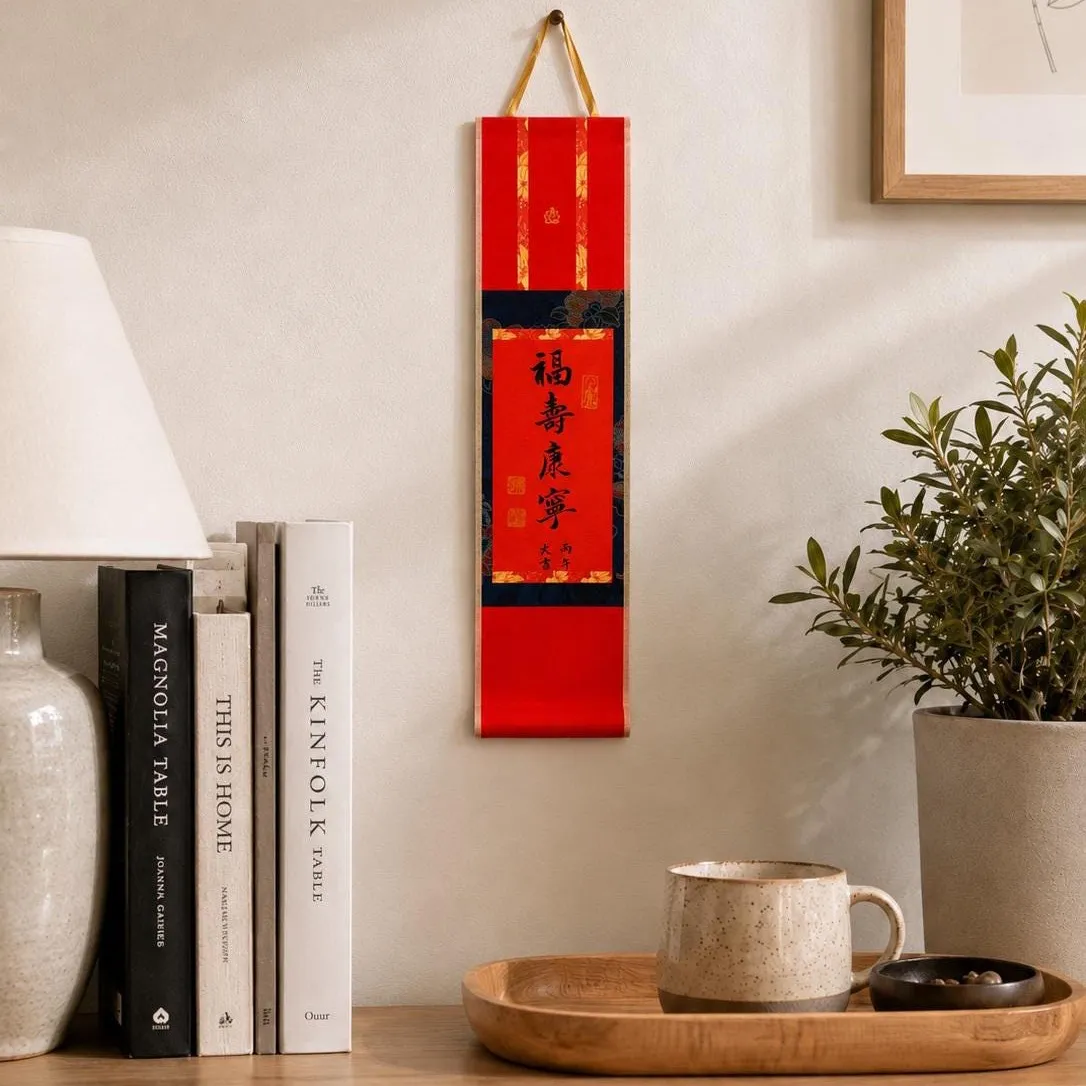
Photo shows a sample — yours will be brushed with 睿, or any character you choose.
Wall Scroll — for walls & housewarmingsfrom $38→ -
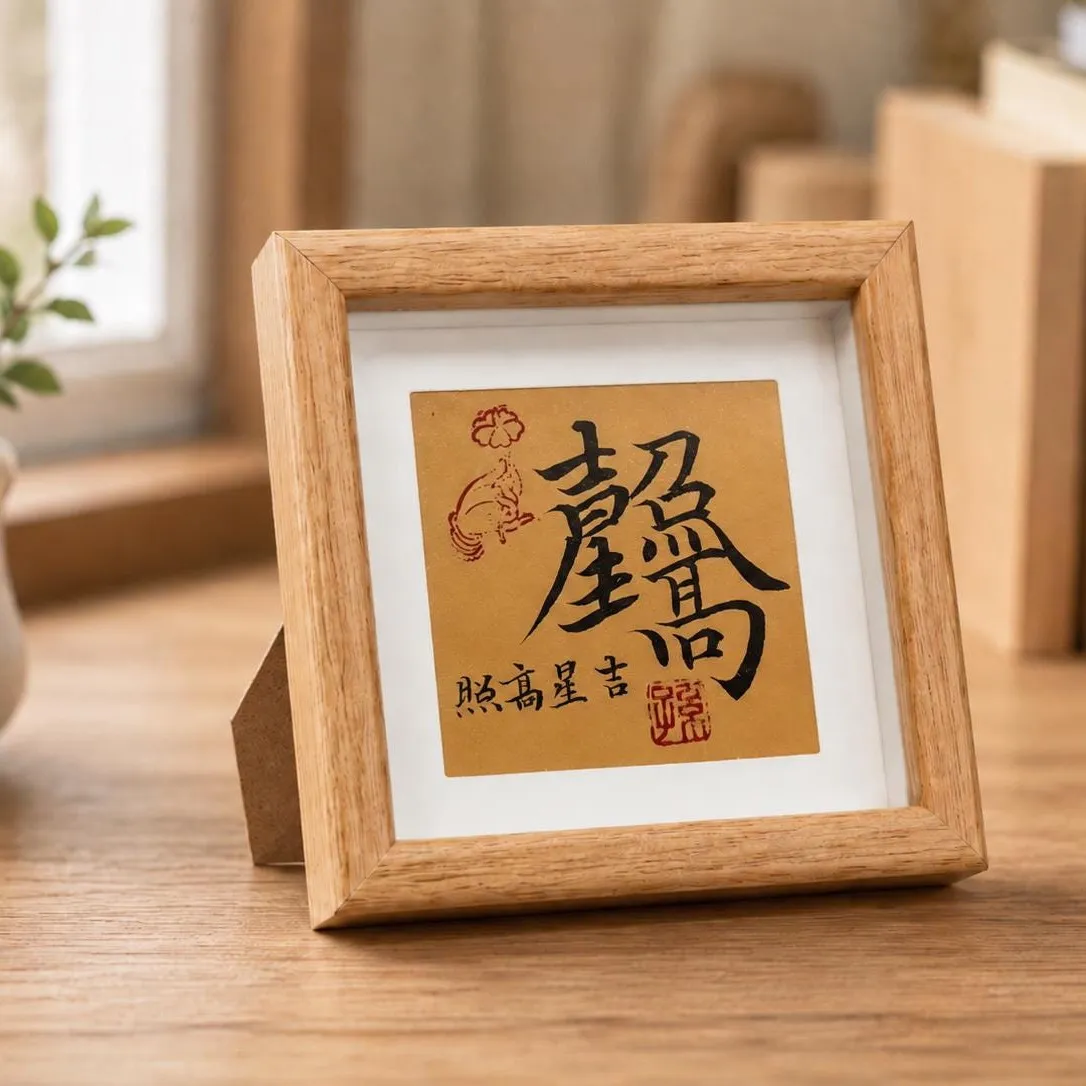
Photo shows a sample — yours will be brushed with 睿, or any character you choose.
Desk Frame — for desks, studies & studiosfrom $44→ -
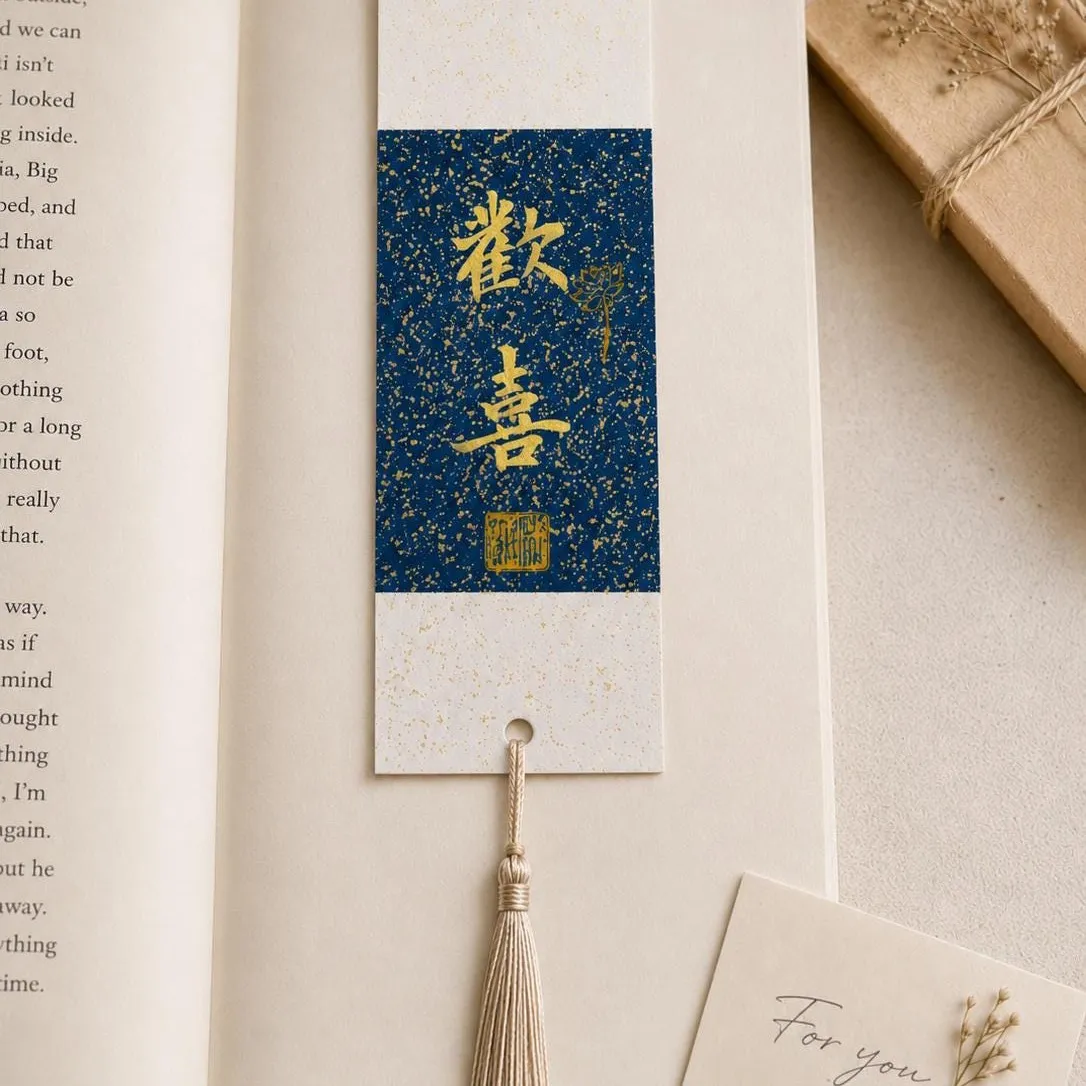
Photo shows a sample — yours will be brushed with 睿, or any character you choose.
Bookmark — for readers & small thank-yousfrom $14→

What people said after it arrived.
-
The item is fantastic. The customer service was genuine. Thanks!
— M.Verified purchase · from our Etsy shop reviews · -
They were great they gave me exactly what I asked for and then some. Thank you!!
— G.Verified purchase · from our Etsy shop reviews · -
It is well designed and customized. My daughter loves it. Amazing gift for family’s d friends
— S.Verified purchase · from our Etsy shop reviews ·
Each "睿" is hand-brushed by FuBlessings on rice paper.
See 睿 (Ruì) on Etsy →