马到成功 (mǎ dào chéng gōng) — Success on Arrival · The Horse Arrives, the Work Is Done
A 4-character phrase, not a single character.
马到成功 belongs to the moment of leaving. Someone is about to ride out, and the four characters skip the whole middle of the story: the horse arrives, the work is done, and nothing in between gets a word. That gap is the wish. It does not ask that a long effort pay off in the end; it asks that the effort turn out to be short. In the two Yuan plays the Ministry of Education dictionary cites, it is the rider’s own promise — Wu Zixu marching on Chu, the farmer’s son Xue Rengui talking his way into the army. The Qing novels also give it to the person who stays at the door: a wife, a host with the stirrup cup.
That is still where it lives. It is said before the exam, the interview, the pitch, the match, the first week in a new post; the Ministry of Education’s example is a wish before a competition. It rides on brass desk horses sold for offices, and it works hardest in a Horse year — CCTV’s greeting on the first morning of 2026’s Year of the Horse ran 祝你事业起飞,马到成功. 一帆风顺 wishes a journey smooth, and 步步高升 wishes a career another rung. 马到成功 picks one errand and wishes it finished on arrival. Once the result is in, the wish has done its job and the word is 恭喜.
A hand-brushed “马到成功” by Artist Lina Sun is a send-off that stays up after the door closes: for the coworker starting somewhere new, the friend with the exam or the launch in front of them, the boss setting out on something of their own — at graduation, or at the turn of the year. Give it before the start. It wishes the thing ahead of them short, and done.
- success on arrival
- a send-off for one undertaking
- may it be quick, and done
- said before the start, by someone who stays
- good luck Luck is open-ended. 马到成功 names one undertaking and asks for a particular outcome: that it be finished as soon as it is begun.
- congratulations That is 恭喜, said afterwards. As a wish 马到成功 belongs before the start; said after a win, it only remarks that the win came quickly.
- smooth sailing That is 一帆风顺, a wish about the passage. 马到成功 skips the passage: the horse arrives, and the work is done.
- hard work pays off That is 天道酬勤. 马到成功 has no word for effort; it wishes the effort short.
The short arms are the point: these readings don’t reach it.
- 马 the war horseIn the Yuan plays it is the commander's mount riding into battle. The phrase keeps the animal and drops the war: today the horse is whoever is setting out.
- 到 to arriveThe hinge of the phrase. 马到 is a time clause — the moment of getting there — and nothing stands between it and the result.
- 成 to completeTo bring something to its finish. Joined to 功 it makes the ordinary modern word for success, 成功.
- 功 the deed, the meritMerit earned by a finished task; in a war story, the deed of arms. 成功 together is the work done and counted.
characters
- 旗开得胜 qí kāi dé shèng the banner unfurls and the battle is won — its standing partner in send-off speech; related by sense, it shares no character
- 成功 chéng gōng success — the modern word the phrase ends on
- 大功告成 dà gōng gào chéng the great work is reported complete — the announcement at the end of a long job, where this phrase wishes the job short
- 马上 mǎ shàng right away; literally on horseback — the same speed in an everyday word
- 一路顺风 yī lù shùn fēng a following wind all the way — the send-off for the journey itself; related by sense, it shares no character
Cinnabar marks the characters 马到成功 actually contains. The dark row is a relative by meaning or by sound, not one shared stroke.
The Story Behind the Character
Wu Zixu leaves the Wu court with four hundred thousand men behind him and a debt to collect: the minister he blames for the deaths of his father and elder brother still holds power in Chu. In 郑廷玉's Yuan play on the campaign, he takes his leave of the king with a promise — 管取马到成功,奏凯回来 — count on it: the horse arrives, the work is done, the victory song comes home. Once he has gone, the king recites a verse of his own about him: 马到处谁敢相当, wherever his horse arrives, who dares stand against him? The Taiwan Ministry of Education's revised dictionary gives two book-proofs for the phrase, and both are Yuan plays: this one, and 张国宾's play about Xue Rengui, where a farmer's son uses the same four characters to talk his parents into letting him enlist.
The four characters are two clauses with nothing in between. 马到 is the moment of getting there; 成功 is the work done and counted. Chinese can leave the conjunction out and let sequence carry the logic, and here the omission is the meaning: arrival and completion land in one beat. There is no siege in the phrase, no campaign season, no word for effort at all. That is what it wishes for — not that a long struggle pay off in the end, but that the struggle turn out to be short.
Through the Qing novels the line keeps the same place in the scene, the moment of leaving. In 《粉妆楼》 Luo Zeng's wife says it at home on the day his frontier posting arrives, with 旗开得胜 in front of it and 早早归来 behind. In 《荡寇志》 it is spoken over the 上马杯, the stirrup cup poured before a rider mounts. Li Ruzhen's 《镜花缘》 carries the battlefield image into the examination hall, where one candidate calls good conduct the vanguard you send in ahead of you. The Ministry's concise dictionary now glosses the phrase as success that comes quickly and smoothly, and its example sentence is a wish spoken before a competition.
Classical lines
- roughly 500 years
- c. 13th–14th c. CE 《薛仁贵荣归故里》楔子
- c. 1797 《粉妆楼》第一回
- c. 1818 《镜花缘》第六十三回
凭着您孩儿学成武艺,智勇双全。若在两阵之间,怕不马到成功? Trust what your son has learned
the arts of war, and wit and nerve together. Put me between two battle lines, and how could I not win the moment my horse arrives? — Xue Rengui, who would rather practise the spear than plough, says it at his parents' door to win their leave to enlist. His father has just objected: the two of them are old, every eye and arm they have is looking to him, and if he goes there is no one to care for them. This line is the son's answer, and after it his mother tells him to go, and his father gives way and has silver packed for the road. On this stage the phrase is the rider's own promise, made to the people he is leaving.
但愿老爷此去,旗开得胜,马到成功,早早归来。 I only hope that, once you are gone, your banners win the first fight, your horse finds the work done on arrival, and you come home early.
Lady Qin to her husband Luo Zeng, posted to the frontier by a chief minister who means him harm. Here the formula has its standing shape: 旗开得胜 in front, 马到成功 behind, and the wish to have him back said in the same breath, by the one who stays.
即如出兵,先锋得利,那主帅先有倚傍。自然马到成功了。 It is like an army marching out: if the vanguard does well, the commander already has something to lean on, and naturally the horse arrives and the work is done.
Tang Guichen, preparing for the women's examinations Li Ruzhen imagines for Empress Wu's court, arguing that conduct goes into the exam hall ahead of the candidate. The war horse is still in the sentence, but the errand is now an examination — the use the phrase still has on the morning of a test.
Why This Character Matters
The phrase has no word in it for effort, and as a wish it has a fixed place in time. 马到成功 is said before the start — to a team before a pitch, a student before the exam, a colleague on the last day before the new post. Every scene quoted on this page places it before the event. Qing novels do also use it afterwards, when a returning commander reports to the throne that his campaign was over fast, but then it describes speed rather than wishing for it; the congratulation itself is 恭喜, or 大功告成 when a long job is finally reported finished. The wish also assumes one undertaking with an end. An exam, a launch, a match, a posting all qualify. A career or a marriage, with no single finish line, is better served by 步步高升 or 百年好合.
It runs in both directions across the doorway. In the two Yuan plays the dictionary cites, it is the departing man's own promise — Wu Zixu to his king, Xue Rengui to his parents — and Qing generals still say it of themselves. The same novels also give it to the people who stay: a wife, a host with the stirrup cup in his hand. The gift form is that second shape. It turns up on brass desk horses sold for offices, and it gets extra work in a Horse year, but on a wall it is what the Qing wife said — a short line from someone who is not going, for someone who is.
A few characters live near "马到成功" but mean something quieter, sharper, or more specific. Here's how to tell them apart.
skips the journey: arrival, then done
the passage itself, wished smooth
one undertaking, finished fast
a career, rung after rung
said before the start, looking forward
a record looked back on
the horse that arrives and finishes
the horse's stamina, wished on an elder
A graduation closes one undertaking, and 马到成功 is spent on the next one.
- A graduation closes one undertaking, and 马到成功 is spent on the next one. The phrase is a send-off, said before something starts, so at a graduation it looks past the diploma to whatever the graduate rides into next — the first interview, the qualifying exam, the job that begins in the autumn — and asks that it be over quickly. 学业有成 settles up the years just finished. This one leaves them alone and wishes the next ride short.
- New Year is when people start on the year's plans: the exam in spring, the transfer applied for, the stall that will open after the holiday. 马到成功 is the line for the person with one of those plans in hand. It works hardest in a Horse year — CCTV's greeting on the first morning of the 2026 Year of the Horse ran 祝你事业起飞,马到成功 — but it is not a zodiac greeting, and it suits anyone who starts the year with a definite thing to do. Said before the start, it wishes that thing finished on arrival.
Looking for a name? See Western names written in Chinese →
-
What occasions is 马到成功 given for?
People say 马到成功 to someone about to set out on one definite thing: an exam, an interview, a first job, a launch, a match. It is a send-off, so it belongs before the start and not after the result. FuBlessings suggests it for a coworker, a friend or a boss, at graduation, where it points at whatever the graduate starts next, and at Chinese New Year, for the person beginning the year with a plan. After the result it can only remark that a win came quickly; the congratulation itself is a different word.
-
What does 马到成功 (mǎ dào chéng gōng) mean?
马到成功 (mǎ dào chéng gōng) is a 4-character Chinese phrase for success on arrival, the horse arrives, the work is done. 马到成功 belongs to the moment of leaving. Someone is about to ride out, and the four characters skip the whole middle of the story: the horse arrives, the work is done, and nothing in between gets a word. That gap is the wish. It does not ask that a long effort pay off in the end; it asks that the effort turn out to be short. In the two Yuan plays the Ministry of Education dictionary cites, it is the rider's own promise — Wu Zixu marching on Chu, the farmer's son Xue Rengui talking his way into the army. The Qing novels also give it to the person who stays at the door: a wife, a host with the stirrup cup. The phrase has no word in it for effort, and as a wish it has a fixed place in time. 马到成功 is said before the start — to a team before a pitch, a student before the exam, a colleague on the last day before the new post. Every scene quoted on this page places it before the event. Qing novels do also use it afterwards, when a returning commander reports to the throne that his campaign was over fast, but then it describes speed rather than wishing for it; the congratulation itself is 恭喜, or 大功告成 when a long job is finally reported finished. The wish also assumes one undertaking with an end. An exam, a launch, a match, a posting all qualify. A career or a marriage, with no single finish line, is better served by 步步高升 or 百年好合.
-
Who brushes the 马到成功 calligraphy?
Each 马到成功 (Mǎ Dào Chéng Gōng) is hand-brushed to order by Artist Lina Sun in ink on rice paper — never printed, never repeated.
Bring 马到成功 home — choose how you'd like it brushed.
-
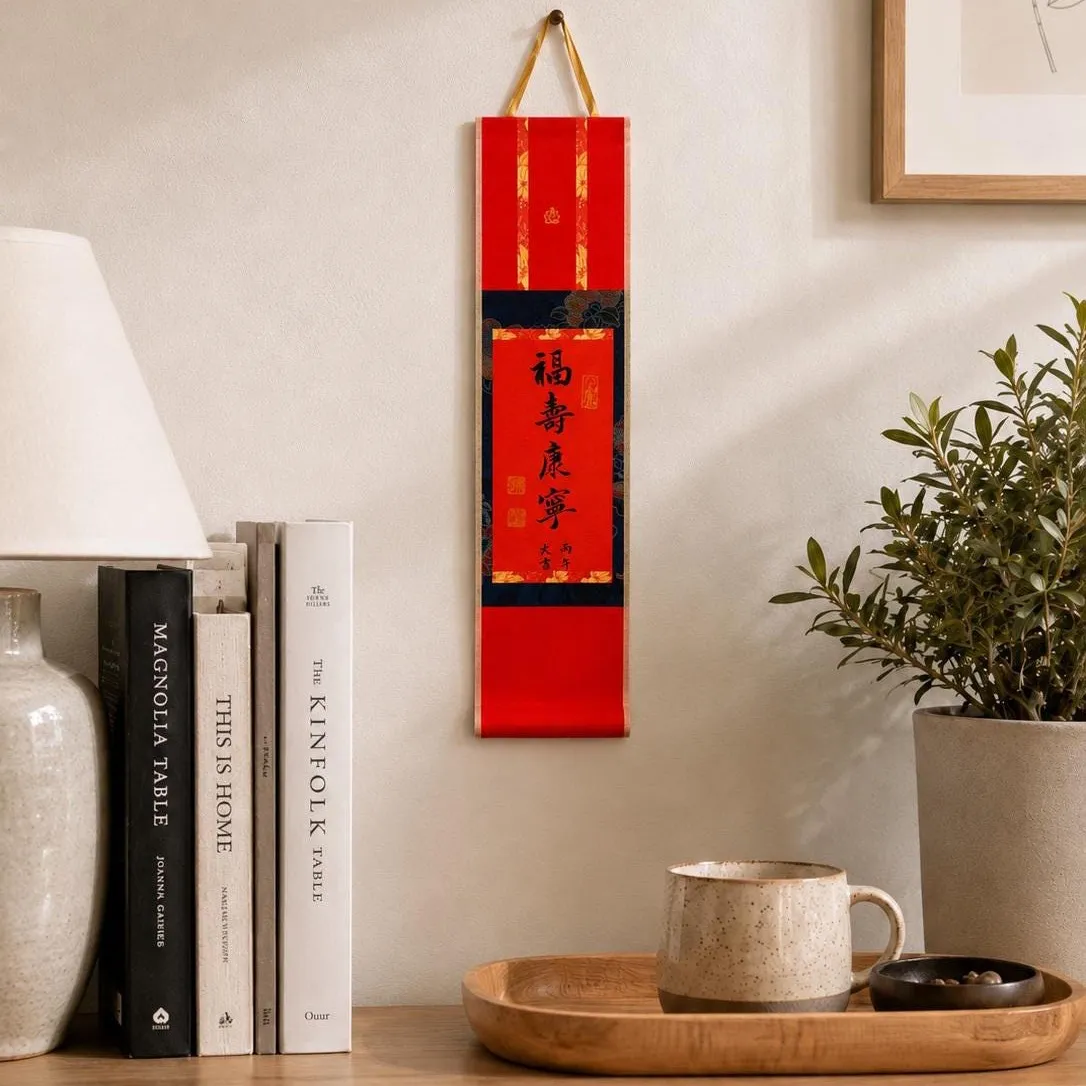
Photo shows a sample — yours will be brushed with 马到成功, or any character you choose.
Wall Scroll — for walls & housewarmingsfrom $38→ -
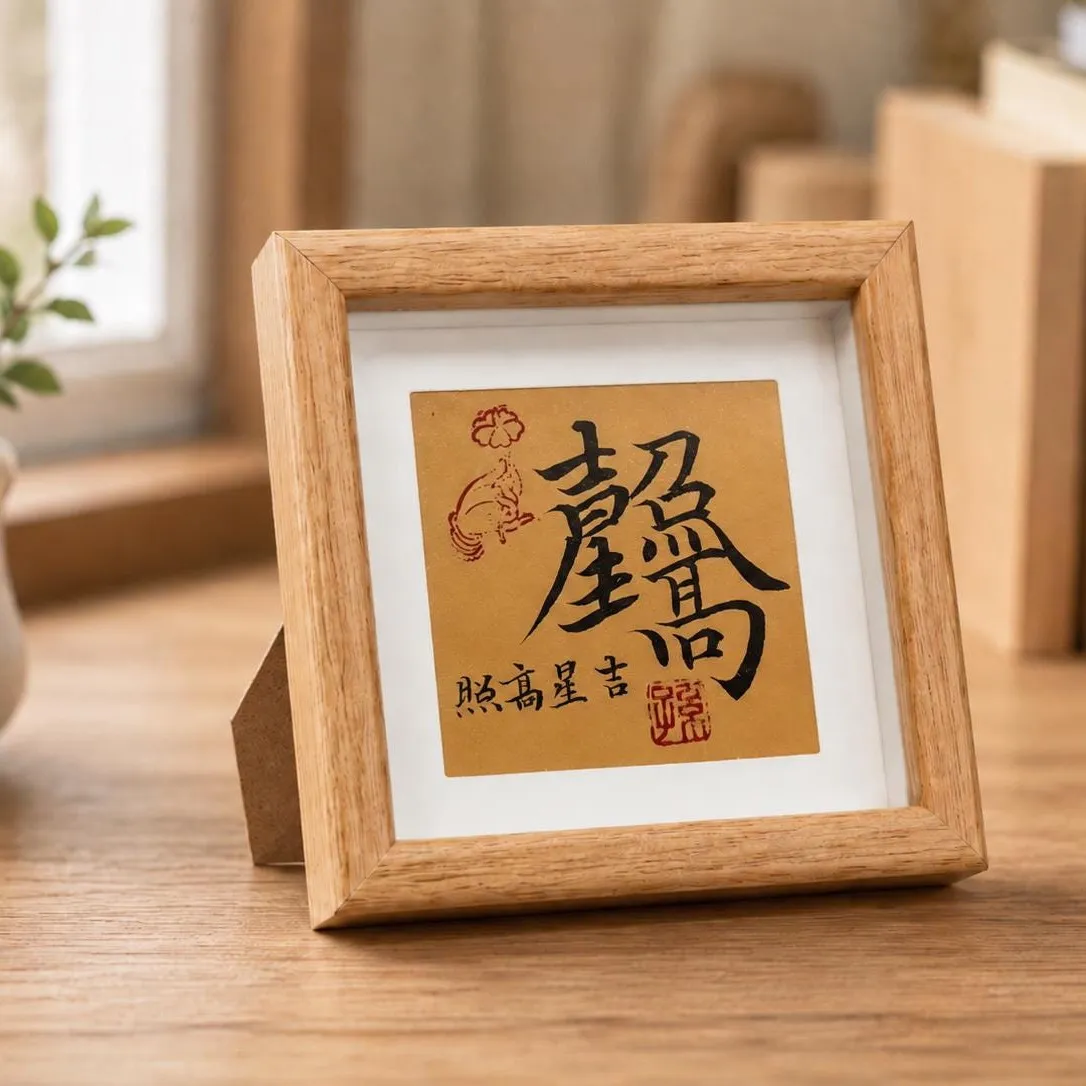
Photo shows a sample — yours will be brushed with 马到成功, or any character you choose.
Desk Frame — for desks, studies & studiosfrom $44→ -
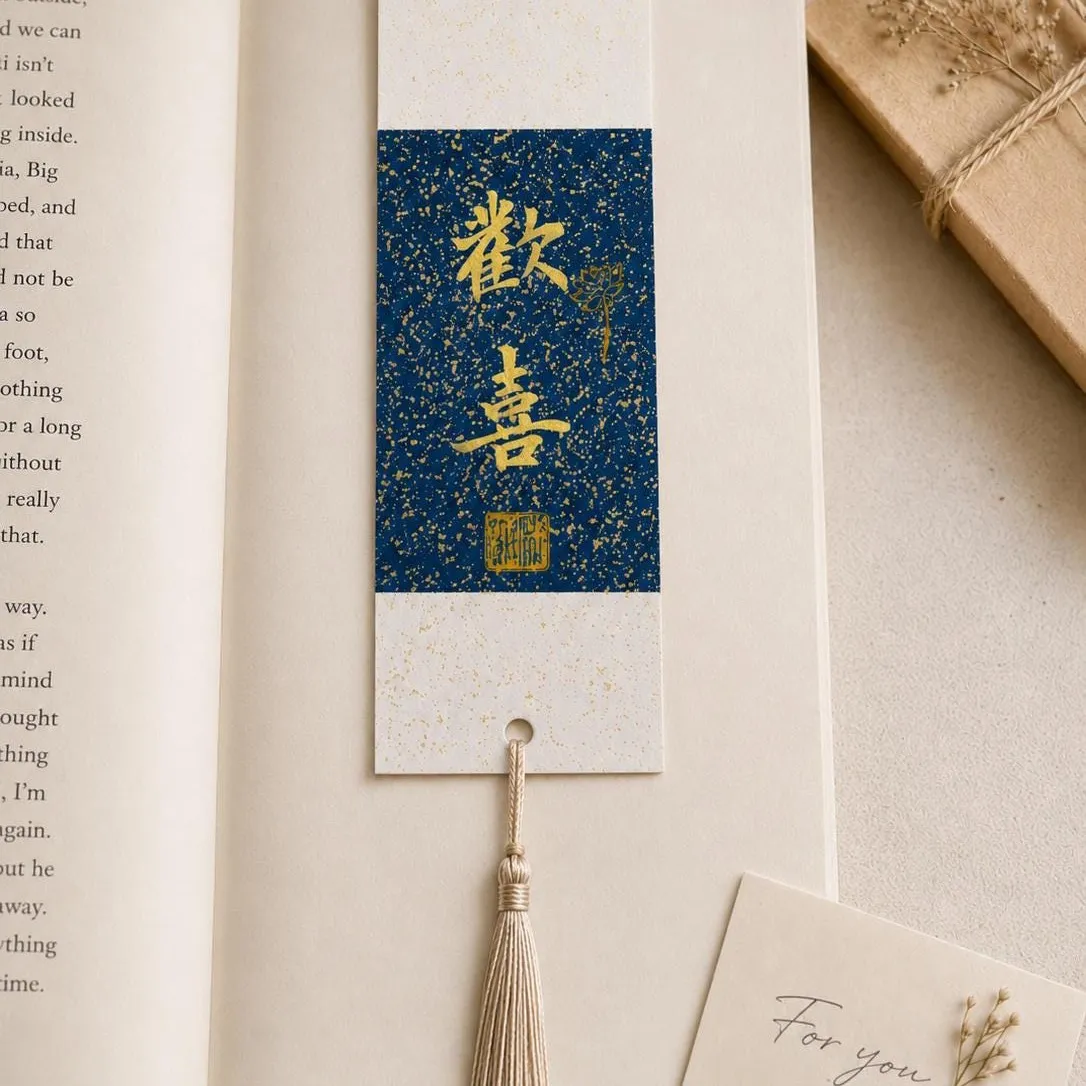
Photo shows a sample — yours will be brushed with 马到成功, or any character you choose.
Bookmark — for readers & small thank-yousfrom $17→
What people said after it arrived.
-
The item is fantastic. The customer service was genuine. Thanks!
— M.Verified purchase · from our Etsy shop reviews · -
They were great they gave me exactly what I asked for and then some. Thank you!!
— G.Verified purchase · from our Etsy shop reviews · -
It is well designed and customized. My daughter loves it. Amazing gift for family’s d friends
— S.Verified purchase · from our Etsy shop reviews ·
Each "马到成功" is hand-brushed by Artist Lina Sun on rice paper.
See 马到成功 (Mǎ Dào Chéng Gōng) on Etsy →