事业有成 (shì yè yǒu chéng) — The Thing You Built Is Standing
Two halves, not four pieces: 事业 is one noun, and 有成 — 有 plus 成 — is what gets said about it.
Read 事业有成 as a sentence and there is nobody in it. 事业 is the subject and 有成 is what is said about it: the thing is standing, it has something to show. Compare the shape of 步步高升, which has a climber in it and measures how high they have got, or 前程似锦, which describes the road out in front of somebody walking. Those two are about a person’s position. These four characters step around the person entirely and ask after the work, which is a smaller claim and a more checkable one — and it is the reason the phrase travels so easily between people who do not know each other’s business well.
Chinese keeps three nouns where English keeps one, and the entry price of these four characters is knowing which one they take. 工作 is the hours and the salary. 职业 is the post — what goes on the form. 事业 is the thing being built through both, and it comes apart from them constantly: a person can hold a fine 职业 and have no 事业, and the reverse is common enough that the language has a word for the appetite, 事业心, and a verb phrase for the act, 干一番事业 — to go and make something exist. 事业有成 asks after the third noun only — not what the post is called, not what it pays, not who has been promoted — which is why it can be said by someone who knows a person’s trade and nothing at all about their standing in it.
A hand-brushed “事业有成” by FuBlessings suits a colleague, a mentor, or a husband, at the lunar new year or on a birthday somewhere in the middle of a working life. It is not a scoreboard, and the reason is the clock rather than the grammar: 有成 can only be said to someone who has already put the years in, so it lands as a receipt for work done and not as a demand for work to come. Hung where the person who built the thing can see it, it says the plainest version of what a colleague or a spouse actually wants to say: that the years went into something, and that the something is holding.
- the thing you took up has something to show for it
- work that outlasted the job it started as
- years of it, and a result standing
- an undertaking finished enough to be seen by other people
- success Success in English lands on the person — she is successful, he is a success. These four characters put the work in the subject slot and never name the worker, which is what makes them sayable to someone whose actual record you are in no position to judge.
- a good career 职业 is the post you hold and 工作 is the hours you put in; 事业 is the thing being built through them, and Chinese keeps all three words because they come apart. A person can have a fine career and no 事业, and the reverse happens all the time.
- promotion That is 步步高升, which measures height inside a structure. 事业有成 says nothing about rank — a founder, a surgeon, a bookbinder with a forty-year shop can be 事业有成 without ever having been promoted by anyone.
- wealth The money words say so: 富贵, 招财进宝, 金玉满堂. 事业单位 — the schools and hospitals — carry the word for the opposite reason, because what they produce is not sold.
The short arms are the point: these readings don’t reach it.
- 事业 the thing being builtA board, not a job. 业 was the big decorated board on a bell rack before it was anything else, and what it kept through the senses that matter here is that a board carries what is set on it — 学业 is what a student has in front of them, 事业 what an adult has taken up. The 《周易》 definition adds the public half: it is an 事业 once other people have to live with it.
- 有成 there is completion in itNot 成功. 成功 credits a person with succeeding; 有成 says of the thing itself that it is finished. It is also the half that requires time to have passed, which is why the phrase cannot honestly be given to someone who has not started.
characters
- 学业有成 xué yè yǒu chéng the studies completed — the same frame with a student in it, and the phrase this one replaces once a person leaves school
- 一事无成 yī shì wú chéng not one thing accomplished — the exact negative, and the older phrase: 白居易 wrote it about himself on a New Year's Eve
- 功成名就 gōng chéng míng jiù the work done and the name made — adds the reputation, which these four characters deliberately leave out
- 事业心 shì yè xīn the appetite for building something past the job — the word that proves 事业 and 工作 are two different nouns
- 白手起家 bái shǒu qǐ jiā empty-handed, building from nothing — related by sense rather than by any shared character: it names the start of exactly the thing 有成 reports on at the far end
Cinnabar marks the characters 事业有成 actually contains. The dark row is a relative by meaning or by sound, not one shared stroke.
The Story Behind the Character
业 began as a piece of orchestra furniture. In 《诗经·大雅·灵台》, the poem about King Wen's tower and the crowds who built it in a day, the bells and drums come with their rack described part by part: 虡业维枞 — the uprights, the board across the front of them, the spikes along its top. 业 is that board. 《说文解字》 calls it 大版, a big board, hung to dress the frame that carried the bells and drums, its edge cut like saw teeth and painted white. Nothing in the character's earliest life has anything to do with work. It is the decorated facing fixed across the front of the frame, cut into teeth along the top, and the bells and chimes hung off those teeth.
The later senses run through the board rather than the bells. A 大版 is also what a text could be written across, and from there Chinese gets 学业 (studies), 肄业 (enrolled and not finished), 毕业 (finished) — three words still in daily use, all of them counting what a person has in front of them rather than what they are doing. 事业 is that same thing once the student has left school and taken up something bigger. The word gets an actual definition in 《周易·系辞上》, at the end of a chain: transform a thing and cut it to shape, that is called 变; push it out and put it into practice, that is called 通; take it up and set it before the people of the world, 谓之事业. The last step is what earns the word. 事业 is not the work you do; it is the work that has left you and reached other people.
The other half is older than it looks and narrower than 成功. 有成 does not say a person succeeded — it says of a situation that there is completion in it. Confucius used it to price himself: 苟有用我者,期月而已可也,三年有成. Twelve months for something to show, three years for the thing to be finished. As four fixed characters 事业有成 is modern, a greeting assembled out of those two classical parts rather than quarried whole from a text; the negative is the one with the pedigree, since 一事无成 — not one thing accomplished — comes from 白居易 counting his own white hair in a New Year's Eve poem to a friend. What the assembly does is put 事业 in the subject slot and 有成 in the predicate. The person who did the work is not in the sentence at all.
Classical lines
- roughly 600 years
- c. 10th–9th c. BCE 《诗经·大雅·灵台》
- c. 400 BCE 《论语·子路》
- c. 300 BCE 《周易·系辞上》
- c. 280 BCE 《荀子·劝学》
虡业维枞,贲鼓维镛。 The uprights and the board with its spikes, the great drum and the large bell.
One of the oldest places 业 appears in a text, and it is a carpentry term: the big decorated board across the front of a bell rack. Read the line and the modern word for a life's work turns out to be a piece of hardware, named for a plank the chimes were hung from.
举而错之天下之民,谓之事业。 To take it up and set it before the people of the world
this is what is called 事业. — The definition of the word, and it is the last term in a sequence that starts privately and ends in public. Whatever the thing was inside one person's head, it becomes an 事业 only at the point where other people have to live with it.
苟有用我者,期月而已可也,三年有成。 If someone would only employ me
twelve months and it would do, three years and it would be finished. — Confucius in his years of looking for work, quoting a price in time rather than salary. It is the sharpest classical use of 有成, and it comes with a schedule attached: a year to show something, three to have built it.
无冥冥之志者,无昭昭之明;无惛惛之事者,无赫赫之功。 Without the will that works in the dark there is no brilliance in the light; without the labor done in obscurity there is no dazzling achievement.
Xunzi puts the two halves in the only order they come in. The 事 in his sentence is the unlit part, and it is the same 事 that stands at the head of these four characters — which is why 有成 can only be said after the years have gone by, not before.
Why This Character Matters
These four characters expire. A child is wished 学业有成, an elder 身体健康 or 安享晚年, and somewhere between the two — from the first job to the last one — a person becomes eligible for 事业有成 and then stops being eligible again on retiring. What it asks after is something a specific stretch of life is supposed to contain, which is why receiving it is quietly a form of being taken seriously, and why it drops out of the messages the year somebody retires.
The line the 《周易》 drew still happens to fall in the same place. Chinese administrative vocabulary splits its organizations into 企业 and 事业单位 — enterprises on one side, and on the other the schools, hospitals, libraries and research institutes, whose output is set before the public rather than sold to it. In ordinary speech the same edge survives in the difference between 工作 and 事业: your 工作 is the hours and the salary, your 事业 is what you are building through them, and the two can come apart completely. 干一番事业 means to go and make something exist; 事业心 describes a person who has that appetite. English flattens all of it into career, a word that started as a carriage road and still describes a track rather than a thing standing at the end of it.
A few characters live near "事业有成" but mean something quieter, sharper, or more specific. Here's how to tell them apart.
the thing built, and whether it is standing
the person, and how far up the structure they have got
one undertaking, and the years it took
whatever was privately wished for, whatever it was
the result, with the effort left unmentioned
the effort, with the result left to heaven
事业有成 is what gets said to anyone of working age at New Year, and it does not name them.
- 事业有成 is what gets said to anyone of working age at New Year, and it does not name them. The subject of the sentence is not the person standing in front of you — it is the thing they have been building. It usually arrives second in a fixed run: 身体健康、事业有成 — health first, then the work. That order is not politeness. The health line is addressed to the body of the person you are talking to; this one steps past them to ask after something they made, which is why it survives being said to a colleague you like without knowing much about, a client, a cousin you see once a year. You are not claiming they are impressive. You are asking that the thing hold.
- 有成 keeps a clock inside it. The line it comes from is Confucius, out of office and looking for a ruler to hire him: give me twelve months and something will show, three years and there will be 成. A birthday is the one occasion built out of the same material — a count of elapsed years, handed over once a year whether or not anything happened in them. For an adult somewhere in the middle of a working life, these four characters are the birthday wish that takes the count seriously instead of talking around it.
Looking for a name? See Western names written in Chinese →
-
What does 事业有成 (shì yè yǒu chéng) mean?
事业有成 (shì yè yǒu chéng) is a 4-character Chinese phrase for the thing you built is standing. Read 事业有成 as a sentence and there is nobody in it. 事业 is the subject and 有成 is what is said about it: the thing is standing, it has something to show. Compare the shape of 步步高升, which has a climber in it and measures how high they have got, or 前程似锦, which describes the road out in front of somebody walking. Those two are about a person's position. These four characters step around the person entirely and ask after the work, which is a smaller claim and a more checkable one — and it is the reason the phrase travels so easily between people who do not know each other's business well. These four characters expire. A child is wished 学业有成, an elder 身体健康 or 安享晚年, and somewhere between the two — from the first job to the last one — a person becomes eligible for 事业有成 and then stops being eligible again on retiring. What it asks after is something a specific stretch of life is supposed to contain, which is why receiving it is quietly a form of being taken seriously, and why it drops out of the messages the year somebody retires.
-
What occasions is 事业有成 given for?
事业有成 is traditionally given for Chinese New Year, Birthday. 事业有成 is what gets said to anyone of working age at New Year, and it does not name them. The subject of the sentence is not the person standing in front of you — it is the thing they have been building. It usually arrives second in a fixed run: 身体健康、事业有成 — health first, then the work. That order is not politeness. The health line is addressed to the body of the person you are talking to; this one steps past them to ask after something they made, which is why it survives being said to a colleague you like without knowing much about, a client, a cousin you see once a year. You are not claiming they are impressive. You are asking that the thing hold. 有成 keeps a clock inside it. The line it comes from is Confucius, out of office and looking for a ruler to hire him: give me twelve months and something will show, three years and there will be 成. A birthday is the one occasion built out of the same material — a count of elapsed years, handed over once a year whether or not anything happened in them. For an adult somewhere in the middle of a working life, these four characters are the birthday wish that takes the count seriously instead of talking around it.
-
Who brushes the 事业有成 calligraphy?
FuBlessings hand-brushes each 事业有成 (Shì Yè Yǒu Chéng) to order, in ink on rice paper — never printed, never repeated.
Bring 事业有成 home — choose how you'd like it brushed.
-

Photo shows a sample — yours will be brushed with 事业有成, or any character you choose.
Wall Scroll — for walls & housewarmingsfrom $38→ -
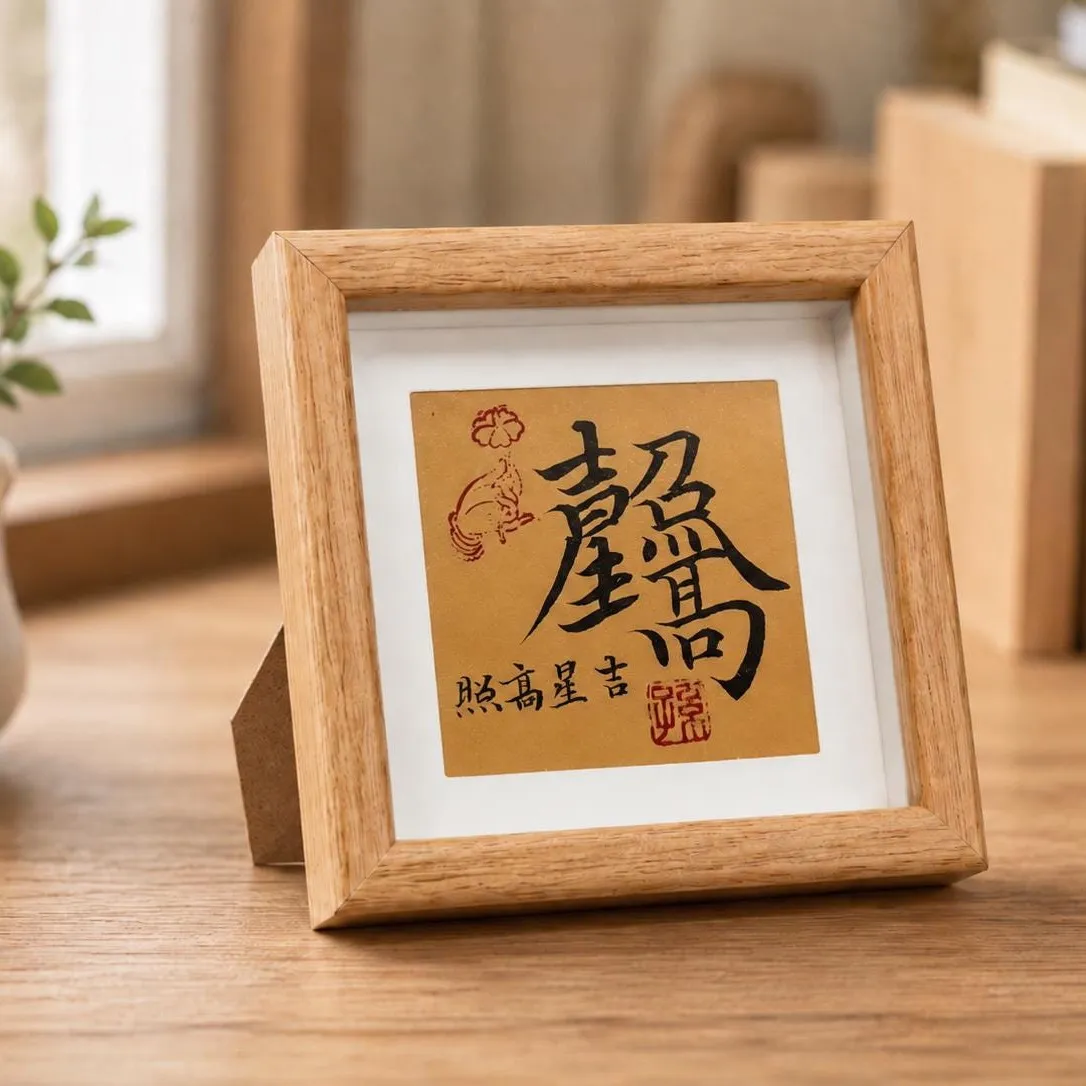
Photo shows a sample — yours will be brushed with 事业有成, or any character you choose.
Desk Frame — for desks, studies & studiosfrom $44→ -
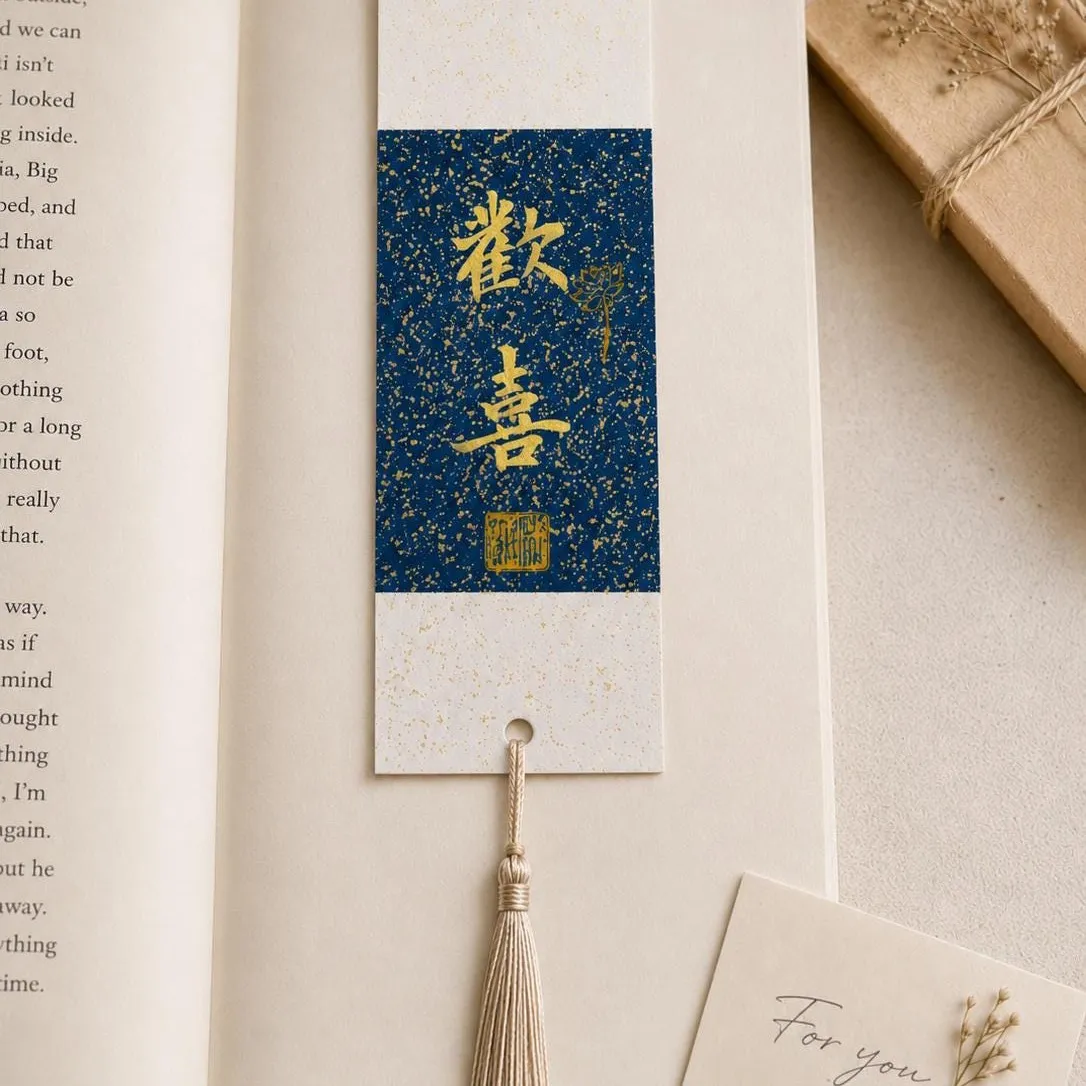
Photo shows a sample — yours will be brushed with 事业有成, or any character you choose.
Bookmark — for readers & small thank-yousfrom $14→

What people said after it arrived.
-
The item is fantastic. The customer service was genuine. Thanks!
— M.Verified purchase · from our Etsy shop reviews · -
They were great they gave me exactly what I asked for and then some. Thank you!!
— G.Verified purchase · from our Etsy shop reviews · -
It is well designed and customized. My daughter loves it. Amazing gift for family’s d friends
— S.Verified purchase · from our Etsy shop reviews ·
Each "事业有成" is hand-brushed by FuBlessings on rice paper.
See 事业有成 (Shì Yè Yǒu Chéng) on Etsy →