俭 (jiǎn) — Restraint · Frugality · Using Less Than You Could
A single character.
In the spring of 670 BCE the duke of Lu had the rafters of his father’s temple carved. He had painted the pillars red the autumn before, and an officer named 御孙 came to object — not that the state could not afford the work, because it plainly could, but that the duke had taken the larger option twice running. The sentence 御孙 used is the one that fixed this character for good: 俭,德之共也. Restraint is the common ground of the virtues. Everything difficult about the word is already sitting in that scene. 俭 is not a description of how much somebody has, and it is not sayable at all about a person with nothing to decline. It is only available to someone who could have done otherwise, which is why the 说文 defines it with 約, the cord that binds a bundle shut. The bundle has to be full before there is anything to bind.
In modern Chinese the character travels mostly in compounds, and the one that carries it is 勤俭. It is what gets said about a grandmother who fed a family through years when nobody was confident the food would last, and it is said with respect rather than pity, because it credits a skill rather than reporting a shortage. See 勤 → is the other half of that compound and the two do not substitute: 勤 is what a person put in, this is what they declined to take back out. The word to keep it away from is 吝啬, stingy — the same behaviour seen from outside, separated only by which direction it points. 俭 restrains what you spend on yourself; 吝啬 refuses to spend on anyone else. That line has stayed bright for two and a half thousand years, and a gift of this character depends on it entirely.
A hand-brushed 俭 by FuBlessings is for the person whose restraint you only worked out afterwards. For a father that usually takes the form of an inventory rather than a memory — the car that never got replaced, the trip postponed twice, the size of enough learned by watching instead of being told. For a grandparent it lands on a whole life’s arithmetic, and it is exactly the claim 御孙’s sentence was built to carry: not one virtue among several but the ground the others were standing on. For a manager it is narrower and more specific, the one who spends a budget as though it were coming out of a real pocket, which is rarer than it ought to be. See 谦 → is the neighbour for the same instinct aimed at status instead of spending.
- 约 — the 说文's entire gloss, and a word about cord pulled tight
- taking the smaller version when the larger one was affordable
- the plain running of a household — 节俭, 俭省
- the ground the other virtues stand on — 德之共也
- poor 贫 is a condition and this is a decision, and the gap between them is what makes the character a virtue at all. Both of its anchor scenes are about people who had the money — a duke ordering rafters, an official's household deciding what to put in front of a guest. Applying it to somebody who never had the option empties out the only thing the word was measuring.
- stingy 吝啬 is the vice this gets mistaken for, and Chinese separates the two by direction rather than by degree: this word points at your own consumption, that one at everybody else's. The same money, a different act, and a person can be conspicuously one without being the other.
- minimalist The modern aesthetic makes a claim about what a room looks like once it is finished. This character makes no claim about appearance whatsoever: 与其奢也宁俭 is a rule for choosing between two things you are standing in front of, and a household that follows it faithfully can end up looking entirely ordinary.
The short arms are the point: these readings don’t reach it.

- 亻 a person — the standing figure, and the reason the word is judged as behaviour and not counted as an amountNothing anywhere in the graph depicts a small amount, an empty vessel or a thin harvest. The only thing on the left is somebody doing something, and what they are doing is written on the right.
- 佥 the phonetic — written 僉 before simplification, and glossed by the 说文 in a single word, 皆, all of themThe seal glyph in the timeline above is the 儉 form, with 僉 still at full complexity. What the flattening kept is the sound, and arguably a residue of sense: this is the same element that gives 敛 and 检 their pull-it-back-in.
character
- 节俭 jié jiǎn thrift — the plain modern word, the one that turns up in a report or on a form
- 勤俭 qín jiǎn hard work and restraint together, nearly always running on into 勤俭持家, keeping a household on both
- 俭朴 jiǎn pǔ plain-living — said of a person's habits, dress and house rather than of their accounts
- 俭省 jiǎn shěng sparing in use; the everyday verb, said of someone who makes a thing last
- 简朴 jiǎn pǔ plain and simple. A relative by sound with no character in common — identical reading, but 简 is bamboo-strip simplicity, so 俭朴 measures how much you use and 简朴 how complicated it is
- 节约 jié yuē to economize. A relative by sense sharing no character, and the closest one there is: 约 is the single word the 说文 used to define 俭, so this is the dictionary's own gloss put back into modern speech
Cinnabar marks the characters 俭 actually contains. The dark row is a relative by meaning or by sound, not one shared stroke.
The Story Behind the Character
The 说文解字 defines this character with a single word: 約. That looks thin until you follow it. 約's own entry is about cord — binding, tying a bundle closed — and 段玉裁, annotating the dictionary in the Qing, made the connection explicit rather than leaving it to be inferred: 約者,纏束也。儉者,不敢放侈之意. A cord wound tight around a bundle; and a person who does not dare let things spread. Nothing in the definition is about scarcity. The image is a full thing held in.
The graph agrees. 亻 stands on the left, a person, which is why this is a word about conduct rather than about quantity, and 僉 sits on the right for the sound — a character meaning all or together, its seal form stacking a cover over two mouths and two figures, a group speaking with one voice. What is worth noticing is the company 僉 keeps. It heads a family: 斂 to gather in, 檢 to hold in check, 險 a narrow pass, 劍 a blade, 驗 to test against. Three of them — 斂, 檢 and 儉 — all describe pulling something back inside a boundary, whether grain, conduct or spending. Song philologists had a name for this kind of observation, 右文说, the claim that the right-hand element carries sense and not only sound. As a general rule it overreaches badly. On this particular family it is hard to unsee, and it puts the character in a neighbourhood of restraint rather than a neighbourhood of want.
What fixed the word was a single objection, and the interesting part of it is what the objector left out. Remonstrating with his duke over a set of carved rafters, 御孙 never once argued that the treasury was short. The complaint was aimed entirely at the choosing, which is the move that converts a quantity into a virtue: from here on the character measures the distance between what a person could have spent and what they did. A duke with a full treasury settling for plain timber is 俭. A household that cannot buy the timber at all is 贫, and nothing has been demonstrated about it either way. The 说文's cord holds up under this reading too. You cannot bind a bundle that was never there.
Classical lines
- roughly 1,700 years
- 670 BCE 《左传·庄公二十四年》
- c. 400 BCE 《论语·八佾》
- c. 1070 CE 司马光《训俭示康》
俭,德之共也;侈,恶之大也。 Restraint is what the virtues hold in common; excess is the largest of the faults.
御孙 said it to the duke of Lu, who had just had his father's temple rafters carved after painting the pillars red the year before. The duke could afford both, and that is the condition the sentence depends on: the objection is not to the expense but to the choosing. The line has been quoted ever since as the strongest thing said about restraint in the classical vocabulary, and it is doing more than praising it: 共 is glossed 同, the thing held in common, which makes the sentence a claim about where the other virtues came from rather than a rank ordering.
礼,与其奢也,宁俭;丧,与其易也,宁戚。 In ritual, rather than lavish, sparing; in mourning, rather than smoothly run, grieved.
林放 had asked what the root of ritual was, and 孔子 called it a great question before answering in two parallel choices. Neither half names an amount. Both are instructions for standing between two options you could have either of, which is the grammar this character always uses. The mourning clause explains the first: a funeral that runs perfectly is not the point, and neither is a ceremony that impresses.
顾人之常情,由俭入奢易,由奢入俭难。 But consider how people are: it is easy to go from restraint into luxury, and hard to go from luxury back into restraint.
司马光 is quoting 张知白, a chancellor who kept living on the scale of the junior clerk he had once been and was asked by his relatives why he bothered. The answer given is not a moral one. It is a forecast about the household: a salary is not permanent, a life is not permanent, and a family that has spent years learning to spend will not be able to stop on the day it has to. It is quoted constantly in Chinese on the subject of money, and it argues from arithmetic rather than from virtue.
Why This Character Matters
司马光 compiled the 《资治通鉴》 and served as chancellor, and when he wrote his son 司马康 a letter about restraint the persuasive part of it was an inventory. Reaching back to the 天圣 years (1023–1032), when his father held a post as 群牧判官, he lists exactly what a guest at their house could expect: wine bought from the market rather than brewed at home; fruit going no further than pears, chestnuts, dates and persimmons; food no further than dried meat, meat relish and vegetable soup; vessels of porcelain and lacquer. Rounds of wine at three or five, never more than seven. He set the list against what the capital had become in his own day, where a host who failed to lay in delicacies from a distance would be talked about afterwards, and stated his position without hedging: 众人皆以奢靡为荣,吾心独以俭素为美 — everyone else takes extravagance for glory; my own view is that restraint and plainness are what is beautiful. A household menu survived a thousand years because a father wanted his son to be able to see the size of enough.
The lines most Chinese children actually learn are not from the classics but from a seventeenth-century household text, 朱柏庐's 《治家格言》: 一粥一饭,当思来处不易;半丝半缕,恒念物力维艰 — for every bowl of porridge and grain of rice, think how hard it was to get here; for every half-thread of silk, remember the labour it cost. They go up on schoolroom walls and canteen posters, and they do the 左传's work at domestic scale, making the restraint about the effort behind a thing rather than the price on it. In ordinary modern speech the character has largely retired into two compounds: 节俭 for the plain habit, and 勤俭 for the pairing with hard work. 俭朴 describes a person rather than a budget, and Chinese writers substitute 简朴 for it constantly — one written character apart, identical out loud, and not the same word.
Worth saying plainly: a lone 俭 on a body does not land the way 德 or 静 does. Read as a word it comes through as 节俭, thrifty, and thrift in Chinese is a household compliment rather than a personal banner — the warm reading is close to 'careful with money', and an unkind reader will hear 小气 instead. The character is strongest where 御孙 put it, as a claim about where somebody's other virtues came from, and that claim is much easier to make in ink on a wall than in ink on an arm. It reads better as a gift than as a self-description, and best of all given to somebody who already lives that way and has never once said so. Given upward, to a manager, it needs the occasion to carry it: the character is read as praise when it lands on somebody's handling of a shared budget, and can be read as a comment on their personal spending when it does not.
Calligraphy Styles for Tattoos
- Regular script (楷书 kǎishū) Best for tattoos
俭 is 9 strokes in a narrow left-wide right structure, and every difficulty is on the right, where a small stack of short marks sits under a peaked cover. Regular script is the only style that reliably keeps that peak clear of the horizontal beneath it. Minimum recommended size: 1.75 inches.
- Running script (行书 xíngshū) Only at scale
亻 takes a running hand well. 佥 does not — its lower half is already a set of short disconnected marks, and a running brush merges them into two, at which point the character stops being distinguishable from its neighbours. Worth attempting at 3 inches or more, with a calligrapher who has written it before.
Common Mistakes to Avoid
- Getting 检 or 验 insteadIntended: 俭 — with the person radical 亻 standing on the left
俭, 检, 验, 险 and 剑 all carry 佥 and differ only in what stands beside it: a person, a tree, a horse, a mound, a blade. At tattoo scale the left-hand element is the smaller half and the one a stencil renders least carefully, so this is the substitution that actually happens. 检 means to inspect. Confirm the 亻 against a printed character before the needle, not against the stencil.
- Asking for 儉 and getting 俭, or the reverseIntended: whichever you decided on before the stencil was drawn
儉 is the traditional form at 15 strokes against 9, and it is what a reader in Taiwan or Hong Kong will expect. The two look quite different — 僉 written full is a tall stacked column that the simplified 佥 flattens right down. Neither form is more correct than the other; they belong to different reading publics, and no calligrapher will guess which one you meant.
Notes for Your Tattoo Artist
9 strokes, 左右 structure, and unbalanced by width rather than by height: 亻 takes about a fifth of the box and 佥 takes the rest. The failure mode is the reverse of most left-right characters — there is no crowding on the left, so the temptation is to let 佥 sprawl sideways, and a sprawling 佥 makes the word read as 检. Keep the right-hand element narrow and tall. The peak at its top must sit clearly above the horizontal underneath it, and that gap is the first thing to close at small sizes. Minimum 1.75 inches.
A few characters live near "俭" but mean something quieter, sharper, or more specific. Here's how to tell them apart.
what a person declines to use once it is already in hand
what a person puts in before anything is in hand — the two halves of 勤俭, and the reason the compound needs both words
restraint aimed at what you consume
restraint aimed at what you claim — the same instinct pointed at your standing rather than your spending
how much you use
how carefully you act — a person can be scrupulous about every decision and still live expensively, so the two never substitute
what a person declines to spend when spending was affordable
what a person declines to take when taking was permitted — one refusal at the inbound edge, and a person can pass that test every time and still spend freely on themselves
A father's 俭 is legible in a way most virtues are not: it shows up as the things a household did not buy.
- A father's 俭 is legible in a way most virtues are not: it shows up as the things a household did not buy. 司马光 made that argument to his own son by writing down a menu — four lines covering what his father's household in the 天圣 years put in front of a guest, down to the wine and the crockery — on the reasoning that a served dish is evidence and a maxim is not. What the character says on Father's Day is not that a man went without. It is that he took the smaller version every time, over years, while the larger one stayed available and unremarked.
- The 左传 gives this character an unusually large verdict: 俭,德之共也 — restraint is the quality every other virtue rests on. 司马光, quoting the line in 《训俭示康》, glossed 共 as 同 and drew out the consequence: whoever has the virtues arrived by way of this one. That makes an odd birthday character, because it is not a wish for the year ahead and not a compliment about temperament. It is a claim about where a long record of good conduct came from, and that is the sort of claim only a birthday with some years behind it can actually support.
Dad · Grandparent · Boss · or yourself
Looking for a name? See Western names written in Chinese →
-
What does 俭 (jiǎn) mean?
俭 (jiǎn) is the Chinese character for restraint, frugality, using less than you could. In the spring of 670 BCE the duke of Lu had the rafters of his father's temple carved. He had painted the pillars red the autumn before, and an officer named 御孙 came to object — not that the state could not afford the work, because it plainly could, but that the duke had taken the larger option twice running. The sentence 御孙 used is the one that fixed this character for good: 俭,德之共也. Restraint is the common ground of the virtues. Everything difficult about the word is already sitting in that scene. 俭 is not a description of how much somebody has, and it is not sayable at all about a person with nothing to decline. It is only available to someone who could have done otherwise, which is why the 说文 defines it with 約, the cord that binds a bundle shut. The bundle has to be full before there is anything to bind. 司马光 compiled the 《资治通鉴》 and served as chancellor, and when he wrote his son 司马康 a letter about restraint the persuasive part of it was an inventory. Reaching back to the 天圣 years (1023–1032), when his father held a post as 群牧判官, he lists exactly what a guest at their house could expect: wine bought from the market rather than brewed at home; fruit going no further than pears, chestnuts, dates and persimmons; food no further than dried meat, meat relish and vegetable soup; vessels of porcelain and lacquer. Rounds of wine at three or five, never more than seven. He set the list against what the capital had become in his own day, where a host who failed to lay in delicacies from a distance would be talked about afterwards, and stated his position without hedging: 众人皆以奢靡为荣,吾心独以俭素为美 — everyone else takes extravagance for glory; my own view is that restraint and plainness are what is beautiful. A household menu survived a thousand years because a father wanted his son to be able to see the size of enough.
-
What occasions is 俭 given for?
俭 is traditionally given for Father's Day, Birthday. A father's 俭 is legible in a way most virtues are not: it shows up as the things a household did not buy. 司马光 made that argument to his own son by writing down a menu — four lines covering what his father's household in the 天圣 years put in front of a guest, down to the wine and the crockery — on the reasoning that a served dish is evidence and a maxim is not. What the character says on Father's Day is not that a man went without. It is that he took the smaller version every time, over years, while the larger one stayed available and unremarked. The 左传 gives this character an unusually large verdict: 俭,德之共也 — restraint is the quality every other virtue rests on. 司马光, quoting the line in 《训俭示康》, glossed 共 as 同 and drew out the consequence: whoever has the virtues arrived by way of this one. That makes an odd birthday character, because it is not a wish for the year ahead and not a compliment about temperament. It is a claim about where a long record of good conduct came from, and that is the sort of claim only a birthday with some years behind it can actually support.
-
Is 俭 a good Chinese tattoo?
Worth saying plainly: a lone 俭 on a body does not land the way 德 or 静 does. Read as a word it comes through as 节俭, thrifty, and thrift in Chinese is a household compliment rather than a personal banner — the warm reading is close to 'careful with money', and an unkind reader will hear 小气 instead. The character is strongest where 御孙 put it, as a claim about where somebody's other virtues came from, and that claim is much easier to make in ink on a wall than in ink on an arm. It reads better as a gift than as a self-description, and best of all given to somebody who already lives that way and has never once said so. Given upward, to a manager, it needs the occasion to carry it: the character is read as praise when it lands on somebody's handling of a shared budget, and can be read as a comment on their personal spending when it does not.
-
Who brushes the 俭 calligraphy?
FuBlessings hand-brushes each 俭 (Jiǎn) to order, in ink on rice paper — never printed, never repeated.
Bring 俭 home — choose how you'd like it brushed.
-
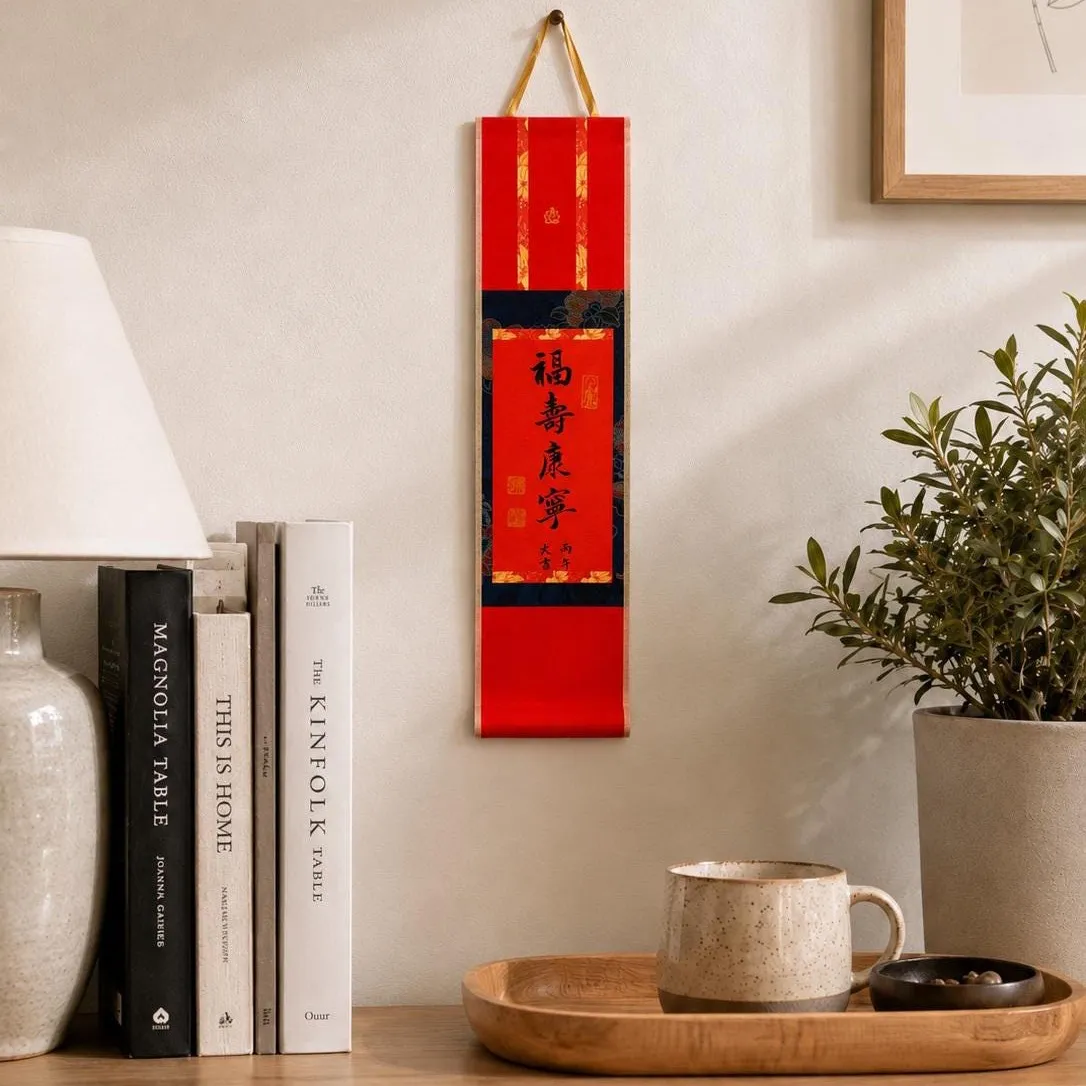
Photo shows a sample — yours will be brushed with 俭, or any character you choose.
Wall Scroll — for walls & housewarmingsfrom $38→ -
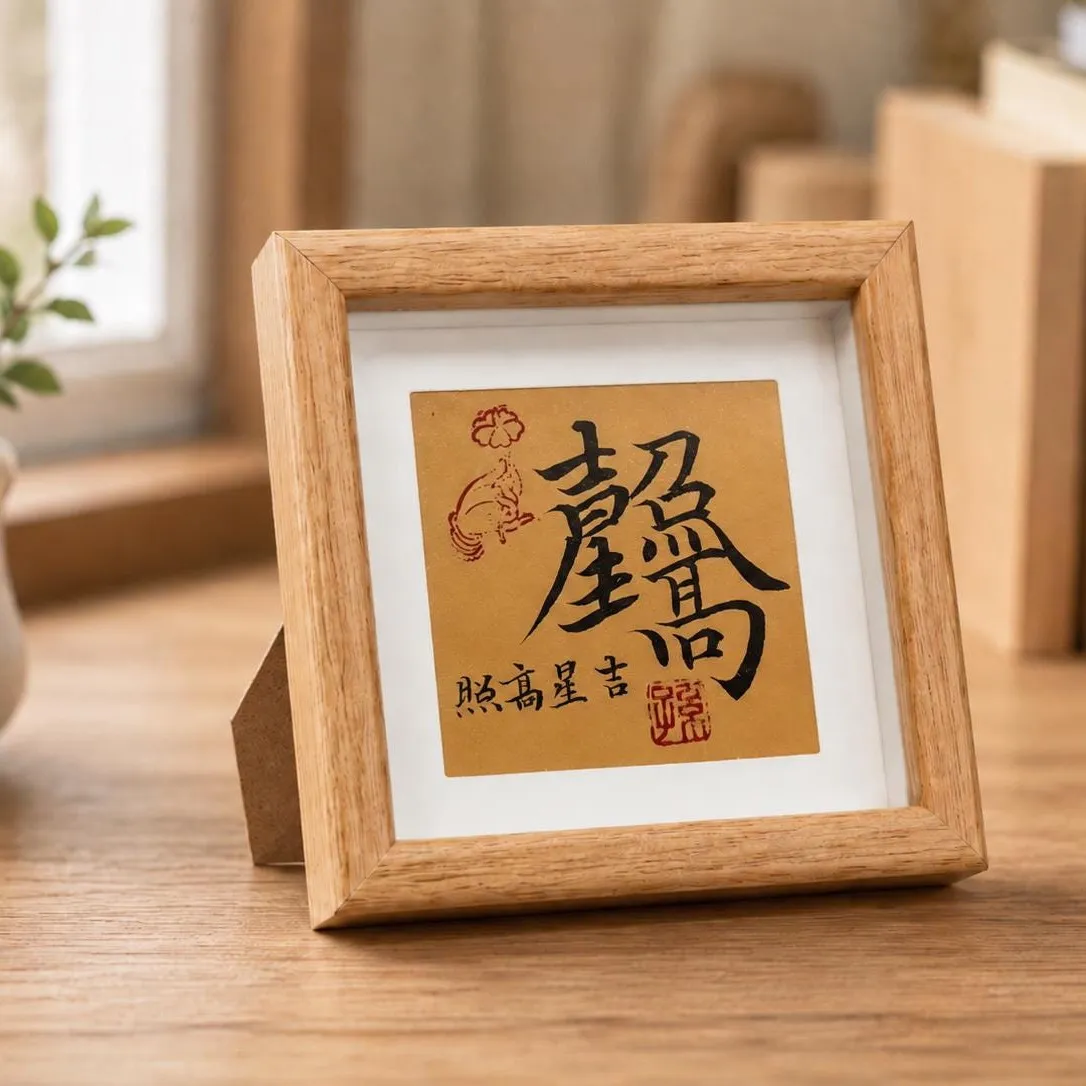
Photo shows a sample — yours will be brushed with 俭, or any character you choose.
Desk Frame — for desks, studies & studiosfrom $44→ -
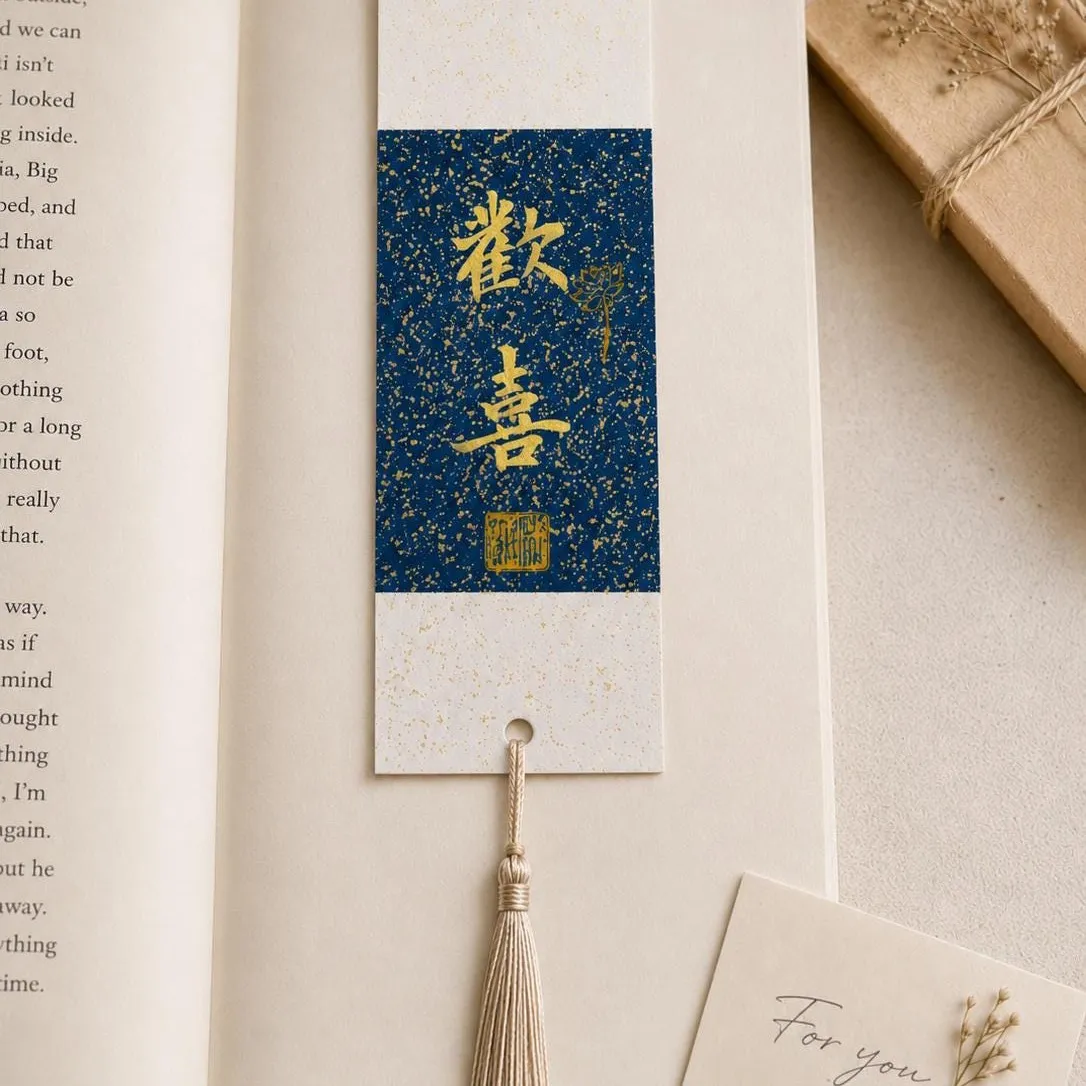
Photo shows a sample — yours will be brushed with 俭, or any character you choose.
Bookmark — for readers & small thank-yousfrom $14→
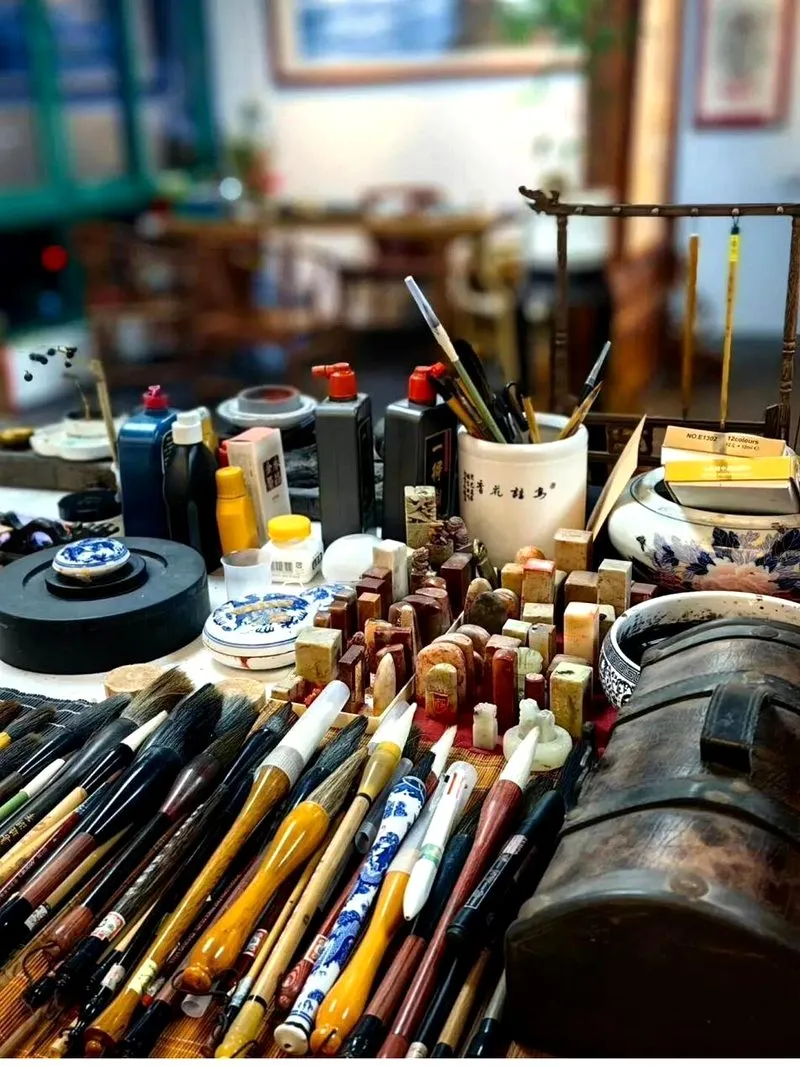
What people said after it arrived.
-
The item is fantastic. The customer service was genuine. Thanks!
— M.Verified purchase · from our Etsy shop reviews · -
They were great they gave me exactly what I asked for and then some. Thank you!!
— G.Verified purchase · from our Etsy shop reviews · -
It is well designed and customized. My daughter loves it. Amazing gift for family’s d friends
— S.Verified purchase · from our Etsy shop reviews ·
Each "俭" is hand-brushed by FuBlessings on rice paper.
See 俭 (Jiǎn) on Etsy →