廉 (lián) — Integrity · What Was Declined · The Edge Where a Person Stops
A single character.
孟子 put the test in ten characters and put it somewhere unexpected: 可以取,可以无取,取伤廉 — when you may take and may equally not take, taking damages your 廉. Not theft. Theft is easy and needs no special word. The case he means is the one where the thing is offered, the rule allows it, the person offering wants you to have it, and nobody afterwards would ever have raised it. 廉 is what happens in that moment, and only in that moment. It is why the word cannot be checked against a record — the record shows nothing taken and also nothing owed — and why in Chinese it attaches most naturally to people who spent years around something worth taking.
The character had an earlier life as part of a building: the edge of a raised hall floor, the line where the platform stops. Its whole moral career is that edge relocated onto a person. From the floor it went into government and never left: Hong Kong’s anti-graft agency is the 廉政公署, the 廉署 for short, and the oldest surviving Chinese standard for assessing an official is built on the same character. It also went the other way, downmarket. An edge is a thin thing and a thin price is a cheap one, so 价廉 sits on the shelf tag in every Chinese supermarket, the same character doing the budget version of the same job. The two readings are not a pun. A person who is 廉 and a price that is 廉 are being described in identical terms: measured at the edge, with nothing added on.
A hand-brushed 廉 by Artist Lina Sun is for someone in your family who had chances. For a father who worked somewhere with a till, a signature or a purchasing decision in it, and came home the same man — which is the kind of thing children learn late, from someone outside the family, and almost never from him. And for a grandparent, where the character comes with its own inheritance story: 杨震 sent a visitor’s gold back in the dark, then refused to buy land for his sons and left them a sentence instead, and his family has carried 四知堂 as its name ever since. It is the rare thing a person can hand down that was paid for once and cannot be spent.
- integrity in the narrow sense of what a person declines to take
- incorruptible in a post — 廉洁, 清廉, 廉政
- having edges — a visible line where someone stops
- spare, unpadded — and from there, low-priced
- honest Honesty is a claim about what a person says. 王逸's gloss on 廉洁 puts this one somewhere else entirely — 不受曰廉, not receiving is what the word names. Someone can be scrupulously truthful and still take everything put in front of them, and no Chinese speaker would call that person 廉.
- generous 孟子 sets the two tests in adjacent clauses and lets them fail separately — taking damages 廉, giving damages 惠. A close-fisted man can pass this one; an open-handed man can fail it.
- humble That is 谦's work, and the two pull in opposite directions. 廉隅 means edges and corners, and a 廉 person is defined by having them. 《论语》 uses the word for the older, better form of 矜 — self-regard with a line drawn around it.
The short arms are the point: these readings don’t reach it.
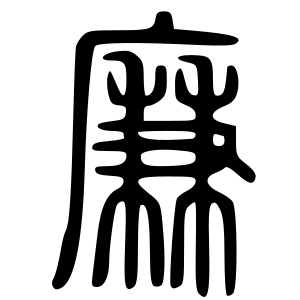
- 广 the roofed-structure element — and the reason this character begins as architecture说文解字 files 廉 under 广, used for a building raised against a slope or a wall, and glosses it 仄也 — narrow, angled. 段玉裁's 1815 commentary reads that as the edge of a hall and sends the reader to 《仪礼·乡饮酒礼》, where a mat is laid 于堂廉 and 郑玄 defines the term without ornament: 侧边曰廉, the side edge is what the word names. Every moral sense the character later carries is built on that one line.
- 兼 the sound element — 兼 (jiān) giving 廉 (lián)兼 is a hand closed around two stalks of grain at once. 说文 records it as sound only, 兼声, and goes no further. 段玉裁 does not push the graph either; he takes the character's later meanings off the edge rather than off the grain, listing them 引伸之为清也,俭也,严利也 — clear, sparing, stern and sharp-edged. Every one of those is a property of a rim.
character
- 廉洁 lián jié incorrupt — the standard modern compound, in continuous use since the 楚辞
- 清廉 qīng lián clear and unpadded — said of an official's whole record rather than a single decision
- 廉耻 lián chǐ the line, and the shame of crossing it — 不知廉耻 is among the harder things one Chinese speaker says to another
- 廉隅 lián yú edge and corner — 砥砺廉隅, to grind one's edges rather than smooth them off
- 礼义廉耻 lǐ yì lián chǐ the four cords of 《管子》 — the most-painted institutional motto of the twentieth century
- 物美价廉 wù měi jià lián good goods, unpadded price — the other descendant, and the one on the shelf tag
The Story Behind the Character
贾谊, writing to a young Emperor Wen around 174 BCE about why a ruler needs height, reached for a building — and for a word that by then had been doing moral work for centuries, used here in the plain architectural sense it came from. The sovereign is the raised hall, the officials are the flight of steps, everyone else is the ground: 陛九级上,廉远地,则堂高 — run the stairs up nine flights and the 廉 stands far off the earth, and the hall is high. Take the steps away, 廉近地, and the hall is nothing. The word there is not a virtue and not a person. It is a piece of architecture: the edge of the raised floor, the line where the platform stops and the drop starts. 说文解字 (c. 100 CE) files the character under 广, the element for a structure built against a slope, and glosses it in a single word — 廉,仄也, narrow, on an angle. The sound comes from 兼.
A floor edge is a thing you can stub a toe on, and that is the entire metaphor. 廉隅 — edge and corner — became the ordinary word for whatever part of a person refuses to round off, and 《礼记·儒行》 lists 砥厉廉隅 among the marks of a scholar: he grinds his edges sharp rather than smooth. 《论语·阳货》 catches the same shape going out of fashion. Confucius says the self-regarding men of an earlier generation were 廉, and the ones in front of him are merely 忿戾, touchy — the edge has degraded into a temper. What the edge is for turns explicit once the word enters government. 《周礼·天官·小宰》 sets out six counts on which the state audits its clerks, and 廉 is not one of the six; it is the first character of all six — 廉善, 廉能, 廉敬, 廉正, 廉法, 廉辨. 郑玄's commentary states the reasoning flatly: 既断以六事,又以廉为本. Competence, diligence, correctness and judgement were each to be assessed with the question of what the man had already taken folded inside them.
The move from the floor edge to the person was made long before 贾谊 sat down to write, and the 楚辞 catches it already complete. 《卜居》 puts 屈原 in a diviner's rooms asking the wrong kind of question — not what will happen but what to be — and sets the alternatives out in pairs: 宁廉洁正直以自清乎, shall I be 廉洁 and upright and so keep myself clear, against the option of going supple as grease and soft as tanned hide and fitting himself round whatever pillar is nearest. He gets no answer; it is not the kind of question a shell can take. 《招魂》, in the same collection, opens on the same compound — 朕幼清以廉洁兮 — and the Han commentator 王逸 glosses it in eight characters that have been quoted after him ever since: 不受曰廉,不污曰洁. Not receiving is 廉; not being stained is 洁. Which of the two pieces came first is not settled and may not be settleable, but by the time either was written the word already meant what it means now. A second line of descent runs the other way and is no less direct: an edge is a thin thing, a thin thing is spare, and from spare the road goes to 薄利 and out onto the price tag. One character, two futures — the official who will not take the gold and the merchant who will not pad the margin — and both are the same idea, which is that nothing has been added on at the edge.
Classical lines
- about a century
- c. 300 BCE 《孟子·离娄下》
- c. 300 BCE 《周礼·天官·小宰》
- c. 3rd c. BCE 《楚辞·卜居》
可以取,可以无取,取伤廉;可以与,可以无与,与伤惠。 When you may take and may equally not take, taking damages your 廉; when you may give and may equally not give, giving damages your generosity.
The whole test sits in the first two clauses. 孟子 is not discussing theft, which needs no argument and no character. He means the case where the thing is offered, the rule permits it, the person offering wants you to have it, and no one afterwards would have raised it. He also refuses to let 廉 collapse into generosity: he sets the two in adjacent clauses and lets each fail on its own terms.
以听官府之六计,弊群吏之治:一曰廉善,二曰廉能,三曰廉敬,四曰廉正,五曰廉法,六曰廉辨。 Judge the conduct of the officials by six reckonings: 廉善, 廉能, 廉敬, 廉正, 廉法, 廉辨.
Good at the work and well spoken of; capable; diligent; correct; by the book; discerning — six counts, and one character opening every one of them. 郑玄's commentary explains the design: 既断以六事,又以廉为本, judgement is passed on the six matters, and 廉 is the root of them. This is the oldest job description in Chinese for holding a post, and it treats the question of what a person took as prior to the question of how well they worked.
宁廉洁正直以自清乎?将突梯滑稽,如脂如韦,以絜楹乎? Shall I be 廉洁 and upright and so keep myself clear
or go smooth and glib, like grease, like softened leather, and fit myself around the pillar? — The piece puts 屈原, out of favour and out of options, in front of a diviner, asking him to settle not what will happen but what kind of man to be. The diviner sets down the yarrow stalks and tells him the tortoise shell does not answer questions of this kind. The word 廉洁 arrives here fully formed and already opposed to exactly the thing it is still opposed to.
Why This Character Matters
In older villages across Henan, Shaanxi and Hunan you can still find 四知堂 — Hall of the Four Knowings — painted over a doorway. It is a 堂号, the house-name a lineage carries, and this one belongs to the 杨 family. The story behind it takes four sentences in 《后汉书》. 杨震, travelling to take up a governorship in the second century, was visited at his lodging after dark by 王密, a man he had once recommended for office, who had brought ten catties of gold. 王密 pressed it on him with the obvious argument — 暮夜无知者, it is late, nobody will know. 杨震 answered: 天知,神知,我知,子知。何谓无知 — Heaven knows, the spirits know, I know, and you know; in what sense does nobody know? 王密 left ashamed. When friends later urged 杨震 to buy land so his sons would have something, he refused and gave them the line his descendants took as a name: 使后世称为清白吏子孙,以此遗之,不亦厚乎 — let later generations call them the children of a clean official; is that not a rich enough thing to leave them? The family took him at his word, and the name has been carried for eighteen hundred years.
The character also holds down a national-scale job. 《管子·牧民》 names four cords that keep a state from coming apart — 礼, 义, 廉, 耻 — and warns 四维不张,国乃灭亡: let the four go slack and the state is finished. That four-character line, 礼义廉耻, went onto school gates and assembly-hall walls across China and Taiwan through the twentieth century and is still legible on a good many of them. What this cord names is not how a person carries themselves, and not what they feel afterwards. It is the thing in front of them, and the hand not moving.
A few characters live near "廉" but mean something quieter, sharper, or more specific. Here's how to tell them apart.
the inbound edge — what a person declines to take in
the outbound one — what a person concludes they owe and pays out, with nobody having assigned it
one specific refusal at one specific edge: the thing was offered and was not taken
a whole condition with no murk in it — said of water, air, a room, a reputation
what is on the scale — whether the thing may be accepted at all, in the case where accepting is permitted
the weighing itself — the care taken over a step before anyone takes it
one narrow test, failable in a single evening, in private, over one envelope
the whole accumulated weight of a person's conduct, built up over a lifetime
Most of what gets said to a father on this day is about what he provided or what he withstood.
- Most of what gets said to a father on this day is about what he provided or what he withstood. 廉 is about neither. It reports on what was within reach and left alone — the discount that was offered, the job that could have gone to a cousin, the money that was there and stayed there. Children usually find out about decisions like that late, from someone else, or never. 孟子's rule is that the choices which test this character are exactly the ones nobody would have questioned, which means most of them left no trace anywhere except in the man who made them. For the father whose record is clean in the places no one thought to look.
- A birthday is a summing-up, and the sums people reach for are the visible ones — what was built, how far it went, who is in the room. 廉 counts the other column. 《周礼》 makes the logic plain: the state assessed its officials on six separate counts and put this character at the head of every one of them, because how well a man did the work was held to mean nothing until you knew what the work had cost the people around him. That is a fair thing to hand someone on the day their years are being counted, and it never needs revising as the total goes up, because what it credits is already closed — the occasions that came, and what was left where it lay.
Dad · Grandparent · or yourself
Looking for a name? See Western names written in Chinese →
-
What does 廉 (lián) mean?
廉 (lián) is the Chinese character for integrity, what was declined, the edge where a person stops. 孟子 put the test in ten characters and put it somewhere unexpected: 可以取,可以无取,取伤廉 — when you may take and may equally not take, taking damages your 廉. Not theft. Theft is easy and needs no special word. The case he means is the one where the thing is offered, the rule allows it, the person offering wants you to have it, and nobody afterwards would ever have raised it. 廉 is what happens in that moment, and only in that moment. It is why the word cannot be checked against a record — the record shows nothing taken and also nothing owed — and why in Chinese it attaches most naturally to people who spent years around something worth taking. In older villages across Henan, Shaanxi and Hunan you can still find 四知堂 — Hall of the Four Knowings — painted over a doorway. It is a 堂号, the house-name a lineage carries, and this one belongs to the 杨 family. The story behind it takes four sentences in 《后汉书》. 杨震, travelling to take up a governorship in the second century, was visited at his lodging after dark by 王密, a man he had once recommended for office, who had brought ten catties of gold. 王密 pressed it on him with the obvious argument — 暮夜无知者, it is late, nobody will know. 杨震 answered: 天知,神知,我知,子知。何谓无知 — Heaven knows, the spirits know, I know, and you know; in what sense does nobody know? 王密 left ashamed. When friends later urged 杨震 to buy land so his sons would have something, he refused and gave them the line his descendants took as a name: 使后世称为清白吏子孙,以此遗之,不亦厚乎 — let later generations call them the children of a clean official; is that not a rich enough thing to leave them? The family took him at his word, and the name has been carried for eighteen hundred years.
-
What occasions is 廉 given for?
廉 is traditionally given for Father's Day, Birthday. Most of what gets said to a father on this day is about what he provided or what he withstood. 廉 is about neither. It reports on what was within reach and left alone — the discount that was offered, the job that could have gone to a cousin, the money that was there and stayed there. Children usually find out about decisions like that late, from someone else, or never. 孟子's rule is that the choices which test this character are exactly the ones nobody would have questioned, which means most of them left no trace anywhere except in the man who made them. For the father whose record is clean in the places no one thought to look. A birthday is a summing-up, and the sums people reach for are the visible ones — what was built, how far it went, who is in the room. 廉 counts the other column. 《周礼》 makes the logic plain: the state assessed its officials on six separate counts and put this character at the head of every one of them, because how well a man did the work was held to mean nothing until you knew what the work had cost the people around him. That is a fair thing to hand someone on the day their years are being counted, and it never needs revising as the total goes up, because what it credits is already closed — the occasions that came, and what was left where it lay.
-
Who brushes the 廉 calligraphy?
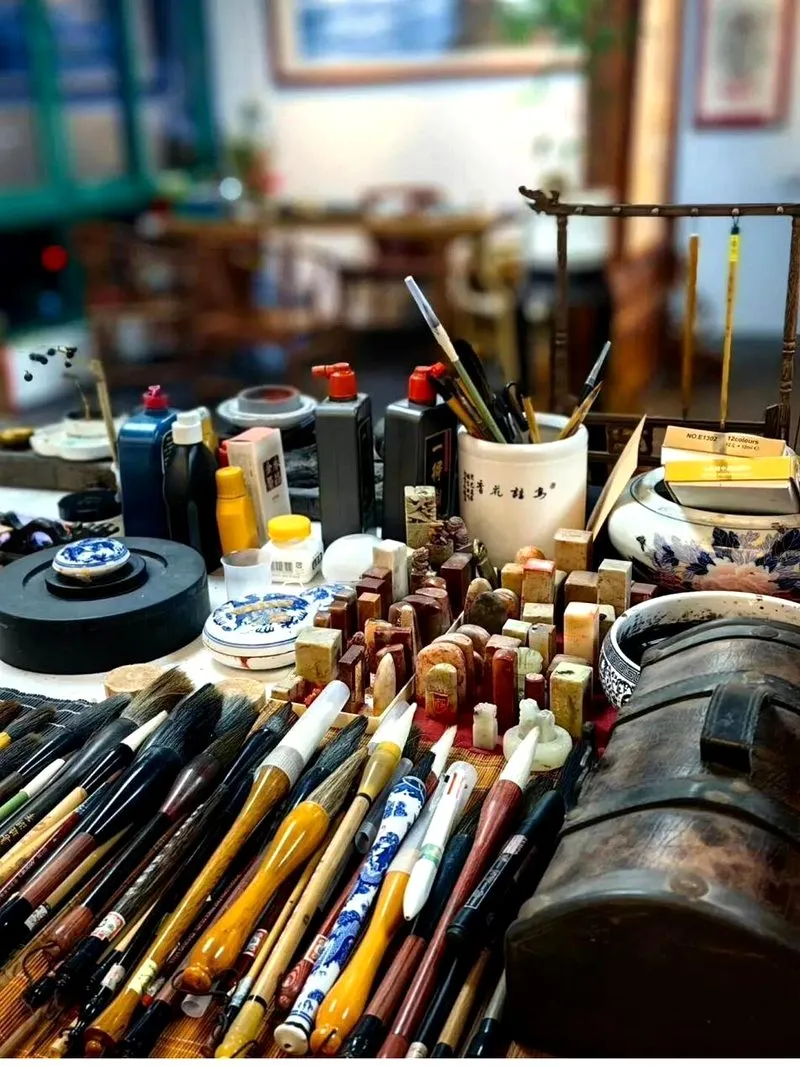
Each 廉 (Lián) is hand-brushed to order by Artist Lina Sun in ink on rice paper — never printed, never repeated.
Bring 廉 home — choose how you'd like it brushed.
-
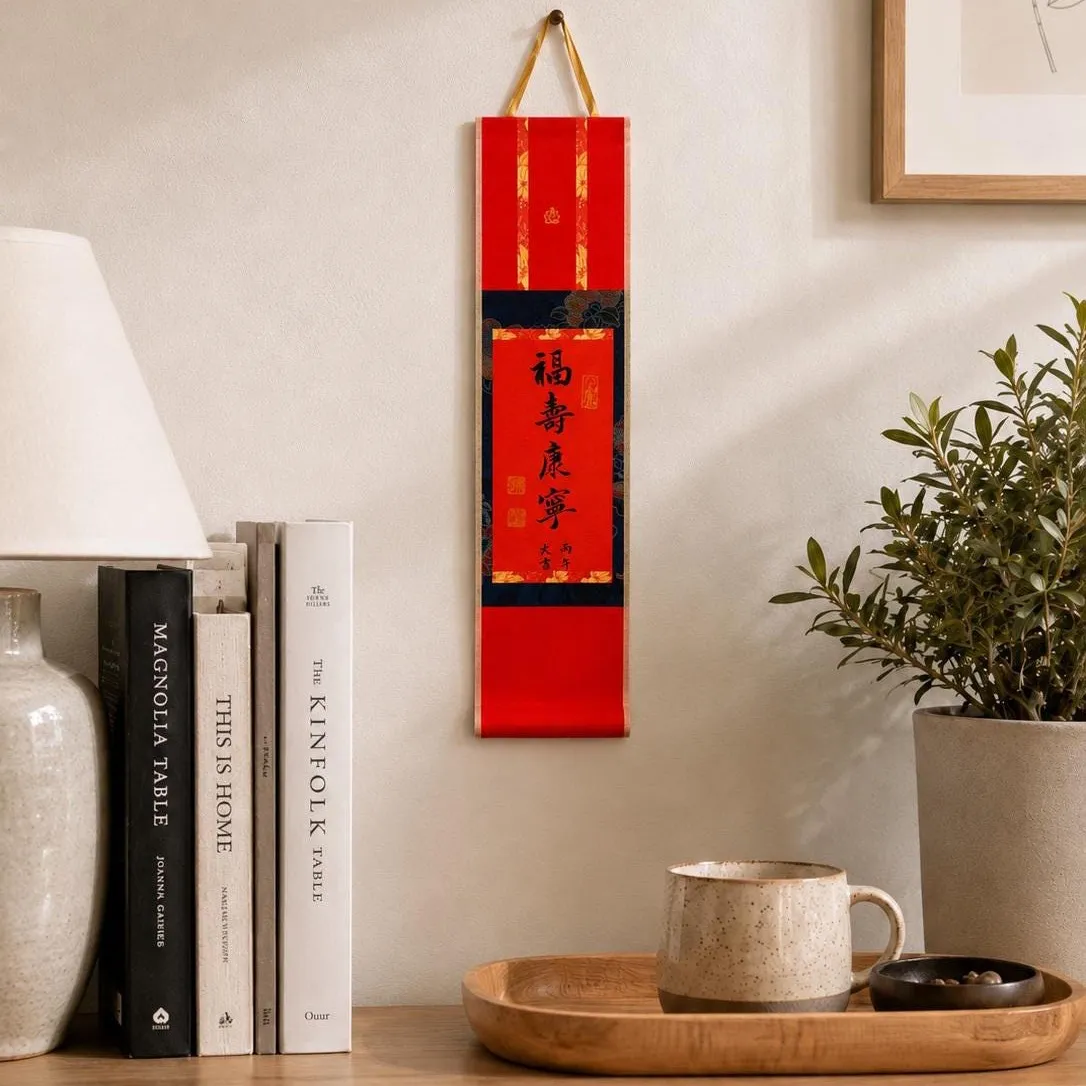
Photo shows a sample — yours will be brushed with 廉, or any character you choose.
Wall Scroll — for walls & housewarmingsfrom $38→ -
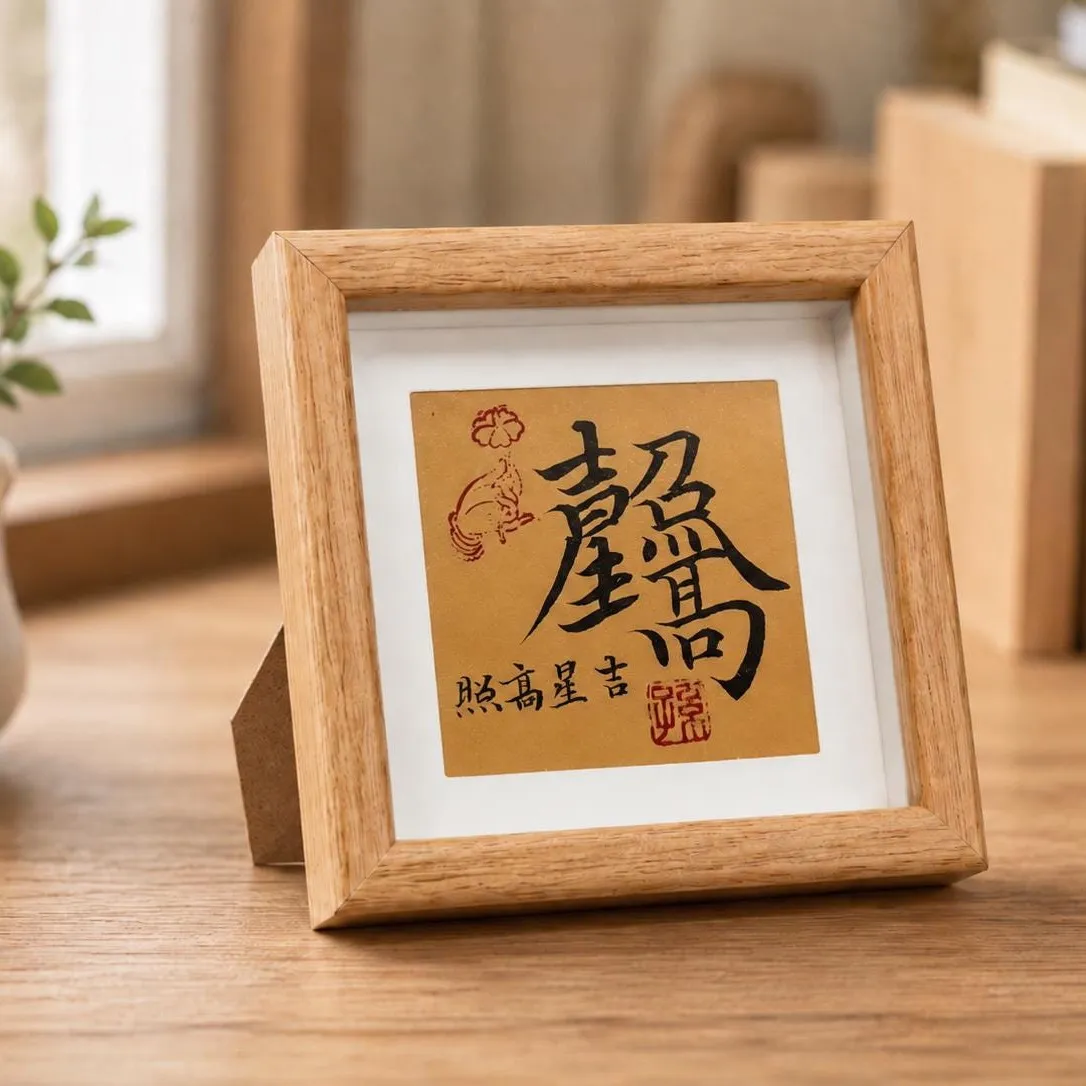
Photo shows a sample — yours will be brushed with 廉, or any character you choose.
Desk Frame — for desks, studies & studiosfrom $44→ -
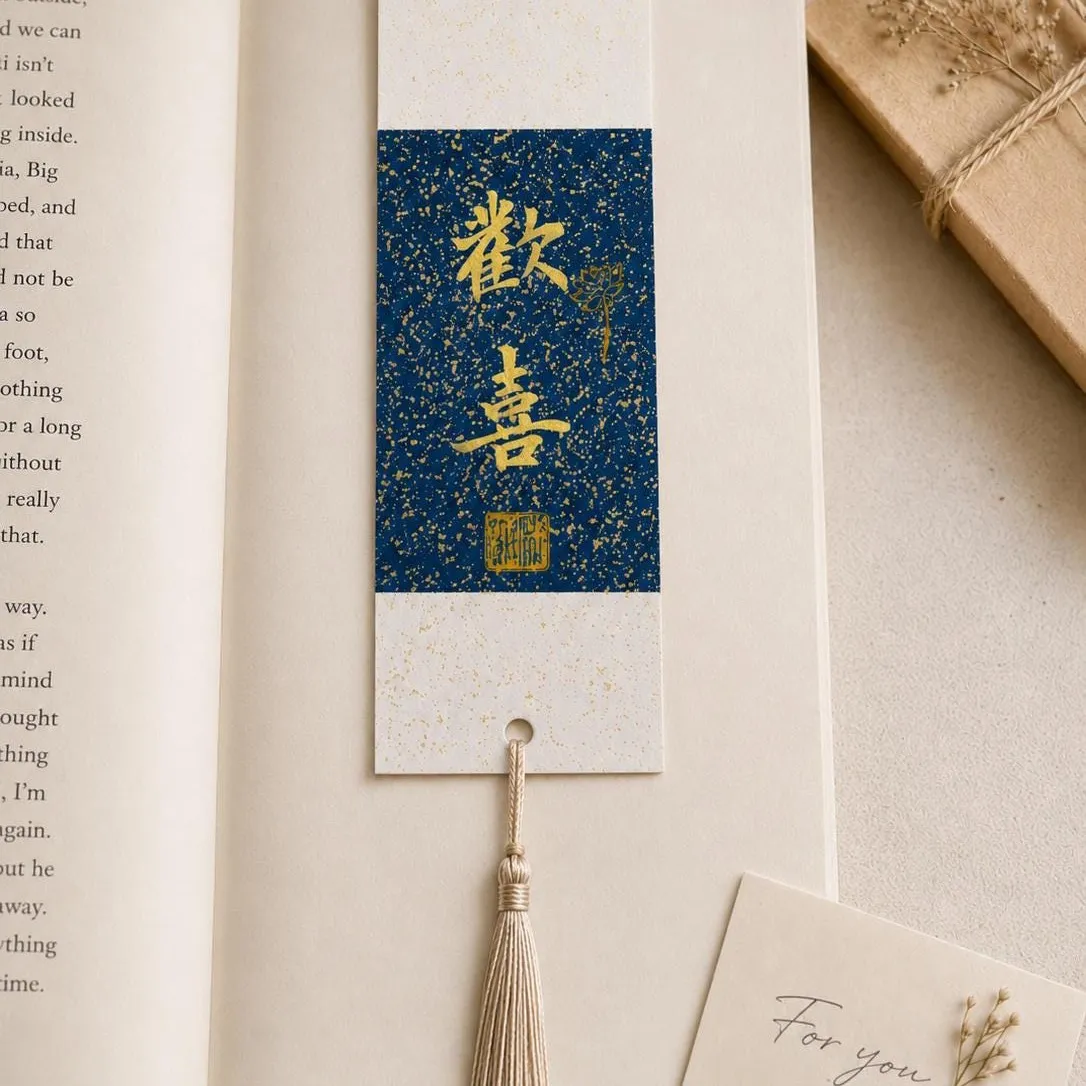
Photo shows a sample — yours will be brushed with 廉, or any character you choose.
Bookmark — for readers & small thank-yousfrom $17→
What people said after it arrived.
-
The item is fantastic. The customer service was genuine. Thanks!
— M.Verified purchase · from our Etsy shop reviews · -
They were great they gave me exactly what I asked for and then some. Thank you!!
— G.Verified purchase · from our Etsy shop reviews · -
It is well designed and customized. My daughter loves it. Amazing gift for family’s d friends
— S.Verified purchase · from our Etsy shop reviews ·
Each "廉" is hand-brushed by Artist Lina Sun on rice paper.
See 廉 (Lián) on Etsy →