弘 (hóng) — Widening What You Were Handed · Giving It More Room · Carrying It Past Where It Reached
One character, and a left-right build rather than a single unit: 弓 takes the whole left side, and the two strokes beside it are there for the reading, not for the sense. Nothing on the right-hand side of this character means anything.
弘什么? Widen what? That is the question a Chinese reader tends to reach for when this character turns up on its own, and it is not pedantry — standing alone, the word behaves like a verb with a hole in it where the object goes. 孔子 built the most quoted sentence about it out of exactly that property: 人能弘道,非道弘人, a person can widen the way, and the way does not widen the person. Both halves use the same verb and only the subject moves. What the second clause rules out is the offer that large words tend to make quietly, that attaching yourself to something big is a way of becoming big. This one runs the other way. Whatever was handed to you is only as wide as the person carrying it makes it. 承 is the character for getting under a load in the first place. See 承 → This is the one for what happens to it afterwards.
The verb turns up wherever something is being carried past the person who received it. A temple posts 弘法 and means the teaching goes out beyond the walls. A guild 弘扬s a craft and means more people will be practising it next year than this one. 恢弘 holds the other half of the word’s life, the adjectival half — a 恢弘 hall or a 恢弘 piece of music is one built at a size somebody had to decide on, and 诸葛亮 used the same two characters as a verb in 227. The pairing that carries the most weight is 弘毅, out of 曾子’s sentence about what a scholar cannot do without: 士不可以不弘毅,任重而道远, breadth and resolve, the burden heavy and the road long. One names how wide the work is; the other names whether you put it down. See 毅 →
A hand-brushed 弘 by Artist Lina Sun is for the person the word can take as its subject. For a father that is the domestic version and it is easy to overlook, because the things he widened were handed to him too — a trade, a household, a standard for how a job gets finished, none of which is where he found it. For a boss or a mentor the claim is sharper and more checkable: the team, the practice, the standard is bigger on their way out than on their way in, and other people are inside it now. For a grandparent it is the long reading, taken over a stretch nobody else in the room has seen from both ends. Its twin 宏 reports the same size as a fact about the thing. See 宏 → This one says who made it that size.
- carrying something further than it reached — 弘扬, 弘法, 弘道
- widening what somebody else built and handed over — 恢弘, 光大
- the size of what somebody has taken on — 弘愿, a vow with no finishing line in it
- breadth in a person, counted as capacity rather than as achievement — 弘毅, 宽宏
- great 伟 is a judgment about a person, complete in itself, and it can stand alone on a page. This one is rarely complete. Its flat adjectival uses are classical and have mostly gone over to 宏, so a modern reader meeting a bare 弘 goes looking for the object — 弘什么, widen what?
- promote 推广 pushes a thing out to more people and stays neutral about whether it deserves the room. 弘扬 asserts that it does. The difference shows in what each can take: a product is 推广, a craft is 弘扬, and swapping them is a joke in either direction.
- ambitious An ambition points at your own future and needs nothing outside it to be true. In its live modern sense this character takes an object that is not you — a trade, a teaching, other people's morale — so the evidence for it sits in the object rather than in the person, and it fails quietly when the object is unchanged.
- broad 博 describes a condition already arrived at: 博学 means the learning is in there. 弘 is the act of extending an edge, which is why it can fail and why it can be dated. One is a measurement of a person; the other is something a person did on a particular set of afternoons.
The short arms are the point: these readings don’t reach it.
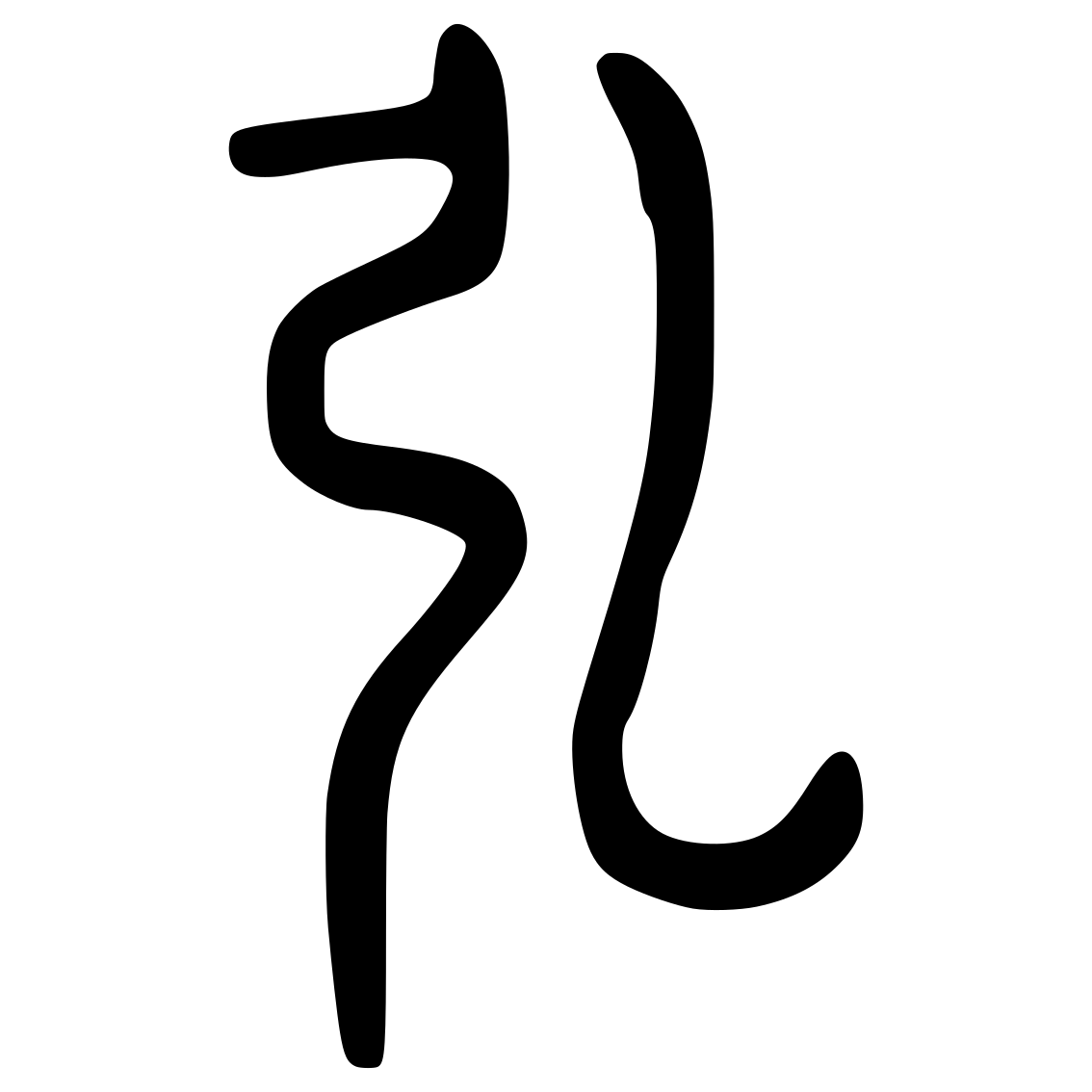
- 弓 a bow — the frame of the character and the thing whose sound it first namedCompressed to a narrow column on the left, as 弓 always is in this position, with its closing hook turned up short instead of swept out to the right. That restraint is where the room for the other half comes from.
- 厶 the sound element, from 肱 — the upper armNot the 厶 of 私. In the oldest forms it is not a 厶 at all but a plain mark laid against the bowstring to point at the spot the noise comes from. 许慎 read the seal-script version as the old graph for 肱, present for its reading rather than its sense — the same 肱 element that sits under the roof in 宏.
character
- 弘扬 hóng yáng to carry forward and give more room to — the ordinary modern verb for what is done with a tradition, a craft or a standard
- 弘法 hóng fǎ to spread a teaching; Buddhist in origin and still the plain word for it
- 弘愿 hóng yuàn a vow taken at a size that makes finishing it beside the point; Buddhist in register, and the 四弘誓愿 are its standard set
- 恢弘 huī hóng magnificent, of a building or a piece of music — and, in 诸葛亮's usage, the verb: to enlarge
- 弘毅 hóng yì breadth and resolve as a pair, out of 曾子's line about the burden being heavy and the road long
- 宽宏大量 kuān hóng dà liàng big enough not to be made small by an offence. A relative by sound rather than by character — the 宏 in it is 弘's homophone twin, and the classics borrowed one for the other long before the 乾隆 taboo did it again
- 发扬光大 fā yáng guāng dà to take something up and carry it further than you found it. A relative by sense with no character in common — four characters saying what 弘扬 says in two
Cinnabar marks the characters 弘 actually contains. The dark row is a relative by meaning or by sound, not one shared stroke.
The Story Behind the Character
Release a bowstring and two things leave the bow. One of them is the arrow. The other gets there first, and on the standard reading of the oracle-bone forms it is what the character was drawn to record: the bow graph 弓 with a short mark set beside the string — an indicative stroke that points and says here, this part, this is where the noise comes off. 许慎 still had the noise in front of him when he wrote the entry. 弘,弓声也 — the sound of a bow — and he takes the graph apart as 从弓,厶声, a bow with 厶 supplying the reading, adding that 厶 is the old way of writing 肱, the upper arm. So the pointing mark hardened into a phonetic. Five strokes now, and nothing in them looks like a bow being fired.
The bow's report is a sound that gets further than the bow does, and the character was borrowed away from the noise to name reach of that kind. It then settled into two lives and kept both. One is flat description: 弘璧, the great jade disc laid out among the regalia in 《尚书·顾命》; 弘大; 弘量 — the word doing what any adjective for large does. The other is the one that earned it a place beside a long shelf of synonyms. Put an object after it and it stops describing anything and becomes something a person does. 弘道, to widen the way. 弘法, to carry a teaching out past the walls. 恢弘志士之气, to enlarge the spirit of men who have some. Something already existed, somebody gave it more room, and the somebody is not the thing.
Two centuries of imperial bookkeeping then tangled it with its twin. 乾隆's given name was 弘历, which put the character under 避讳 for the length of his reign and beyond: it was printed with its last stroke dropped, and the Tang academy 弘文馆 comes down through Qing editions as 宏文馆. 宏 (hóng) sounds identical, already meant grand, and made the obvious substitute, so the two words spent a long stretch standing in for one another. Modern Chinese has separated them along the line the etymology predicts rather than along their meanings, which overlap almost completely. 宏 states a scale — 宏大, 宏观 — a thing measured and found large. 弘 does something to a scale. It keeps a foothold on the other side in 恢弘 and 弘愿, but the half of it still in daily use is 弘扬, and that half needs somebody to perform it.
Classical lines
- roughly 1,100 years
- c. 9th c. BCE 《诗经·大雅·民劳》
- c. 5th c. BCE 《论语·卫灵公》
- 227 CE 诸葛亮《出师表》
戎虽小子,而式弘大。 You may be a young man, but what you have been put to is wide.
The word's oldest appearance in the 诗经 is not praise. 《民劳》 is a remonstrance, read since the Han commentaries as an older statesman addressing a young ruler whose reign was going badly, and the line is the turn at the end of the fourth stanza: your years are not the measure here, the job is. Three thousand years later the character still points at the size of what has been handed over rather than at the person holding it.
人能弘道,非道弘人。 A person can widen the way; the way does not widen the person.
Both halves use the same verb and only the subject moves, which makes this the shortest complete statement of what the character does. What the second clause refuses is the offer that large words usually make quietly: that attaching yourself to something big is a way of becoming big. The received 注疏 puts it in plain terms — where the person is large the way grows with them, and where the person is small the way cannot make up the difference.
诚宜开张圣听,以光先帝遗德,恢弘志士之气。 You would do well to throw your hearing open, to brighten the character the late emperor left behind, and to widen the spirit of men who have any.
诸葛亮 wrote this to a young sovereign in the spring of 227, on his way north with an army and no certainty of coming back; Chinese school students still learn it by heart. Note what the verb is asked to do. The emperor is not told to become larger. He is told to enlarge something in other people, which is the only direction this character has ever pointed.
Why This Character Matters
In 1918 a painter, songwriter and stage actor who had spent a decade putting Western oil painting and spoken drama into Chinese schools and theatres walked into 虎跑定慧寺 outside Hangzhou and gave nearly all of it up. 李叔同 took 演音 as his dharma name and 弘一 as the name he is known by, and of every art he had practised he kept exactly one: the brush. The calligraphy from before that year is worked and confident; the late work is thin, plain, and almost unpractised-looking, and it is what he is now studied for. The 弘 he chose is the verb, and it describes the twenty-four years that followed, spent recovering the 南山律 vinaya learning that had been out of use in China for centuries. A calligrapher whose chosen name is the character for giving something more room is a useful correction to reading the word as bigness.
The word's other modern life is public, and it is worth knowing before brushing it. 弘扬 is standard Chinese official language — 弘扬传统文化, 弘扬工匠精神 — printed on banners at every scale from a ministry down to a village primary school, which lends the character a faint civic accent, the way "uphold" or "foster" carries one in English. Two things keep it personal. 弘 is a standard character in men's given names — 乾隆's was 弘历 — and it is what 李叔同 reached for when he needed a monastic 号, so a reader meets it on people at least as often as on banners. And the banner usage is the classical usage unchanged: something exists, it deserves more room than it currently has, and a person is being asked to give it that room. The register went public; the grammar is the one 孔子 used.
Nothing about 弘 is awkward on skin: no unfortunate homophone, no clash of register, nothing a Chinese speaker would wince at. The difficulty is that the character is already spoken for. It has served as a men's name character for centuries, and at one point as an entire generation's: 康熙 fixed 弘 as the character his grandsons would share, which is how the future 乾隆 came to be 弘历. A single character on an arm is therefore as likely to be taken for somebody's name as for a word. The second guess is the banner sense, 弘扬, which belongs to public notices rather than to people. Neither reading is unpleasant and neither is usually the one that was ordered. Two characters close the question. 弘毅 is the piece worth getting: 曾子's phrase, breadth alongside resolve, complete in itself and recognised immediately. 恢弘 also works and is purely descriptive. The single character does better brushed on paper than inked on an arm, for the plain reason that a gift arrives with a name attached to it and a tattoo travels without one.
Calligraphy Styles for Tattoos
- Regular script (楷书 kǎishū) Best for tattoos
Five strokes and a clean left-right split: a tall narrow 弓 on the left, 厶 seated to its right and low. The whole legibility problem is the 弓, whose three strokes fold back on themselves twice and leave two small enclosed gaps that ink will close first. Regular script keeps those gaps open at wearable sizes. Minimum recommended size: 1.5 inches.
- Seal script (篆书 zhuànshū) Worth considering
One of the few characters whose seal form is more readable as a picture than the modern one — the bow is still recognisably a bow. It is a design choice rather than a legibility one. A Chinese reader will get there, but not instantly, and whether that pause is the point depends entirely on who the piece is for. Work from a calligrapher's original, never a font.
Common Mistakes to Avoid
- Picking 弘 off a dictionary page for its gloss of greatIntended: 弘毅 — 曾子's pair, or a different character altogether
The gloss is real but it is the half of the word modern Chinese has largely handed to 宏. What a contemporary reader activates first is 弘扬, which is the vocabulary of public notices, so a lone character can land nearer a civic banner than a personal statement. 弘毅 sidesteps that: a set phrase out of 《论语》, read as a person rather than a slogan, and placed on sight by anyone who went to school in Chinese.
- Getting 引 insteadIntended: 弘 — 弓 with 厶 to its right
引 is the same bow with a single vertical stroke beside it, and at small sizes or in a running hand the two-stroke 厶 can flatten into something close to that line. 引 means to pull or to lead, which is a different word entirely. Print the character at the size you intend and look at the right-hand element there, not on a screen.
Notes for Your Tattoo Artist
Five strokes, and the balance is unusual for a left-right character because the two halves are nothing like the same shape. 弓 is a tall narrow column of three strokes that fold twice; 厶 is two strokes and wants to sit low and to the right, not centred against the 弓's height. The commonest failure is a 厶 drawn too large and too high, which turns the character into two competing blocks. The second is closing up the 弓 — its two small internal gaps are the character's only breathing room and they set the whole thing's weight. The closing hook at the bottom of the 弓 stays short and turns up; swept out to the right it collides with the 厶 and the character loses its seam. Minimum 1.5 inches.
A few characters live near "弘" but mean something quieter, sharper, or more specific. Here's how to tell them apart.
somebody making a thing wider than it was
the thing measured and found wide — identical in sound, borrowed for each other in the classics and swapped again under the 乾隆 taboo, and told apart now by which of the two takes an object
what happens to the load after it has been picked up
the moment of getting under it — 承 is whether the weight moved onto you, this one is whether it went any further
how wide the work is
whether you put it down — 曾子 said a scholar needs both, and the pair 弘毅 is the reason either character is quoted
extending the edge of something outward
how much is already inside — 博 is a person's own capacity, this one is what they did to something that was not theirs to begin with
He did not start any of it. The only question this character asks is whether it is wider now.
- Almost nothing a father works on starts with him. A trade, a household, a standard for when a job counts as finished — each of those arrived from somewhere earlier, and this character puts the one question about them that can actually be checked: are they wider now than when they reached him? Steadiness is the compliment fathers usually get, and it is the easier one to pay. This is the other one, and a grown child is unusually well placed to pay it, having had the before and the after in view from inside the house.
- The object of this verb is never the person, which is exactly what makes it usable on a day built around one. What gets measured is whatever they were handed, and the only claim made is that its edges have moved outward since. For a boss or a mentor that lands as a fact rather than as a compliment, and facts age better: a department is larger than it was inherited, or it is not. For a grandparent the same measurement runs over sixty or seventy years, most of it done in increments too small to notice from inside.
Dad · Boss · Grandparent · or yourself
Looking for a name? See Western names written in Chinese →
-
What does 弘 (hóng) mean?
弘 (hóng) is the Chinese character for widening what you were handed, giving it more room, carrying it past where it reached. 弘什么? Widen what? That is the question a Chinese reader tends to reach for when this character turns up on its own, and it is not pedantry — standing alone, the word behaves like a verb with a hole in it where the object goes. 孔子 built the most quoted sentence about it out of exactly that property: 人能弘道,非道弘人, a person can widen the way, and the way does not widen the person. Both halves use the same verb and only the subject moves. What the second clause rules out is the offer that large words tend to make quietly, that attaching yourself to something big is a way of becoming big. This one runs the other way. Whatever was handed to you is only as wide as the person carrying it makes it. 承 is the character for getting under a load in the first place. See 承 → This is the one for what happens to it afterwards. In 1918 a painter, songwriter and stage actor who had spent a decade putting Western oil painting and spoken drama into Chinese schools and theatres walked into 虎跑定慧寺 outside Hangzhou and gave nearly all of it up. 李叔同 took 演音 as his dharma name and 弘一 as the name he is known by, and of every art he had practised he kept exactly one: the brush. The calligraphy from before that year is worked and confident; the late work is thin, plain, and almost unpractised-looking, and it is what he is now studied for. The 弘 he chose is the verb, and it describes the twenty-four years that followed, spent recovering the 南山律 vinaya learning that had been out of use in China for centuries. A calligrapher whose chosen name is the character for giving something more room is a useful correction to reading the word as bigness.
-
What occasions is 弘 given for?
弘 is traditionally given for Father's Day, Birthday. Almost nothing a father works on starts with him. A trade, a household, a standard for when a job counts as finished — each of those arrived from somewhere earlier, and this character puts the one question about them that can actually be checked: are they wider now than when they reached him? Steadiness is the compliment fathers usually get, and it is the easier one to pay. This is the other one, and a grown child is unusually well placed to pay it, having had the before and the after in view from inside the house. The object of this verb is never the person, which is exactly what makes it usable on a day built around one. What gets measured is whatever they were handed, and the only claim made is that its edges have moved outward since. For a boss or a mentor that lands as a fact rather than as a compliment, and facts age better: a department is larger than it was inherited, or it is not. For a grandparent the same measurement runs over sixty or seventy years, most of it done in increments too small to notice from inside.
-
Is 弘 a good Chinese tattoo?
Nothing about 弘 is awkward on skin: no unfortunate homophone, no clash of register, nothing a Chinese speaker would wince at. The difficulty is that the character is already spoken for. It has served as a men's name character for centuries, and at one point as an entire generation's: 康熙 fixed 弘 as the character his grandsons would share, which is how the future 乾隆 came to be 弘历. A single character on an arm is therefore as likely to be taken for somebody's name as for a word. The second guess is the banner sense, 弘扬, which belongs to public notices rather than to people. Neither reading is unpleasant and neither is usually the one that was ordered. Two characters close the question. 弘毅 is the piece worth getting: 曾子's phrase, breadth alongside resolve, complete in itself and recognised immediately. 恢弘 also works and is purely descriptive. The single character does better brushed on paper than inked on an arm, for the plain reason that a gift arrives with a name attached to it and a tattoo travels without one.
-
Who brushes the 弘 calligraphy?
Each 弘 (Hóng) is hand-brushed to order by Artist Lina Sun in ink on rice paper — never printed, never repeated.
Bring 弘 home — choose how you'd like it brushed.
-
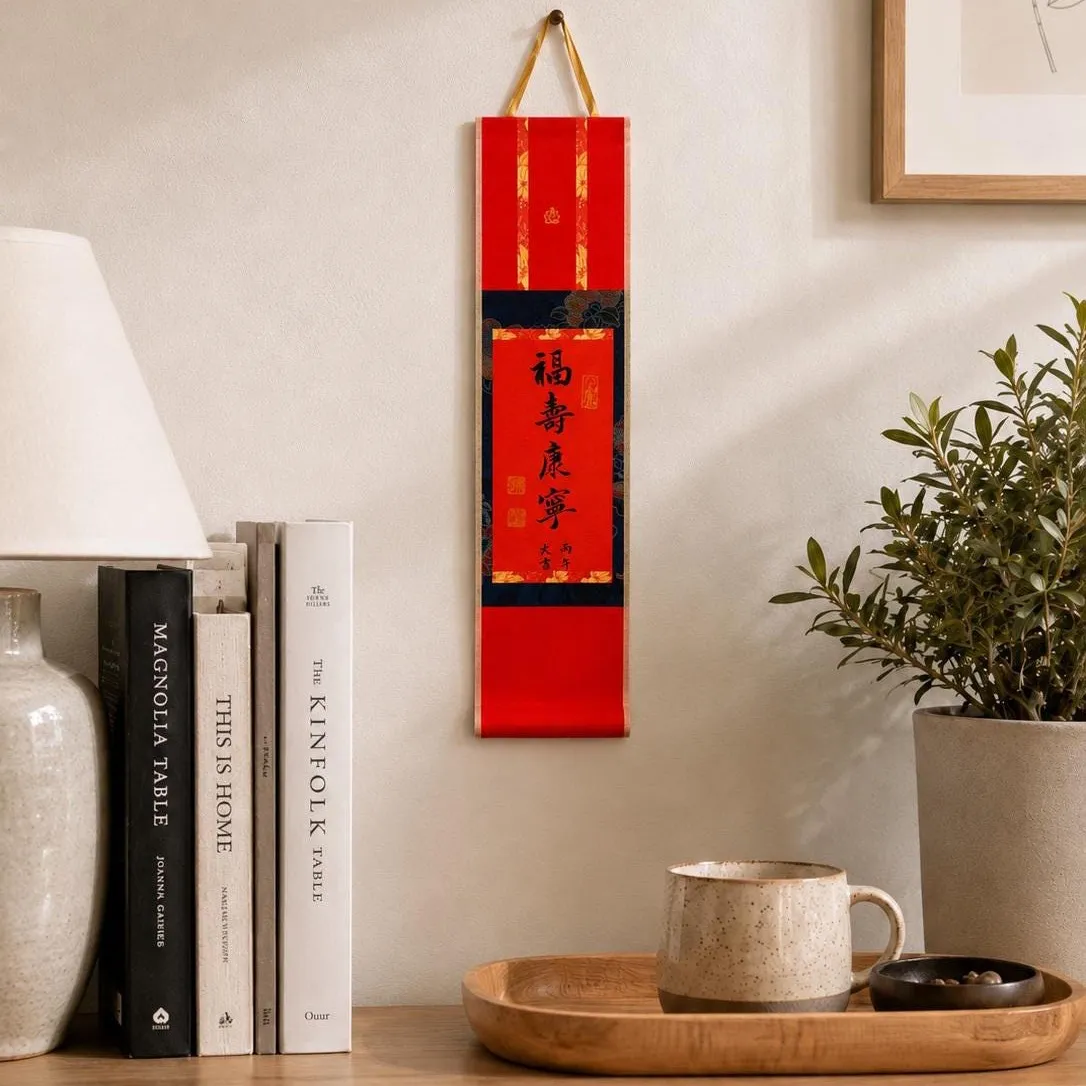
Photo shows a sample — yours will be brushed with 弘, or any character you choose.
Wall Scroll — for walls & housewarmingsfrom $38→ -
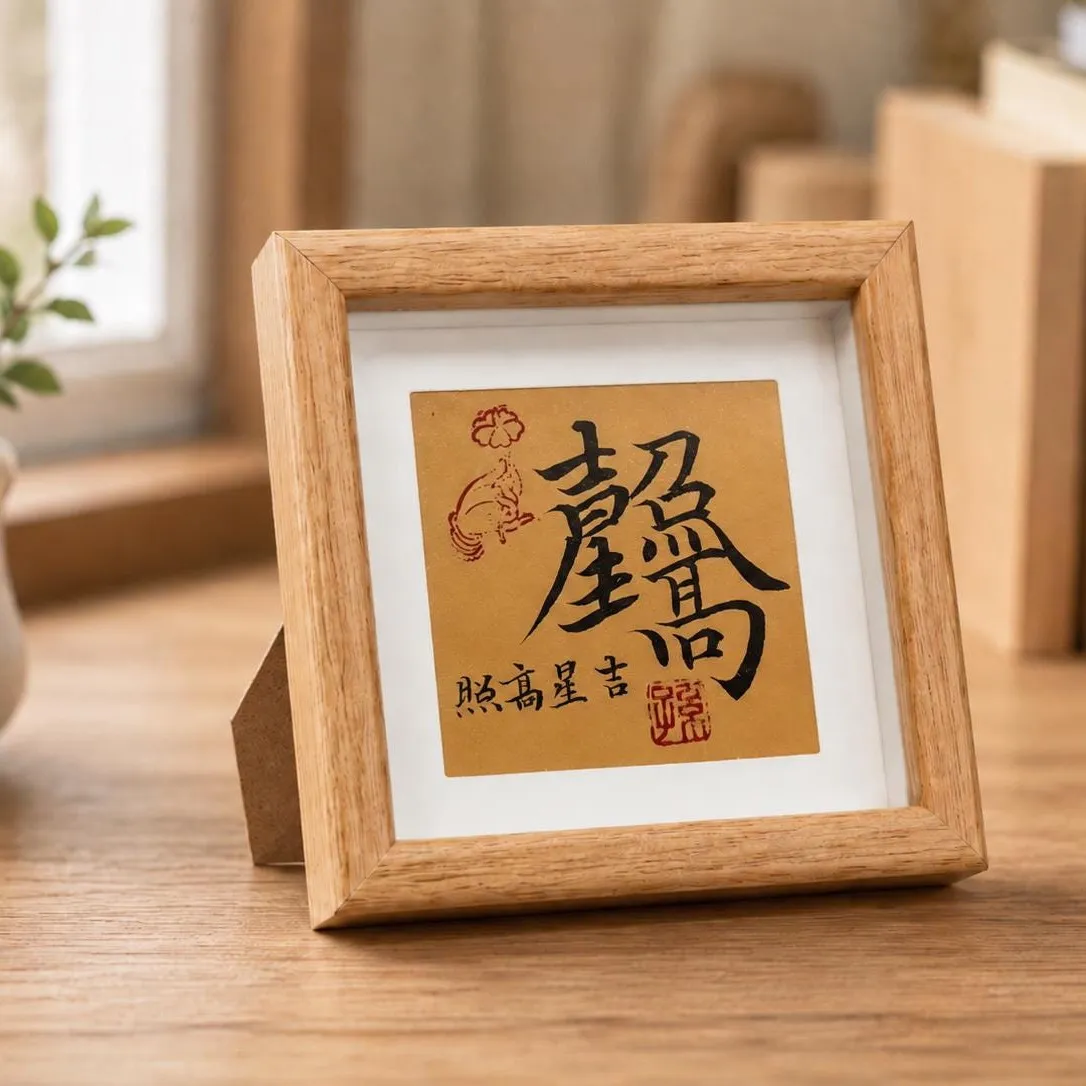
Photo shows a sample — yours will be brushed with 弘, or any character you choose.
Desk Frame — for desks, studies & studiosfrom $44→ -
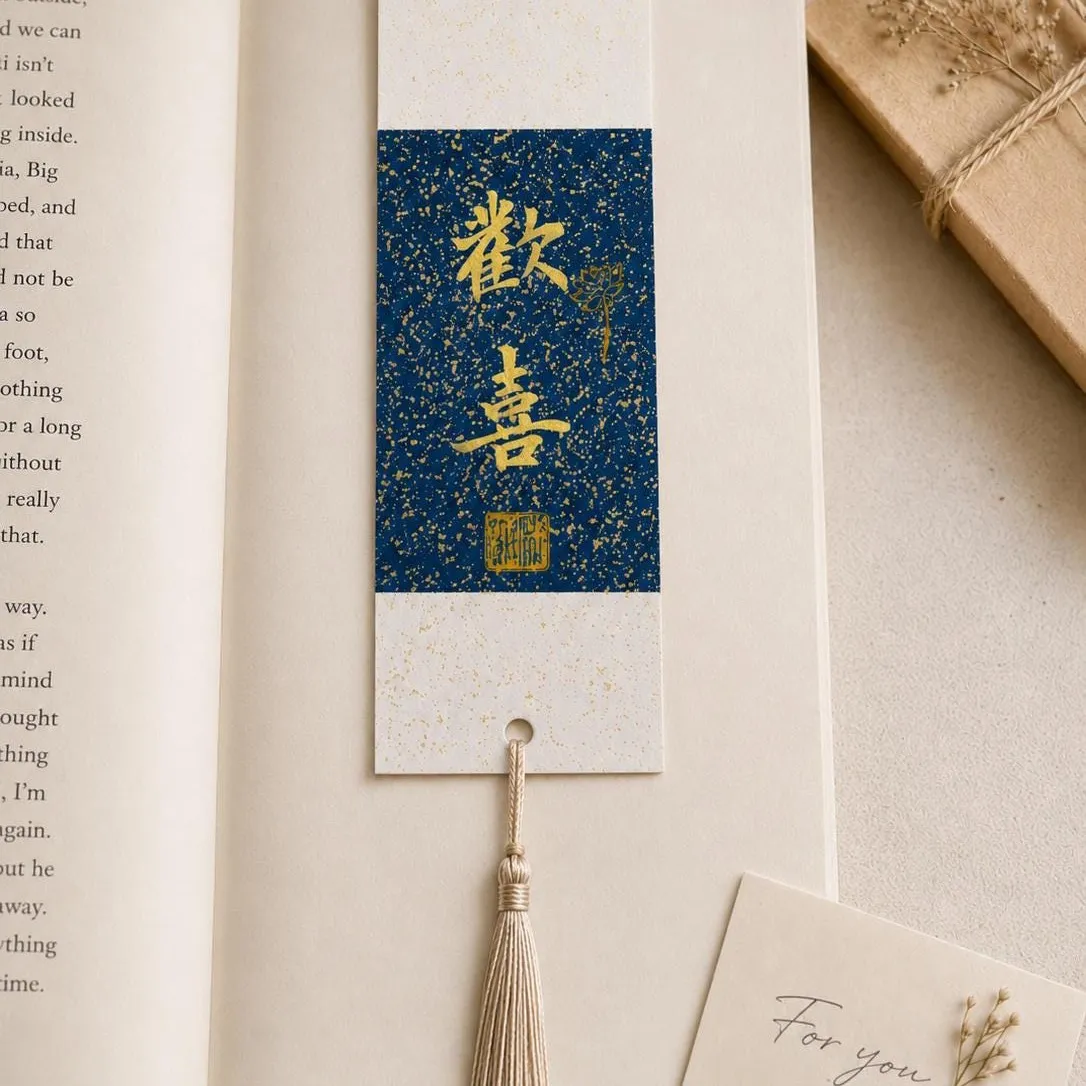
Photo shows a sample — yours will be brushed with 弘, or any character you choose.
Bookmark — for readers & small thank-yousfrom $17→
What people said after it arrived.
-
The item is fantastic. The customer service was genuine. Thanks!
— M.Verified purchase · from our Etsy shop reviews · -
They were great they gave me exactly what I asked for and then some. Thank you!!
— G.Verified purchase · from our Etsy shop reviews · -
It is well designed and customized. My daughter loves it. Amazing gift for family’s d friends
— S.Verified purchase · from our Etsy shop reviews ·
Each "弘" is hand-brushed by Artist Lina Sun on rice paper.
See 弘 (Hóng) on Etsy →