和睦 (hé mù) — Concord · The Peace That Takes More Than One
Two characters, and not 和 with a modifier bolted on. 和 alone will describe one person's manner (和气); joined to 睦 it will not describe anyone at all — only the space between them.
和睦 has no singular. A person can be patient, or generous, or easy to be around; nobody is 和睦. The word refuses to be a property of one person. Both parties are always in the sentence — as a collective subject (一家和睦, 邻里和睦, 妯娌和睦), as two parties named side by side (婆媳和睦, 上下和睦, 夫妻和睦), or as a 与-phrase behind a singular one (与邻居和睦相处). What it never does is settle on anybody. And nearly every relationship on that list was handed to somebody rather than picked. That is what this word is actually for — the peace held between people who did not choose each other and cannot walk away.
The two halves divide the labour, and each gives something up to do it. 和 supplies the fit, different parts held in proportion, and on its own it is happy to describe one person’s manner. See 和 → 睦 supplies the closeness and the face — 目顺, the eyes at ease, the Shuowen’s three-word definition — and on its own it names a conduct somebody performs toward their kin. See 睦 → Joined, both lose the singular they kept. And the compound has been widening ever since: the old list of six conducts filed 睦 with one’s own line and kept a separate item, 姻, for the ties that arrive with a marriage — and 婆媳和睦, said in exactly the register of 家庭和睦, no longer registers as a different category at all. Yan Zhitui, writing instructions for his descendants around 590 CE, had already seen why the boundary could not hold — 兄弟不睦,则子侄不爱: when brothers fall out their children stop being fond of each other, then the cousins drift, and in the end the servants are enemies.
A hand-brushed 和睦 by Artist Lina Sun is the gift for a couple at the point where the roster gets long — a wedding, or the anniversary of one. It does not describe the two of them, and no word needing two parties could. It names the harder thing being asked of them: that the household around them, made largely of people who did not choose one another, stays at ease with itself.
- concord — the peace two or more parties keep between them
- a household at ease with itself
- good relations across a seam nobody can leave
- the state of a family, a neighbourhood, or a pair of ranks
- harmony 和 alone can be said of one person — 和气, an easy manner someone carries into a room. 和睦 cannot. It is never a quality anybody has; it is a report on what two or more parties have managed between them.
- getting along Closer than most, but too light. Getting along describes any two people who happen not to clash. 和睦 is used of relationships nobody can walk out of — kin, in-laws, neighbours, the ranks above and below — where the alternative to concord is not distance but a long war at close quarters.
- happiness 和睦 makes no claim about how anyone feels. A household can be 和睦 and tired, or 和睦 and short of money. 幸福 and 美满 are the words for how a home feels; 和睦 reports only that nothing between its people has hardened.
The short arms are the point: these readings don’t reach it.
- 和 fitting togetherGrain beside a mouth: food shared, voices in agreement. 和 is proportion — different parts arranged so they belong. On its own it will describe one person's manner (和气); inside this compound it supplies only the fit.
- 睦 eyes at easeAn eye 目 with the phonetic 坴 beside it. The Shuowen defines it in three words — 目顺, the eyes at ease — which locates concord in the face rather than in agreement. It is what makes 和睦 a word about people at close range.
characters
- 家庭和睦 jiā tíng hé mù a household in concord — the standard form in a wedding toast
- 邻里和睦 lín lǐ hé mù good relations among neighbours — people nobody picked and nobody can move away from
- 婆媳和睦 pó xí hé mù concord between a wife and her husband's mother — the Erya files 夫之母 under 婚姻, not under one's own line
- 和和睦睦 hé hé mù mù the doubled, spoken form — 一家人和和睦睦, said around a New Year table
- 和睦相处 hé mù xiāng chǔ to live in concord — the standard verbal form, and the one place the second party sits in a 与-phrase instead of the subject
- 睦邻友好 mù lín yǒu hǎo good-neighbourliness between states — the same word, scaled to a border
The Story Behind the Character
In 575 BCE, with the armies of Chu and Jin about to meet at Yanling, a commander rode out to the retired statesman Shen Shushi and asked him a plain question: how will we do? The answer recorded in the Zuo Commentary never counts a single chariot. It works through virtue, punishment, ritual and trust, and arrives at a condition of the state itself — 上下和睦,周旋不逆, those above and those below in concord, so that when the ranks wheel they do not wheel against each other. Then he turns the list around: 今楚内弃其民,而外绝其好 — Chu has thrown away its own people and cut off its friends abroad. He is not describing Chu. He is naming what Chu does not have, and he ends by telling the commander he will not see him again. (Chu lost at Yanling; the commander took his own life.) Note what the sentence cannot do even in the negative. It cannot name one man. 和睦 arrives already carrying two parties, and everything it says is about the space between them.
The two halves divide the work. 和 supplies the fit — different elements held in proportion, the sense that runs from a chord to a bowl of soup — and 和 is perfectly willing to describe one person's manner: 和气, an easy way of being. 睦 supplies the closeness and the face. China's first dictionary (Shuowen Jiezi, c. 100 CE) defines it in three words, 目顺, the eyes at ease, and the Rites of Zhou lists it among the 六行 as a conduct a person is taught to perform toward their kin. Each half, alone, can belong to somebody: 和 still does, and 睦 did for as long as the six conducts were being taught. Joined, they lose that: the compound describes a state, and a state needs more than one party to be in.
What happened afterward was a slow widening. The 六行 filed 睦 with one's own line — Zheng Xuan's gloss is 亲于九族, closeness with the nine branches — and kept a separate item, 姻, for the ties that arrive with a marriage. The Erya (尔雅), the oldest surviving Chinese dictionary of terms, sorted kin along parallel lines and put 夫之父 and 夫之母 under 婚姻 rather than under 宗族: from where a wife stands, her husband's mother is someone the wedding delivered. Living Chinese does not sort them at all. 婆媳和睦 is said in exactly the register of 家庭和睦, and nobody hears a category change. The compound governs proximity, not kinship — whoever you cannot get away from is inside it.
Classical lines
- roughly 1,400 years
- c. 800 BCE 《诗经·小雅·斯干》
- 575 BCE 《左传·成公十六年》
- c. 590 CE 《颜氏家训·兄弟》
上下和睦,周旋不逆,求无不具,各知其极。 Those above and those below in concord, wheeling without turning against one another; nothing sought that is not supplied, and every man knowing his limit.
Shen Shushi, asked on the eve of a campaign whether the army would hold, answers by describing the country an army needs behind it, and then telling the commander that Chu is not that country. The oldest use of 和睦 in this shape already has the grammar the word never lost: two parties named together, 上 and 下, and a peace that belongs to neither of them alone.
兄及弟矣,式相好矣,无相犹矣。 Brothers here: be good to one another, and do not scheme against one another.
斯干 is the poem for a newly completed house, and this is the line it spends on the people who will live in it. Not a wish that they love each other — 犹 is read as 猷, to plot — but an instruction that they not work against each other. The oldest housewarming poem in Chinese assumes the risk is indoors.
兄弟不睦,则子侄不爱;子侄不爱,则群从疏薄;群从疏薄,则僮仆为雠敌矣。 When brothers are not in concord, their sons and nephews will not be fond of one another; when the sons and nephews are not fond of one another, the wider cousins grow distant; and when the cousins grow distant, even the household servants become enemies.
Yan Zhitui wrote for his own descendants after living through the collapse of three dynasties, and he traces the failure outward one ring at a time. That widening ring is the reason the compound cannot take a singular subject: the failure is never located in one person either, and nothing in a household breaks on its own.
Why This Character Matters
和睦 is the only word in this part of the vocabulary that also works on a map. 睦邻友好 — good-neighbourliness — is the standing name of China's policy toward the countries on its borders, and 敦睦, to deepen concord, is the verb on diplomatic communiqués; the 2001 China–Russia treaty is a 睦邻友好合作条约, and the Shanghai Cooperation Organisation signed a long-term one of its own in 2007. Meanwhile 和顺, 家和 and 美满 never once leave the house. The reason is in the word rather than in the diplomacy: what 和睦 requires is not affection or kinship but proximity nobody can exit. A state cannot move away from the state next to it any more than a daughter-in-law can move away from her husband's mother, and that is precisely the condition the compound was built for.
At home it comes with a warmer form. Chinese doubles both halves — 和和睦睦 — and that is the shape it takes in a New Year toast: 一家人和和睦睦, the whole family in concord, said across a table where several of the people present are related by somebody else's marriage. Note what the grammar quietly refuses to do. Because the subject has to be plural, no version of the sentence assigns the credit or the blame to one side. 婆媳关系 may be the most discussed relationship in Chinese family life, and 婆媳和睦 is the polite thing to say about one that works — polite in a very specific way, because it declines to say which of the two women made it work.
A few characters live near "和睦" but mean something quieter, sharper, or more specific. Here's how to tell them apart.
productive — it takes any pair of parties: 邻里, 婆媳, 妯娌, 上下
frozen to its one subject — nobody says 邻里和 or 婆媳和; 家 is the only thing 和 pairs with this way
concord that needs two parties named together — it will not attach to one person
harmony as arrangement — and it can be said of a single person's manner, 和气
the state a household or a pair of parties is in
the conduct one person performs toward their kin — the 六行 taught it as a skill
a standing relation between parties — a state, not an event
a single passage going through unobstructed — an errand, a year, a journey
You chose one person; 和睦 is the word for everyone else who came with them.
- You chose one person; 和睦 is the word for everyone else who came with them. The compound has no singular — nobody is 和睦 the way a person is patient or generous — and its subject is collective, paired, or supplied by a 与-phrase: 一家和睦, 邻里和睦, 婆媳和睦, 妯娌和睦, 与邻居和睦相处. A household and itself, neighbours across a wall, a wife and her husband's mother, the wives of brothers. Every one of those arrived attached to a decision someone else made. A wedding is the hour a person acquires the whole set at once, which is why this is the blessing pointed at the set rather than at the two people standing in the middle of it.
- For the couple far enough in that the roster has grown. 夫妻和睦 is the odd item on this word's list — the only pair on it who picked each other — and the years do not thin out the rest: parents age into the house, siblings marry, children arrive with opinions of their own. What an anniversary gift of 和睦 credits is therefore not the couple's own accord, which 和顺 and 美满 already name, but their record across everything the marriage kept adding. Two decades of concord held with people who arrived as part of the deal is a harder thing than romance, and no part of the ceremony was about it.
New Couple · Husband · Wife · or yourself
Looking for a name? See Western names written in Chinese →
-
What does 和睦 (hé mù) mean?
和睦 (hé mù) is a two-character Chinese word for concord, the peace that takes more than one. 和睦 has no singular. A person can be patient, or generous, or easy to be around; nobody is 和睦. The word refuses to be a property of one person. Both parties are always in the sentence — as a collective subject (一家和睦, 邻里和睦, 妯娌和睦), as two parties named side by side (婆媳和睦, 上下和睦, 夫妻和睦), or as a 与-phrase behind a singular one (与邻居和睦相处). What it never does is settle on anybody. And nearly every relationship on that list was handed to somebody rather than picked. That is what this word is actually for — the peace held between people who did not choose each other and cannot walk away. 和睦 is the only word in this part of the vocabulary that also works on a map. 睦邻友好 — good-neighbourliness — is the standing name of China's policy toward the countries on its borders, and 敦睦, to deepen concord, is the verb on diplomatic communiqués; the 2001 China–Russia treaty is a 睦邻友好合作条约, and the Shanghai Cooperation Organisation signed a long-term one of its own in 2007. Meanwhile 和顺, 家和 and 美满 never once leave the house. The reason is in the word rather than in the diplomacy: what 和睦 requires is not affection or kinship but proximity nobody can exit. A state cannot move away from the state next to it any more than a daughter-in-law can move away from her husband's mother, and that is precisely the condition the compound was built for.
-
What occasions is 和睦 given for?
和睦 is traditionally given for Wedding, Anniversary. You chose one person; 和睦 is the word for everyone else who came with them. The compound has no singular — nobody is 和睦 the way a person is patient or generous — and its subject is collective, paired, or supplied by a 与-phrase: 一家和睦, 邻里和睦, 婆媳和睦, 妯娌和睦, 与邻居和睦相处. A household and itself, neighbours across a wall, a wife and her husband's mother, the wives of brothers. Every one of those arrived attached to a decision someone else made. A wedding is the hour a person acquires the whole set at once, which is why this is the blessing pointed at the set rather than at the two people standing in the middle of it. For the couple far enough in that the roster has grown. 夫妻和睦 is the odd item on this word's list — the only pair on it who picked each other — and the years do not thin out the rest: parents age into the house, siblings marry, children arrive with opinions of their own. What an anniversary gift of 和睦 credits is therefore not the couple's own accord, which 和顺 and 美满 already name, but their record across everything the marriage kept adding. Two decades of concord held with people who arrived as part of the deal is a harder thing than romance, and no part of the ceremony was about it.
-
Who brushes the 和睦 calligraphy?
Each 和睦 (Hé Mù) is hand-brushed to order by Artist Lina Sun in ink on rice paper — never printed, never repeated.
Bring 和睦 home — choose how you'd like it brushed.
-
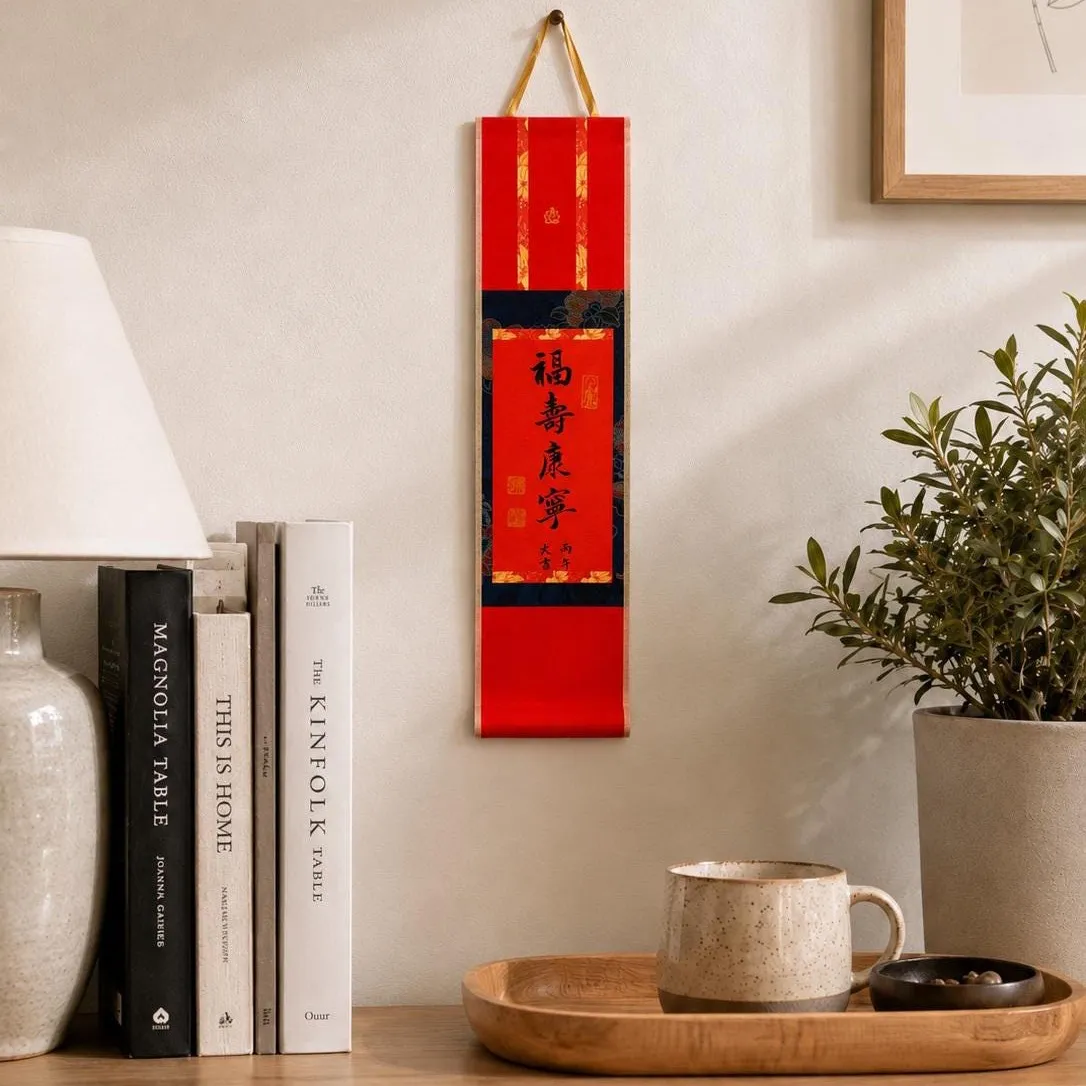
Photo shows a sample — yours will be brushed with 和睦, or any character you choose.
Wall Scroll — for walls & housewarmingsfrom $38→ -
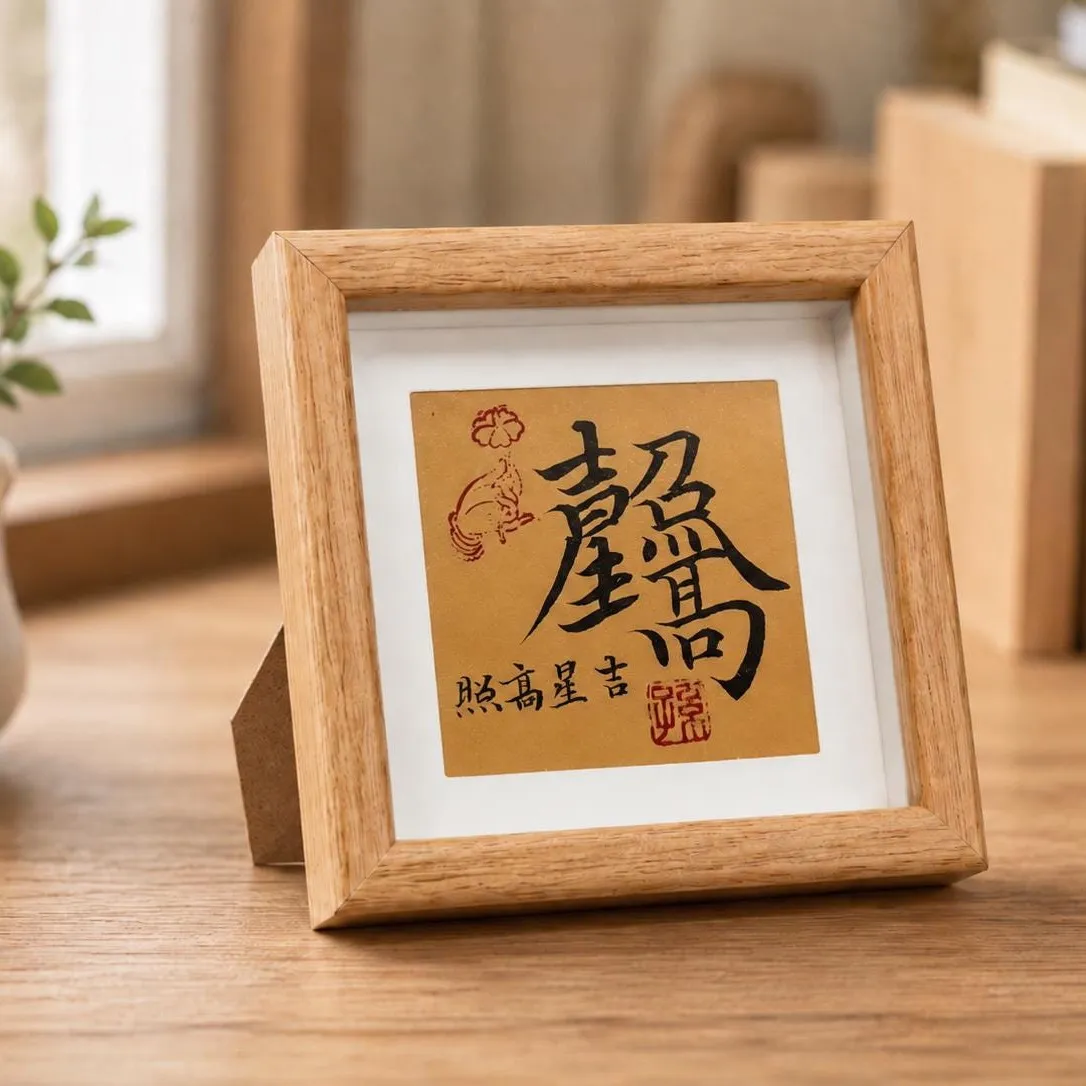
Photo shows a sample — yours will be brushed with 和睦, or any character you choose.
Desk Frame — for desks, studies & studiosfrom $44→ -
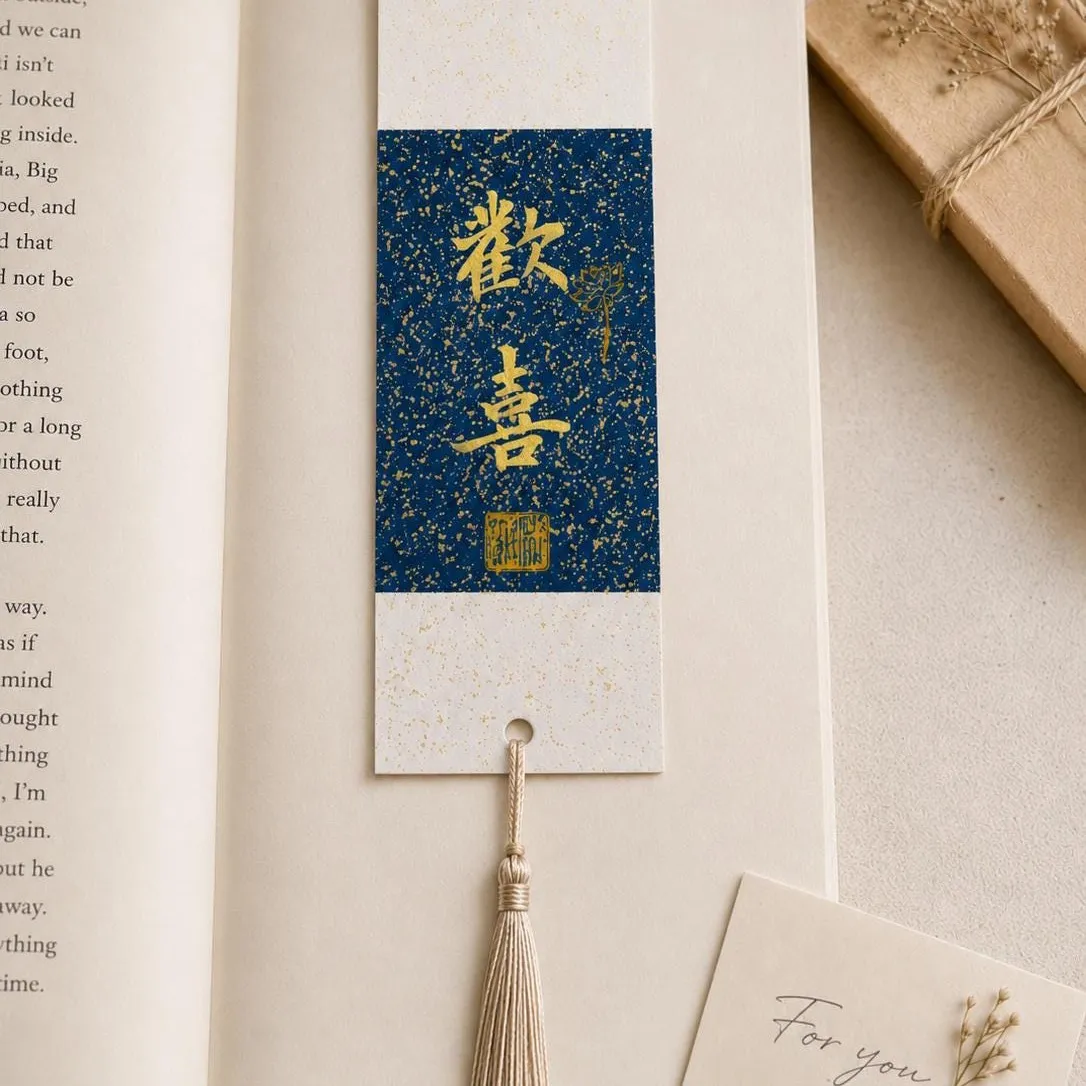
Photo shows a sample — yours will be brushed with 和睦, or any character you choose.
Bookmark — for readers & small thank-yousfrom $17→
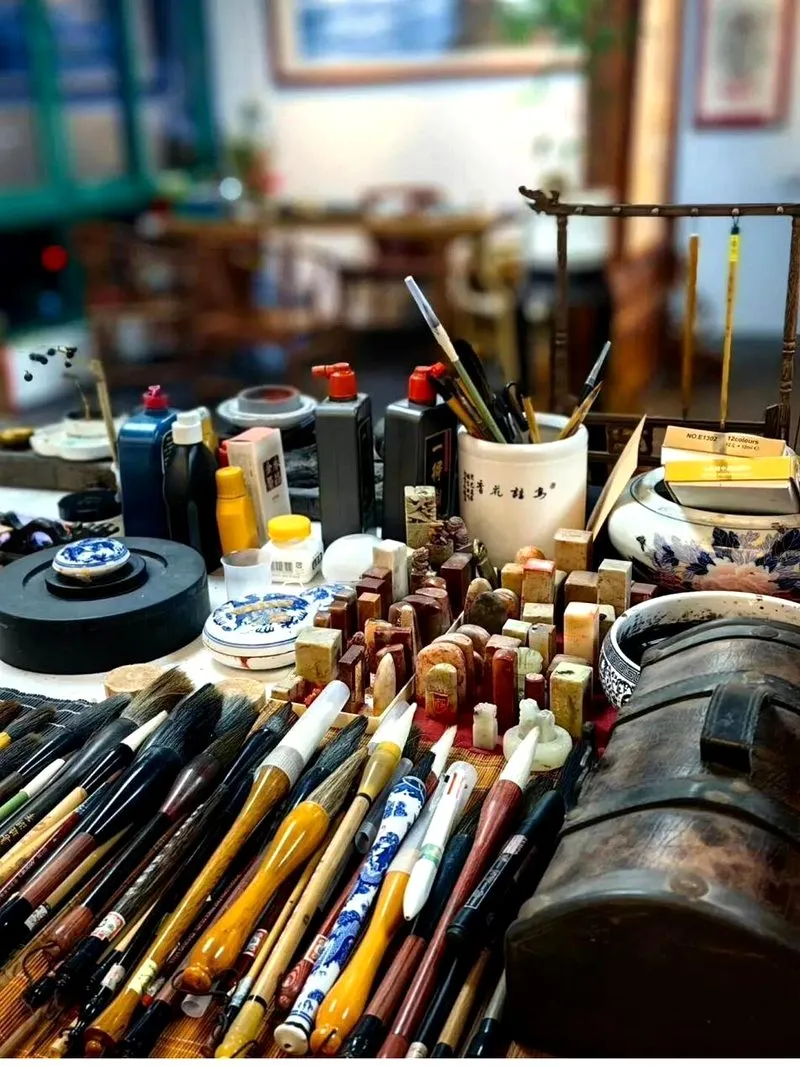
What people said after it arrived.
-
The item is fantastic. The customer service was genuine. Thanks!
— M.Verified purchase · from our Etsy shop reviews · -
They were great they gave me exactly what I asked for and then some. Thank you!!
— G.Verified purchase · from our Etsy shop reviews · -
It is well designed and customized. My daughter loves it. Amazing gift for family’s d friends
— S.Verified purchase · from our Etsy shop reviews ·
Each "和睦" is hand-brushed by Artist Lina Sun on rice paper.
See 和睦 (Hé Mù) on Etsy →