恩爱 (ēn ài) — Conjugal Affection · Mutual Kindness Between Spouses · The Everyday Love of a Marriage
A two-character word, not a single character.
恩爱 is the ordinary Chinese word for how a married couple is with each other. The Ministry revised dictionary defines it as 彼此真切的相爱 — sincere love on both sides — and then says what speakers usually mean: 多指夫妻间的爱. 恩 alone is a favor that has landed, not a romance; the library’s 恩 page keeps that ledger separate from thanks and repayment. See 恩 → 爱 alone can be a parent’s care, a friend’s loyalty, or Mozi’s borderless 兼爱; the library’s 爱 page carries that width. See 爱 → Put together, the two graphs stop being optional halves. Living speech uses 他们很恩爱 for a couple whose kindness toward each other is already visible, without needing a bad year and without waiting for white hair.
That mutual, conjugal reading is why neighbouring pages keep this compound as the baseline. 相濡以沫 refuses to be this word — it needs a drought. 白头偕老’s usage notes sit inside 恩爱终生 wedding speech. 仁爱 points at parents and sustained outward care. 长情 can be true of one person with nobody else in the sentence. 琴瑟 asks whether two instruments still answer. 恩爱 asks something plainer: whether the kindness between the two of you is the kind people can already see. Han institutional prose still shows a wider kinship circle — 《白虎通》 can 崇恩爱 when explaining surnames — and the 别鹤操 credited to 蔡邕 already hurts because 恩爱 is what would be lost if a marriage were broken. Modern Mandarin kept the spouse reading.
A hand-brushed “恩爱” by Artist Lina Sun suits a husband or a wife whose mutual kindness is already the household’s ordinary fact, a new couple being wished the conjugal reading guests still say out loud, an anniversary that should name what neighbours already report, a wedding that wants the affection itself rather than a counted century, or a Valentine’s Day that should credit the Tuesdays instead of the florist’s evening. It does not promise longevity, score the ensemble, or invent a crisis. It names the mutual love a marriage is already supposed to show.
- mutual affection between spouses — MOE 彼此真切的相爱,多指夫妻间的爱
- the living predicate 他们很恩爱 / 夫妻恩爱 — ordinary household warmth, not a crisis word
- the wedding-register wish 祝你们恩爱 — conjugal affection named without a counted century
- kindness and love held together: 恩 as favor in force, 爱 as the answering affection
- romantic passion Passion measures heat. 恩爱 measures mutual kindness that can be quiet and still count. A spectacular month often fails this word; a plain marriage often passes.
- one person's lasting feeling That is 长情 — a single subject, no second person required. 恩爱 in living speech is about the two of them; 他很恩爱 is incomplete in a way 他很长情 is not.
- benevolent parental care That is 仁爱 — sustained outward orientation, often parents and grandparents. 恩爱 is the spouse compound; the Ministry's usual target is 夫妻.
- rescue through a hard year 相濡以沫 needs a drought before it means anything. 恩爱 needs no thin year; neighbouring pages cite it as the ordinary love word that does not require crisis.
- growing old together 白头偕老 asks whether both reach white hair in the same room. 恩爱 asks whether the mutual kindness is present now, including on the wedding day before any hair has changed.
The short arms are the point: these readings don’t reach it.
- 恩 kindness bestowed — the favor that landed between two people说文 defines the single graph as 惠也. In this pair it is not gratitude (感恩) and not repayment (报恩); it is the kindness already in force between spouses. See the library's 恩 page for the favor reading kept separate from romance.
- 爱 love — the affection that answersThe second graph supplies the love half. Alone it can point at parents, friends, or Mozi's universal 兼爱. Beside 恩 in living speech it is pulled into the mutual, conjugal reading the Ministry marks as usual.
characters
- 恩爱夫妻 ēn ài fū qī an affectionate married couple — the four-character frame that makes the spouse reading explicit
- 恩恩爱爱 ēn ēn ài ài the reduplicated everyday form — mutual fondness said of a couple in ordinary speech
- 夫妻恩爱 fū qī ēn ài husband and wife in 恩爱 — the same compound with the subject named first
- 情深 qíng shēn deep feeling — related by sense, shares no character; measures depth rather than mutual conjugal kindness
- 仇恨 chóu hèn hatred — the antonym the Ministry revised dictionary prints for this compound
Cinnabar marks the characters 恩爱 actually contains. The dark row is a relative by meaning or by sound, not one shared stroke.
The Story Behind the Character
The Ministry of Education's revised dictionary opens with a mutual claim: 彼此真切的相爱, sincere love for each other, and then narrows the usual target — 多指夫妻间的爱, mostly the love between husband and wife. The antonym it prints is 仇恨. Its first proof-text is a Han farewell poem traditionally attributed to 苏武, which it cites from 《文选》 as 结发为夫妻,恩爱两不移. The 李善 edition of 《文选》 and the 《玉台新咏》 copy both read 两不疑 (the poem is usually cited today as 留别妻); this library already quotes that form on the 白头偕老 page, so the couplet is not repeated as a verse here. The compound is already doing spouse work in that line: 结发 names the marriage's start, and 恩爱 names what does not shift between the two of them, or, in the 不疑 reading, what neither of them doubts.
Each half arrives with its own ledger. 恩, in 《说文》, is 惠也 — a favor that has landed — filed under the heart with 因 as the phonetic; the library's single-character page keeps that reading separate from gratitude and from repayment. 爱 is the practice of not walking away, the graph whose traditional form kept a visible heart. Put together they do a job neither half does alone. 恩 alone is not romance. 爱 alone can be one-sided, parental, or universal (兼爱). 恩爱 in living speech is characteristically mutual, and characteristically conjugal: 他们很恩爱 is a report on a couple, not on one person's mood.
The Han institutional texts still show a wider circle. 《白虎通·姓名》 says surnames exist 所以崇恩爱、厚亲亲、远禽兽、别婚姻也 — to honour 恩爱, thicken kinship, keep distance from beasts, and mark marriage lines. The same chapter glosses 族 as 恩爱相流凑也, affection flowing together. That is kinship warmth before the compound settled on spouses. By the time the 《琴操》 traditionally credited to 蔡邕 has 商陵牧子 play 别鹤操 — 痛恩爱之永离,叹别鹤以舒情 — the word already names the marriage bond whose loss hurts. Modern speech kept the spouse reading and let the clan sense thin out.
Classical lines
- about a century
- c. 79 CE 《白虎通·姓名》
- c. 1st–2nd c. CE 旧题苏武《留别妻》
- c. 2nd c. CE 旧题蔡邕《琴操·别鹤操》
痛恩爱之永离,叹别鹤以舒情。 I ache that 恩爱 should be parted forever, and sigh out the grief on a crane that flies alone.
商陵牧子's wife hears his family plan a second marriage after five childless years; he answers on the qin. The compound is already the marriage bond whose loss is named before any white hair or any drought.
所以崇恩爱、厚亲亲、远禽兽、别婚姻也。 It is how one honours 恩爱, thickens kinship, keeps distance from beasts, and marks the marriage lines.
The chapter's answer to why people have surnames. Here 恩爱 is still the wider kinship warmth that surnames protect; living Mandarin later narrowed the usual target to spouses.
生当复来归,死当长相思。 Alive, I shall return; dead, I shall think of you always.
The closing vow of the same farewell poem whose earlier couplet, 结发为夫妻,恩爱两不疑, is already a verse on the 白头偕老 page. What remains for this entry is the promise that follows from that mutual affection when the road pulls them apart.
Why This Character Matters
Ask a native speaker how a marriage is going and 恩爱 is one of the first predicates available: 他们两口子很恩爱, 老两口还那么恩爱. No drought is required, no white hair, no claim that the strings were restrung. The word reports mutual kindness that is visible in the ordinary run of a household. That is why neighbouring library pages keep pointing at it when they need the ordinary love word — 相濡以沫 insists it is not this; 白头偕老's usage notes sit inside 恩爱终生 speech.
Calligraphy and wedding gifts reach for the two characters because they are short, spoken, and already aimed at the couple. 仁爱 on another page is parental and outward; 友爱 was declined for this slot because its adult register is siblings and school banners. 恩爱 is the compound the wedding register actually uses. A scroll reading 恩爱 does not instruct anyone to be nicer. It names what the marriage is already supposed to show.
A few characters live near "恩爱" but mean something quieter, sharper, or more specific. Here's how to tell them apart.
Said of the couple's mutual kindness; both people are in the picture.
Said of one person's feeling over time; the sentence needs no second subject.
Conjugal mutual affection — the Ministry's usual spouse reading.
Benevolent love sustained as practice, typically parents and grandparents, not the wedding register.
Names the mutual kindness between spouses in ordinary speech.
Names whether two instruments are in tune — ensemble sound, not the affection predicate.
Reports the mutual warmth available now, including on day one.
Asks whether both people are still there when the hair has gone white.
An anniversary is the first day of the year the neighbours already use this word for the two of you.
- An anniversary is the first day of the year the neighbours already use this word for the two of you. 他们很恩爱 is ordinary Chinese for a couple whose kindness toward each other is visible without a crisis and without a countdown. 长情 credits how long one person's feeling ran; 白头偕老 points at white hair; 琴瑟 asks whether the registers still answer. 恩爱 reports the mutual warmth that is already the case — the Ministry revised dictionary's 彼此真切的相爱, aimed at spouses. For the year when the gift should name what people already say about the marriage, not what they hope the decades will prove.
- Chinese wedding speech still reaches for 恩爱 when the wish is the couple's mutual affection itself — the backlog's own note on a declined 友爱 row named this compound beside 百年好合 and 白头偕老 as the living wedding register. Guests say 祝你们恩爱; calligraphy keeps the two characters because they need no dragon and no counted century. On the wedding day the word is prospective: may the kindness between you be the kind people can see. It does not ask whether you will reach white hair, and it does not score the ensemble. It names the conjugal affection the Ministry marks as 多指夫妻间的爱.
- February is built to make one evening carry a marriage. 恩爱 refuses that job. Living Chinese already uses the compound for ordinary Tuesdays — 夫妻恩爱, 恩恩爱爱 — so the gift credits the mutual kindness that does not need florists to be true. 缘 points back at how you met; 长情 hands the weight to the years behind one person; 花好月圆 blesses the night as complete. This pair names the everyday conjugal reading: each toward the other, already under way.
Husband · Wife · New Couple · or yourself
Looking for a name? See Western names written in Chinese →
-
What does 恩爱 (ēn ài) mean?
恩爱 (ēn ài) is a two-character Chinese word for conjugal affection, mutual kindness between spouses, the everyday love of a marriage. 恩爱 is the ordinary Chinese word for how a married couple is with each other. The Ministry revised dictionary defines it as 彼此真切的相爱 — sincere love on both sides — and then says what speakers usually mean: 多指夫妻间的爱. 恩 alone is a favor that has landed, not a romance; the library's 恩 page keeps that ledger separate from thanks and repayment. See 恩 → 爱 alone can be a parent's care, a friend's loyalty, or Mozi's borderless 兼爱; the library's 爱 page carries that width. See 爱 → Put together, the two graphs stop being optional halves. Living speech uses 他们很恩爱 for a couple whose kindness toward each other is already visible, without needing a bad year and without waiting for white hair. Ask a native speaker how a marriage is going and 恩爱 is one of the first predicates available: 他们两口子很恩爱, 老两口还那么恩爱. No drought is required, no white hair, no claim that the strings were restrung. The word reports mutual kindness that is visible in the ordinary run of a household. That is why neighbouring library pages keep pointing at it when they need the ordinary love word — 相濡以沫 insists it is not this; 白头偕老's usage notes sit inside 恩爱终生 speech.
-
What occasions is 恩爱 given for?
恩爱 is traditionally given for Anniversary, Wedding, Valentine's Day. An anniversary is the first day of the year the neighbours already use this word for the two of you. 他们很恩爱 is ordinary Chinese for a couple whose kindness toward each other is visible without a crisis and without a countdown. 长情 credits how long one person's feeling ran; 白头偕老 points at white hair; 琴瑟 asks whether the registers still answer. 恩爱 reports the mutual warmth that is already the case — the Ministry revised dictionary's 彼此真切的相爱, aimed at spouses. For the year when the gift should name what people already say about the marriage, not what they hope the decades will prove. Chinese wedding speech still reaches for 恩爱 when the wish is the couple's mutual affection itself — the backlog's own note on a declined 友爱 row named this compound beside 百年好合 and 白头偕老 as the living wedding register. Guests say 祝你们恩爱; calligraphy keeps the two characters because they need no dragon and no counted century. On the wedding day the word is prospective: may the kindness between you be the kind people can see. It does not ask whether you will reach white hair, and it does not score the ensemble. It names the conjugal affection the Ministry marks as 多指夫妻间的爱.
-
Who brushes the 恩爱 calligraphy?
Each 恩爱 (Ēn Ài) is hand-brushed to order by Artist Lina Sun in ink on rice paper — never printed, never repeated.
Bring 恩爱 home — choose how you'd like it brushed.
-
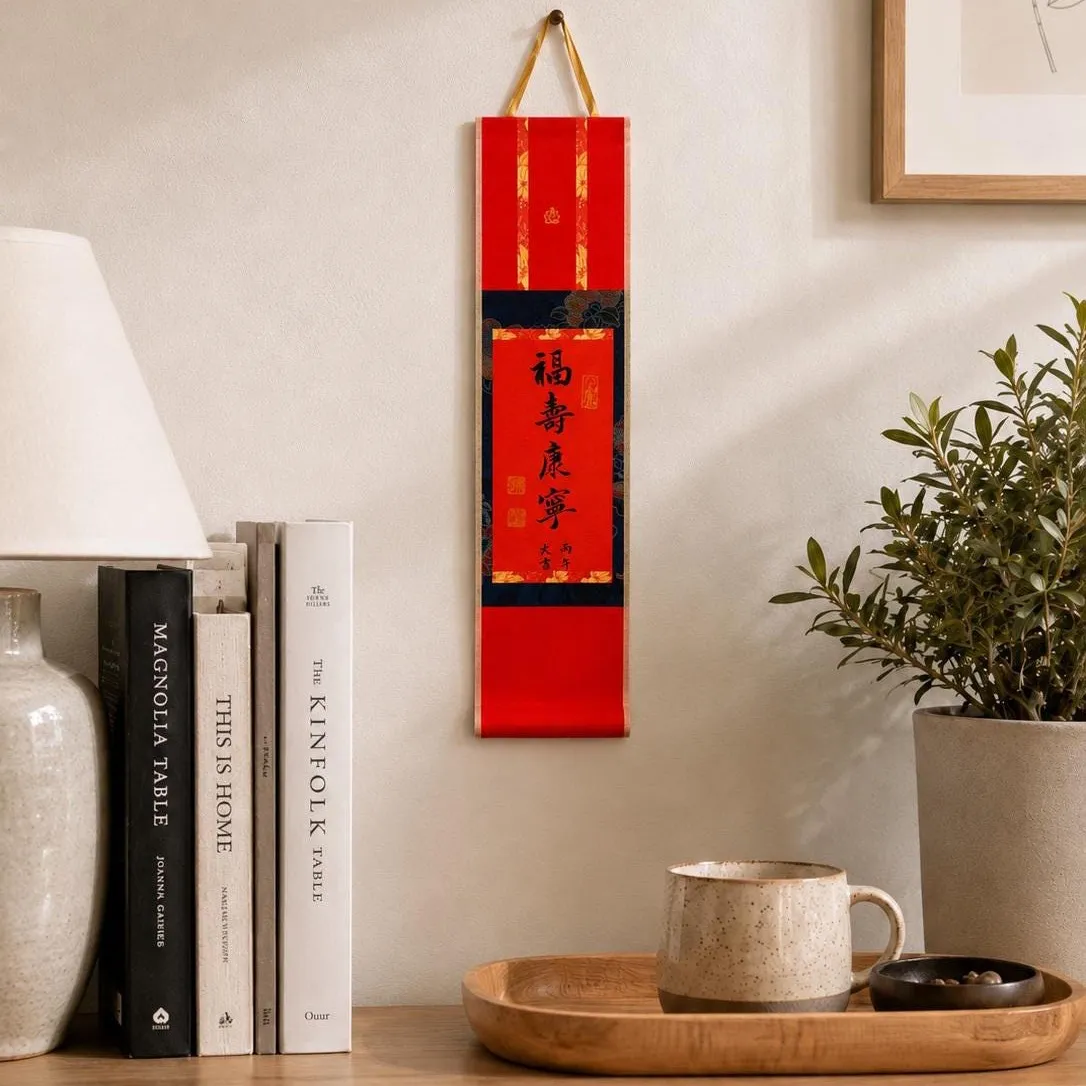
Photo shows a sample — yours will be brushed with 恩爱, or any character you choose.
Wall Scroll — for walls & housewarmingsfrom $38→ -
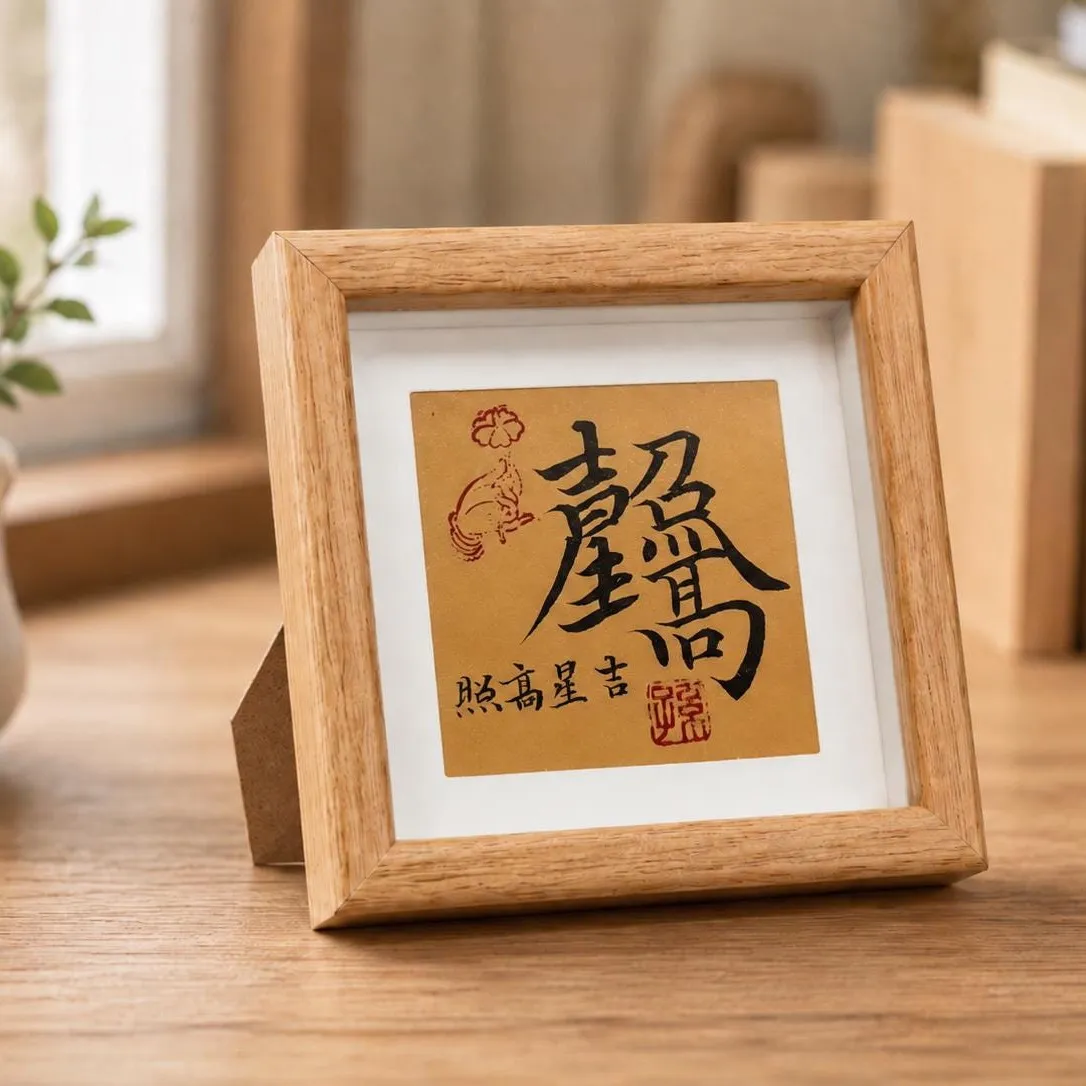
Photo shows a sample — yours will be brushed with 恩爱, or any character you choose.
Desk Frame — for desks, studies & studiosfrom $44→ -
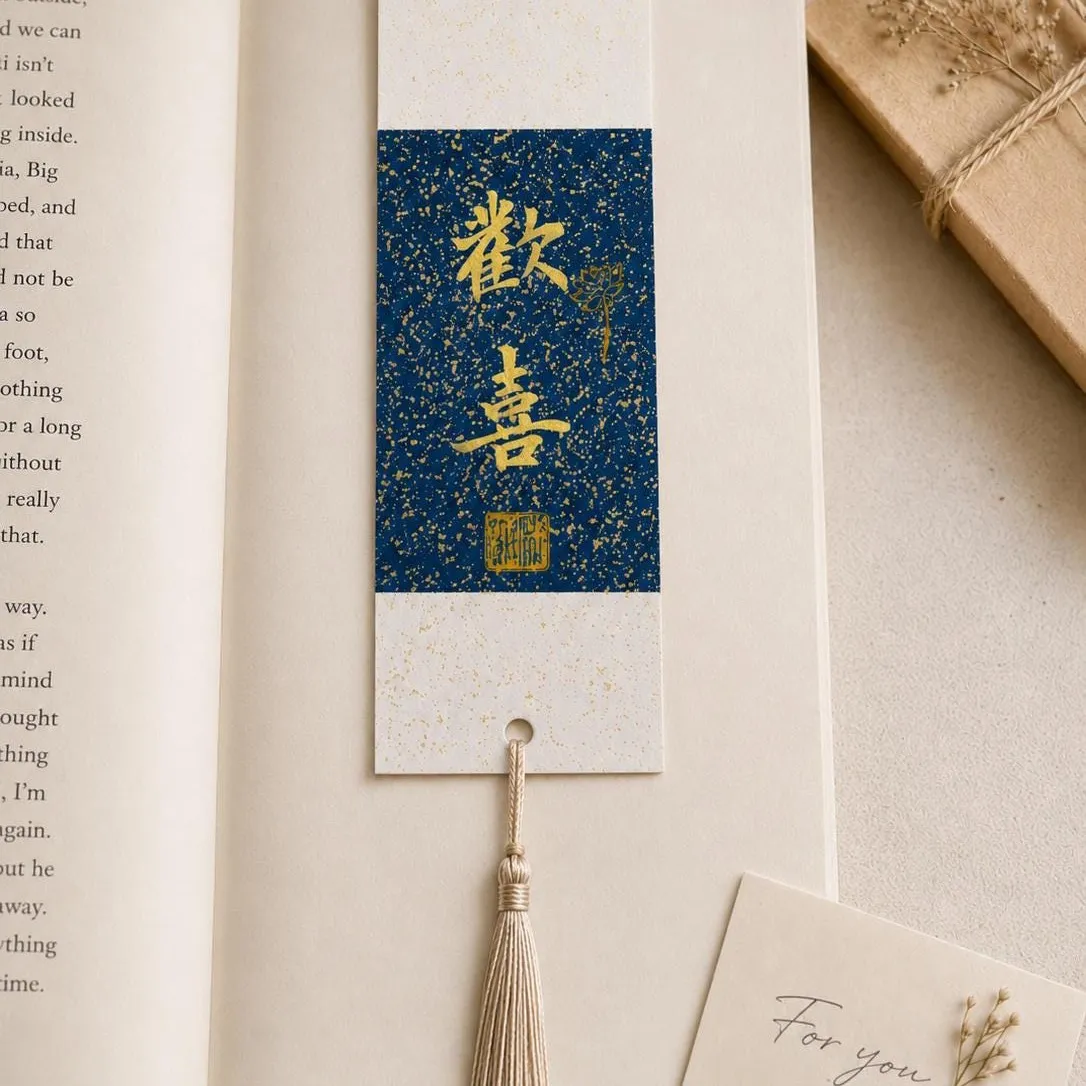
Photo shows a sample — yours will be brushed with 恩爱, or any character you choose.
Bookmark — for readers & small thank-yousfrom $17→
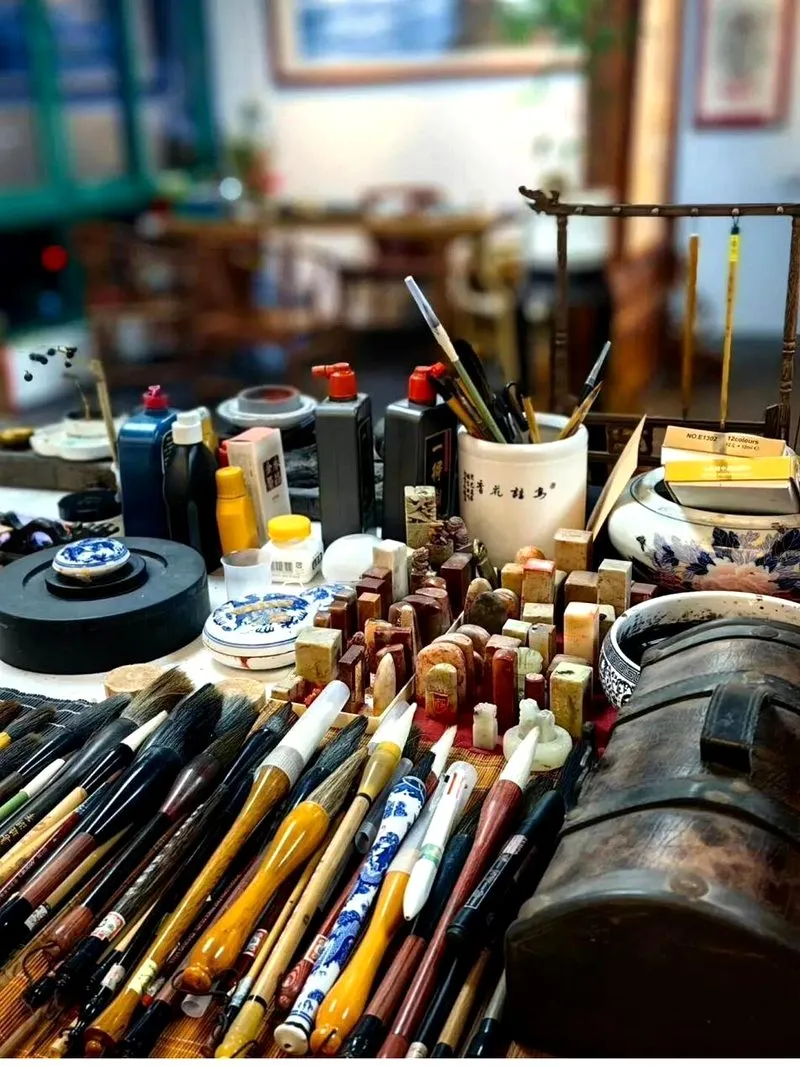
What people said after it arrived.
-
The item is fantastic. The customer service was genuine. Thanks!
— M.Verified purchase · from our Etsy shop reviews · -
They were great they gave me exactly what I asked for and then some. Thank you!!
— G.Verified purchase · from our Etsy shop reviews · -
It is well designed and customized. My daughter loves it. Amazing gift for family’s d friends
— S.Verified purchase · from our Etsy shop reviews ·
Each "恩爱" is hand-brushed by Artist Lina Sun on rice paper.
See 恩爱 (Ēn Ài) on Etsy →