竹报平安 (zhú bào píng ān) — The Bamboo Reports All Is Well · News From Home
A 4-character phrase, not a single character.
One clump of bamboo, a few feet tall, grew at a monastery in Taiyuan, a city known for having none, and every day the stewards reported that it was safe. That report, written down around 850, is where 竹报平安 starts. It is news, not a wish: the bamboo reports, and what it reports is 平安, that nothing has gone wrong. Where 安好 at the foot of a letter says a person is well, this phrase says the house is — the place, and the thing growing in it, still standing. See 安 →
The bamboo became a name for the letter. Taiwan’s Ministry of Education dictionary records 竹报 as a letter that tells the family all is well, and in 1131 the poet Cheng Ju, away from home at Kuaiji, said the letter that reached him came straight from the pines and bamboo. Later the phrase moved to the door as a spring-couplet line, and into pictures: a Ming painting of bamboo and magpies that the Qianlong emperor opened with 竹报平安鹊报喜, before finding the magpies quarrelling while the bamboo simply stood.
A hand-brushed “竹报平安” by FuBlessings is a New Year piece for a mother, a father or a grandparent, and most of all a gift from the child who lives far away. It promises nothing about the year ahead. It says the one thing the Taiyuan stewards said every day about their bamboo: it is safe, and here, all is well.
- news from home that all is well
- a report, not a wish
- the bamboo as the messenger
- a letter that says nothing went wrong
- good luck Luck looks ahead to what might come. 竹报平安 reports what is already so: the household is safe.
- safe travels That is 一路平安, said to someone setting out. 竹报平安 is the news that passes between a home and the person away from it.
- happy new year 新年快乐 is the greeting to a person. 竹报平安 is a couplet line and a picture subject, a report on the household.
The short arms are the point: these readings don’t reach it.
- 竹 bambooThe plant in the story: one clump at a monastery in Taiyuan, a few feet tall. In this word order it is the one doing the reporting.
- 报 to reportTo send word back, as a messenger does. The same verb carries the magpie's news in 鹊报喜.
- 平 level, undisturbedWith 安 it makes 平安, safe and sound: nothing has knocked the household off balance.
- 安 safeThe settled, unharmed state the report confirms. Here it is news about a place as much as a person.
characters
- 报竹平安 bào zhú píng ān the stewards report the bamboo safe — the word order of the Youyang record
- 竹报 zhú bào a bamboo report — the short form, standing for a letter that tells the family all is well
- 平安竹报 píng ān zhú bào the inverted variant the Ministry of Education dictionary lists alongside this one
- 家书 jiā shū a letter between family members — related by sense, it shares no character
- 黄耳传书 huáng ěr chuán shū Yellow Ears carries the letter — Lu Ji's dog, the courier of Cheng Ju's poem; related by sense, it shares no character
Cinnabar marks the characters 竹报平安 actually contains. The dark row is a relative by meaning or by sound, not one shared stroke.
The Story Behind the Character
The bamboo in the story was a few feet tall. In the plant section of the sequel to his Miscellaneous Morsels from Youyang, written around 850, Duan Chengshi set down a remark of Li Deyu, the Duke of Wei: in the Northern Capital, Taiyuan, only the Tongzi Monastery had bamboo, a single clump, and by tradition the monastery's stewards reported every day that the bamboo was safe. The entry stops there. Nothing happens to the bamboo. The report is the whole event.
In that record the words run 报竹平安: the stewards report the bamboo safe. Taiwan's Ministry of Education dictionary treats this as the source, gives 竹报 as the short form, and lists 平安竹报 and 竹报平安 as other ways of writing it. In 竹报平安, the order used on this page, 竹 stands first and becomes the one speaking: the bamboo reports, and what it reports is 平安, that nothing has gone wrong. 报 is a messenger's verb, sending word back. The Qianlong emperor later set the phrase beside 鹊报喜, the magpie reporting joy, which has the same shape.
From the daily report the phrase passed to letters: the dictionary records 竹报 as standing for a letter that tells the family all is well. In 1131 the Song poet Cheng Ju, at Kuaiji, wrote of a letter from home as word sent straight from the pines and bamboo, and gave it a courier: Yellow Ears, the dog the Book of Jin says carried Lu Ji's letters home in a bamboo tube tied to its neck. The same dictionary adds that the phrase later became a common line for spring couplets, and it found its way into painting. A bamboo-and-magpie painting by the Ming painter Lu Zhi, left without an inscription, was given one by the Qianlong emperor in 1770, opening 竹报平安鹊报喜.
Classical lines
- roughly 900 years
- c. 850 《酉阳杂俎》续集卷十
- c. 1620 《古今谭概》癖嗜部
- 1770 《御制诗三集》卷八十六
北都惟童子寺有竹一窠,才长数尺。相传其寺纲维每日报竹平安。 In the Northern Capital only the Tongzi Monastery has bamboo, a single clump, barely a few feet tall. By tradition, the monastery's stewards report every day that the bamboo is safe.
Duan Chengshi files this among plants as something Li Deyu, the Duke of Wei, had said, and the whole entry is these two sentences. Nothing happens to the bamboo. The daily report is the story, and the phrase kept it: four characters saying that nothing has gone wrong.
李卫公守北都,唯童子寺有竹一窠,才长数尺。其寺纲维,每日报竹平安。 When Li, Duke of Wei, governed the Northern Capital, only the Tongzi Monastery had bamboo, a single clump, barely a few feet tall. Every day the monastery's stewards reported the bamboo safe.
Feng Menglong files the story under bamboo in his chapter on obsessions, after the flower lovers, among them a Tang poet who traded a favourite concubine for a camellia, and before a Southern Han palace eunuch who planted plantains by every window and hall. In Duan Chengshi's record Li Deyu only passed the story on; here he is the governor, and the daily report reads as fondness, care spent every morning on one small living thing.
竹报平安鹊报喜,是谁所图乃陆氏。引而未发无一词,似待我歌抉其理。绿筠不识复不知,平安如是而已耳。 The bamboo reports peace, the magpies report joy. Who painted this? Mr. Lu. He drew the bow and held the shot, adding not one word, as if waiting for my song to pry the meaning out. The green bamboo does not notice and does not know: peace is like this, and that is all.
Lu Zhi (1496–1576), the Suzhou painter, left his bamboo and magpies without an inscription; the Qianlong emperor wrote this song for it early in 1770. The poem goes on to count ten magpies squabbling, claws and beaks out, and to say that what passes for joy is really anger's other side. The bamboo's news is the quiet one.
Why This Character Matters
Jinyang had no bamboo, and everyone, past and present, knew it. That is how the Tang historian Liu Zhiji put it in his Shitong, finished in 710, when he doubted a Han story about hundreds of boys riding bamboo hobby-horses to greet a governor of Bingzhou. Jinyang is the old name of Taiyuan. In the Qing, the scholar Yan Ruoqu answered with the Tongzi Monastery's bamboo, reported on every day, and a note in Pu Qilong's annotated Shitong, printed in 1752, draws the conclusion: if the bamboo had to be reported on, it was hard to grow. That is the weight under the phrase. The stewards were not reporting on something common. They were reporting that the one delicate thing in their keeping was still well.
As a gift it is a report, not a wish. 平安 on its own can ask that nothing go wrong; 竹报平安 says that, as of this message, nothing has. Its two homes are the letter between a household and whoever is away, and the spring couplet at the door. The Ming primer 《训蒙骈句》, which teaches children to write paired lines, closes one pair with 好风敲竹报平安, a good wind knocking at the bamboo to report that all is well. For parents and grandparents it is the sentence a family waits to hear from whoever is far from home, written up on the wall where it can be read all year.
A few characters live near "竹报平安" but mean something quieter, sharper, or more specific. Here's how to tell them apart.
the household's news, carried by the bamboo
a person's state, at the foot of a letter
safety reported as news from home
safety itself, wished for anyone
word that the house is safe
safe passage through the door, going and coming
Taiwan's Ministry of Education dictionary notes that 竹报平安, first a name for the letter from home that says all is well, later became a common phrase for spring couplets, the New Year lines pasted around a door.
- Taiwan's Ministry of Education dictionary notes that 竹报平安, first a name for the letter from home that says all is well, later became a common phrase for spring couplets, the New Year lines pasted around a door. A Ming primer for writing couplets already closes one with 好风敲竹报平安, a good wind knocking at the bamboo to report that all is well. Hung in a parent's or grandparent's home at the New Year, it is the household's report, up where everyone coming in can read it.
Mom · Dad · Grandparent · or yourself
Looking for a name? See Western names written in Chinese →
-
What occasions is 竹报平安 given for?
It belongs to the New Year and to the home: a spring-couplet line, a picture title, and an old name for the letter that tells a family all is well. FuBlessings suggests it for a mother, a father or a grandparent at Chinese New Year, and especially as a gift from someone who lives far from them. It reports that the household is safe; it does not wish for luck or for long life.
-
What does 竹报平安 (zhú bào píng ān) mean?
竹报平安 (zhú bào píng ān) is a 4-character Chinese phrase for the bamboo reports all is well, news from home. One clump of bamboo, a few feet tall, grew at a monastery in Taiyuan, a city known for having none, and every day the stewards reported that it was safe. That report, written down around 850, is where 竹报平安 starts. It is news, not a wish: the bamboo reports, and what it reports is 平安, that nothing has gone wrong. Where 安好 at the foot of a letter says a person is well, this phrase says the house is — the place, and the thing growing in it, still standing. See 安 → Jinyang had no bamboo, and everyone, past and present, knew it. That is how the Tang historian Liu Zhiji put it in his Shitong, finished in 710, when he doubted a Han story about hundreds of boys riding bamboo hobby-horses to greet a governor of Bingzhou. Jinyang is the old name of Taiyuan. In the Qing, the scholar Yan Ruoqu answered with the Tongzi Monastery's bamboo, reported on every day, and a note in Pu Qilong's annotated Shitong, printed in 1752, draws the conclusion: if the bamboo had to be reported on, it was hard to grow. That is the weight under the phrase. The stewards were not reporting on something common. They were reporting that the one delicate thing in their keeping was still well.
-
Who brushes the 竹报平安 calligraphy?
FuBlessings hand-brushes each 竹报平安 (Zhú Bào Píng Ān) to order, in ink on rice paper — never printed, never repeated.
Bring 竹报平安 home — choose how you'd like it brushed.
-
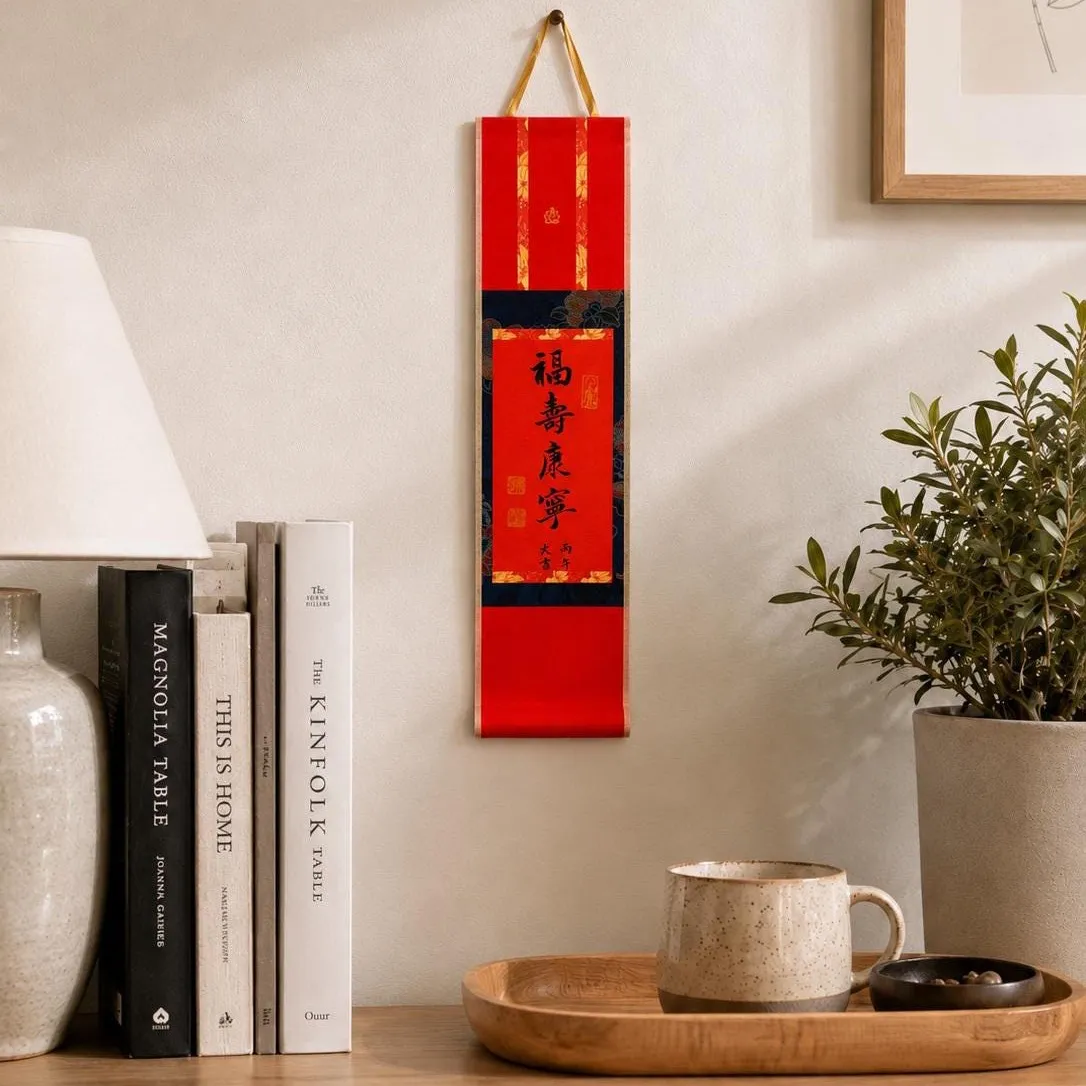
Photo shows a sample — yours will be brushed with 竹报平安, or any character you choose.
Wall Scroll — for walls & housewarmingsfrom $38→ -
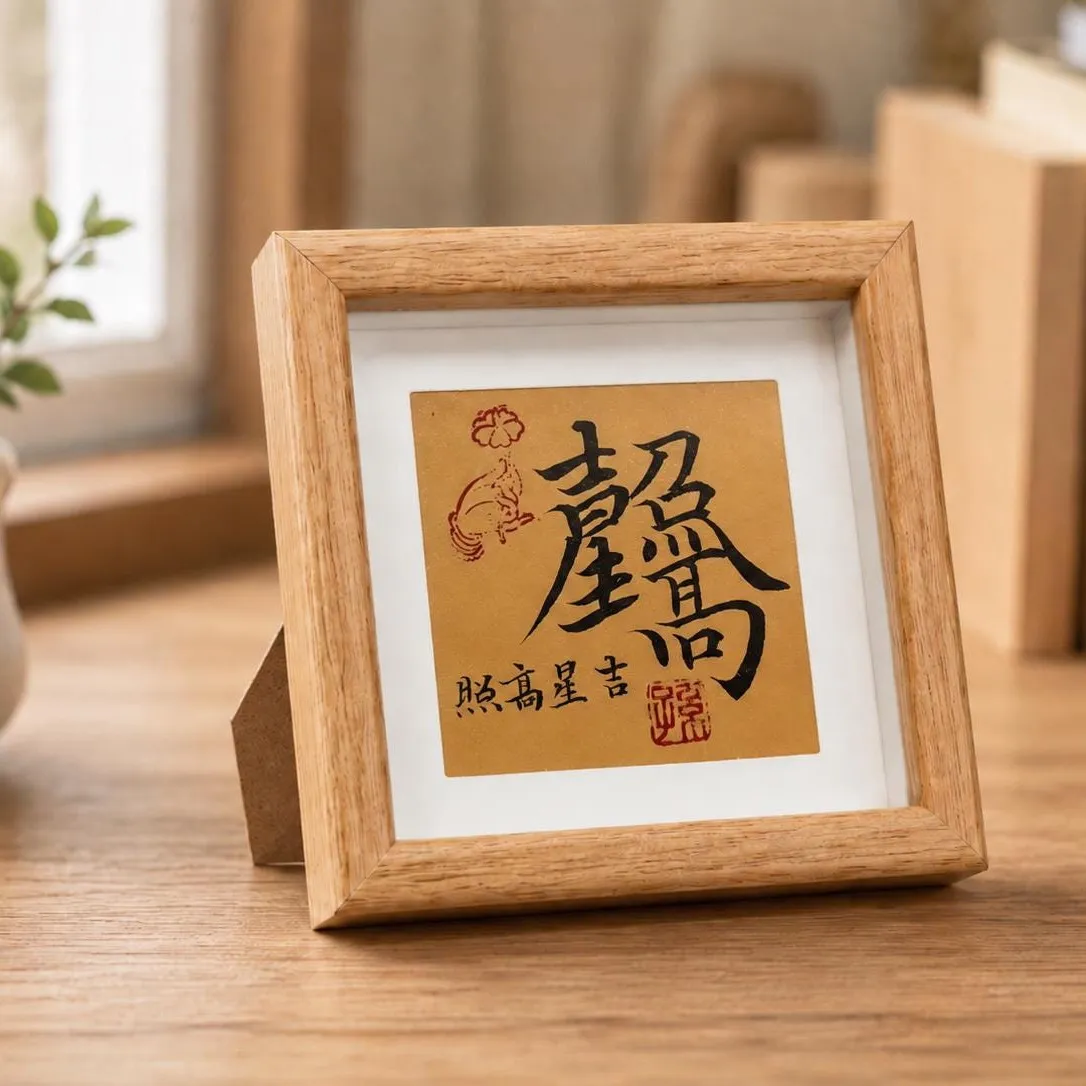
Photo shows a sample — yours will be brushed with 竹报平安, or any character you choose.
Desk Frame — for desks, studies & studiosfrom $44→ -
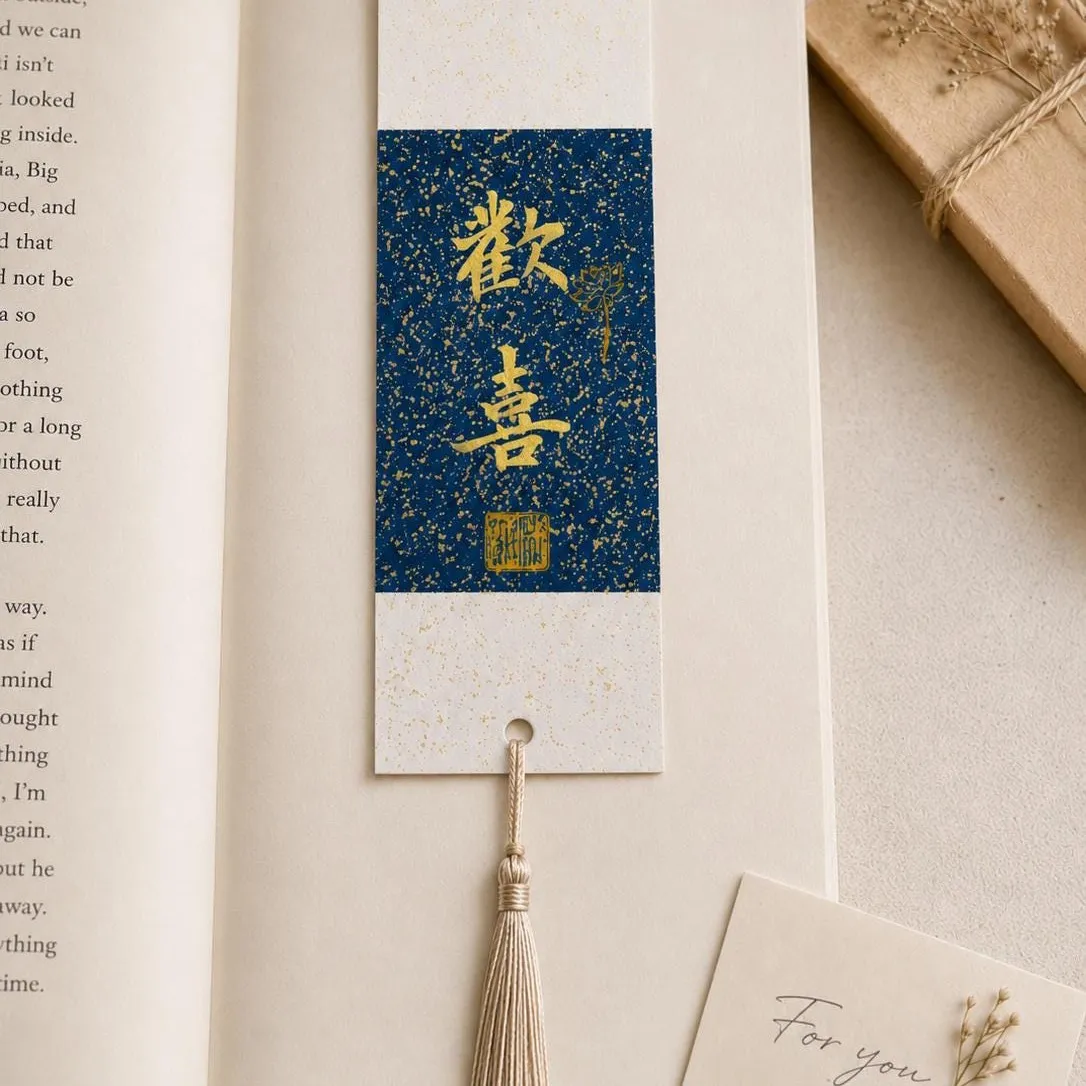
Photo shows a sample — yours will be brushed with 竹报平安, or any character you choose.
Bookmark — for readers & small thank-yousfrom $14→
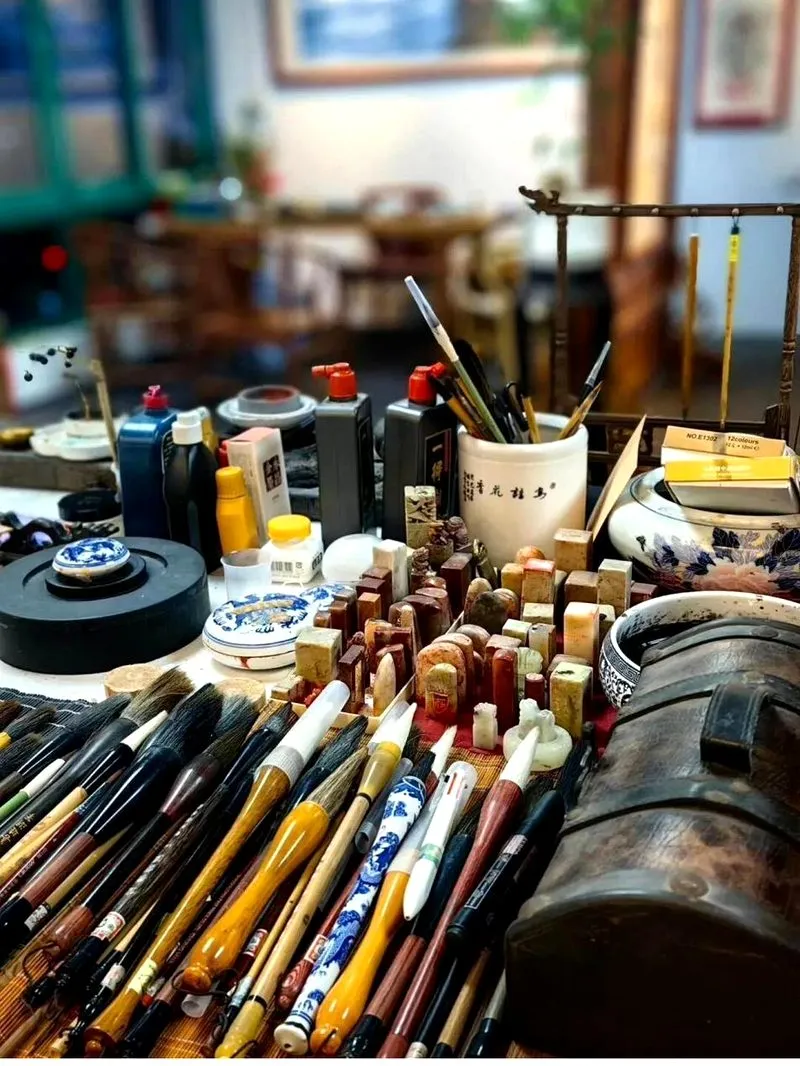
What people said after it arrived.
-
The item is fantastic. The customer service was genuine. Thanks!
— M.Verified purchase · from our Etsy shop reviews · -
They were great they gave me exactly what I asked for and then some. Thank you!!
— G.Verified purchase · from our Etsy shop reviews · -
It is well designed and customized. My daughter loves it. Amazing gift for family’s d friends
— S.Verified purchase · from our Etsy shop reviews ·
Each "竹报平安" is hand-brushed by FuBlessings on rice paper.
See 竹报平安 (Zhú Bào Píng Ān) on Etsy →