执子之手 (zhí zǐ zhī shǒu) — Taking Your Hand · The Promise Made Before Parting · Growing Old Beside You
A 4-character phrase, not a single character.
The sentence is half finished, and everyone who hears it finishes it. 执子之手 is the first line of a Book of Songs couplet whose ending, 与子偕老, completes the promise: I will take your hand and grow old with you. Speakers leave the second half unsaid because the first has already put a hand into the picture, with a verb, a pronoun and a gesture. None of 执, 子, 之 or 手 has a single-character page in this library, so the phrase stands as one act.
The first speaker was a soldier far from home. In 《击鼓》 he remembers the promise after losing his horse in a wood, and the song closes on the fear that it cannot be kept. Whether the person addressed was his wife or his comrades has been argued since the Han; the Song reading, that he is thinking of his wife, became the usual one. Weddings now borrow the couplet for the other side of that fear: the promise made and the hand actually held. The neighbours do other work. 白头偕老 shows the white-haired end, 比翼双飞 sets the pair travelling, and 琴瑟 asks whether they still sound together. This one is the moment of taking hold.
A hand-brushed 执子之手 by FuBlessings suits a wedding vow or a gift to a new couple, a husband or wife on an anniversary, and a Valentine’s Day piece for the person whose hand you would still choose. It does not forecast the years. It names a gesture and the promise that goes with it, and leaves the second half for the two of you to say.
- a promise made person to person by taking the other's hand
- the first half of a couplet whose second half, 与子偕老, supplies the vow
- a line said at a wedding and read again at an anniversary
- a pledge made before a separation and kept through it
- the white-haired end That is 白头偕老: the arrival, two heads gone white in one house. 执子之手 is the beginning and the gesture. It names the hand and promises the old age, but it stops before showing it.
- travelling together That is 比翼双飞, two wings level in the air. This line is a hand taken while standing still, with no destination in it.
- English "hold my hand" The English reaches for comfort in the moment. 执子之手 is a promise whose second half is a lifetime, taken from a poem written under threat of separation.
The short arms are the point: these readings don’t reach it.
- 执 take hold ofTraditional 執. The verb that makes the line an act. The dictionary's first sense is to hold or grip, and the same character gives 执手, held hands, which the dictionary's examples show at partings. No library single for 执.
- 子 youA respectful second person in the older texts, not 子 as child or as the title of a master. It is the you the pledge is made to, and the poem never says whether that you is a wife or a comrade. No library single for 子.
- 之 ofThe particle joining you to your hand, as in 你的手. No library single for 之.
- 手 handThe part of the body offered in an oath and in a goodbye. No library single for 手.
characters
- 与子偕老 yǔ zǐ xié lǎo the second half of the couplet, the promise itself; it shares 子 with this phrase
- 执手 zhí shǒu to hold hands; the dictionary's examples are partings; it shares 执 and 手 with this phrase
- 偕老 xié lǎo to live together until old age, now mostly said of a married couple; shares no character with 执子之手 but carries the promise
- 死生契阔 sǐ shēng qiè kuò the line just before it in the poem: through death and life, near and far; 契阔 is read as hardship or as parting
Cinnabar marks the characters 执子之手 actually contains. The dark row is a relative by meaning or by sound, not one shared stroke.
The Story Behind the Character
A soldier of the state of Wei has lost his horse. Around him the army drums and drills, and while others at home dig earth or wall the town of Cao, he alone is marching south. That is where the Book of Songs poem 《击鼓》 stands when its fourth stanza arrives: 死生契阔,与子成说,执子之手,与子偕老, roughly, whether we live or die, together or far apart, I made you a pledge, to take your hand and grow old with you. The Mao Preface files the song under 怨州吁, a complaint against Zhou Xu, the Wei ruler who sent Gongsun Wenzhong to make peace with Chen and Song by force. Zhu Xi noted that the old account tying it to the fourth year of Duke Yin, 719 BCE, was perhaps right. The fifth and last stanza turns on the promise itself: 于嗟阔兮,不我活兮,于嗟洵兮,不我信兮. Zhu Xi reads it as the soldier's fear that he will die and never keep the pledge.
Who the pledge was made to has been argued for two thousand years. Zheng Xuan of the Eastern Han read 从军之士与其伍约, men of the army pledging with their own squad to rescue one another, and Kong Yingda's Tang commentary followed him. Ouyang Xiu of the Northern Song judged that reading badly wrong and preferred Wang Su's earlier view that the stanza is a farewell to a household. Zhu Xi's 《诗集传》 then wrote that the man was thinking of his wife, and because his commentary became the examination standard, that reading became the common one. Qian Zhongshu, in 《管锥编》, also takes the stanza as marital love. Even the key word 契阔 is split between hardship and parting. What both readings keep is the shape of the thing: a promise made before a separation, and remembered under threat.
The four characters are a verb, a pronoun, a particle and a noun. The Taiwan Ministry of Education dictionary glosses 执 as to take hold of, 子 in this use as simply 你, you, and 成说 in the same stanza as a pledge. 之 joins you to your hand. The line is only half a couplet; 与子偕老 carries the promise, and the dictionary defines 偕老 as living together until old age, now mostly said of husband and wife. Speakers drop the second half because the first has already put a hand into the picture. The dictionary glosses 执手 simply as holding hands, and its two examples are both partings: the Song lyric 执手相看泪眼 and 《三国演义》 ‘玄德执手挥泪而别’. The hand in this line was taken before a parting, not after a wedding, and later centuries moved it to the wedding.
Classical lines
- roughly 1,700 years
- c. 7th c. BCE 《诗经·邶风·击鼓》
- 3rd c. CE 傅咸《与尚书同僚诗》
- c. 11th c. CE 柳永《雨霖铃·寒蝉凄切》
执子之手,与子偕老。 I will take your hand and grow old with you.
The couplet in its original place: the fourth stanza of a soldier's song, a promise remembered far from home and sung with the fear that the war will not let him keep it. Commentators have disagreed since the Han over whether the one addressed is a comrade or a wife.
执手相看泪眼,竟无语凝噎。 Hand in hand we look at each other through tears, and no words come, only a choked silence.
The Ministry of Education dictionary cites this line under 执手 (holding hands); it is a parting scene. It is the same hand as in the oath, taken on the day of leaving instead of the day of promising.
与子偕老,岂曰执手。 To grow old with you
need it be called holding hands? — Fu Xian wrote this to fellow officials, not a wife, as he left for a provincial post, and the lines just before it say that a meeting of minds outlasts words. By the third century the Songs vow was already travelling beyond marriage.
Why This Character Matters
The best-known marriage vow in the Book of Songs was voiced by a soldier who did not expect to get home. Today the couplet turns up in wedding speeches, on calligraphy for the room where the couple will live, and in fiction: in Zhang Ailing's novella 《倾城之恋》, Fan Liuyuan recites it down a telephone line to Bai Liusu, changing 与子成说 to 与子相悦. The popular line cuts the poem down to its happy half. The people who wrote on 《击鼓》 for two thousand years kept the other half in view, the drums and the lost horse and the stanza that ends in doubt.
That is also what separates the phrase from its neighbours. 白头偕老 shows the white-haired end and asks whether both people are still there. 比翼双飞 sets the pair travelling at one height. 琴瑟 asks whether the two still sound in tune. 执子之手 is the moment of taking hold, with the promise attached, and it is at its best given when a hand is really being held: a wedding, an anniversary, a February evening.
A few characters live near "执子之手" but mean something quieter, sharper, or more specific. Here's how to tell them apart.
the hand taken and the promise made
the white-haired end, visible on both heads
a hand taken, standing still
two wings level, travelling
a pledge given
a marriage still sounding in tune
At a wedding the line works as a first-person vow: one person takes the other's hand and the second half of the couplet, 与子偕老, is what they promise.
- At a wedding the line works as a first-person vow: one person takes the other's hand and the second half of the couplet, 与子偕老, is what they promise. Guests often quote it as a blessing, but the grammar belongs to the couple. 执 is the act of taking hold and 子 is you. A card in the gift basket, a couplet by the door, or the words said aloud with hands already joined. It forecasts no number of years; it supplies the gesture and trusts the couple to finish the sentence.
- Years in, the hand has been held through things the vow never listed. The line's origin suits that: the soldier who first said it was already far from home when he remembered the promise, and his song ends fearing he cannot keep it. A couple that has kept it can read the four characters as something between a receipt and a renewal. Best for an anniversary when the gift should credit the hand-holding itself rather than count the years.
- The scale here is small and physical: a hand on a February street, the next hand to reach for. Nothing in the line asks for roses or a seventh-night oath. It asks for a person to take hold of, and it sets that person beside the promise of old age. For the partner whose hand you would still pick out of a crowd, on February 14 or on any day close to it.
Husband · Wife · New Couple · or yourself
Looking for a name? See Western names written in Chinese →
-
What does 执子之手 (zhí zǐ zhī shǒu) mean?
执子之手 (zhí zǐ zhī shǒu) is a 4-character Chinese phrase for taking your hand, the promise made before parting, growing old beside you. The sentence is half finished, and everyone who hears it finishes it. 执子之手 is the first line of a Book of Songs couplet whose ending, 与子偕老, completes the promise: I will take your hand and grow old with you. Speakers leave the second half unsaid because the first has already put a hand into the picture, with a verb, a pronoun and a gesture. None of 执, 子, 之 or 手 has a single-character page in this library, so the phrase stands as one act. The best-known marriage vow in the Book of Songs was voiced by a soldier who did not expect to get home. Today the couplet turns up in wedding speeches, on calligraphy for the room where the couple will live, and in fiction: in Zhang Ailing's novella 《倾城之恋》, Fan Liuyuan recites it down a telephone line to Bai Liusu, changing 与子成说 to 与子相悦. The popular line cuts the poem down to its happy half. The people who wrote on 《击鼓》 for two thousand years kept the other half in view, the drums and the lost horse and the stanza that ends in doubt.
-
What occasions is 执子之手 given for?
执子之手 is traditionally given for Wedding, Anniversary, Valentine's Day. At a wedding the line works as a first-person vow: one person takes the other's hand and the second half of the couplet, 与子偕老, is what they promise. Guests often quote it as a blessing, but the grammar belongs to the couple. 执 is the act of taking hold and 子 is you. A card in the gift basket, a couplet by the door, or the words said aloud with hands already joined. It forecasts no number of years; it supplies the gesture and trusts the couple to finish the sentence. Years in, the hand has been held through things the vow never listed. The line's origin suits that: the soldier who first said it was already far from home when he remembered the promise, and his song ends fearing he cannot keep it. A couple that has kept it can read the four characters as something between a receipt and a renewal. Best for an anniversary when the gift should credit the hand-holding itself rather than count the years.
-
Who brushes the 执子之手 calligraphy?
FuBlessings hand-brushes each 执子之手 (Zhí Zǐ Zhī Shǒu) to order, in ink on rice paper — never printed, never repeated.
Bring 执子之手 home — choose how you'd like it brushed.
-
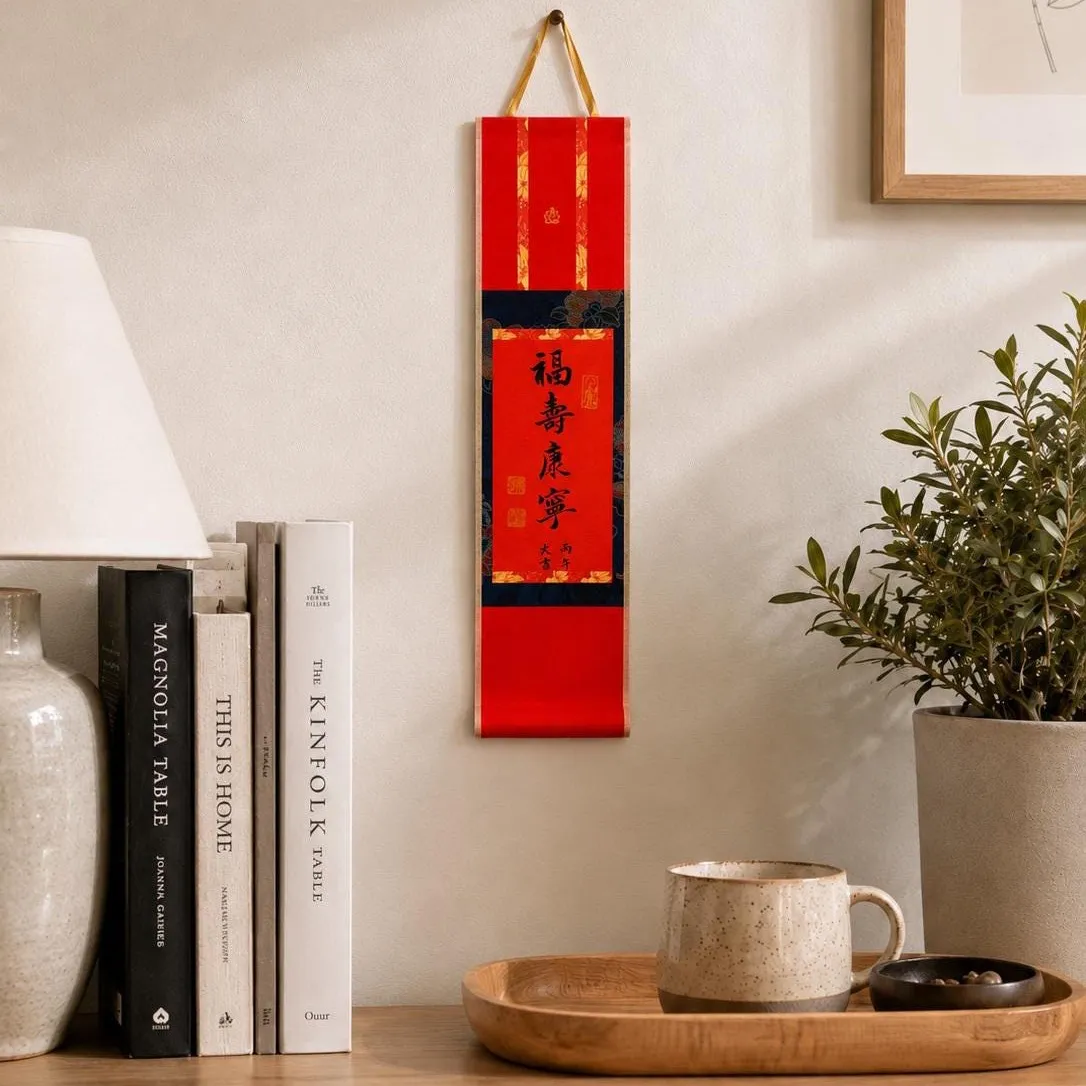
Photo shows a sample — yours will be brushed with 执子之手, or any character you choose.
Wall Scroll — for walls & housewarmingsfrom $38→ -
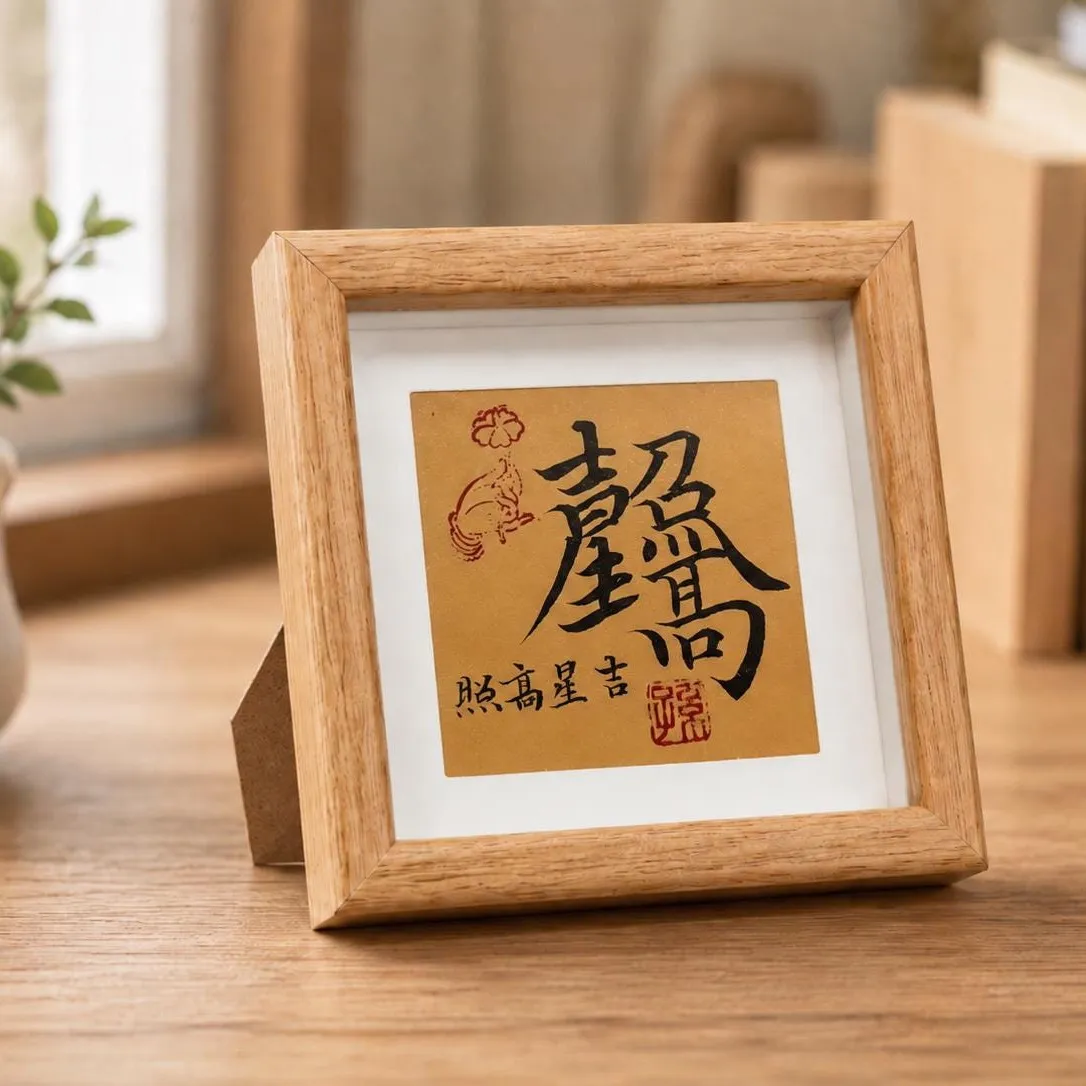
Photo shows a sample — yours will be brushed with 执子之手, or any character you choose.
Desk Frame — for desks, studies & studiosfrom $44→ -
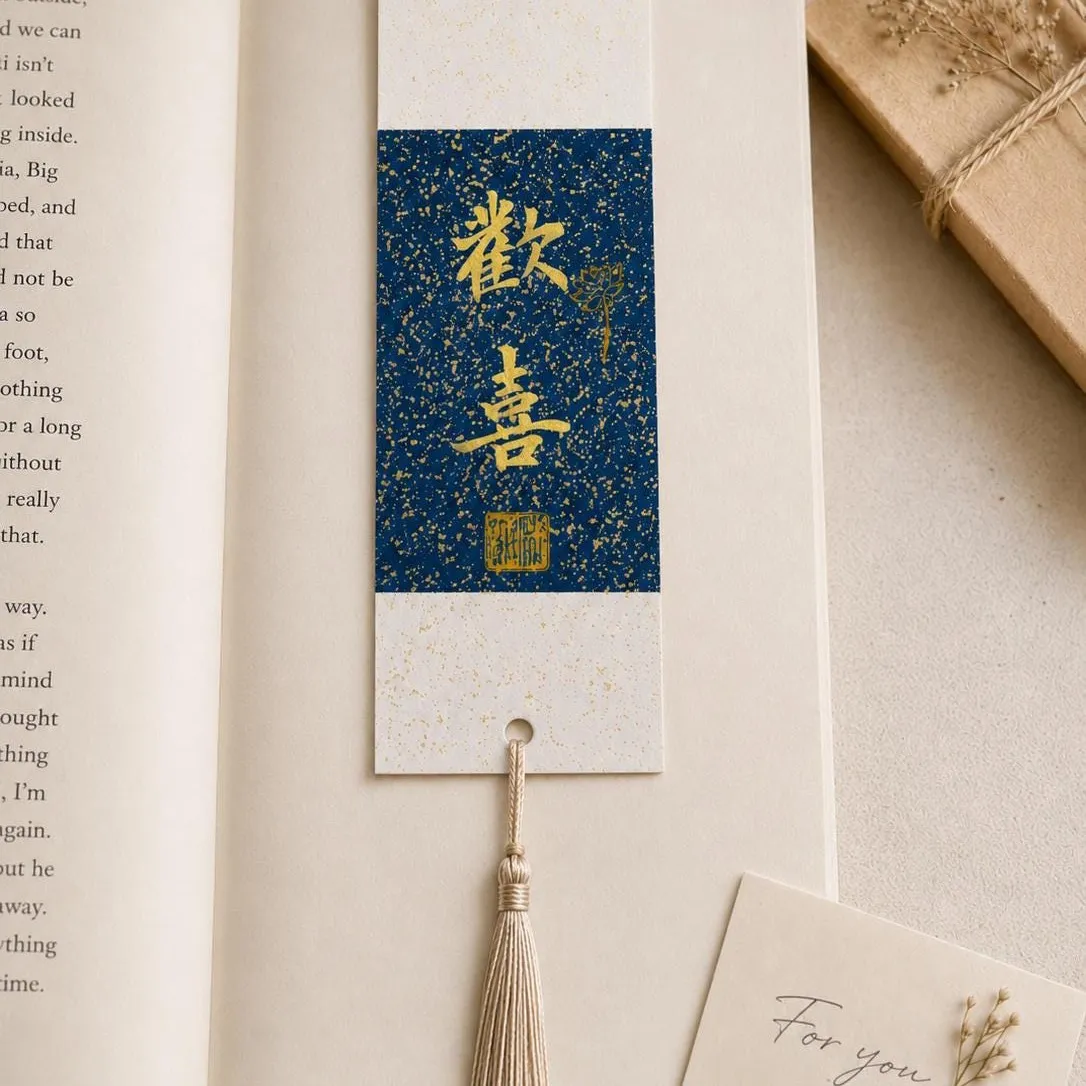
Photo shows a sample — yours will be brushed with 执子之手, or any character you choose.
Bookmark — for readers & small thank-yousfrom $14→
What people said after it arrived.
-
The item is fantastic. The customer service was genuine. Thanks!
— M.Verified purchase · from our Etsy shop reviews · -
They were great they gave me exactly what I asked for and then some. Thank you!!
— G.Verified purchase · from our Etsy shop reviews · -
It is well designed and customized. My daughter loves it. Amazing gift for family’s d friends
— S.Verified purchase · from our Etsy shop reviews ·
Each "执子之手" is hand-brushed by FuBlessings on rice paper.
See 执子之手 (Zhí Zǐ Zhī Shǒu) on Etsy →