比翼双飞 (bǐ yì shuāng fēi) — Wing Beside Wing · Flying as a Pair · Setting Out Together
A 4-character phrase, not a single character.
One eye and one wing each: that is how a Jin commentator pictured the paired-wing bird, and the rule the old word-list writes under it is four characters long, 不比不飞, no flight unless the two are level. 比翼双飞 takes that creature as its picture. The wish is not that two people arrive somewhere, or stay in tune, or reach white hair, but that they set out together and get to places neither could reach alone, each one supplying the wing the other lacks. In plain terms, it is a couple going hand in hand toward a future of their own making.
The four characters already stand together in a poem by Lu Ji, who died in 303. In Bai Juyi’s poem of 806 the lovers swear by the bird at midnight on the seventh night of the seventh month, the night Chinese still keeps for lovers. The phrase now goes to couples as a wish: Taiwan’s Ministry of Education dictionary gives 愿你们夫妻俩比翼双飞,白头偕老 as its example, and a Ming poet, Shen Tiansun, opened a wedding-night poem with these four characters. Where 白头偕老 looks to the end of a marriage, this looks at the road.
A hand-brushed “比翼双飞” by FuBlessings is a wedding gift for a new couple, or a piece for a husband or wife at an anniversary or on Valentine’s Day. It does not promise where the two of you will land. It says that whatever the distance, you are covering it side by side, and that neither of you is flying alone.
- two who can only fly together
- setting out side by side, neither carrying the other
- a couple's shared way forward
- a wedding send-off for the pair
- growing old together That is 白头偕老, which names the far end of the road. 比翼双飞 is about the going and says nothing about how far.
- of one heart 同心 says two people want the same things. This phrase has them moving, and moving at the same height.
- lovebirds The English pet bird sits close on a perch. The 比翼鸟 of the old books cannot leave the ground alone; the phrase is about the flight.
The short arms are the point: these readings don’t reach it.
- 比 side by sideTwo set level with each other, as in 比肩, shoulder to shoulder. In the Erya's line 不比不飞 it is the condition for flying at all.
- 翼 wingEach of the paired birds has one, in Guo Pu's description, so a single bird has only half of what flight needs.
- 双 a pairTwo together, traditional 雙. After 比翼 it repeats the point, so that the reader counts two.
- 飞 to flyTraditional 飛. The verb is what separates this phrase from wishes about staying, calling in tune or growing old: here the two are travelling.
characters
- 比翼鸟 bǐ yì niǎo the paired-wing bird itself, which flies only with its partner
- 鹣鹣 jiān jiān the bird's name in the Erya, later used for a loving husband and wife
- 比翼连枝 bǐ yì lián zhī paired wings and joined branches — two images of a couple who cannot be parted
- 连理枝 lián lǐ zhī branches of two trees grown into one — the bird's partner image in Bai Juyi's vow; related by sense, it shares no character
- 鸾凤和鸣 luán fèng hé míng the male and female phoenix calling in tune — a wedding near-synonym; related by sense, it shares no character
Cinnabar marks the characters 比翼双飞 actually contains. The dark row is a relative by meaning or by sound, not one shared stroke.
The Story Behind the Character
The bird has one eye and one wing. That is how the Jin scholar Guo Pu describes it in his note to the Erya, the early word-list, which says of it only 不比不飞: it flies only beside another. The Erya lists one paired thing for each quarter of the world, a fish in the east that does not go unless paired, the bird in the south, a beast in the west that runs with a partner, people in the north who take turns to eat and keep watch, and calls them the strange airs of the four directions. 比 is side by side. In the Chuci piece Divination, Qu Yuan asks the diviner whether he should fly 比翼 with the yellow swan or fight the chickens and ducks for food, and the Tang commentators of the Wenxuan explain 比翼 as 比肩, shoulder to shoulder.
The phrase says the same thing twice. 比翼 puts the wings side by side and 双飞 has two in flight, and the doubling is the point: one bird is not enough to make the sentence. Lu Ji, who died in 303, already joins all four characters in a single line, at the close of a poem about music heard from below a high tower. Zuo Fen, writing the court elegy for Empress Yang in 274, split the two halves across a couplet, saying of the emperor and the empress that they had flown 比翼 in a plain unpainted house and 双飞 into the purple pavilions of the palace.
At first the image was not only for couples. Taiwan's Ministry of Education dictionary still records 比翼鸟 as a figure for close friends as well as for a loving husband and wife, and for the friends' sense it quotes Cao Zhi's farewell to two companions. The lovers' sense is the one that held. In Bai Juyi's Song of Everlasting Regret of 806 the bird is the oath of an emperor and his consort; in the twelfth century the painter Yang Wujiu has a couple recall their old vow as 比翼连枝, paired wings and joined branches; and the dictionary's gloss of 比翼双飞 today is a man and woman in loving accord, joining hands to make a future together.
Classical lines
- roughly 500 years
- c. 3rd–2nd c. BCE 《尔雅·释地》
- c. 211 CE 《送应氏》
- c. 280–303 CE 《拟西北有高楼》
南方有比翼鸟焉,不比不飞,其名谓之鹣鹣。 In the south there is the paired-wing bird: unless side by side, it does not fly. Its name is jianjian.
The Erya sets this bird in a row of four: in the east a fish that does not go unless paired, in the west a beast that pulls sweet grass for its partner and is carried off by it when danger comes. Guo Pu's note on this line gives each bird one eye and one wing, so that it flies only when it has found the other. The whole phrase rests on that one condition.
山川阻且远,别促会日长。愿为比翼鸟,施翮起高翔。 Mountains and rivers block the way, and it is far; the parting is quick, the wait to meet again is long. I wish we were paired-wing birds, spreading our wings to rise and fly high.
Cao Zhi wrote this at a farewell feast for friends bound for the north, by tradition the brothers Ying Yang and Ying Qu. The wish comes from the friend staying behind: as paired-wing birds, they would not have to part at all. Taiwan's Ministry of Education dictionary keeps this line as its example of the bird as a figure for close friends.
不怨伫立久,但愿歌者欢。思驾归鸿羽,比翼双飞翰。 I do not mind how long I have stood here; I only wish the singer joy. I long to ride the wings of a homeward goose, wing beside wing, a pair in flight.
Lu Ji is rewriting an older poem in which a listener hears string music from the foot of a tall tower, grieves that so few understand it, and wishes the two of them were birds rising high. His version puts 比翼双飞 into a single line. The Tang commentators of the Wenxuan read the beauty at the strings as a figure for a gifted man nobody employs, and the goose as a way of leaving with someone of the same heart. The flight is a departure, taken together.
Why This Character Matters
In the Classic of Mountains and Seas the bird is not a love token at all; it is bad news. A bird like a wild duck, with one wing and one eye, flies only when the two find each other, and when it is seen the world floods; Guo Pu's note names it the paired-wing bird. The Han historian Sima Qian records the opposite reading: Guan Zhong told Duke Huan of Qi that when the old kings made the feng and shan sacrifices, the eastern sea had sent the paired-eye fish and the western sea the paired-wing bird, and that with no such signs now the duke should not try it; the duke dropped the plan. The Book of Song's list of auspicious signs says the bird appears when a ruler's virtue reaches far. The poets who later wrote it into vows took over a bird that had already been a flood omen and a court omen.
Today it is said of and to couples. Taiwan's Ministry of Education dictionary lists 鸾凤和鸣 and 夫唱妇随 among its near-synonyms, and its example sentence under 双飞 wishes it on a husband and wife together with 白头偕老. The neighbours show what this one adds. In 夫唱妇随 the husband leads and the wife follows; in 鸾凤和鸣 the male and female phoenix call in tune. 比翼双飞 has no leader and no song. The two are level, they are moving, and neither one can make the trip without the other.
A few characters live near "比翼双飞" but mean something quieter, sharper, or more specific. Here's how to tell them apart.
the journey, taken wing beside wing
the destination: two heads gone white in one house
two in motion, at the same height
two aimed the same way, wherever they stand
a pair travelling together
a pair sounding in tune
At a wedding the phrase works as a send-off: the ceremony is where the two leave the ground, and the wish is for the flight.
- At a wedding the phrase works as a send-off: the ceremony is where the two leave the ground, and the wish is for the flight. Taiwan's Ministry of Education dictionary illustrates the word 双飞 with a wish addressed to a husband and wife, 愿你们夫妻俩比翼双飞,白头偕老, may the two of you fly wing beside wing and grow old together, and a Ming poet, Shen Tiansun, opened a wedding-night poem for a woman named Wang Huifang with the same four characters.
- An anniversary can look back at the flight instead of wishing for it. The Song painter and poet Yang Wujiu ends a song about two people singing and drinking late into the night by weighing their old vow, to be paired wings and joined branches, against the night they are having, and the night comes out ahead. Given years in, the phrase reads less as a hope than as a description of how the two of you have travelled.
- The paired-wing bird belongs to a lovers' night. In Bai Juyi's Song of Everlasting Regret, written in 806, the oath Yang Guifei sends back to the emperor recalls a midnight on the seventh day of the seventh month, 在天愿作比翼鸟, in the sky, may we be the paired-wing bird. Taiwan's Ministry of Education dictionary lists that night, 七夕, first under 情人节, lovers' day, ahead of February 14. For a partner, the phrase keeps the vow and leaves out the regret.
Husband · Wife · New Couple · or yourself
Looking for a name? See Western names written in Chinese →
-
What occasions is 比翼双飞 given for?
It is a couple's phrase: a wedding wish from guests, a line for a husband or wife at an anniversary, and a lovers' gift, whether on February 14 or on 七夕, the seventh night of the seventh month. FuBlessings suggests it for a husband, a wife or a new couple. It wishes two people a way forward taken together; it does not promise luck, wealth or a long life.
-
What does 比翼双飞 (bǐ yì shuāng fēi) mean?
比翼双飞 (bǐ yì shuāng fēi) is a 4-character Chinese phrase for wing beside wing, flying as a pair, setting out together. One eye and one wing each: that is how a Jin commentator pictured the paired-wing bird, and the rule the old word-list writes under it is four characters long, 不比不飞, no flight unless the two are level. 比翼双飞 takes that creature as its picture. The wish is not that two people arrive somewhere, or stay in tune, or reach white hair, but that they set out together and get to places neither could reach alone, each one supplying the wing the other lacks. In plain terms, it is a couple going hand in hand toward a future of their own making. In the Classic of Mountains and Seas the bird is not a love token at all; it is bad news. A bird like a wild duck, with one wing and one eye, flies only when the two find each other, and when it is seen the world floods; Guo Pu's note names it the paired-wing bird. The Han historian Sima Qian records the opposite reading: Guan Zhong told Duke Huan of Qi that when the old kings made the feng and shan sacrifices, the eastern sea had sent the paired-eye fish and the western sea the paired-wing bird, and that with no such signs now the duke should not try it; the duke dropped the plan. The Book of Song's list of auspicious signs says the bird appears when a ruler's virtue reaches far. The poets who later wrote it into vows took over a bird that had already been a flood omen and a court omen.
-
Who brushes the 比翼双飞 calligraphy?
FuBlessings hand-brushes each 比翼双飞 (Bǐ Yì Shuāng Fēi) to order, in ink on rice paper — never printed, never repeated.
Bring 比翼双飞 home — choose how you'd like it brushed.
-
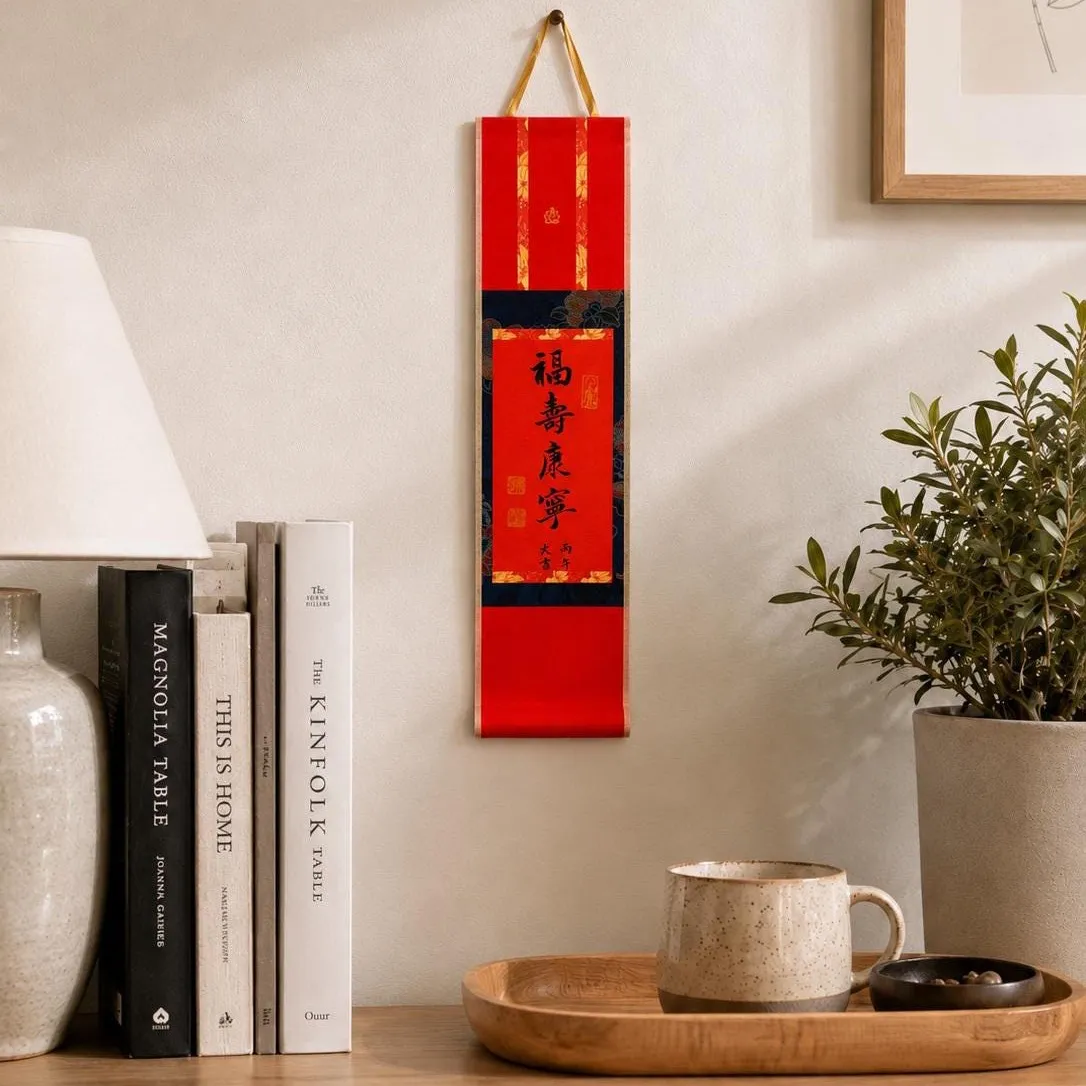
Photo shows a sample — yours will be brushed with 比翼双飞, or any character you choose.
Wall Scroll — for walls & housewarmingsfrom $38→ -
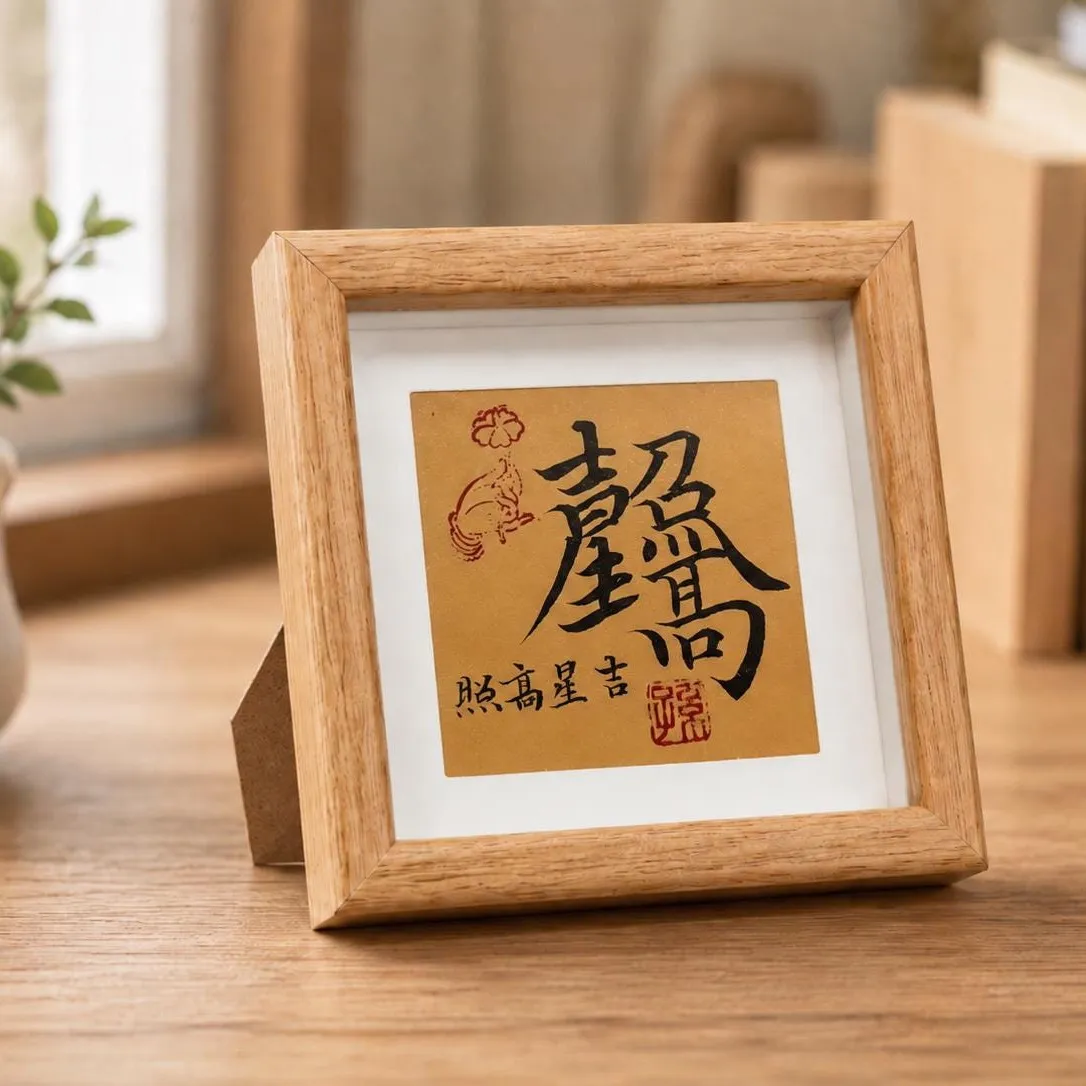
Photo shows a sample — yours will be brushed with 比翼双飞, or any character you choose.
Desk Frame — for desks, studies & studiosfrom $44→ -
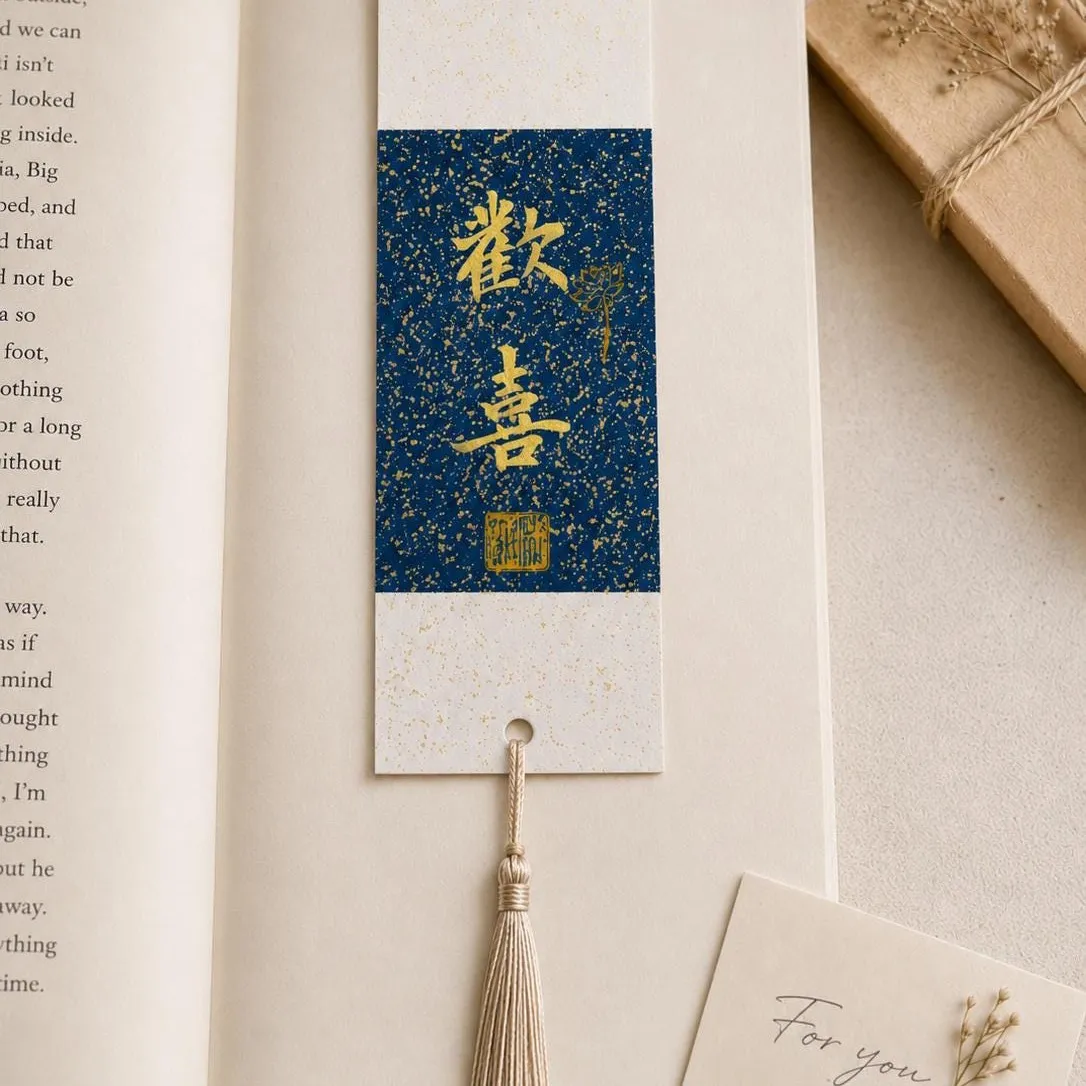
Photo shows a sample — yours will be brushed with 比翼双飞, or any character you choose.
Bookmark — for readers & small thank-yousfrom $14→

What people said after it arrived.
-
The item is fantastic. The customer service was genuine. Thanks!
— M.Verified purchase · from our Etsy shop reviews · -
They were great they gave me exactly what I asked for and then some. Thank you!!
— G.Verified purchase · from our Etsy shop reviews · -
It is well designed and customized. My daughter loves it. Amazing gift for family’s d friends
— S.Verified purchase · from our Etsy shop reviews ·
Each "比翼双飞" is hand-brushed by FuBlessings on rice paper.
See 比翼双飞 (Bǐ Yì Shuāng Fēi) on Etsy →