正 (zhèng) — True to the Mark · The Main and the Exact
A single character.
Count votes on a Chinese classroom blackboard and the tally is usually kept in this character: one stroke per vote, five to each finished 正, written across, down, across, down, across. Since Unicode 11.0 in 2018 there are five code points for the stages of building one. The tally uses the strokes, not the meaning. The meaning underneath is older and more exacting: a mark fixed outside a person, and the work of squaring up to it. 郑玄 explains why the painted square at the centre of a Zhou target was called 正 by pointing at the archer rather than the cloth, 射者内志正,则能中焉, one who is set right within can hit it, and 孟子’s archer 正己而后发, sets himself right and only then lets go. See 正直 → joins the character to 直, the sightline, and asks a person to be right and to say so plainly. The single character asks something earlier. Where are you standing, and are you facing the mark?
Most of the time the word means the main or the exact. 正门 is the front gate, 正午 is noon, 正好 is just right, and in a courtyard house the 正房 faces south across the yard. The first month is 正月, read zhēng yuè, and the bull’s-eye 正鹄 keeps the same level tone. Its moral uses stay close to the body. 孔子 said 其身正,不令而行: when the person is right, things go forward without orders. He answered a question about government with 政者,正也, and the pun is visible in the graphs. When the 穆宗 emperor asked 柳公权 how to use a brush well, the calligrapher said 心正则笔正, a right heart makes an upright brush, and the emperor understood that the answer was really about him. A gentleman in the 《论语》 sets his robe and cap straight, 正其衣冠, and the verb there is as plain as a hand on a collar.
A hand-brushed 正 by Artist Lina Sun is five strokes, every one of them straight. For a father it can name the aim he kept and the collars he straightened before you went out the door. For a grandparent it is the north room, the place a household is still arranged from. For a friend it is the one you ask when you would rather be corrected now than later. On a birthday it is the archer’s stance before the next shot. It does not promise a hit. It asks where you are standing.
- squared to a mark fixed outside the person — the painted 正 at the centre of a target, 正鹄 the bull's-eye
- set right in oneself first — 正己而后发 before the shot, 其身正 before any order is given
- the main and the central — 正门, 正房, 正月
- exactly so — 正午 at noon, 正好 just right
- put straight by hand — 正衣冠, a collar or a cap set right
- straight in the saying That is 正直, which adds 直, the sightline, and asks for both halves: right by a standard and straight in the account given. A lone 正 makes no claim about what a person says. It is about where they stand relative to the mark.
- upright bearing That is 端, uprightness that can be read off the posture and conduct, as in 品行端正. 正 can sit out of sight until the arrow lands. The archery chapter of the 《礼记》 puts it in the archer's intent as well as his body.
- righteousness That is 义, an obligation a person decides to take on. 正 is not a duty assumed. It is an alignment checked against a mark, and it can be lost and recovered by adjusting.
- refined correctness 雅 is glossed with this character in the Mao preface, 雅者,正也, but it names the register of court song and speech. 正 is the plainer word, said of a cap, a gate, a month, or a shot.
The short arms are the point: these readings don’t reach it.
- 一 the markThe top stroke. In the oracle bones and bronzes it was a small square or a filled dot, read in the Chinese University of Hong Kong's database as the destination the foot is heading for, possibly also the sound 丁. 许慎's seal form has a line there, which he read as the place the foot stops, 一以止. It is written first.
- 止 the footThe lower four strokes, in the order 竖, 横, 竖, 横, so the whole character goes 横, 竖, 横, 竖, 横 (stroke code 12121) in five strokes. 止 began as a footprint and in compounds usually means going or stopping. Dictionaries file 正 under 止 with one stroke outside it.
character
- 正鹄 zhēng gǔ the bull's-eye, and by extension the aim of a thing; read in the level tone, as 陆德明 already marked the target sense
- 正月 zhēng yuè the first month of the lunar year; Shang inscriptions already record it
- 正衣冠 zhèng yī guān to set one's robe and cap straight, after 《论语》 君子正其衣冠
- 正房 zhèng fáng the north room of a courtyard house, facing south, where the household is arranged from
- 正楷 zhèng kǎi regular script, the standard form a copybook sets for each stroke
- 中的 zhòng dì to hit the bull's-eye, and so to get to the heart of a matter; a dark row by sense, the moment this character's target names, with no character in common
Cinnabar marks the characters 正 actually contains. The dark row is a relative by meaning or by sound, not one shared stroke.
The Story Behind the Character
Shang diviners already used this graph in more than one way. In one inscription it is a verb, 今者王正土方, the king now marches on the 土方, and there it writes the word later spelled 征. In others it opens a date, 在正月, in the first month. The picture under both is a foot, 止, headed toward a mark at the top, drawn as a small square or a filled dot. The Chinese University of Hong Kong's character database reads that mark as the destination, a town or a goal, and notes the proposal that it also gave the sound. The step sign 彳 was added later to split off 征 for the marching sense. 许慎, working without the oracle bones, had a line where the mark had been, and he defined the whole in one word: 正,是也, being so. He read the graph as 从止,一以止, a foot brought to a stop at the line.
On the Zhou archery range the word had a second concrete home. At a guest archery meeting the target was a stretched cloth with a square painted in its middle. On the king's target the square had five rings, vermilion at the centre, then white, blue-green and yellow, with black outside, as 郑玄 describes it in his note on the 《周礼》. That square was the 正. The Mao commentary to 《猗嗟》 gives its size as two 尺. 陆德明's sound gloss marks it 音征, the level tone, and the modern dictionary still reads 正鹄, the bull's-eye, as zhēng gǔ. 郑玄 gives a reason for the name, 正之言正也,射者内志正,则能中焉: it is called 正 because an archer who is set right within can hit it. A second note of his, quoted in the Tang subcommentary, adds another explanation beside the first: 正 was also the name of a quick bird in 齐 and 鲁, hard to hit, so hitting it proved skill. Even the Han commentator kept both.
The step from the cloth to the person is made in the 《礼记》 chapter on archery and again by 孟子, in almost the same words. 射求正诸己,己正而后发, says the one; 射者正己而后发, says the other. The archer looks for 正 in himself first and releases only after. 孔子 made the same move about government. Asked about 政 by 季康子, the senior minister of 鲁, he answered 政者,正也, and the pun is in the graphs: 许慎 builds 政 from 攴 beside 正, which also gives the sound. 攴 is 许慎's sign for a light blow. The character keeps two things together from the oracle bones on, a mark fixed outside the person and the adjustment the person makes to meet it.
Classical lines
- roughly 500 years
- c. 9th–7th c. BCE 《诗经·齐风·猗嗟》
- c. 400 BCE 《论语·颜渊》
- c. 300 BCE 《孟子·公孙丑上》
猗嗟名兮,美目清兮,仪既成兮。终日射侯,不出正兮。 Ah, how fine the brow, how clear the eyes beneath it; his bearing is complete. All day he shoots at the target and never leaves the centre.
The 正 here is the painted square in the middle of the cloth target, two 尺 across in the Mao commentary. The Mao preface reads the praise as reproach and lament. It takes the archer for Duke Zhuang of 鲁, accomplished in bearing and skill and unable to keep his mother in check. Whatever its edge, the line shows the word at its most literal, a mark that an arrow either stays inside or leaves.
仁者如射:射者正己而后发;发而不中,不怨胜己者,反求诸己而已矣。 Humaneness is like archery. The archer sets himself right and then releases. If he misses, he does not resent the one who beat him; he turns back and looks for the cause in himself, and that is all.
The 《礼记》 chapter on archery carries nearly the same sentence. The order is the point. The verb 正 comes before the shot and works on the archer, not the target, and the account after a miss runs inward.
政者,正也。子帅以正,孰敢不正? To govern is to set right. If you lead by being right, who will dare not to be?
孔子's answer to 季康子, who had asked about government. 郑玄's note on 帅 reminds the reader that 康子 headed the ministers of 鲁, so the sentence places the starting point in the man asking. 许慎 later builds 政 from this character with 攴 beside it, and the two still share a reading.
Why This Character Matters
The 《旧唐书》 keeps a sentence about brushwork that turns on this character, and it was a reproach. The history says that the 穆宗 emperor, whose rule it calls 僻, wayward, once asked 柳公权 how a brush could be used to perfection. 柳公权 answered 用笔在心,心正则笔正: the brush is used from the heart, and when the heart is right the brush is upright. The emperor's expression changed, the history continues, because he understood it as 笔谏, admonition delivered as advice about writing. The same word is a plain physical verb as well. 《论语》 gives 君子正其衣冠, robe and cap set straight, as part of how a gentleman commands respect without being fierce. After 魏徵 died, 唐太宗 told his ministers that a bronze mirror is good for exactly that, 以铜为镜,可以正衣冠, while a person used as a mirror shows what one has got right and wrong.
In ordinary speech it marks the main and the exact. 正门 is the front gate, 正午 is noon, 正好 is just right. In a Beijing courtyard house the 正房 sits on the north side facing south, so the winter sun reaches into it. It was the head of the household's quarters, and in the full three-courtyard plan the old of the family lived there, with the eldest son in the east wing. The first month keeps the level-tone reading, 正月 (zhēng yuè), as the bull's-eye does. Hung alone, 正 can also be read first as the tally mark, five votes on a blackboard, so a gift of it works best when the giver says which mark they mean.
A few characters live near "正" but mean something quieter, sharper, or more specific. Here's how to tell them apart.
the alignment to a mark, which may only show when the shot lands
the uprightness a room reads off a person's bearing
a stance adjusted and readjusted toward a fixed mark
the single decision to take on an obligation
the plain word for right, said of a cap, a gate, or a shot
correctness in the register of court song and speech
The 《礼记》 chapter on archery asks for 心平体正 before the shot, a level mind and a body set square, and goes straight on to a list: 为人父者,以为父鹄, a man who is a father takes being a father as his target, and a son takes being a son as his.
- The 《礼记》 chapter on archery asks for 心平体正 before the shot, a level mind and a body set square, and goes straight on to a list: 为人父者,以为父鹄, a man who is a father takes being a father as his target, and a son takes being a son as his. Each archer shoots at his own. Nobody else on the range can see that target, only the stance taken toward it, day after day. A Father's Day 正 tells him the family noticed what he was aiming at.
- 孟子 compares the humane person to an archer: 射者正己而后发, he sets himself right and only then lets go, and if he misses he does not resent the one who beat him. A birthday falls between one release and the next. The year just closed has landed where it landed, some of it wide, and the easiest comparison to make is with whoever did better. This character asks for the other one: feet placed, shoulders square, the cause looked for at home before the next arrow goes. It suits a friend's birthday after a hard year, or a grown child's in the years when the shots start to count.
Dad · Grandparent · Friend · or yourself
Looking for a name? See Western names written in Chinese →
-
What does 正 (zhèng) mean?
正 (zhèng) is the Chinese character for true to the mark, the main and the exact. Count votes on a Chinese classroom blackboard and the tally is usually kept in this character: one stroke per vote, five to each finished 正, written across, down, across, down, across. Since Unicode 11.0 in 2018 there are five code points for the stages of building one. The tally uses the strokes, not the meaning. The meaning underneath is older and more exacting: a mark fixed outside a person, and the work of squaring up to it. 郑玄 explains why the painted square at the centre of a Zhou target was called 正 by pointing at the archer rather than the cloth, 射者内志正,则能中焉, one who is set right within can hit it, and 孟子's archer 正己而后发, sets himself right and only then lets go. See 正直 → joins the character to 直, the sightline, and asks a person to be right and to say so plainly. The single character asks something earlier. Where are you standing, and are you facing the mark? The 《旧唐书》 keeps a sentence about brushwork that turns on this character, and it was a reproach. The history says that the 穆宗 emperor, whose rule it calls 僻, wayward, once asked 柳公权 how a brush could be used to perfection. 柳公权 answered 用笔在心,心正则笔正: the brush is used from the heart, and when the heart is right the brush is upright. The emperor's expression changed, the history continues, because he understood it as 笔谏, admonition delivered as advice about writing. The same word is a plain physical verb as well. 《论语》 gives 君子正其衣冠, robe and cap set straight, as part of how a gentleman commands respect without being fierce. After 魏徵 died, 唐太宗 told his ministers that a bronze mirror is good for exactly that, 以铜为镜,可以正衣冠, while a person used as a mirror shows what one has got right and wrong.
-
What occasions is 正 given for?
正 is traditionally given for Father's Day, Birthday. The 《礼记》 chapter on archery asks for 心平体正 before the shot, a level mind and a body set square, and goes straight on to a list: 为人父者,以为父鹄, a man who is a father takes being a father as his target, and a son takes being a son as his. Each archer shoots at his own. Nobody else on the range can see that target, only the stance taken toward it, day after day. A Father's Day 正 tells him the family noticed what he was aiming at. 孟子 compares the humane person to an archer: 射者正己而后发, he sets himself right and only then lets go, and if he misses he does not resent the one who beat him. A birthday falls between one release and the next. The year just closed has landed where it landed, some of it wide, and the easiest comparison to make is with whoever did better. This character asks for the other one: feet placed, shoulders square, the cause looked for at home before the next arrow goes. It suits a friend's birthday after a hard year, or a grown child's in the years when the shots start to count.
-
Who brushes the 正 calligraphy?
Each 正 (Zhèng) is hand-brushed to order by Artist Lina Sun in ink on rice paper — never printed, never repeated.
Bring 正 home — choose how you'd like it brushed.
-
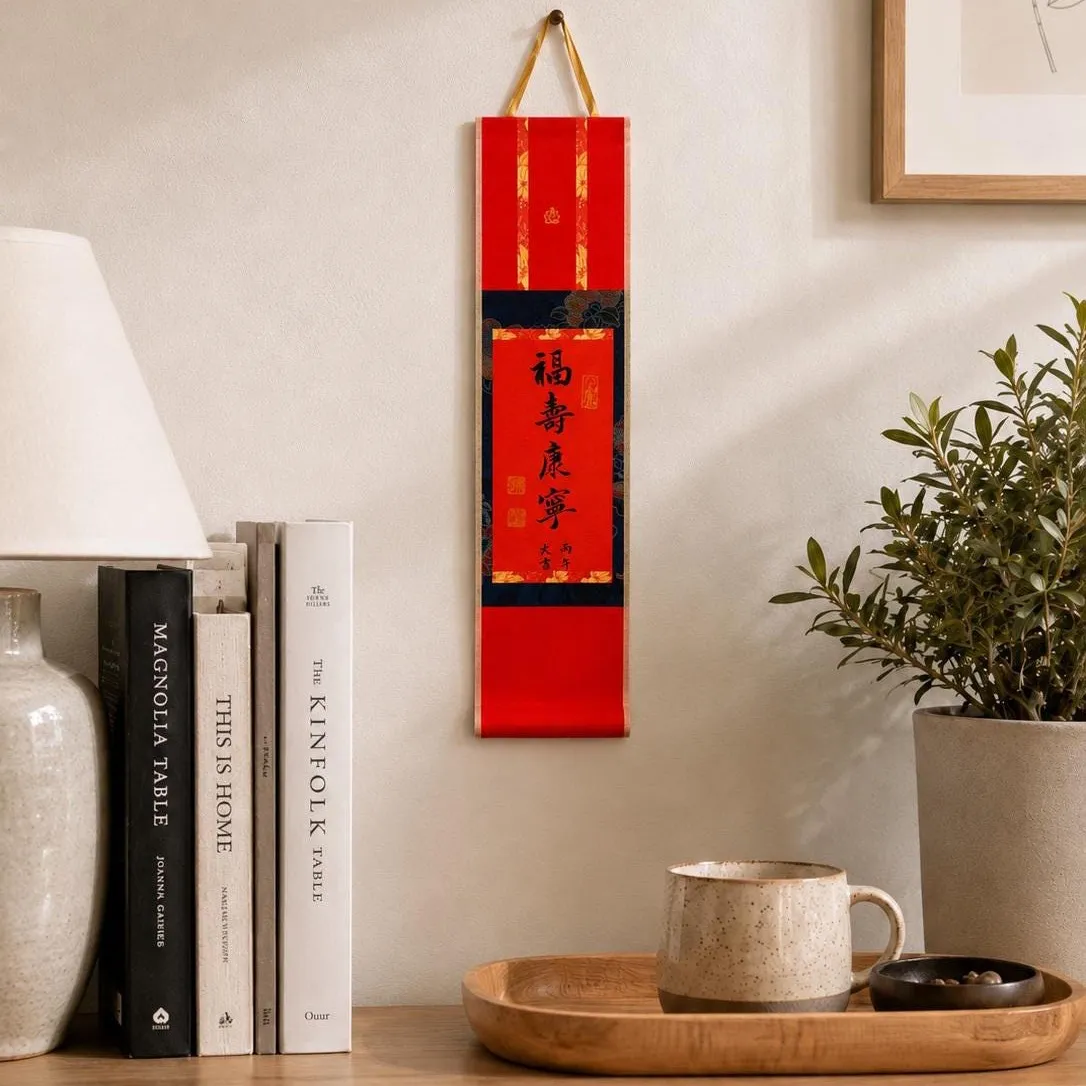
Photo shows a sample — yours will be brushed with 正, or any character you choose.
Wall Scroll — for walls & housewarmingsfrom $38→ -
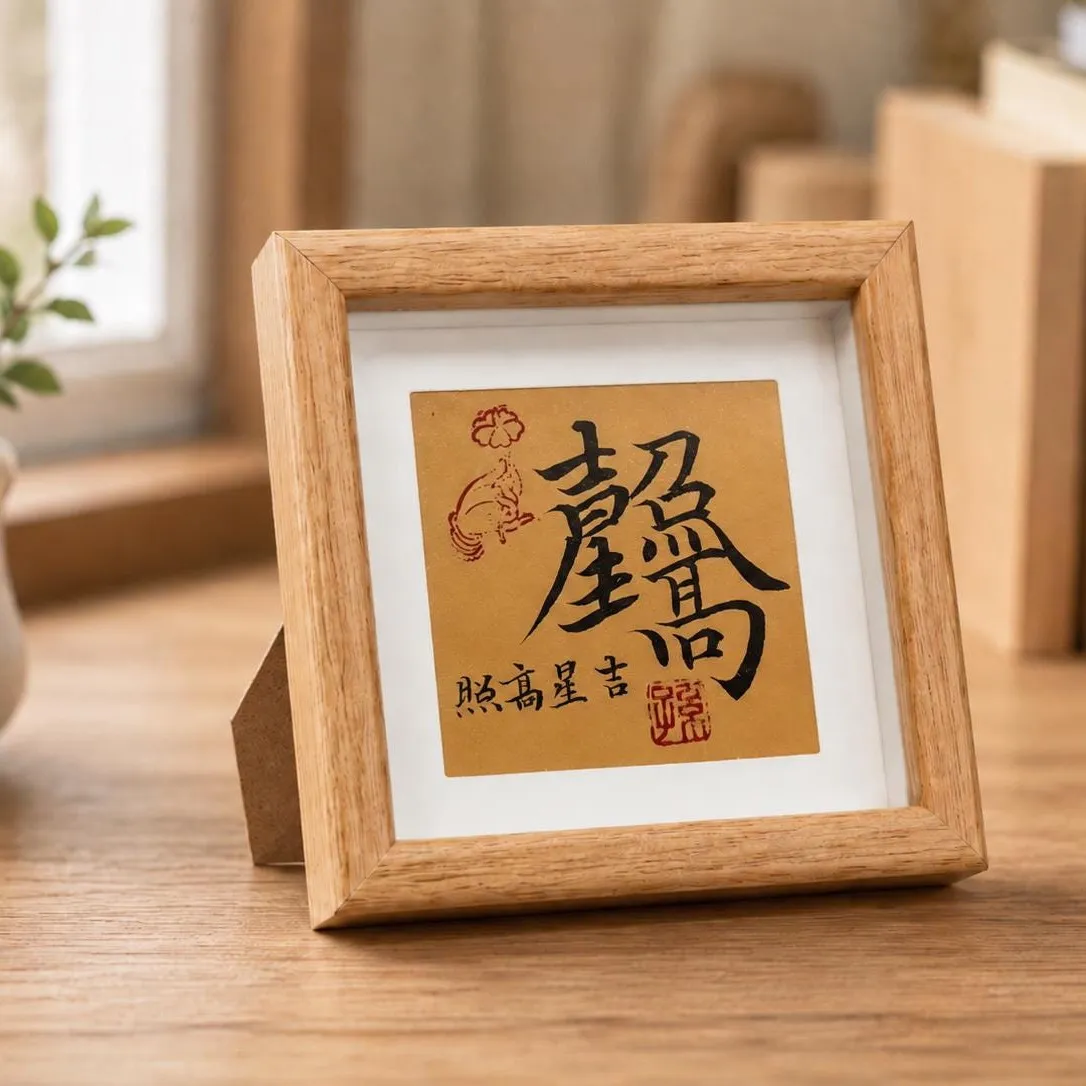
Photo shows a sample — yours will be brushed with 正, or any character you choose.
Desk Frame — for desks, studies & studiosfrom $44→ -
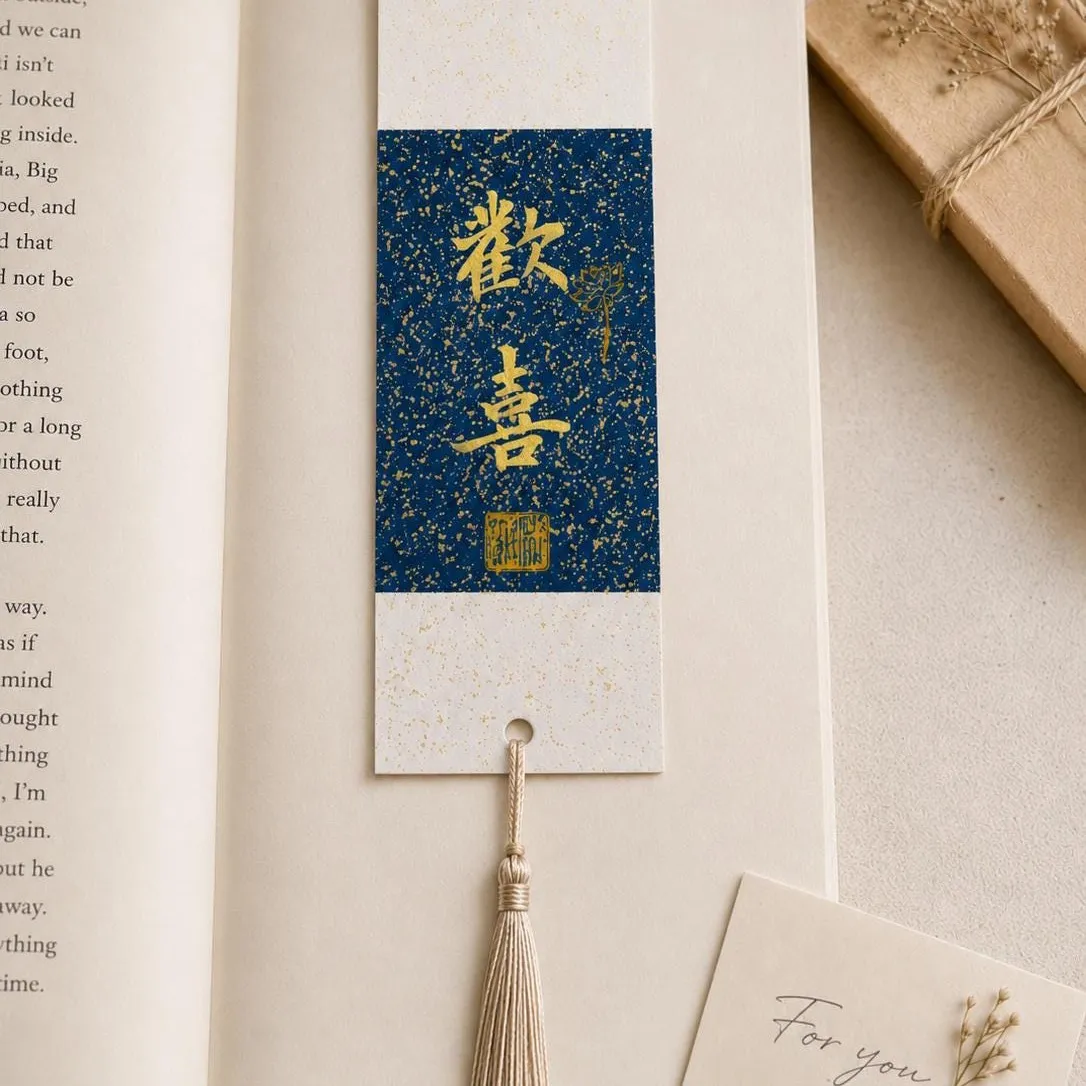
Photo shows a sample — yours will be brushed with 正, or any character you choose.
Bookmark — for readers & small thank-yousfrom $17→
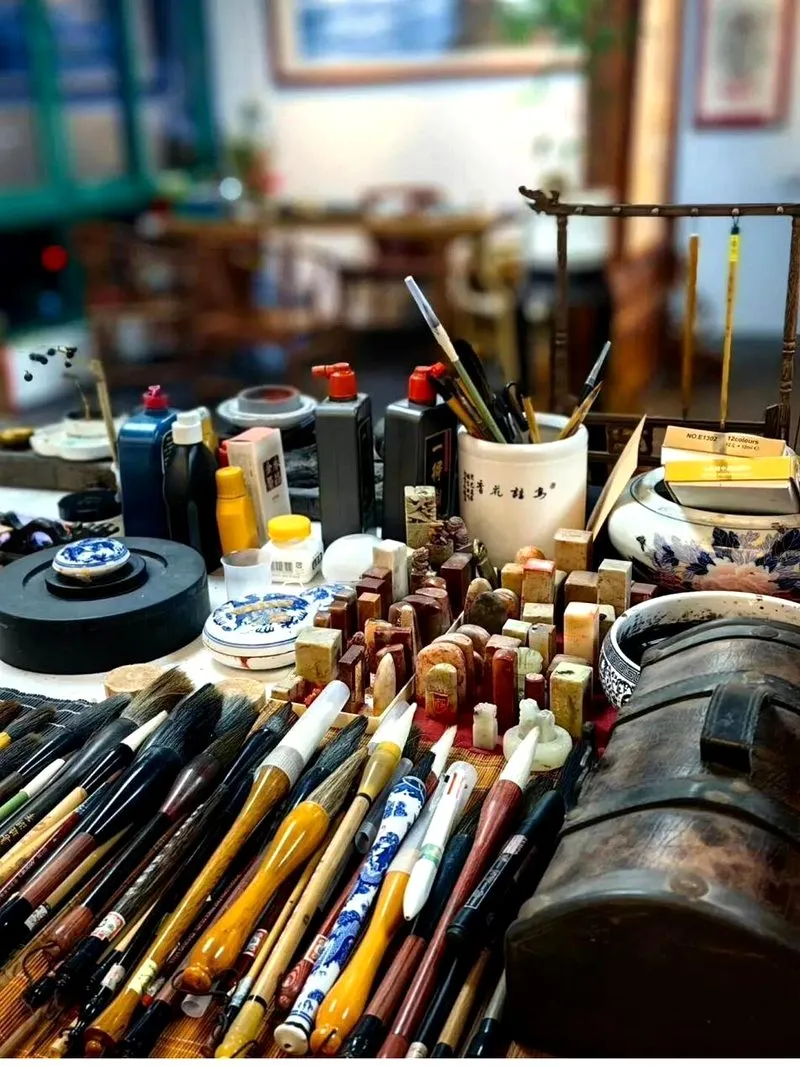
What people said after it arrived.
-
The item is fantastic. The customer service was genuine. Thanks!
— M.Verified purchase · from our Etsy shop reviews · -
They were great they gave me exactly what I asked for and then some. Thank you!!
— G.Verified purchase · from our Etsy shop reviews · -
It is well designed and customized. My daughter loves it. Amazing gift for family’s d friends
— S.Verified purchase · from our Etsy shop reviews ·
Each "正" is hand-brushed by Artist Lina Sun on rice paper.
See 正 (Zhèng) on Etsy →