天长地久 (tiān cháng dì jiǔ) — As Long as the Sky, as Lasting as the Ground
Two clauses rather than one four-character block: 天长 and 地久 each carry their own subject, which is why 地久天长 swaps the halves and changes nothing.
《长恨歌》 runs to a hundred and twenty lines, and the couplet that got free of the poem is the last one. It puts an expiry date on these four characters: 天长地久有时尽 — heaven is long and the ground endures, and even they come to a term — with a grief set against them that does not. Notice what that assumes about the phrase. It is not a claim of eternity, and Chinese has not generally handled it as one: 永恒 puts a bond outside time, where nothing can get at it, while these four characters leave it inside the world, measured against two things that are themselves still running and will one day stop. The measure is enormous, checkable from any doorway, and finite — which is the more honest of the two to hand a marriage, and the reason a poet could set a limit on it without contradicting anybody. See 永恒 →
The distance the phrase keeps is built in, and it is easy to walk past. There is no verb of wishing anywhere in the four characters — no 愿, no 祝 — and nobody is addressed by them. What they do instead is set a length on the table and leave it lying there. Nothing a marriage does can make the sentence untrue. That is a different offer from the ones next to it on the wedding table, where 百年好合 puts a figure on the ask and 同心 asks whether the two are aimed the same way. These four characters ask for a length and stop there, which is why they turn up wherever something is meant to be permanent and nobody wants embroidery: on the red banner set at a wedding, engraved inside a pair of rings, on the plaque a company hangs up on its founding date.
A hand-brushed “天长地久” by FuBlessings suits a wedding, a milestone anniversary, or the partner you would rather hand a measure than a compliment. Hung in a house it keeps working in the direction its own chapter intended: heaven and earth last, Laozi says, because they are not spending anything on lasting. For two people who have been at it a while, that is the most useful thing the phrase carries — not the size of the promise, but the quiet argument underneath it about what a thing has to stop doing in order to go on.
- as long as the sky, as lasting as the ground
- a bond meant to run as long as the world it stands in
- duration measured against something you can walk outside and look at
- the plainest four characters in Chinese for a term with no figure on it
- 永恒 永恒 is a category — a bond lifted out of time, where nothing changes and nothing ends. These four characters make no such claim. Heaven and earth are inside the world, and a Tang poet could write that they have a term without contradicting anyone. This is duration by comparison; that is duration made absolute.
- forever English forever is one unbounded word. This is two finite clauses about two objects, and nothing in it says without end — it says as long as those, and leaves the reader to decide how long that is.
- romantic In its source the phrase is doing cosmology, not courtship: it is the opening premise of an argument about why anything lasts. Chinese still uses it that way whenever the subject is not a couple, which is why 友谊 takes it as comfortably as 爱情 does.
- a hundred years 百年好合 puts a figure on the ask — one full lifetime, and the honest outer edge of two people. This phrase names no number at all, and its measure outlives everybody who is given it.
The short arms are the point: these readings don’t reach it.
- 天长 the sky, and it does not run out《说文》 glosses 天 with 颠 — a sound-gloss reaching for the word for the crown of the head — and then gives the sense plainly: 至高无上, the topmost thing with nothing over it. The 长 standing beside it here is doing time and not size. The clause claims the sky has not run out.
- 地久 the ground, and it was here first久 measures time and nothing else: 多久 asks how long a stretch and can never ask how long a thing, which 长 will do either way. So this half is purely elapsed years. 地 is the later of the two nouns as a written graph — the earth was written 土 for a long stretch before 地 settled into the pair.
characters
- 地久天长 dì jiǔ tiān cháng the same four characters with the halves swapped — the standard variant, and the one sung in 《友谊地久天长》
- 天荒地老 tiān huāng dì lǎo till the sky runs waste and the earth grows old — the same two nouns worn out rather than enduring, so the forever is measured by exhaustion instead of by duration
- 长相厮守 cháng xiāng sī shǒu to stay by one another for a long time — shares 长, and asks for physical proximity, which this phrase never mentions: two people can be apart for a decade without spending any of the term
- 海枯石烂 hǎi kū shí làn till the seas dry and the rocks crumble — related by sense and sharing no character with the headword. It hands the term to a catastrophe: the love ends when the world does. These four characters bet the other way, on the world not ending
- 白头偕老 bái tóu xié lǎo to grow old together with white heads — also related by sense alone, and it is the version with a visible end: two people, one lifetime, hair anybody can see
Cinnabar marks the characters 天长地久 actually contains. The dark row is a relative by meaning or by sound, not one shared stroke.
The Story Behind the Character
Chapter seven of the 《道德经》 is, by the time it finishes, about a man who puts himself at the back of the queue and ends up at the front — 后其身而身先. These four characters are how it opens. They are set down flat, as something the writer expects no argument about, and the line immediately after gives their cause: 天地所以能长且久者,以其不自生 — the reason heaven and earth can go on this long is that they do not live for themselves. Nowhere in the source is the phrase a wish. It is the observation an argument stands on, and the argument is that whatever spends itself on continuing does not continue.
As a sentence it is two clauses set side by side, each with its own subject, and both subjects are things rather than people: the sky, and the ground. That is what lets the same four characters go to a marriage, a friendship or a company without a stroke being altered — nothing in them has to be adjusted for who is receiving them. The halves are interchangeable as well. 地久天长 is a standard variant, it turns up wherever the meter wants it, and no reader hears a different claim in it.
What travelled out of the chapter and what stayed behind is the interesting part. The four characters went everywhere: onto wedding banners, into rings, into the mouths of people who have never opened the book. The reason clause did not go with them. Most people who write 天长地久 on a gift have never met 不自生, and the phrase now does duty as a way of holding on, which is close to the reverse of the work it was doing in chapter seven. Call that a promotion rather than a corruption: a premise about why things last was taken up as the measure of how long they ought to.
Classical lines
- roughly 1,200 years
- c. 4th c. BCE 《老子》第七章
- c. 300 BCE 《礼记·中庸》
- 806 《长恨歌》白居易
天长地久。天地所以能长且久者,以其不自生,故能长生。 Heaven and earth last. The reason heaven and earth can last long is that they do not live for themselves, and so they live long.
The four characters open the chapter; the next sentence gives the reason — heaven and earth last because they do not live for themselves.
博厚配地,高明配天,悠久无疆。 Broad and thick, it matches the earth; high and bright, it matches heaven; long-enduring, it has no bound.
The subject is a person's sincerity, and the chapter climbs to this line through a chain that begins 不息则久 — what does not stop becomes lasting. It is the tradition's one route from a human quality up to the scale of heaven and earth, and the first step on it is not intensity but continuing.
天长地久有时尽,此恨绵绵无绝期。 Heaven is long and earth endures, and even they have their term; this regret runs on and on with no date of ending.
The most famous appearance of these four characters in Chinese poetry is a line saying that they run out. Bai Juyi could only close a poem that way because by 806 the phrase was already the standard measure of forever: you cannot put a limit on a figure of speech your reader is not already holding.
Why This Character Matters
Auld Lang Syne is sung across the Chinese-speaking world at graduations, farewells and the turn of the year, and its standard Chinese title is 《友谊地久天长》 — these four characters with the halves swapped and 友谊, friendship, set in front. That is where most people meet the phrase first: not said to a lover but sung by a room of people about to scatter. It absorbs the job without any adjustment, because it never specified who was being measured.
There is a city in Anhui called 天长, and it is named after an emperor's birthday. 玄宗's birthday had been kept since 729 as 千秋节, the Thousand Autumns; in 748 the court renamed it 天长节, borrowing the first half of this phrase, and the county that had been founded as 千秋县 was renamed along with the festival. The festival is long gone; the place name is still on the map. The emperor in question is also the man in 《长恨歌》 — so the poem that closes by saying 天长地久 has a term was written about the ruler whose birthday had been renamed for it. Whether 白居易 meant the echo is not recoverable, and the coincidence is worth more than an intention would be: the phrase was public enough by the eighth century to name a festival, a county, and the outer limit of what a poem could promise.
A few characters live near "天长地久" but mean something quieter, sharper, or more specific. Here's how to tell them apart.
duration by comparison — as long as two things still standing outside the window
duration made absolute — a bond placed outside time altogether
a term, with no figure attached to it
a hundred years, and the quality of the union across every one of them
how long the thing is meant to run
whether the two of them are aimed the same way while it does
Nothing in these four characters predicts anything about the two people getting married.
- Nothing in these four characters predicts anything about the two people getting married. What goes up on a wedding wall is mostly written for the ceremony — 喜结良缘 and 新婚志喜 have the occasion written into them — and this is the panel of the red banner set that was never about the afternoon at all. Its subject is the sky and the ground. So a couple can take it down from the hall, carry it into the flat they move into afterwards, and it will not read as leftover wedding decoration, because none of it was addressed to a wedding to begin with.
- An anniversary licenses the question a couple otherwise avoids — why has this lasted — and the source these four characters come from answers it directly: 天地所以能长且久者,以其不自生, heaven and earth go on this long because they do not live for themselves. What endures, on Laozi's account, is what is not spending itself on enduring. It is the least flattering explanation of a long marriage in the tradition, and also the one that costs nobody anything: it credits neither partner with heroic effort and asks neither of them for more of it. For the anniversary that would rather account for the years than compliment them.
- The standard counter-argument in Chinese is aimed squarely at this phrase. 不在乎天长地久,只在乎曾经拥有 — never mind lasting as long as heaven and earth, what matters is having once had it — came out of a Hong Kong watch commercial in the early 1990s, escaped it completely, and has been in circulation ever since in songs, in break-up conversations, and in thirty years of argument about how a love should be measured. To give these four characters on the day is to take the older side of that argument on purpose, and to say the least decorated version of it: not that the feeling is large tonight, but that the term is meant to be long.
Husband · Wife · New Couple · or yourself
Looking for a name? See Western names written in Chinese →
-
What does 天长地久 (tiān cháng dì jiǔ) mean?
天长地久 (tiān cháng dì jiǔ) is a 4-character Chinese phrase for as long as the sky, as lasting as the ground. 《长恨歌》 runs to a hundred and twenty lines, and the couplet that got free of the poem is the last one. It puts an expiry date on these four characters: 天长地久有时尽 — heaven is long and the ground endures, and even they come to a term — with a grief set against them that does not. Notice what that assumes about the phrase. It is not a claim of eternity, and Chinese has not generally handled it as one: 永恒 puts a bond outside time, where nothing can get at it, while these four characters leave it inside the world, measured against two things that are themselves still running and will one day stop. The measure is enormous, checkable from any doorway, and finite — which is the more honest of the two to hand a marriage, and the reason a poet could set a limit on it without contradicting anybody. See 永恒 → Auld Lang Syne is sung across the Chinese-speaking world at graduations, farewells and the turn of the year, and its standard Chinese title is 《友谊地久天长》 — these four characters with the halves swapped and 友谊, friendship, set in front. That is where most people meet the phrase first: not said to a lover but sung by a room of people about to scatter. It absorbs the job without any adjustment, because it never specified who was being measured.
-
What occasions is 天长地久 given for?
天长地久 is traditionally given for Wedding, Anniversary, Valentine's Day. Nothing in these four characters predicts anything about the two people getting married. What goes up on a wedding wall is mostly written for the ceremony — 喜结良缘 and 新婚志喜 have the occasion written into them — and this is the panel of the red banner set that was never about the afternoon at all. Its subject is the sky and the ground. So a couple can take it down from the hall, carry it into the flat they move into afterwards, and it will not read as leftover wedding decoration, because none of it was addressed to a wedding to begin with. An anniversary licenses the question a couple otherwise avoids — why has this lasted — and the source these four characters come from answers it directly: 天地所以能长且久者,以其不自生, heaven and earth go on this long because they do not live for themselves. What endures, on Laozi's account, is what is not spending itself on enduring. It is the least flattering explanation of a long marriage in the tradition, and also the one that costs nobody anything: it credits neither partner with heroic effort and asks neither of them for more of it. For the anniversary that would rather account for the years than compliment them.
-
Who brushes the 天长地久 calligraphy?
FuBlessings hand-brushes each 天长地久 (Tiān Cháng Dì Jiǔ) to order, in ink on rice paper — never printed, never repeated.
Bring 天长地久 home — choose how you'd like it brushed.
-
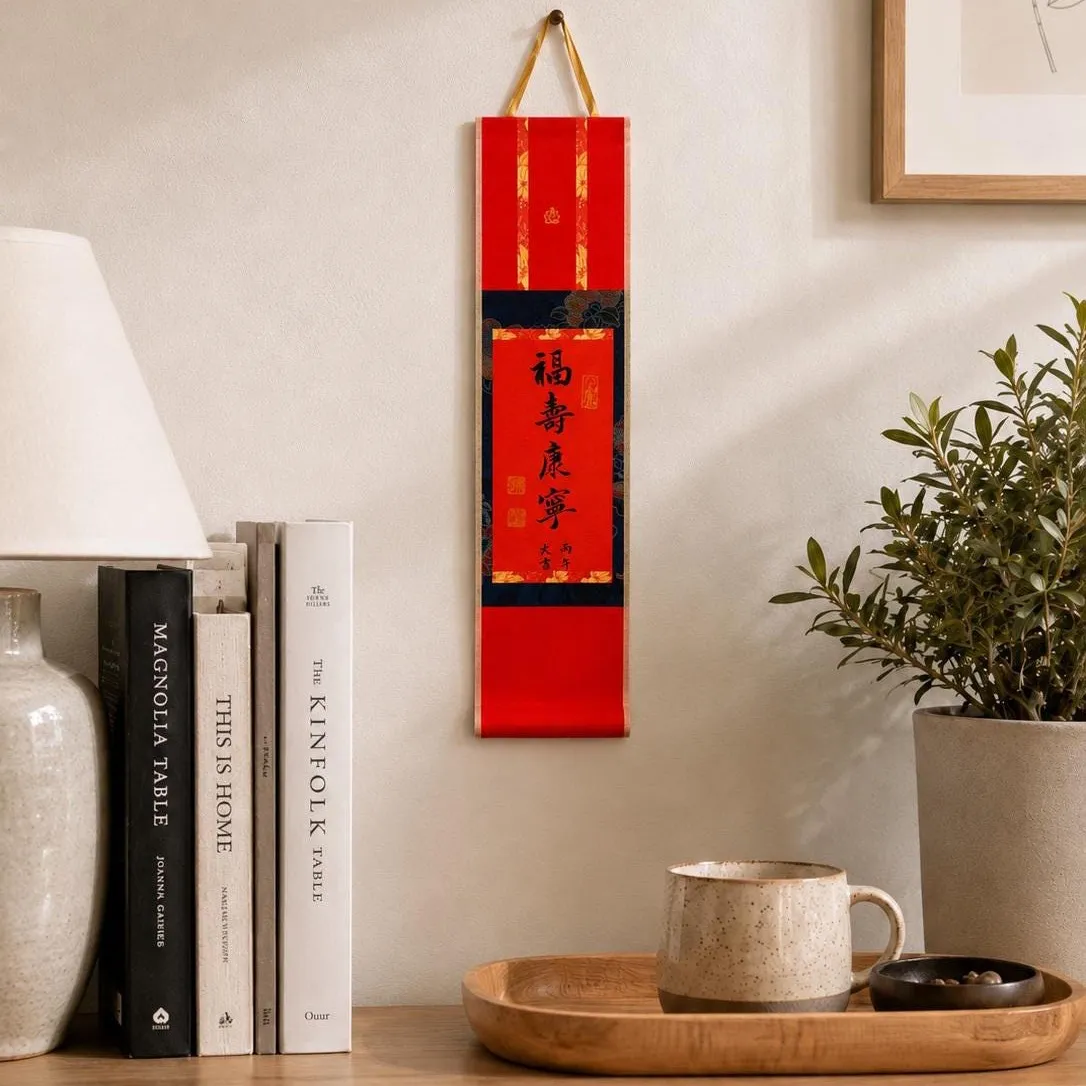
Photo shows a sample — yours will be brushed with 天长地久, or any character you choose.
Wall Scroll — for walls & housewarmingsfrom $38→ -
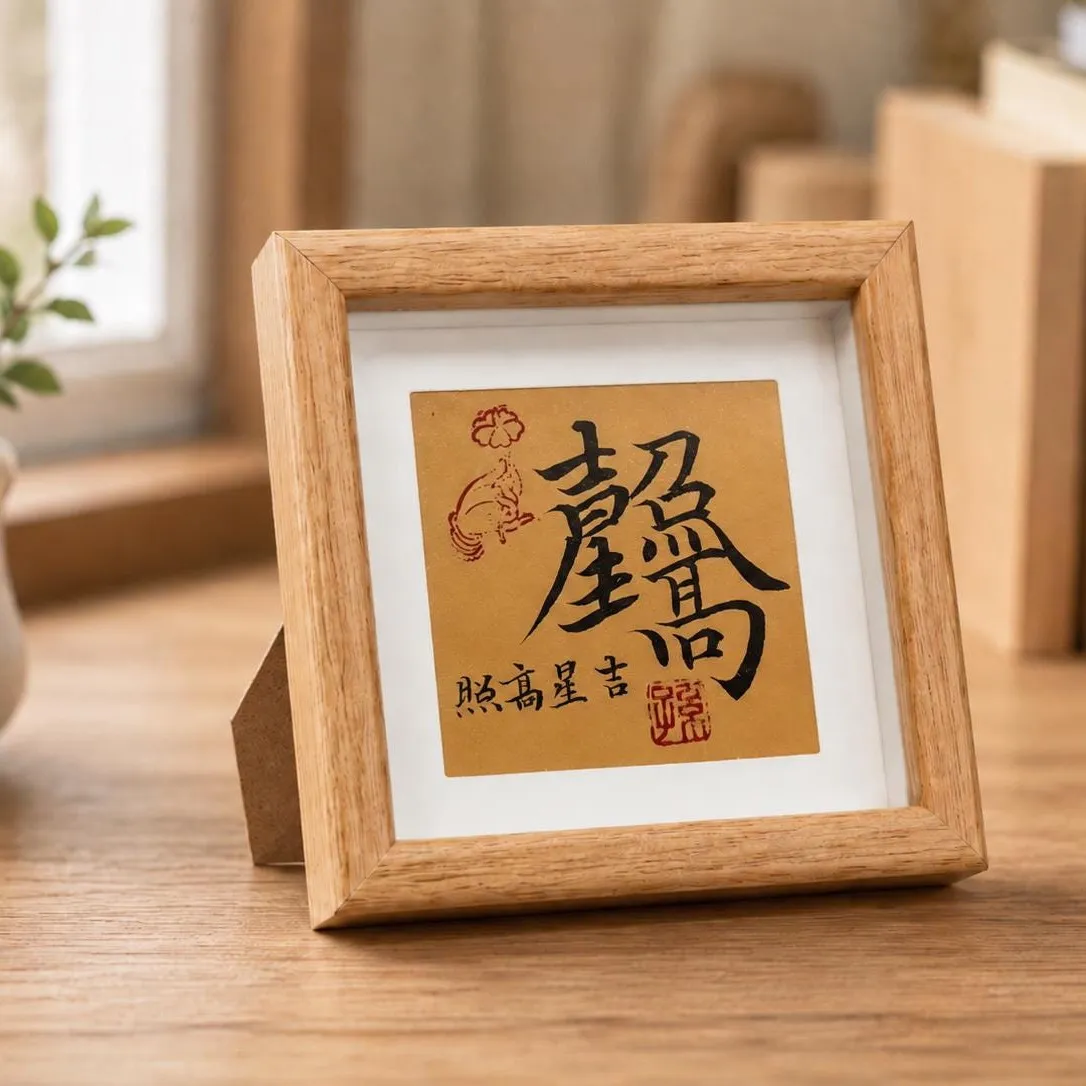
Photo shows a sample — yours will be brushed with 天长地久, or any character you choose.
Desk Frame — for desks, studies & studiosfrom $44→ -
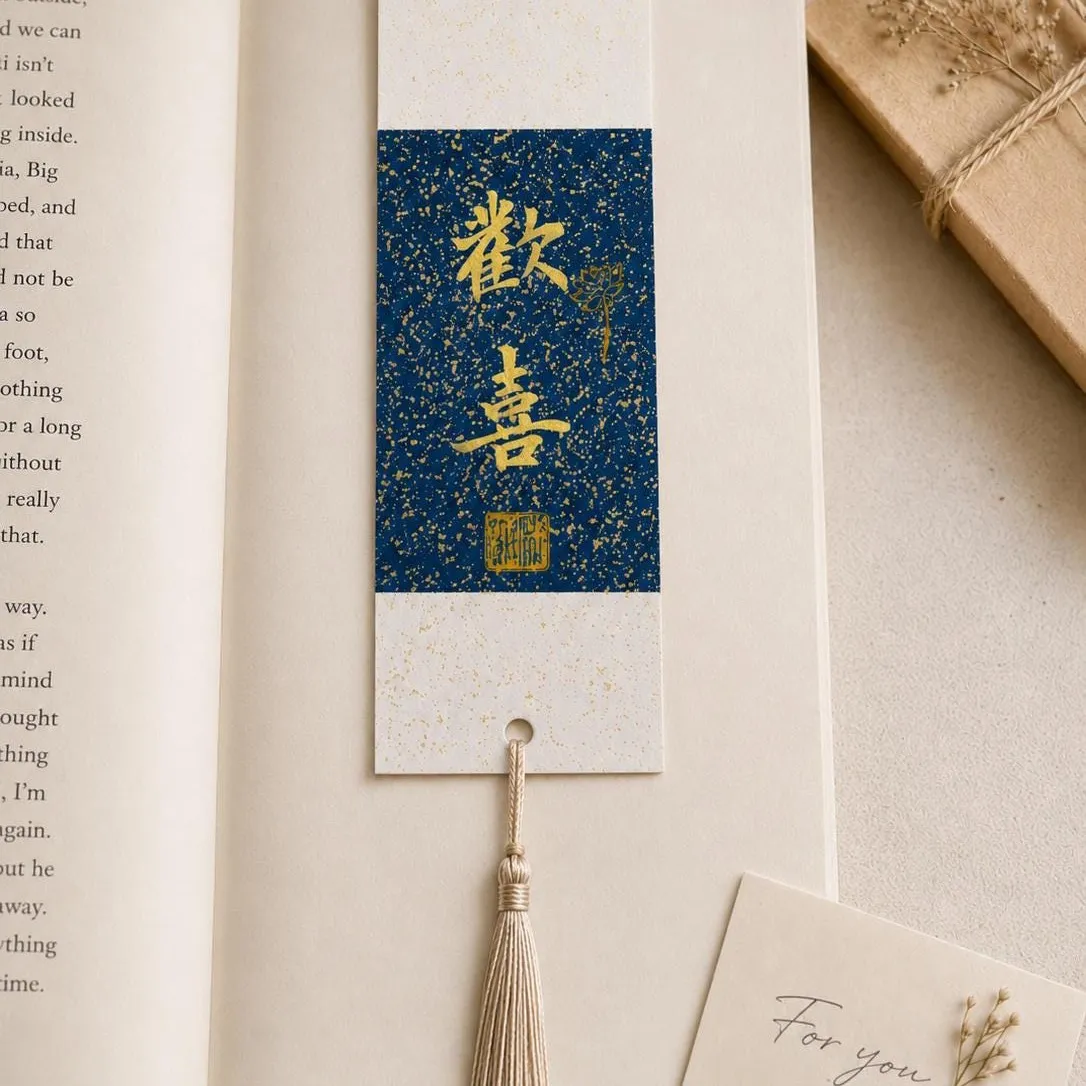
Photo shows a sample — yours will be brushed with 天长地久, or any character you choose.
Bookmark — for readers & small thank-yousfrom $14→
What people said after it arrived.
-
The item is fantastic. The customer service was genuine. Thanks!
— M.Verified purchase · from our Etsy shop reviews · -
They were great they gave me exactly what I asked for and then some. Thank you!!
— G.Verified purchase · from our Etsy shop reviews · -
It is well designed and customized. My daughter loves it. Amazing gift for family’s d friends
— S.Verified purchase · from our Etsy shop reviews ·
Each "天长地久" is hand-brushed by FuBlessings on rice paper.
See 天长地久 (Tiān Cháng Dì Jiǔ) on Etsy →