寿比南山 (shòu bǐ nán shān) — Years Set Beside the Southern Mountain · The Long-Life Half of the Birthday Wish
A 4-character phrase, not a single character.
In the History of the Southern Dynasties a prince calls 寿比南山 flattery, to his brother the emperor at a family dinner, and offers him a hundred years instead. The phrase was old even then. It sets a person’s years beside the Southern Mountain of the Book of Songs, which neither wears away nor falls, and lets a mountain stand where a number would be. Its partner half, 福如东海, wishes the years full; this half wishes them long and steady, still there when you look up. See 寿 →
It goes up a generation. At a birthday it closes the line that opens with 福如东海, and the Ministry of Education’s Hakka dictionary still illustrates it with a family wishing their grandfather well on his birthday. On New Year’s morning it is part of the greeting paid to elders; a novel printed around 1603 already lists it as the old person’s line. Officials sang it to Han Yu at his birthday in a Ming novel, a Qing joke book made fun of the old man who wanted more than a mountain, and a Qing primer of Manchu used it to teach the word for “like”.
A hand-brushed “寿比南山” by Artist Lina Sun is the birthday or New Year piece for a grandparent, a mother or a father: the closing half of a line their family already knows by heart, given on its own or hung beside 福如东海. It does not name an age. It wishes them the mountain’s way of lasting — firm, and higher the more you look up.
- years that keep standing like a mountain
- the second half of the elder's birthday wish
- many more years, said with a bow
- the long-life line for the oldest at the table
- live forever The phrase is a figure of speech, and its users knew it: the prince who recorded it called it flattery and wished a hundred years instead, and a Qing joke mocks the old man who wants more than a mountain.
- happy birthday 生日快乐 is the everyday greeting for anyone. 寿比南山 is the formal birthday wish for an elder, said with a bow or brushed on a scroll.
- good health Health is 健康 or 安康. 寿比南山 wishes length of years and says nothing directly about the body.
- good fortune That is the other half, 福如东海. 寿比南山 does not ask how full the years are, only that there be many of them.
The short arms are the point: these readings don’t reach it.
- 寿 long lifeThe years of a life and the wish that they be many. It is the thing set beside the mountain.
- 比 set besideTo place two things side by side and compare them. The fortune half of the couplet uses 如, to be as; this half uses 比.
- 南 the southWith 山 it names the Southern Mountain of the Book of Songs, which some readers identify with Zhongnan in the Qinling range.
- 山 mountainThe measure. The poem prizes it for not wearing down and not falling, not for its height.
characters
- 福如东海 fú rú dōng hǎi fortune like the Eastern Sea — the couplet's first half; related by sense, it shares no character
- 寿比南山不老松 shòu bǐ nán shān bù lǎo sōng years like the Southern Mountain and its unaging pine — the seven-character couplet line built on this phrase
- 如南山之寿 rú nán shān zhī shòu like the long life of the Southern Mountain — the Book of Songs line the phrase grew from
- 长命百岁 cháng mìng bǎi suì a long life of a hundred years — close to the plain wish Xiao Ni offered instead, 极寿百年; related by sense, it shares no character
- 寿偕南山 shòu xié nán shān years alongside the Southern Mountain — the wording of the same remark in the earlier Book of Qi
Cinnabar marks the characters 寿比南山 actually contains. The dark row is a relative by meaning or by sound, not one shared stroke.
The Story Behind the Character
The mountain comes from the Book of Songs. In 《天保》, a poem the Taiwan Ministry of Education's idiom dictionary reads as a minister's blessing for his lord, the last stanza ends on four likenesses: like the moon, like the rising sun, 如南山之寿,不骞不崩 — like the long life of the Southern Mountain, neither wearing away nor falling — and like the pines and cypresses in leaf. The Qing scholar Zhai Hao, tracing everyday sayings to their sources in 《通俗编》, put it in one line: this is where 寿比南山 starts. The dictionary adds that some readers take the Southern Mountain to be Zhongnan, also called the Qinling.
In the oldest record of the four characters that this page cites, they are already a worn formula. The History of the Southern Dynasties, finished in 659, has the prince Xiao Ni tell his brother the emperor, around 490, that people have said 寿比南山 since old times and that it comes close to flattery. The earlier Book of Qi, compiled under the Liang, gives the same remark as 寿偕南山, years alongside the Southern Mountain. 比 is the word that stayed: it sets the years beside the mountain and lets the reader do the comparing.
What the comparison measures is standing still. The poem asks nothing of the mountain's height or size, only that it not wear down and not fall. In 1177 Zhou Bida, drafting for Emperor Xiaozong the closing memorial of a birthday service for the retired emperor Gaozong, gave the mountain its terms in a single clause: 寿比南山之固,仰之弥高, firm as the Southern Mountain, and higher the more you look up. Later writers swap the mountain for a pine or add an ageless immortal to it, 寿比南山不老松, 寿比南山不老仙; the Southern Mountain stays underneath as the default.
Classical lines
- roughly 1,200 years
- 659 《南史》卷四十二
- 1623 《韩湘子全传》第十三回
- c. 1822 《再生缘》第八十回
古来言愿陛下寿比南山,或称万岁,此殆近貌言。如臣所怀,实愿陛下极寿百年亦足矣。 Since old times people have said, may Your Majesty's years be like the Southern Mountain, or else, ten thousand years. That comes close to flattery. What I hold in my heart is this: I truly wish Your Majesty a full hundred years, and that would be enough.
Late in the Yongming reign Emperor Wu of Qi came to his younger brother's house after the prince's wife had recovered from an illness. Music was set out in the back hall, and the emperor told Xiao Ni to keep family manners, not court ones. Xiao Ni said this. The emperor answered that a hundred years could hardly be had, but something near it would do, and the two brothers held each other and wept. The mountain was the courtly formula; the hundred years was what a brother meant.
寿算真悠远。惟愿取,寿比南山不老仙。 The count of your years runs long indeed. All we wish: years like the Southern Mountain, an immortal who never grows old.
A few days after Han Yu has told the emperor that there are no immortals, his birthday comes, and officials from every ministry crowd in to celebrate. The novel sets down their song in four stanzas to the tune 驻云飞; this is how the first one ends. Han Yu then feasts them and orders the gates kept against uninvited visitors, and the visitor who turns up is his nephew Han Xiangzi, dressed as a wandering Daoist. The man being wished an immortal's years is the one who has just told the emperor there are none.
愿母后,福如东海滔滔长;愿母后,寿比南山叠叠高。 Mother, may your fortune be like the Eastern Sea, rolling on and on; Mother, may your years be like the Southern Mountain, rising tier on tier.
The Empress Dowager has come back from burning incense on her birthday, and in her palace the emperor Chengzong straightens his yellow robe and bows low. She has the eunuchs hold him up and tells him to sit and spare himself, and he gives her this couplet. She thanks him for the words and wishes the realm peace and seasonable weather; then she tells him that all the craft and splendour of her birthday is the fat of the people, and that luxury is where a ruler goes wrong. He promises to obey; inside, the verse says, he is glad and afraid at once and close to tears. The son brings the mountain; the mother answers with what the celebration costs.
Why This Character Matters
A guest at a birthday in the Qing joke book 《笑得好》 wishes the old man years like the pine and cypress, and the old man frowns: pines wither in the end. A second guest wishes him 寿比南山, and he frowns again: mountains crumble in the end too. Asked what would please him, he nods and says, however many thousands of years, just so long as I do not die. The joke works because everyone knows the promise the Book of Songs made for the mountain, that it would neither wear away nor fall. The phrase was ordinary enough to be grammar: a Qing primer of Manchu printed in 1894 teaches the word adali, "like", with jalafun julergi alin -i adali, 寿比南山, and teaches gese with 福如东海.
It is said upward. The Book of Songs line is a minister's wish for his lord, and Xiao Ni was speaking to an emperor who was also his elder brother. Around 1000 the Song official Tian Xi addressed it to the throne when the court reported a sighting of the Old Man Star, the longevity star of the southern sky: his memorial answers the star with 陛下富有万国,寿比南山. The officials of a Ming novel sing it to the birthday man at the head of the hall, and the Ministry of Education's Hakka dictionary gives it to a family speaking to their grandfather. It counts years where 福如东海 counts good fortune, so a family that wants both said hangs the two halves together. Xiao Ni's point still holds for a gift: the mountain is the figure of speech everyone understands, and the wish under it is plain — many more years, standing.
A few characters live near "寿比南山" but mean something quieter, sharper, or more specific. Here's how to tell them apart.
how long the years last, measured by a mountain
how full the years are, measured by a sea
long life set beside a mountain, formal and for an elder
long life named directly, for anyone
the years alone, in a full sentence
fortune and years named together in two characters
At an elder's birthday this is the half of 福如东海,寿比南山 that names the years.
- At an elder's birthday this is the half of 福如东海,寿比南山 that names the years. The Taiwan Ministry of Education's Hakka dictionary illustrates it with a grandfather's birthday, the whole family wishing him 寿比南山, and in a Ming novel of 1623 the officials who crowd in for Han Yu's birthday sing it to him as 寿比南山不老仙. The measure is a mountain rather than a number, so the same four characters serve a sixtieth birthday and a ninetieth: may the years keep standing.
- The year's first visits to the older generation are the other place it is said. Deng Zhimo's novel of Lü Dongbin, printed around 1603, lists the greetings of New Year's morning by who receives them, and the old are wished 福如东海寿比南山 while the merchant, the student and the child are given other lines. At New Year the mountain half marks the year just added to an elder's count and wishes many more on top of it.
Grandparent · Mom · Dad · or yourself
Looking for a name? See Western names written in Chinese →
-
What occasions is 寿比南山 given for?
People say 寿比南山 to someone older than themselves: at a parent's or grandparent's birthday, where it closes the line that opens with 福如东海, and on the New Year visits paid to the elders of the family. FuBlessings suggests it for a grandparent, a mother or a father, at a birthday or at Chinese New Year. It wishes long life measured by a mountain rather than a number, and it is a wish for the generation above you, not a compliment for a friend.
-
What does 寿比南山 (shòu bǐ nán shān) mean?
寿比南山 (shòu bǐ nán shān) is a 4-character Chinese phrase for years set beside the southern mountain, the long-life half of the birthday wish. In the History of the Southern Dynasties a prince calls 寿比南山 flattery, to his brother the emperor at a family dinner, and offers him a hundred years instead. The phrase was old even then. It sets a person's years beside the Southern Mountain of the Book of Songs, which neither wears away nor falls, and lets a mountain stand where a number would be. Its partner half, 福如东海, wishes the years full; this half wishes them long and steady, still there when you look up. See 寿 → A guest at a birthday in the Qing joke book 《笑得好》 wishes the old man years like the pine and cypress, and the old man frowns: pines wither in the end. A second guest wishes him 寿比南山, and he frowns again: mountains crumble in the end too. Asked what would please him, he nods and says, however many thousands of years, just so long as I do not die. The joke works because everyone knows the promise the Book of Songs made for the mountain, that it would neither wear away nor fall. The phrase was ordinary enough to be grammar: a Qing primer of Manchu printed in 1894 teaches the word adali, "like", with jalafun julergi alin -i adali, 寿比南山, and teaches gese with 福如东海.
-
Who brushes the 寿比南山 calligraphy?
Each 寿比南山 (Shòu Bǐ Nán Shān) is hand-brushed to order by Artist Lina Sun in ink on rice paper — never printed, never repeated.
Bring 寿比南山 home — choose how you'd like it brushed.
-
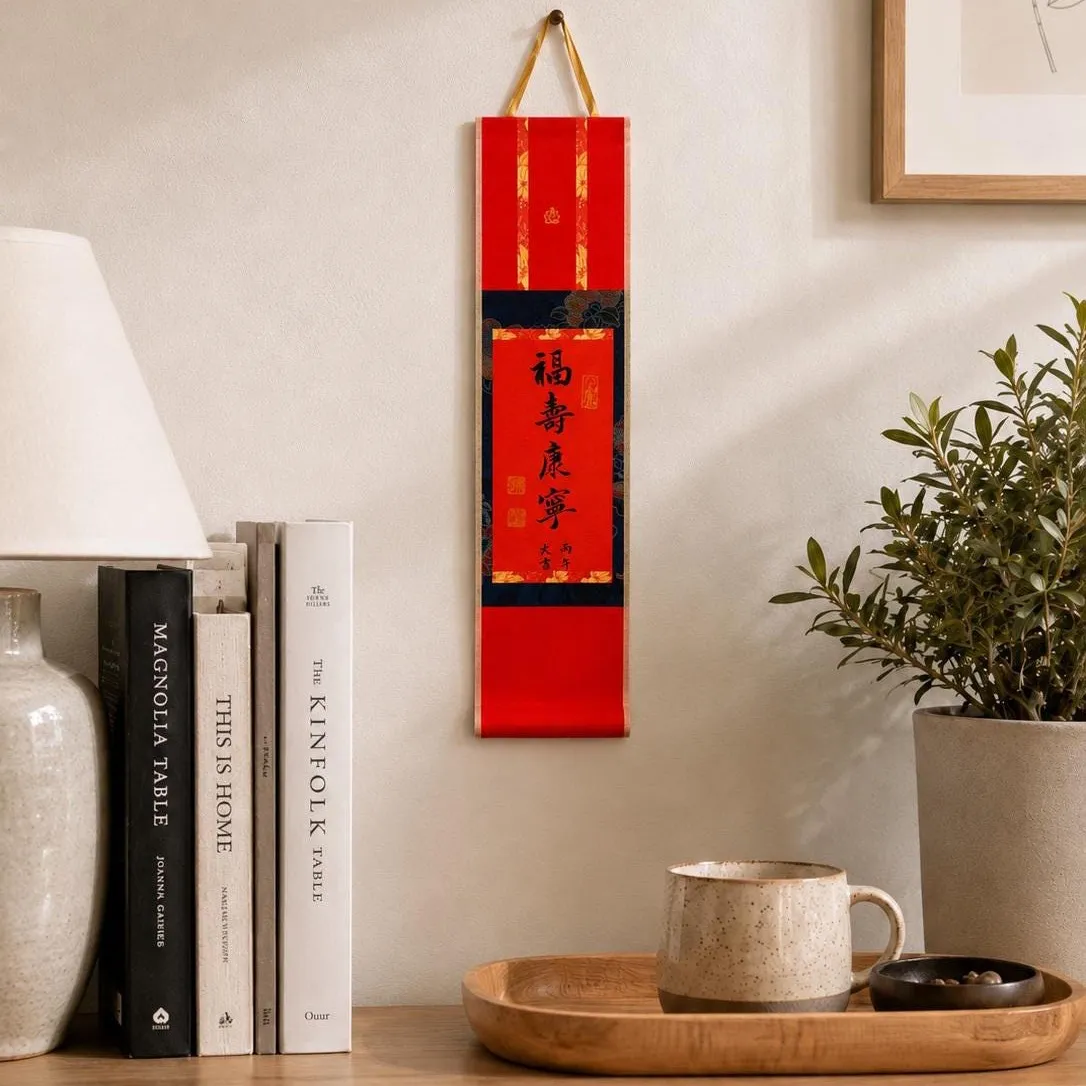
Photo shows a sample — yours will be brushed with 寿比南山, or any character you choose.
Wall Scroll — for walls & housewarmingsfrom $38→ -
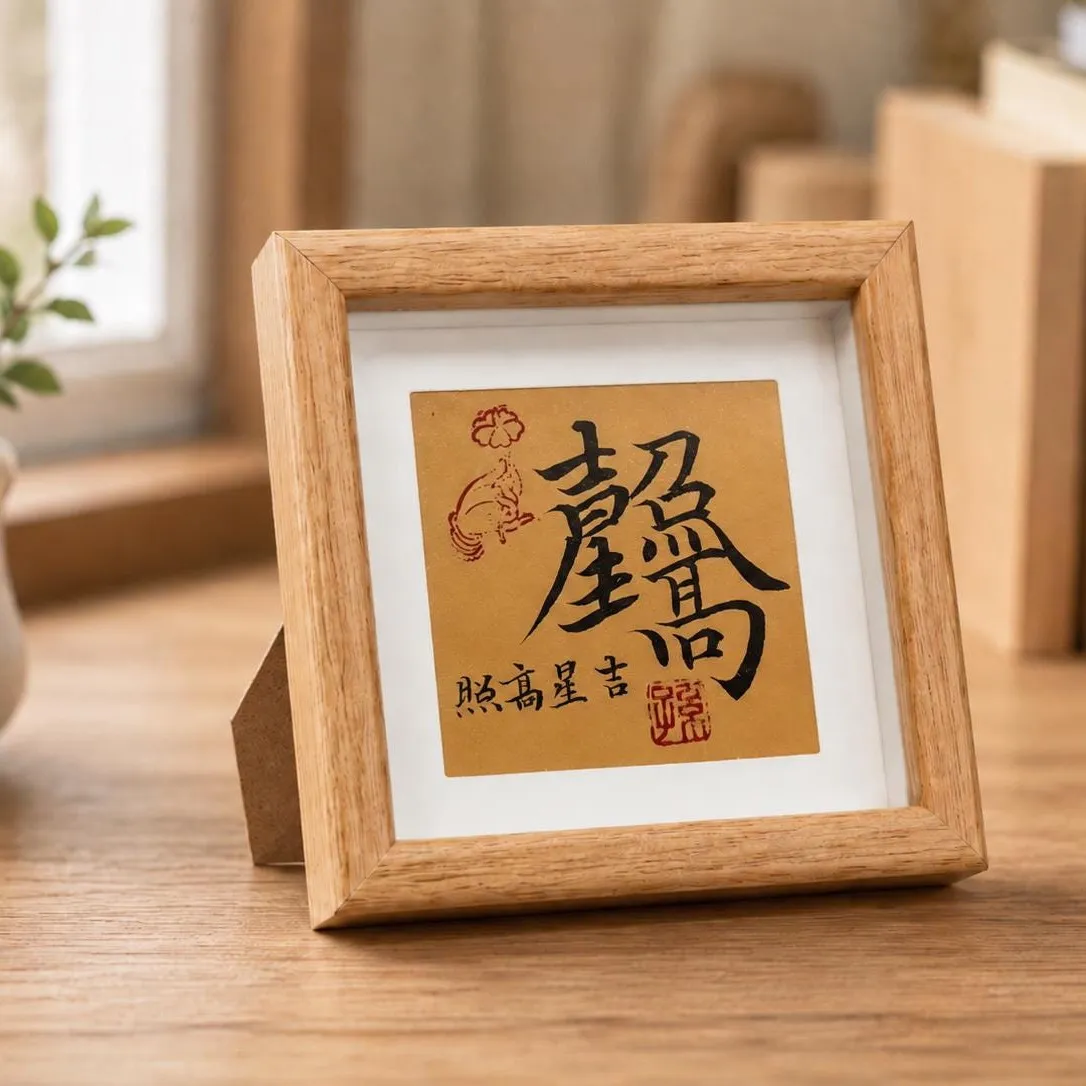
Photo shows a sample — yours will be brushed with 寿比南山, or any character you choose.
Desk Frame — for desks, studies & studiosfrom $44→ -
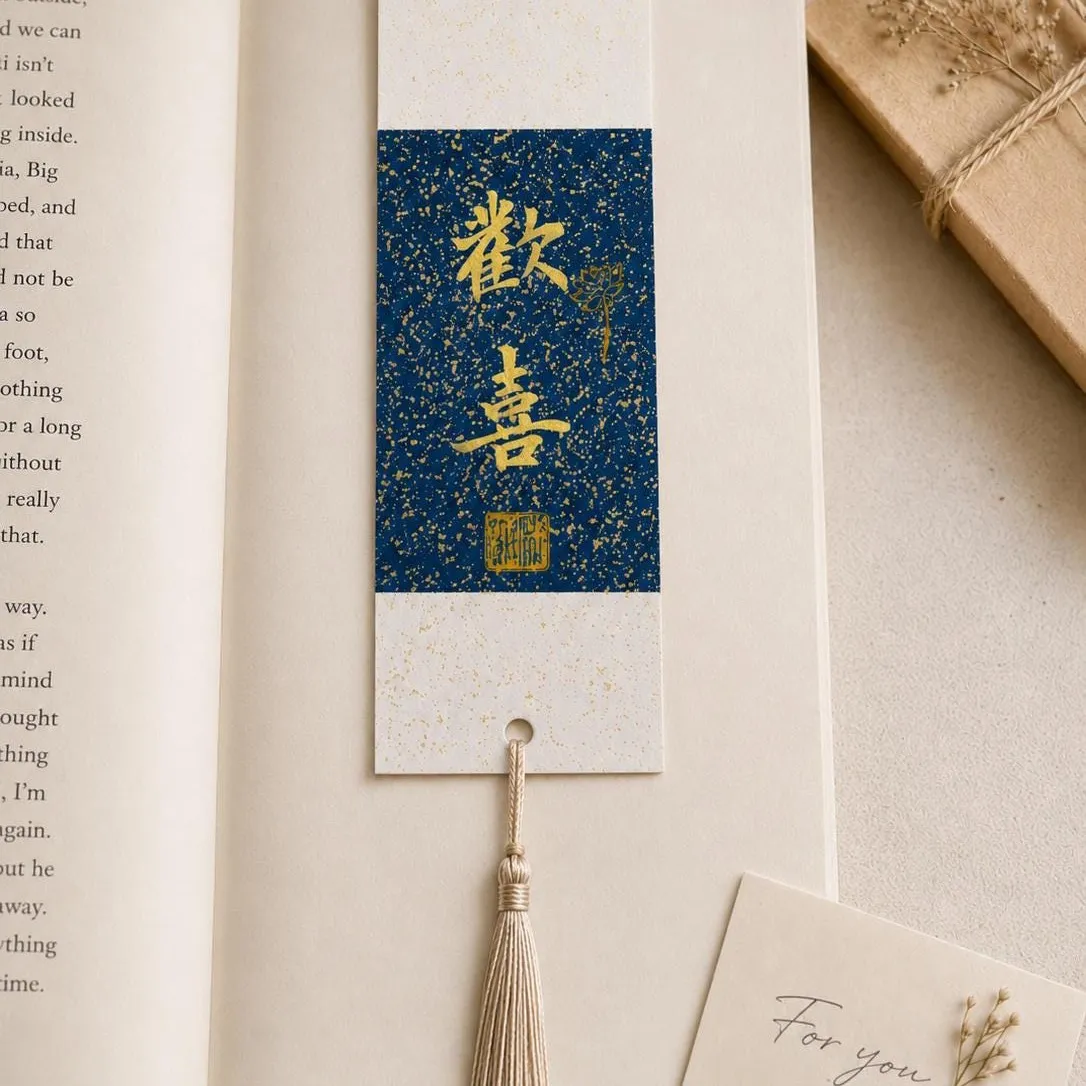
Photo shows a sample — yours will be brushed with 寿比南山, or any character you choose.
Bookmark — for readers & small thank-yousfrom $17→

What people said after it arrived.
-
The item is fantastic. The customer service was genuine. Thanks!
— M.Verified purchase · from our Etsy shop reviews · -
They were great they gave me exactly what I asked for and then some. Thank you!!
— G.Verified purchase · from our Etsy shop reviews · -
It is well designed and customized. My daughter loves it. Amazing gift for family’s d friends
— S.Verified purchase · from our Etsy shop reviews ·
Each "寿比南山" is hand-brushed by Artist Lina Sun on rice paper.
See 寿比南山 (Shòu Bǐ Nán Shān) on Etsy →