福如东海 (fú rú dōng hǎi) — Fortune as Deep as the Eastern Sea · The First Half of the Birthday Wish
A 4-character phrase, not a single character.
A sea has no number written on it. 福如东海 measures an elder’s good fortune against the Eastern Sea, the water China’s great rivers run toward, and the old texts say how to read the measurement: a Song memorial of 1177 reads it by depth, and the later couplets by the water that keeps flowing in. Its partner phrase, 寿比南山, measures the years against a mountain. This half leaves the years alone. It wishes that whatever years there are be full, and that the fullness keep arriving the way water keeps arriving at the coast. See 福 →
It is said up a generation. At a birthday it opens the line 福如东海,寿比南山, sung by a whole table in the southern play 《荆钗记》 and still the example the Taiwan Ministry of Education’s Hakka dictionary gives for a family wishing a grandmother well. On New Year’s morning it is the greeting paid to the elders you call on; a novel printed around 1603 already lists it as the elder’s line, with the merchant, the student and the child each given something else. It went onto Ming palace fans and imperial porcelain, and onto a pine-needle birthday present in a Qing novel.
A hand-brushed “福如东海” by Artist Lina Sun is the birthday or New Year piece for a grandparent, a mother or a father: the opening half of the line every family already knows, given on its own or hung beside 寿比南山. It does not count their years. It wishes the years full, with more coming in.
- fortune as deep as the sea
- the first half of the elder's birthday wish
- good things that keep coming in
- the New Year greeting for the oldest in the family
- good luck Luck is one roll of the dice. 福如东海 wishes a whole life's supply of good things, measured by a sea, and it is said to elders, not before an exam.
- may you be rich Money is 富 or 财. 福 is the wider field — health, family, a house where things go well — and the phrase never names wealth.
- long life That is the other half, 寿比南山. 福如东海 says nothing about the number of years; it wishes them full.
- happy birthday 生日快乐 is the everyday birthday greeting. 福如东海 is the formal birthday wish for an elder, said with a bow or brushed on a scroll.
The short arms are the point: these readings don’t reach it.
- 福 good fortuneThe whole field of a good life — health, household, things going well — rather than money alone. It is the thing being measured.
- 如 is likeSets up the comparison. The other half of the couplet uses 比, to measure against; this half uses 如, to be as.
- 东 the eastWith 海 it names the Eastern Sea, the water off China's east coast that the great rivers run toward.
- 海 the seaThe ruler the fortune is measured by. A sea is judged by depth and by what keeps flowing into it, not by a number.
characters
- 寿比南山 shòu bǐ nán shān years like the Southern Mountain — the couplet's other half; related by sense, it shares no character
- 福如东海长流水 fú rú dōng hǎi cháng liú shuǐ fortune like the Eastern Sea, with its long-flowing water — the seven-character couplet line built on this phrase
- 福如海渊 fú rú hǎi yuān fortune like the sea's depths — the variant the Ministry of Education dictionary records
- 寿比青松 shòu bǐ qīng sōng years like the green pine — a variant years half, paired with this phrase in a Qing birthday speech; related by sense, it shares no character
- 洪福齐天 hóng fú qí tiān fortune as vast as the sky — the same 福 measured against heaven instead of the sea
Cinnabar marks the characters 福如东海 actually contains. The dark row is a relative by meaning or by sound, not one shared stroke.
The Story Behind the Character
In the third scene of the southern play 《荆钗记》 the old scholar Qian Liuxing is keeping his birthday with a little wine and vegetable fare, and his wife decides that this year the cup will not be poured by his sister, as it is every year. Their daughter Yulian is grown now; she should pour, and learn the forms. Yulian sings of white hair and of both parents still safe, and the whole company answers her: 齐祝赞,愿福如东海,寿比南山 — all together, may your fortune be like the Eastern Sea, your years like the Southern Mountain. The Taiwan Ministry of Education's revised dictionary gives this scene as its book-proof for the phrase. It assigns the play to the Ming prince Zhu Quan; other catalogues give it to the Yuan writer Ke Danqiu, which leaves the scene somewhere in the late Yuan or early Ming. The phrase itself is older than the play. In 1177 the court writer Zhou Bida, drafting for Emperor Xiaozong, closed a Daoist birthday service for the retired emperor Gaozong with 福如东海之深.
The construction is a measurement. 福 is the thing measured, 如 sets up the comparison, and 东海 is the ruler — the sea to the east, toward which China's great rivers run. Zhou Bida's sentence says what kind of ruler it is: fortune like the depth of the Eastern Sea, 测之益远, the further you sound it, the farther it goes. The other half of the couplet measures years against a mountain, which is judged by height and by not moving. The sea is judged by depth and by inflow. The later seven-character couplet makes the inflow explicit, 福如东海长流水, the Eastern Sea with its long-flowing water, and a Qing daughter wishing her father fortune 滔滔至, rolling in wave after wave, is saying the same thing with a verb.
The fortune half is also the half that holds still. In the Ming and Qing texts cited on this page, the years half moves around: 寿比南山 in most, 寿如山 in 《西游记》's portrait of the Lord of the East on Fangzhang, 寿比青松 when Hai Rui's daughter speaks. 福如东海 comes through every version unchanged. It is the fixed opening of the elder's birthday sentence, which is why it can be brushed alone and still be recognised at once.
Classical lines
- roughly 700 years
- 1177 《文忠集》卷一百十四
- c. 1603 《飞剑记》第二回
- c. 1832 《海公小红袍》第二十回
福如东海之深,测之益远 Fortune like the depth of the Eastern Sea
the further you sound it, the farther it goes. — From the closing memorial of a Daoist service held at the Chongxi temple on Mount Mao for the Tianshen festival, the retired emperor Gaozong's birthday, drafted by Zhou Bida for Emperor Xiaozong, Gaozong's adopted son. The sentence goes on to the Southern Mountain, firm and higher the more you look up at it. This first half has already set the terms: the sea is measured by depth, and every sounding finds more.
见老者,哪一个不说句愿长者福如东海寿比南山? Meet an old person, and who does not say: may you, elder, have fortune like the Eastern Sea and years like the Southern Mountain?
Deng Zhimo's novel of the immortal Lü Dongbin pauses on New Year's morning to list what people say to whom. The elder comes first; then the merchant is wished money found in the east and treasure met in the west, the student a place among the dragons and tigers on the list, the child cleverness and three first places. By the time this was printed, the phrase already had its seat in the year's first greetings, and the seat belonged to the old.
望爹爹福如东海滔滔至,寿比青松日日增! Father, may your fortune come in like the Eastern Sea, wave on wave, and your years grow like the green pine, day by day!
Hai Rui's daughter and daughter-in-law, arrived together for his eighty-fifth birthday, bow to him with this after his wife has greeted him and before the gifts are carried in. The years half has become a pine. The sea half has gained a verb, 滔滔至, rolling in: fortune here is not a store already held but water that keeps arriving.
Why This Character Matters
Eight pots of pine set out for Grand Preceptor Pang's birthday in 《三侠五义》, the needles tied into the eight characters 福如东海寿比南山, with ten thousand taels of gold buried in the soil under them. When a court finally has them opened, every pot is empty; the one for 山 holds only an ivory tag reading ill-gotten wealth on one side and duly collected on the other. The Ming palace ordered the same inscription for itself: a Wanli-era palace order to Sichuan for painted fans, kept in Tan Qian's 《枣林杂俎》, lists fifteen 寿比南山福如东海 fans among its patterns, and the Wanli imperial kiln list copied in the Qing treatise 《陶说》 puts 福如东海 on the rim of a dish. In the storyteller's novel 《雍正剑侠图》, the birthday hall hangs 福如东海长流水 and 寿比南山不老松 on either side of the birthday man's portrait.
The phrase points one way, up a generation. The New Year list in 《飞剑记》 keeps it for the old and gives the young other lines; the birthday scenes put it in the mouths of daughters, nephews and households addressing their elders. 福如东海 also leaves out the years themselves. It is the half of the couplet about how good the life is, not how long, so a family that wants both said can hang it with 寿比南山 beside it.
A few characters live near "福如东海" but mean something quieter, sharper, or more specific. Here's how to tell them apart.
the fortune half alone, measured by a sea
fortune and years named together
how full the years are
how many years there are
one fortune with no bottom to it
five blessings counted at the door
At an elder's birthday the full line is 福如东海,寿比南山, and this is the half that asks how full the years are rather than how many.
- At an elder's birthday the full line is 福如东海,寿比南山, and this is the half that asks how full the years are rather than how many. In the southern play 《荆钗记》 it is what the whole table sings back when the daughter pours her father's birthday cup for the first time, and the Taiwan Ministry of Education's Hakka dictionary still illustrates it with a family wishing a grandmother well on her birthday. Brushed on its own, it leaves the counting of years to the other half and wishes the elder a supply of good things nobody can sound to the bottom.
- New Year's morning is the other place the line has a fixed seat. Deng Zhimo's novel of Lü Dongbin, printed around 1603, stops on the first day of the year to list who gets which greeting: the merchant is wished money found in the east and treasure met in the west, the student a name on the examination list, the small child cleverness — and anyone old is wished 福如东海. It is the greeting for the year's first visits to the elders of the family.
Grandparent · Mom · Dad · or yourself
Looking for a name? See Western names written in Chinese →
-
What occasions is 福如东海 given for?
People say 福如东海 to someone older than themselves: at a parent's or grandparent's birthday, where it is the opening half of the line that ends 寿比南山, and on New Year's morning, when people call on their elders. FuBlessings suggests it for a grandparent, a mother or a father, at a birthday or at Chinese New Year. It wishes good fortune measured by a sea rather than a number, and it is a wish for the generation above you, not a compliment for a friend's good week.
-
What does 福如东海 (fú rú dōng hǎi) mean?
福如东海 (fú rú dōng hǎi) is a 4-character Chinese phrase for fortune as deep as the eastern sea, the first half of the birthday wish. A sea has no number written on it. 福如东海 measures an elder's good fortune against the Eastern Sea, the water China's great rivers run toward, and the old texts say how to read the measurement: a Song memorial of 1177 reads it by depth, and the later couplets by the water that keeps flowing in. Its partner phrase, 寿比南山, measures the years against a mountain. This half leaves the years alone. It wishes that whatever years there are be full, and that the fullness keep arriving the way water keeps arriving at the coast. See 福 → Eight pots of pine set out for Grand Preceptor Pang's birthday in 《三侠五义》, the needles tied into the eight characters 福如东海寿比南山, with ten thousand taels of gold buried in the soil under them. When a court finally has them opened, every pot is empty; the one for 山 holds only an ivory tag reading ill-gotten wealth on one side and duly collected on the other. The Ming palace ordered the same inscription for itself: a Wanli-era palace order to Sichuan for painted fans, kept in Tan Qian's 《枣林杂俎》, lists fifteen 寿比南山福如东海 fans among its patterns, and the Wanli imperial kiln list copied in the Qing treatise 《陶说》 puts 福如东海 on the rim of a dish. In the storyteller's novel 《雍正剑侠图》, the birthday hall hangs 福如东海长流水 and 寿比南山不老松 on either side of the birthday man's portrait.
-
Who brushes the 福如东海 calligraphy?
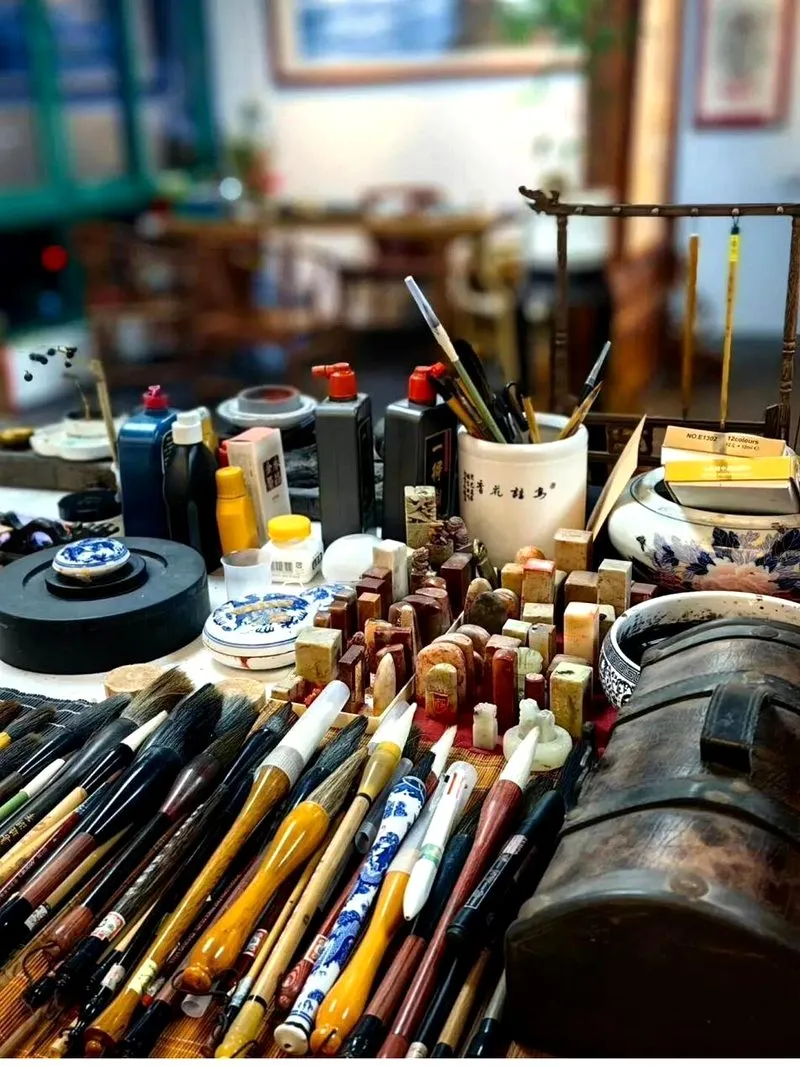
Each 福如东海 (Fú Rú Dōng Hǎi) is hand-brushed to order by Artist Lina Sun in ink on rice paper — never printed, never repeated.
Bring 福如东海 home — choose how you'd like it brushed.
-
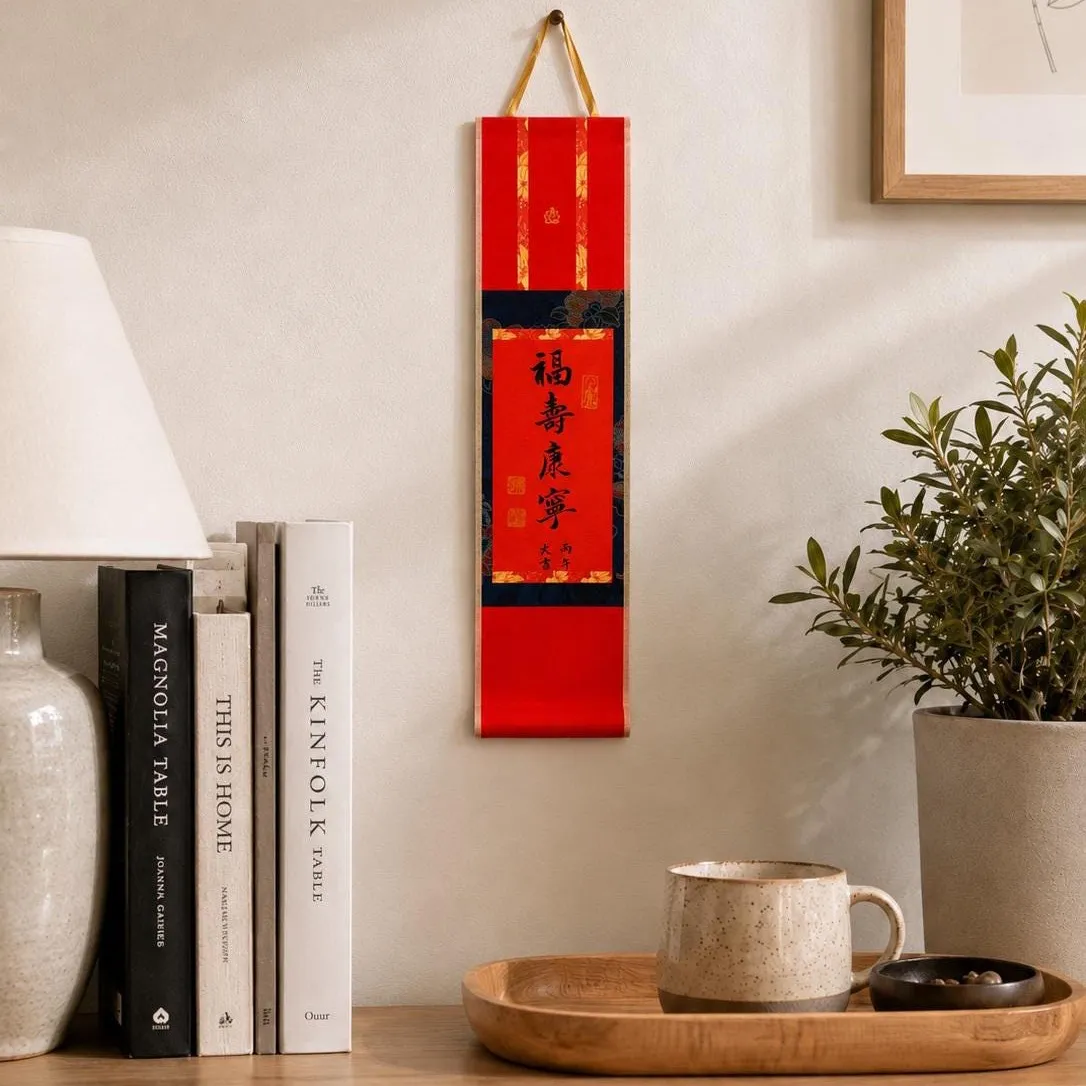
Photo shows a sample — yours will be brushed with 福如东海, or any character you choose.
Wall Scroll — for walls & housewarmingsfrom $38→ -
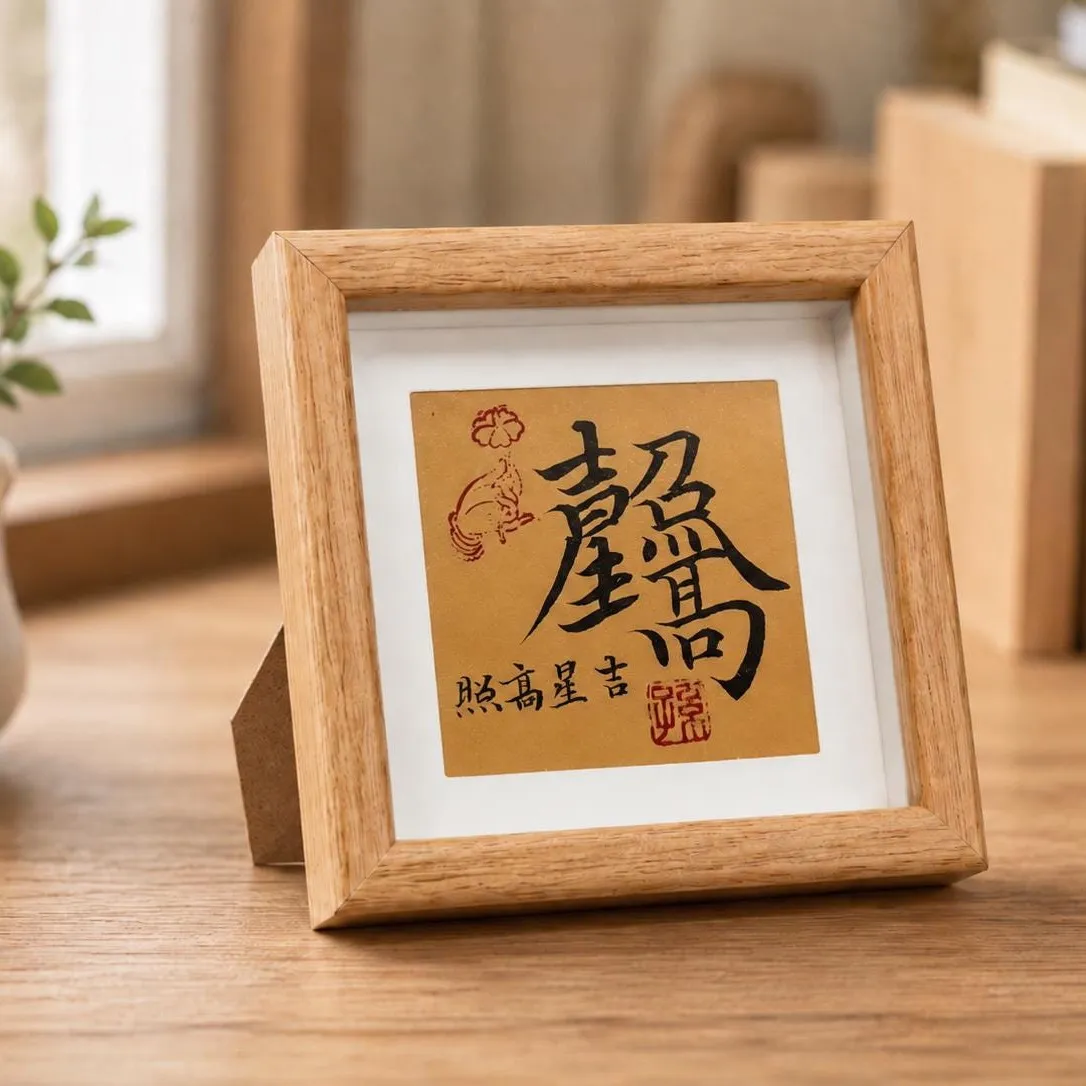
Photo shows a sample — yours will be brushed with 福如东海, or any character you choose.
Desk Frame — for desks, studies & studiosfrom $44→ -
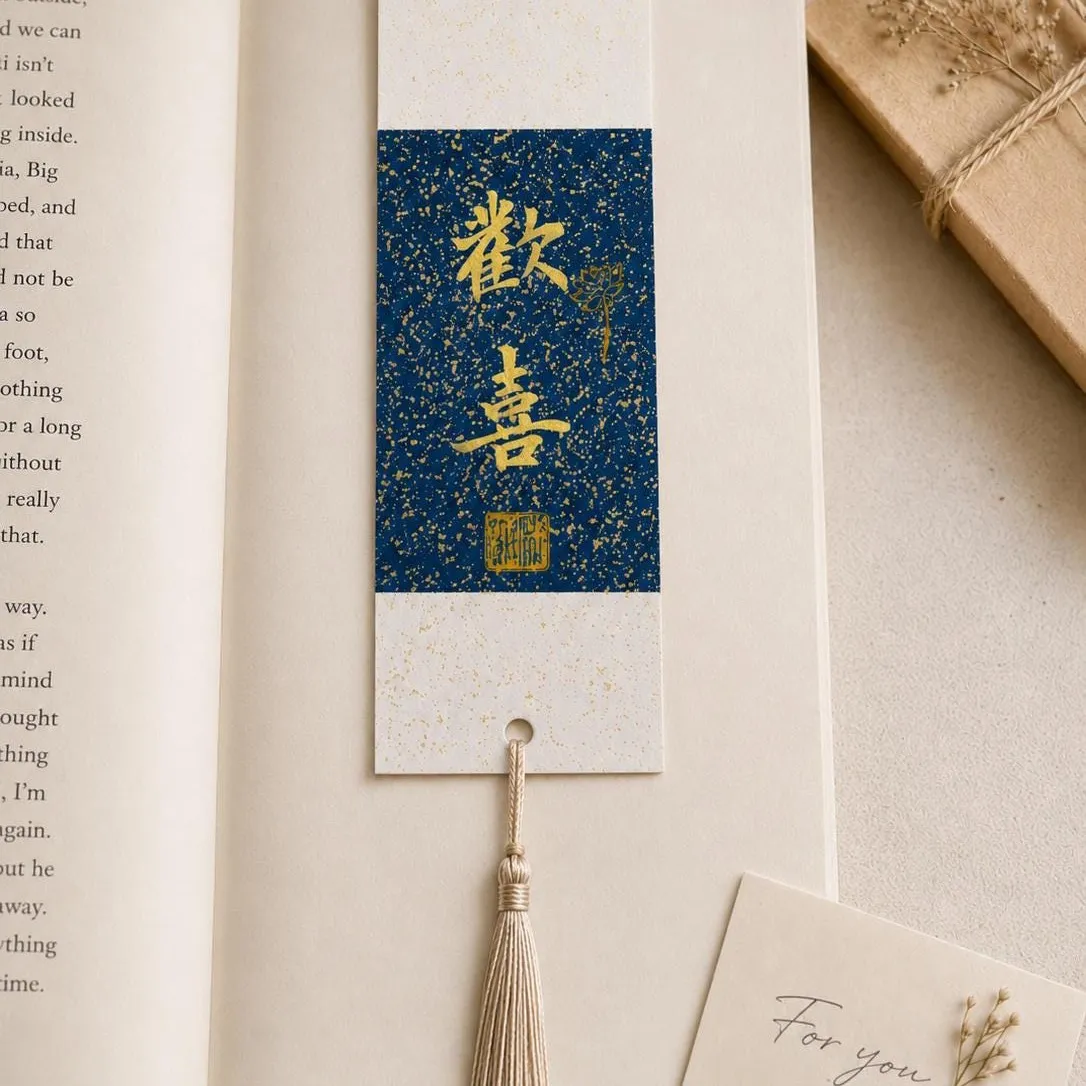
Photo shows a sample — yours will be brushed with 福如东海, or any character you choose.
Bookmark — for readers & small thank-yousfrom $17→
What people said after it arrived.
-
The item is fantastic. The customer service was genuine. Thanks!
— M.Verified purchase · from our Etsy shop reviews · -
They were great they gave me exactly what I asked for and then some. Thank you!!
— G.Verified purchase · from our Etsy shop reviews · -
It is well designed and customized. My daughter loves it. Amazing gift for family’s d friends
— S.Verified purchase · from our Etsy shop reviews ·
Each "福如东海" is hand-brushed by Artist Lina Sun on rice paper.
See 福如东海 (Fú Rú Dōng Hǎi) on Etsy →