诗礼传家 (shī lǐ chuán jiā) — The Odes and the Rites · Handed Down in the Family · An Inheritance of Learning and Bearing
A 4-character phrase, not a single character.
Twice Confucius’s son hurried across the courtyard while his father stood alone, and twice he was stopped with a question: had he studied the Odes, had he studied the rites? Without the first, his father told him, he would have nothing to speak with; without the second, nothing to stand on. 诗礼传家 is that scene made into a household’s motto: the Odes and the rites, handed down in a family as its inheritance. 礼 here is the same character the library treats on its own as the form that fits a person, a room and a moment, now paired with reading and passed to the next generation. See 礼 →
What makes the story worth hanging on a wall is its plainness. The disciple who asked the son whether he had been taught anything special learned instead that a gentleman keeps his own son at a distance: the son had heard nothing the students had not. The inheritance is a standard, taught in the open. The phrase came centuries later, and the dictionary’s proof text gives it to a poor young scholar in a late Yuan or early Ming play who calls himself the unworthy heir of such a house. It reads less as a boast than as a standard the next generation admits it has still to meet.
A hand-brushed 诗礼传家 by FuBlessings is for the father, mother or grandparent who did the handing down: the parent who asked whether the reading was done, or the one who, like the widowed mother in that play, kept the house at its books. It fits Father’s Day, a parent’s or grandparent’s birthday, and the New Year, when the phrase still goes near the door. It credits what they passed on and makes no promise about what the children will do with it.
- a household whose inheritance is reading and bearing
- the Odes so that a child can speak, the rites so that a child can stand
- a standard taught in the open: the son heard nothing the students did not
- credit to the parent or grandparent who did the handing down
- the form itself That is 礼, the bearing that fits a room. 诗礼传家 is about the form being passed on, with reading beside it, from one generation to the next.
- a learned pedigree The dictionary does read 诗礼 as a figure for scholars, but the phrase credits what a family kept up, not a rank or a degree. Wang Shipeng uses it of a family whose fortunes had faded, calling himself its unworthy heir.
- English "family values" The English names no content. The Chinese names two exact subjects, the Odes and the rites, and the courtyard scene they come from.
The short arms are the point: these readings don’t reach it.
- 诗 the OdesHere the Book of Songs, which the dictionary counts among the Six Classics; under 诗礼 it pairs the Odes with the three ritual classics. In the courtyard, the son without it has nothing to speak with. No library single for 诗.
- 礼 the ritesRites, the norms of conduct and the respectful bearing they train. In the courtyard, the son without them has nothing to stand on. The library's single 礼 page treats the character as the form that fits a person, a room and a moment.
- 传 hand downRead chuán, to continue and inherit, passed from one generation to the next. Read zhuàn the same character means a commentary on a classic or a biography; that reading does not apply here. No library single for 传.
- 家 householdThe family and the place it lives. The dictionary's second sense for 传家 is handed down within a family over generations, the sense used here. No library single for 家; jia.md is 嘉.
characters
- 过庭之训 guò tíng zhī xùn Confucius's instruction to his son in the courtyard, and in the dictionary's later sense any father's instruction
- 趋庭 qū tíng hurrying across the courtyard; in the dictionary, a junior receiving an elder's teaching
- 诗礼之家 shī lǐ zhī jiā a household that reads the Odes and keeps the rites; the dictionary's example under 诗礼, sharing 诗礼 and 家 with this phrase
- 庭训 tíng xùn a father's teaching, in the dictionary's gloss; related by sense and sharing no character with 诗礼传家
Cinnabar marks the characters 诗礼传家 actually contains. The dark row is a relative by meaning or by sound, not one shared stroke.
The Story Behind the Character
A disciple named Chen Kang once asked Confucius's son whether he had been taught anything at home that the students had not. Not yet, Boyu said. Once his father was standing alone and he hurried across the courtyard, and his father asked whether he had studied the Odes. Not yet. Without the Odes, his father said, you will have nothing to speak with, so he went and studied them. Another day the same thing happened with the rites: without them you will have nothing to stand on. Those two things were all he had heard. Chen Kang went away pleased and said that he had asked about one thing and learned three, the Odes, the rites, and that a gentleman keeps his own son at a distance.
The four characters came much later than the courtyard, and they keep its order. 诗礼, the Odes and the rites, is what passes; 传家, handed down in a family, is how. The Taiwan Ministry of Education dictionary defines the phrase as reading the Odes and practising the rites, carried on from generation to generation. Its entry for 诗礼 gives the Book of Songs and the three ritual classics, and adds that because Confucian scholars studied them the pair came to stand for scholars, people of learning, as in its example 诗礼之家. The courtyard itself became vocabulary. The dictionary reads 过庭 as a figure for a father's teaching and 趋庭 as a junior receiving an elder's, and keeps 鲤庭 for the place where a father's instruction is received.
The dictionary's proof text comes from the southern play 《荆钗记》, which it assigns to the Ming prince Zhu Quan; other catalogues give the play to Ke Danqiu, so the line sits in the late Yuan or early Ming. The poor young scholar Wang Shipeng introduces himself with it in the second scene: of a house that hands down the Odes and rites he is the unworthy heir, and his father died early. The next lines say the family fortunes have faded and that his mother, as wise as Mencius's, kept him earnestly at his books. The phrase is a claim on a standard, made by someone who admits he has not yet lived up to it.
Classical lines
- roughly 1,800 years
- c. 400 BCE 《论语·季氏》
- c. 675 CE 王勃《滕王阁序》
- c. 14th–15th c. CE 《荆钗记》第二出
问一得三:闻诗,闻礼,又闻君子之远其子也。 I asked about one thing and came away with three: I heard about the Odes, I heard about the rites, and I heard that a gentleman keeps his own son at a distance.
Chen Kang's verdict after asking Confucius's son whether he had been taught anything different at home. He had not. The library's page for 礼 quotes the father's second lesson; this line is what the listener took from both, the reason the inheritance the phrase names is a standard taught in the open rather than a family secret.
诗礼传家忝儒裔,先君不幸早倾逝。 Of a house that hands down the Odes and rites I am the unworthy heir of scholars; my late father, by ill fortune, died early.
Wang Shipeng introduces himself, and the Taiwan Ministry of Education dictionary uses this line as its proof text for the phrase. 忝 is a humble word for oneself: he claims the inheritance and apologizes for it in the same breath, before telling how his widowed mother kept him at his books.
他日趋庭,叨陪鲤对。 Another day I shall hurry across the courtyard and, unworthy as I am, answer as 鲤 answered.
Wang Bo, at a banquet on the road to the post where his father served as magistrate, promises himself the scene of the Analects. By the Tang the courtyard was a two-character allusion: 趋庭 for coming before a father or elder to be taught, 鲤对 for the son's reply.
Why This Character Matters
Every New Year the Kong mansion in Qufu, the household of Confucius's descendants, puts up spring couplets written from a copy dating to the Qianlong reign, which lists the wording for each door pillar down to the colour, length and width of the paper. In 2025 a descendant, quoted by the Qufu culture office, said that one of them, 道德为师仁义为友,礼乐是悦诗书是敦, expresses the family's 诗礼传家 tradition. Elsewhere the four characters went up on the house itself. The Qing scholar Qian Daxin brushed them for a plaque that hangs high inside his former home, the Qianyan Hall in Jiading, and a round earth building in Yongding, Fujian, built in 1880, carries them as the horizontal board over its gate couplet. The Qing official Hu Dayuan, writing a letter-poem to two younger brothers, set them in the middle line: 诗礼传家旧,文章报国先, the Odes and rites are an old inheritance in our family, and serving the country with our writing comes first.
That is what separates the phrase from its neighbours. 礼 on its own is the form itself, the bearing that fits a person and a room. 承 is the taking-on, the weight felt by the one who inherits. 家和万事兴 asks for peace inside the house. 诗礼传家 credits the passing on: the parent who asked about the reading, and the household that kept the books open and the manners steady long enough for the next generation to notice. Because the dictionary also reads 诗礼 as a figure for scholars, the phrase can sound like a claim to a learned pedigree. Given to a family, it praises what was handed down, reading and bearing, rather than a rank.
A few characters live near "诗礼传家" but mean something quieter, sharper, or more specific. Here's how to tell them apart.
the form, handed on with the reading
the form itself
credit to the ones who passed it down
the weight taken on by the heir
what the house hands down
peace inside the house
The phrase starts with a father stopping his son in a courtyard, and the Taiwan Ministry of Education dictionary still gives 过庭, crossing that courtyard, the later figurative sense of a father's teaching.
- The phrase starts with a father stopping his son in a courtyard, and the Taiwan Ministry of Education dictionary still gives 过庭, crossing that courtyard, the later figurative sense of a father's teaching. On Father's Day it credits the dad who asked whether the reading was done and expected you to know how to hold your place among people. In the story the son was taught nothing the other students were not, so the gift thanks him for a standard kept in the open, not for a secret or a fortune.
- At the New Year the phrase belongs near the door. It has hung over the gates of old houses, and modern couplet collections offer it as the horizontal scroll above a pair of spring couplets. The Kong mansion in Qufu still writes its New Year couplets from a Qianlong-era copy, and a descendant quoted by the Qufu culture office in 2025 said that one of them expresses the family's 诗礼传家 tradition. Given for the New Year, it names what a house keeps up from one year into the next.
- In the southern play 《荆钗记》 the phrase turns up on a birthday. Old Qian Liuxing, keeping his own birthday with a little wine and vegetable fare, grieves that he has no son and asks who will carry on a house of Odes and rites; he decides to marry his only daughter to a worthy young scholar. For a parent's or grandparent's birthday, given by the children and grandchildren who kept the reading and the manners going, the four characters are an answer to that worry.
Dad · Grandparent · Mom · or yourself
Looking for a name? See Western names written in Chinese →
-
What does 诗礼传家 (shī lǐ chuán jiā) mean?
诗礼传家 (shī lǐ chuán jiā) is a 4-character Chinese phrase for the odes and the rites, handed down in the family, an inheritance of learning and bearing. Twice Confucius's son hurried across the courtyard while his father stood alone, and twice he was stopped with a question: had he studied the Odes, had he studied the rites? Without the first, his father told him, he would have nothing to speak with; without the second, nothing to stand on. 诗礼传家 is that scene made into a household's motto: the Odes and the rites, handed down in a family as its inheritance. 礼 here is the same character the library treats on its own as the form that fits a person, a room and a moment, now paired with reading and passed to the next generation. See 礼 → Every New Year the Kong mansion in Qufu, the household of Confucius's descendants, puts up spring couplets written from a copy dating to the Qianlong reign, which lists the wording for each door pillar down to the colour, length and width of the paper. In 2025 a descendant, quoted by the Qufu culture office, said that one of them, 道德为师仁义为友,礼乐是悦诗书是敦, expresses the family's 诗礼传家 tradition. Elsewhere the four characters went up on the house itself. The Qing scholar Qian Daxin brushed them for a plaque that hangs high inside his former home, the Qianyan Hall in Jiading, and a round earth building in Yongding, Fujian, built in 1880, carries them as the horizontal board over its gate couplet. The Qing official Hu Dayuan, writing a letter-poem to two younger brothers, set them in the middle line: 诗礼传家旧,文章报国先, the Odes and rites are an old inheritance in our family, and serving the country with our writing comes first.
-
What occasions is 诗礼传家 given for?
诗礼传家 is traditionally given for Father's Day, Chinese New Year, Birthday. The phrase starts with a father stopping his son in a courtyard, and the Taiwan Ministry of Education dictionary still gives 过庭, crossing that courtyard, the later figurative sense of a father's teaching. On Father's Day it credits the dad who asked whether the reading was done and expected you to know how to hold your place among people. In the story the son was taught nothing the other students were not, so the gift thanks him for a standard kept in the open, not for a secret or a fortune. At the New Year the phrase belongs near the door. It has hung over the gates of old houses, and modern couplet collections offer it as the horizontal scroll above a pair of spring couplets. The Kong mansion in Qufu still writes its New Year couplets from a Qianlong-era copy, and a descendant quoted by the Qufu culture office in 2025 said that one of them expresses the family's 诗礼传家 tradition. Given for the New Year, it names what a house keeps up from one year into the next.
-
Who brushes the 诗礼传家 calligraphy?
FuBlessings hand-brushes each 诗礼传家 (Shī Lǐ Chuán Jiā) to order, in ink on rice paper — never printed, never repeated.
Bring 诗礼传家 home — choose how you'd like it brushed.
-
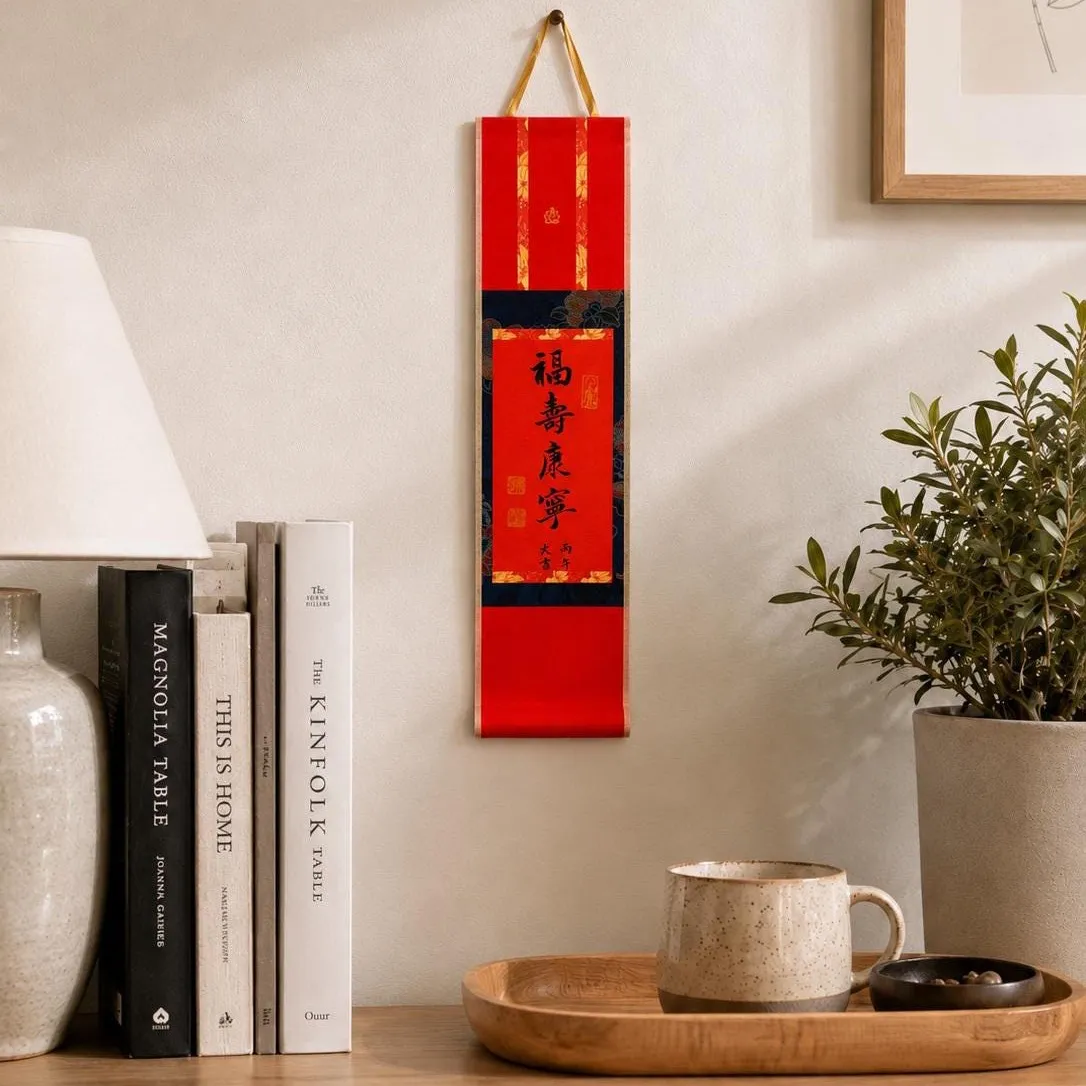
Photo shows a sample — yours will be brushed with 诗礼传家, or any character you choose.
Wall Scroll — for walls & housewarmingsfrom $38→ -
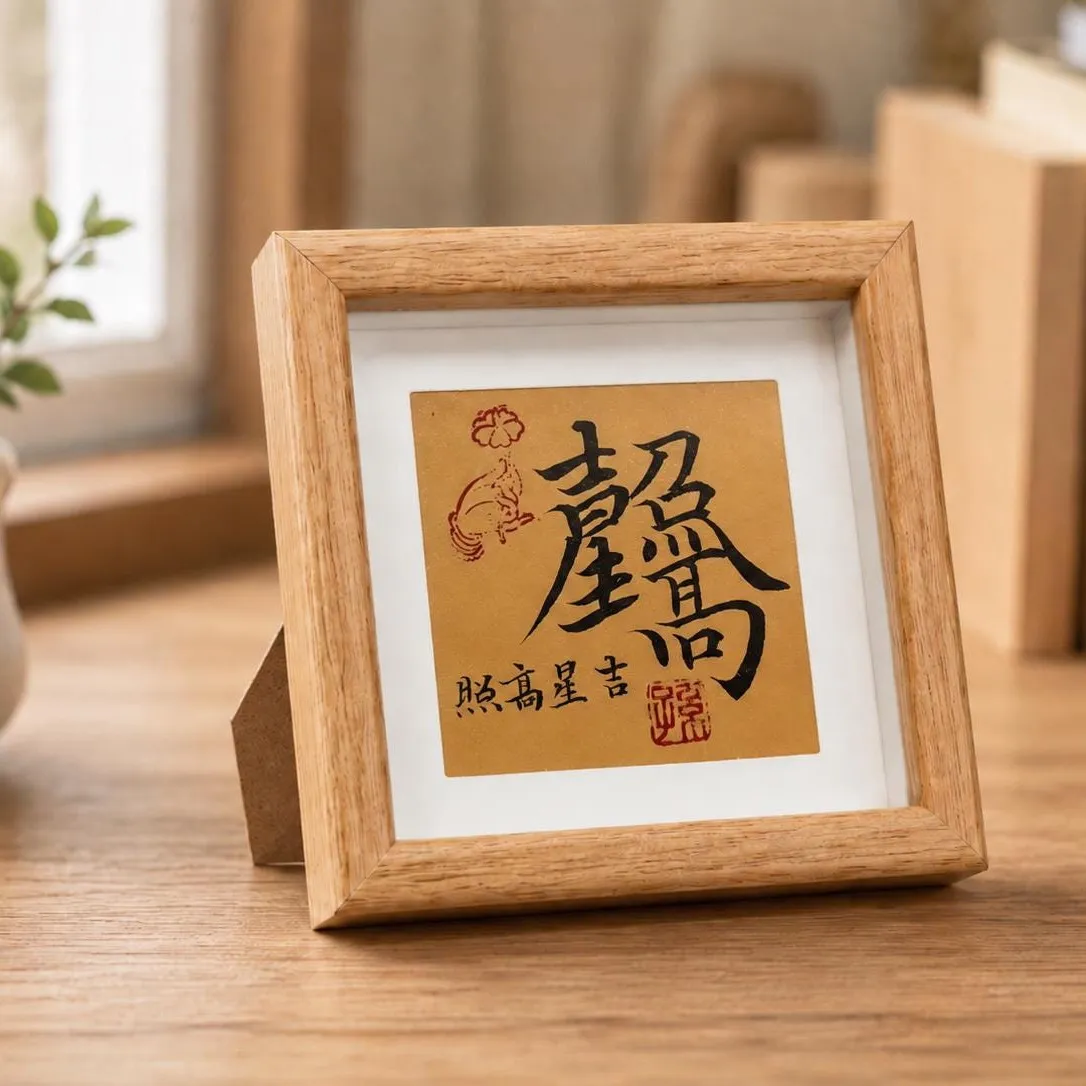
Photo shows a sample — yours will be brushed with 诗礼传家, or any character you choose.
Desk Frame — for desks, studies & studiosfrom $44→ -
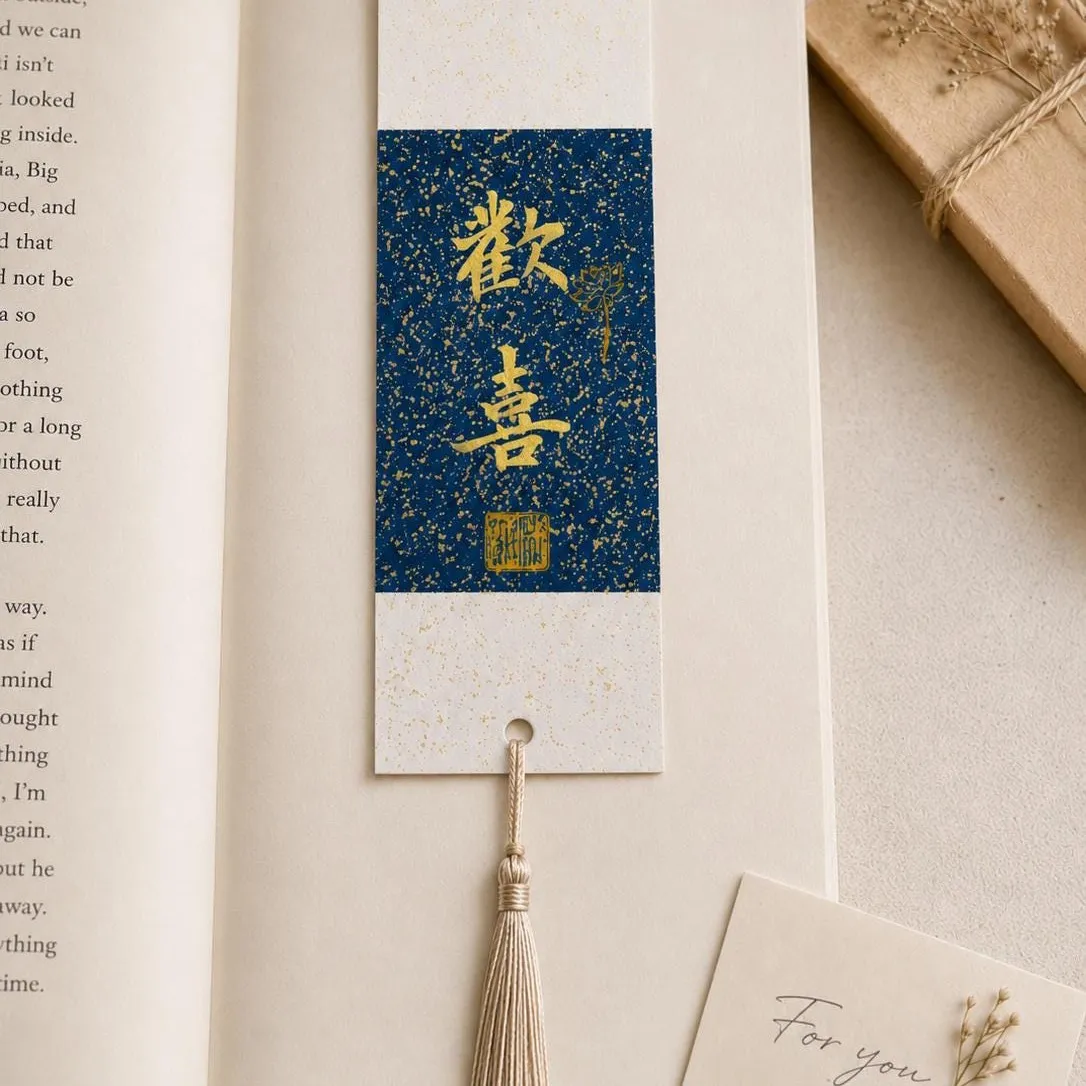
Photo shows a sample — yours will be brushed with 诗礼传家, or any character you choose.
Bookmark — for readers & small thank-yousfrom $14→
What people said after it arrived.
-
The item is fantastic. The customer service was genuine. Thanks!
— M.Verified purchase · from our Etsy shop reviews · -
They were great they gave me exactly what I asked for and then some. Thank you!!
— G.Verified purchase · from our Etsy shop reviews · -
It is well designed and customized. My daughter loves it. Amazing gift for family’s d friends
— S.Verified purchase · from our Etsy shop reviews ·
Each "诗礼传家" is hand-brushed by FuBlessings on rice paper.
See 诗礼传家 (Shī Lǐ Chuán Jiā) on Etsy →