志 (zhì) — The Heart's Heading · An Aim Set and Stated · Direction, Not Distance
One character, and the element on top is not 士 (a gentleman). It is 之 — a foot above a ground line, meaning to step off — flattened into three strokes by Han clerical scribes, and never corrected since.
孔子 once asked two of his students to say what their 志 was. 子路 answered with a coat: carriages, horses and light furs, to be lent to his friends and not missed when they came back worn out. 颜渊 answered with a habit — never to advertise what he was good at, never to impose laborious tasks on others. Then they asked him, and he named three generations of a whole society. All three answers went into the record as 志, and nobody in the passage remarks on the difference in size. That is the first thing to know about this character: it is not a measure of how much someone wants, and it is not a rank. It reports that a direction has been settled on, and it reports nothing else — not the distance, not the odds, not whether anybody got there.
The second thing is that a 志 is meant to be sayable, and Chinese has built more machinery for getting this one out of a person than for anything else kept in the heart. 诗言志, the three characters the whole poetic tradition was built on, says the poem exists to do exactly that; 盍各言尔志 is a teacher asking a room to speak; and the form a school-leaver signs after the 高考 is called 志愿. Double it and you get 同志, people whose headings match — still the fastest way in Chinese to say that two people belong on the same side of something. And the same character carries 三国志 and 县志 and 墓志铭, because 誌, the version with 言 beside it, was only ever this word written down, and the 1955 variant list folded it back in. See 毅 → for the quality most often confused with this one: 毅 is what holds when the heading starts to cost, and it needs a 志 to hold toward.
A hand-brushed 志 by FuBlessings is for a person who has told you which way they are going. For a colleague that is the exact register — 志同道合, headings the same and roads matching, is what Chinese says instead of like-minded, and it is a claim about two people rather than a compliment paid down the ladder. For a friend it is 子路’s answer: a heading small enough to name over dinner and firm enough that they have not swapped it. Neither reading wishes anyone luck or predicts anything, which is the point. 苏轼 called the durable version 坚忍不拔之志, and the compliment in it is not that the heading was large. It is that the heading was still there after the part where holding it cost something.
- a heading the heart is set on — 心之所之, the gloss the commentators settled on
- the aim you state when you are asked for it — 盍各言尔志, 填报志愿
- the mettle that shows once the heading costs something — 志气, 斗志, 坚忍不拔之志
- a heading held in common with someone — 同志, 志同道合
- the record, once the thing is written down — 三国志, 县志, 墓志铭, 杂志
- ambition Ambition in English reports a level of wanting, which is why it needs qualifying before it is a compliment. 志 reports a direction and is silent about size: a heading toward a small thing is as much a 志 as a heading toward a large one. Chinese keeps 野心 for the cases where the size is the objection.
- willpower 意志 is the compound Chinese uses for willpower, and the 意 is what supplies the pushing. A bare 志 is the heading, not the force applied along it, and it does not describe how hard anything is being pushed.
- dream 梦想 is what someone would like to be true, and it obliges them to nothing. A 志 has to be set, and 立志 is the verb for setting it; what has been set can be asked after, which a 梦想 never can, because nobody is entitled to check on it.
The short arms are the point: these readings don’t reach it.
- 士 the top element — historically 之, a foot above the ground line, not the scholar it now resemblesIn the Warring States forms this is 之, a foot stepping off a baseline. Han clerical script flattened it into the three strokes of 士 and the resemblance has been permanent since. 从心之聲 is 徐铉's analysis, written into the 心部 gap in 986 rather than 许慎's own; the commentary tradition put the meaning back, glossing 志 as 心之所之 — where the heart goes.
- 心 heart — where the heading is kept before anyone hears about itThe classifier, and the reason 志 sits in 心部 rather than with the going characters. It fixes the aim as interior: 《毛诗序》 draws the line at exactly this element — 在心为志,发言为诗, in the heart it is 志, and once spoken it is something else.
character
- 志向 zhì xiàng the direction itself — the plain modern noun for where a person has decided to head
- 志气 zhì qì mettle — the visible form of a heading, what a person is said to have or to have lost
- 立志 lì zhì to set a heading — the standard verb for acquiring one, and what a Chinese teacher says to a class
- 志愿 zhì yuàn a stated aim, and the name of the form Chinese students file after the 高考; a 志愿者 is a volunteer
- 同志 tóng zhì same heading — comrade, and since the late 1980s the ordinary word Chinese-speaking LGBTQ communities use for themselves
- 志同道合 zhì tóng dào hé headings the same, roads matching — what Chinese says instead of calling two people like-minded
- 意志 yì zhì will — 意 supplies the pushing that a bare 志 does not claim
- 墓志铭 mù zhì míng an epitaph — the recording sense, written by 誌 for a while and folded back into this character by the 1955 variant list
- 抱负 bào fù what a person has decided to carry. A relative by sense with no character in common — it is the neutral word for what English calls ambition, and it is what 志向 sounds like in an appraisal
- 初心 chū xīn the heading you started with. A relative by sense sharing no character — 不忘初心 is how a speaker today says the thing 立志 said classically, and it puts the emphasis on not having swapped it
Cinnabar marks the characters 志 actually contains. The dark row is a relative by meaning or by sound, not one shared stroke.
The Story Behind the Character
The top of 志 is not 士. In Warring States bronze and on bamboo strips the character is written 之 over 心, and 之 in its oldest form is a foot — 止 — planted above a horizontal line: this ground, and a step off it. Set that over a heart and the whole character is a single motion, the heart leaving where it is for somewhere it is not. What happened next was a handwriting reform. The clerical scribes of the Han flattened the foot into three strokes, and 之 came out looking exactly like 士, the graph for a gentleman. Every Chinese schoolchild since has been taught a character that appears to be a scholar sitting on a heart, and the scholar is a scribal accident.
许慎 defined 意 with this character — 意,志也 — and then never gave the character he had used an entry of its own. There is no 志 entry in the 说文解字 he finished around 100 CE. 段玉裁 sets out what happened to it: the 小徐 recension has no such 篆 either, and 徐铉, editing the dictionary in 986, supplied one as a back-fill, on the reasoning that a character already doing work inside somebody else's definition cannot go without an entry of its own. What 徐铉 wrote into the gap is 意也,从心,之聲 — heart for the meaning, 之 for the sound. So the famous circle, 意 defined by 志 and 志 defined by 意, is a Song editor closing a loop the Han author had left open, and 段玉裁 has an account of why it was open: 古文有志無識, in the older script this character was already doing the job 識 later took over, so its entry belonged under 識 — and under 識 it was left out. Either way, the element 徐铉 filed as a phonetic is the one carrying the sense. The gloss the commentators settled on puts it back to work — 志者,心之所之之谓, that toward which the heart goes, in 朱熹's phrasing — and the 《毛诗序》 had been playing on the same 之 long before either of them, opening with 诗者,志之所之也. Once the 之 is doing the work, 志 stops being a synonym for what is on your mind. It acquires a direction.
徐铉 made a second entry on the same pass, off a different list, and it is this word written down. 誌 — 言 beside 志 — went into 言部 in 986 as a 新附字, glossed 記誌也, to note and to record. Neither character had been in 许慎's book; both were let in together, nine hundred years afterwards, once the language could no longer be described without them. Then 誌 was struck out, and not by the character simplification of the 1950s — it went in the variant purge running alongside it, the 《第一批异体字整理表》 published in December 1955 and in force from February 1956, which ruled 誌 a variant of 志 and retired it. So one character now carries 三国志 and 县志 and 墓志铭 and 杂志, the ordinary word for a magazine. That looks like a collision and is not one: 陈寿 wrote 三国志 with this character in the third century, and the recording sense belonged to this character long before anybody gave it a 言. 徐铉's stated criterion for the 新附 was 经典相承传写及时俗要用而说文不载者 — characters already handed down in the classics and already in daily use — so 986 did not invent 誌. It gave a line in the book to something people had been writing for centuries. Taking a thing down is what this character has always been for, because an aim inside one person's heart is not yet a 志 anybody else can act on. 立志 uses 立, the verb for erecting a post or a stele — you put it up where it can be seen, and then you are standing next to it.
Classical lines
- roughly 1,500 years
- c. 400 BCE 《论语·公冶长》
- c. 1st c. CE 《毛诗序》
- c. 1061 苏轼《晁错论》
颜渊、季路侍。子曰:盍各言尔志?子路曰:愿车马衣轻裘,与朋友共,敝之而无憾。颜渊曰:愿无伐善,无施劳。子路曰:愿闻子之志。子曰:老者安之,朋友信之,少者怀之。 Yan Yuan and Zilu were sitting with him. The Master said: why not each of you state your heading? Zilu said: carriages, horses and light furs
to share them with my friends, and not mind them being worn out. Yan Yuan said: never to parade what I am good at, never to impose laborious tasks on others. Zilu said: may we hear the Master's? The Master said: that the old be settled, that friends trust me, that the young be held close. — The question is the part to notice. 盍各言尔志 assumes a heading is something a person can be asked for across a room and is expected to be able to put into words on the spot. Note also that 孔子 answers only after 子路 turns the question back on him, and that what he gives is not a plan but a description of how three groups of people would be faring if he got his way.
诗者,志之所之也。在心为志,发言为诗。情动于中而形于言。 A poem is where the heading goes. In the heart it is 志; issued as speech it is a poem. Feeling stirs inside and takes shape in words.
The sentence that founded Chinese poetics. Its three-character ancestor 诗言志 comes from the 《尚书·尧典》, and 朱自清 called that one the discipline's opening charter; this is the Han preface unpacking it. What it says about this character is precise and easy to skate past: 志 is the interior state, and it stops being 志 the moment it gets out. Chinese did not treat that as a loss. It built an institution — the entire poetic tradition — whose stated job was to get the thing out of the heart and into a form other people could hold.
古之立大事者,不惟有超世之才,亦必有坚忍不拔之志。 Those who set great things going in the old days had more than talent beyond their age; they also had a heading that would not be bent or pulled up.
苏轼 wrote this in his mid-twenties, in an essay arguing that 晁错 was executed because he started something and then flinched from standing in front of it. The two verbs are load-bearing: 拔 is to pull a post out of the ground, which is what 立志 put there. Chinese has kept the phrase in constant use for the best part of a thousand years — it is now usually written 坚韧不拔, one character away from what 苏轼 wrote — and it is still the compliment paid to someone whose direction survived the part where holding it cost them.
Why This Character Matters
Every summer, more than ten million Chinese eighteen-year-olds fill in a form called 志愿. It is the document that follows the 高考: you rank universities and majors in order, the ranking is binding, and the verb for doing it — 填报志愿 — names one of the tensest weeks in a Chinese family's year, because the score is already fixed and the only remaining variable is where you say you are going. It is the one piece of state paperwork that asks a teenager to write down a heading and sign it. The same word does volunteer work: a 志愿者 is literally a person who has a 志愿, someone doing the thing because they said they would rather than because they were assigned it. Both uses run on the same assumption — that a 志 is not real to anyone else until it has been stated.
The commonest compound in modern Chinese is 同志, and it is built out of exactly that assumption: 同 + 志, people whose heading is the same one. It reached ordinary speech through the couplet 孙中山 wrote in 1923 — 革命尚未成功,同志仍须努力, the work is not finished, those with us must keep at it — which later hung at his funeral and in offices and schoolrooms for decades, and it then became the standard form of address in the People's Republic, where an older person may still use it for a stranger. Since the late 1980s it has also been the ordinary self-description of Chinese-speaking LGBTQ communities, taken up first in Hong Kong, so which reading a listener hears now depends entirely on who is speaking. A single 志 on a wall carries none of this. It is worth knowing anyway, because it shows what the character does when you double it: the fastest way to say two people belong together in Chinese is to say their headings match.
志 is one of the most common given-name characters in Chinese — 志强, 志明, 志远, 建志 — and 志明 is close to an everyman name in Taiwanese pop culture, so a Chinese reader meeting a lone 志 on skin may well take it for part of somebody's name before reading it as a word. Read as a word it lands as 志向 or 志气: someone who has decided which way they are going and can say so. It reads as a declaration rather than a boast, because the character reports a decision rather than a result.
Calligraphy Styles for Tattoos
- Regular script (楷书 kǎishū) Best for tattoos
志 is 7 strokes in a clean 上下 stack — 士 above, 心 below — and regular script is the only style that reliably keeps 士 from closing into 土. It is one of the more forgiving characters at small sizes for that reason. Minimum recommended size: 1.25 inches.
- Running script (行书 xíngshū) Good
The 心 beneath opens into one of the most rewarding shapes in a running hand — the 卧钩 sweeping right and lifting into two dots. Needs 1.75 inches or more, because the dots are the first thing to merge into the hook.
- Cursive script (草书 cǎoshū) Only with an expert calligrapher
Cursive reduces both halves to a couple of gestures, and 志 then sits very close to other 心-footed characters such as 忘 and 忍. Worth attempting only at 2.5 inches or more, with a calligrapher who writes cursive regularly.
Common Mistakes to Avoid
- Writing 土 on top instead of 士Intended: 志, with 士 — the upper horizontal longer than the lower one
士 and 土 differ only in which horizontal stroke is longer: 士 is wide on top, 土 is wide at the base. Getting it backwards produces a character that is not 志 and is not anything else either. It is the single most common error in this character, and it is invisible unless you look at the two horizontals side by side. Ask for it to be checked before the needle.
- Making 心 narrower than the element above itIntended: 志 with 心 spread wider than 士, carrying it
志 is a stacked character and the bottom half is the base. 心 has to be drawn wider than 士 so the whole thing sits down rather than teetering; a narrow 心 makes the character read as top-heavy and, at tattoo scale, blurs it toward 忐. This is a proportion error rather than a stroke error, so it never shows up in a font preview.
Notes for Your Tattoo Artist
7 strokes, 上下 structure: 士 (3 strokes) above 心 (4 strokes). The upper horizontal of 士 must be clearly the longer of the two — that is the whole difference from 土. 心 should be set wider than the element above it, with the 卧钩 flat enough to carry the stack and the two right-hand dots kept well clear of the hook. Historically the top element was 之; the 士 shape is a clerical-script development, and calligraphers writing seal or bronze forms will restore the foot. Minimum 1.25 inches.
A few characters live near "志" but mean something quieter, sharper, or more specific. Here's how to tell them apart.
which way — the heading, chosen and stated, before anything has tested it
holding out — what is left when the heading starts costing; 毅 is the enduring, and it needs a 志 to endure toward
what the continuing is aimed at — 恒 with no 志 under it is only routine
the same thing, continued — constancy measured in repetition rather than in direction
having settled where you are going, which no amount of looking will decide for you
seeing what is actually the case — an exact homophone that shares nothing else with this character
whether a direction was chosen at all; 志 is silent about how far it reaches
how far the sight or the road extends — the distance, which 志存高远 adds to the heading rather than assuming
A graduation certifies what was finished; this is the only thing on the table that points the other way.
- A graduation certifies what was finished; 志 is the only thing on the table that points the other way. The Chinese school system already makes this literal: the binding form a student files after the 高考 is called 志愿. A graduation gift that names the destination is a guess about someone else's life. 志 names the fact that a direction has been chosen, and leaves the direction to the person who chose it.
- 孔子's account of his own life is a list of ages, and the first rung on it is not an achievement — 吾十有五而志于学, at fifteen I set my heading on learning. Everything after it is dated from there. That is what makes 志 an unusual birthday character: it does not wish the year well and it does not praise the person, it marks that the count started somewhere on purpose. For the birthday where the interesting question is not how many years but which way they have been running.
Looking for a name? See Western names written in Chinese →
-
What does 志 (zhì) mean?
志 (zhì) is the Chinese character for the heart's heading, an aim set and stated, direction, not distance. 孔子 once asked two of his students to say what their 志 was. 子路 answered with a coat: carriages, horses and light furs, to be lent to his friends and not missed when they came back worn out. 颜渊 answered with a habit — never to advertise what he was good at, never to impose laborious tasks on others. Then they asked him, and he named three generations of a whole society. All three answers went into the record as 志, and nobody in the passage remarks on the difference in size. That is the first thing to know about this character: it is not a measure of how much someone wants, and it is not a rank. It reports that a direction has been settled on, and it reports nothing else — not the distance, not the odds, not whether anybody got there. Every summer, more than ten million Chinese eighteen-year-olds fill in a form called 志愿. It is the document that follows the 高考: you rank universities and majors in order, the ranking is binding, and the verb for doing it — 填报志愿 — names one of the tensest weeks in a Chinese family's year, because the score is already fixed and the only remaining variable is where you say you are going. It is the one piece of state paperwork that asks a teenager to write down a heading and sign it. The same word does volunteer work: a 志愿者 is literally a person who has a 志愿, someone doing the thing because they said they would rather than because they were assigned it. Both uses run on the same assumption — that a 志 is not real to anyone else until it has been stated.
-
What occasions is 志 given for?
志 is traditionally given for Graduation, Birthday. A graduation certifies what was finished; 志 is the only thing on the table that points the other way. The Chinese school system already makes this literal: the binding form a student files after the 高考 is called 志愿. A graduation gift that names the destination is a guess about someone else's life. 志 names the fact that a direction has been chosen, and leaves the direction to the person who chose it. 孔子's account of his own life is a list of ages, and the first rung on it is not an achievement — 吾十有五而志于学, at fifteen I set my heading on learning. Everything after it is dated from there. That is what makes 志 an unusual birthday character: it does not wish the year well and it does not praise the person, it marks that the count started somewhere on purpose. For the birthday where the interesting question is not how many years but which way they have been running.
-
Is 志 a good Chinese tattoo?
志 is one of the most common given-name characters in Chinese — 志强, 志明, 志远, 建志 — and 志明 is close to an everyman name in Taiwanese pop culture, so a Chinese reader meeting a lone 志 on skin may well take it for part of somebody's name before reading it as a word. Read as a word it lands as 志向 or 志气: someone who has decided which way they are going and can say so. It reads as a declaration rather than a boast, because the character reports a decision rather than a result.
-
Who brushes the 志 calligraphy?
FuBlessings hand-brushes each 志 (Zhì) to order, in ink on rice paper — never printed, never repeated.
Bring 志 home — choose how you'd like it brushed.
-
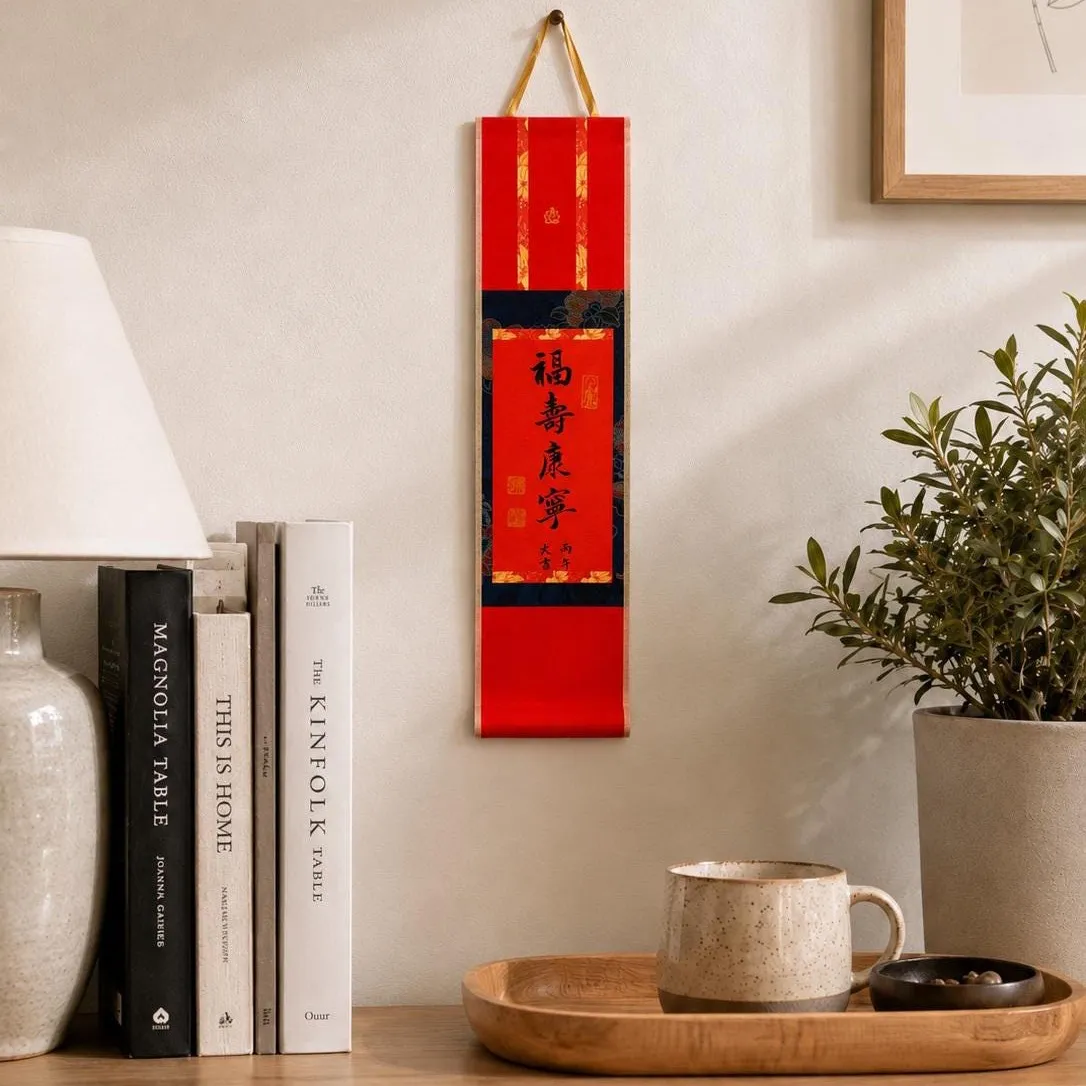
Photo shows a sample — yours will be brushed with 志, or any character you choose.
Wall Scroll — for walls & housewarmingsfrom $38→ -
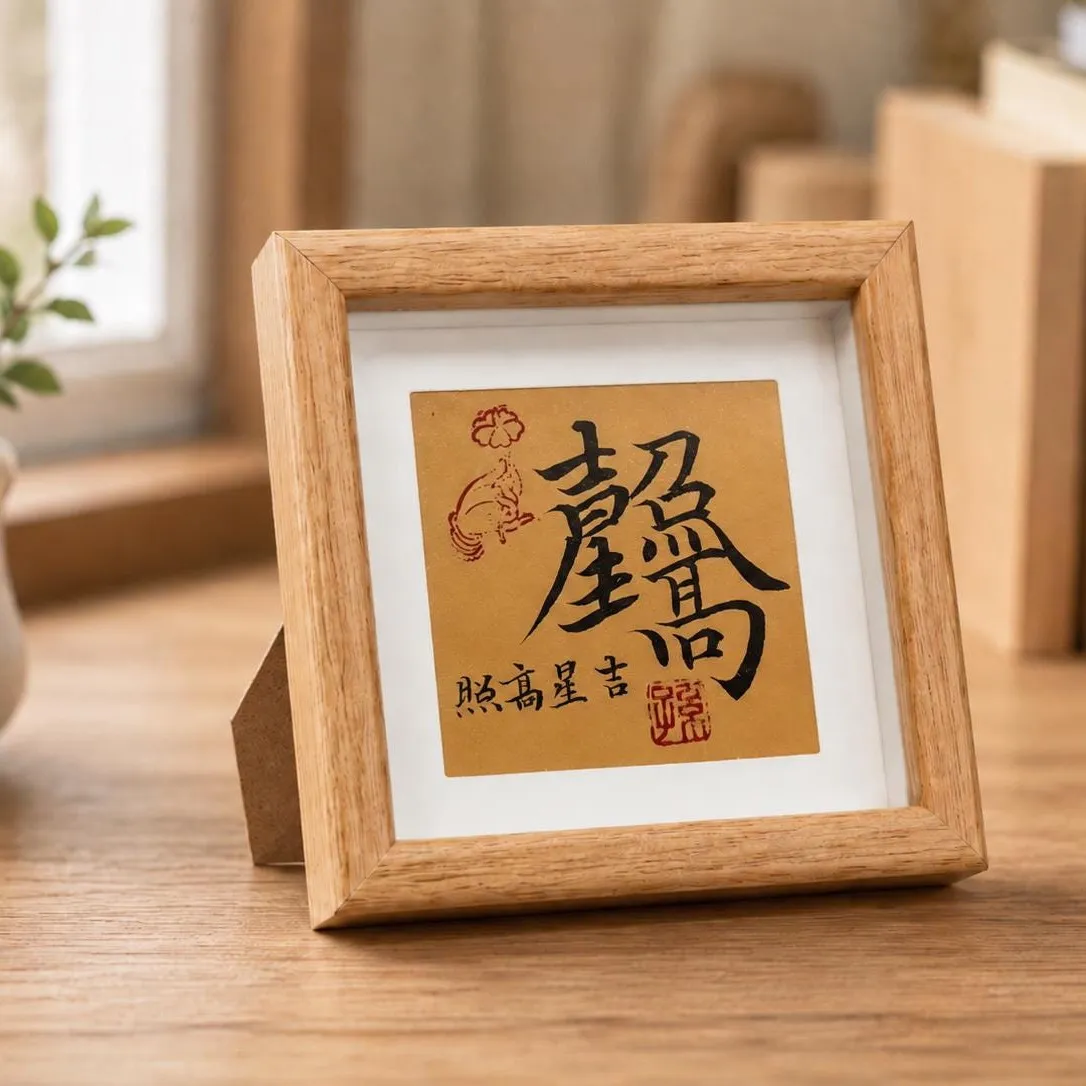
Photo shows a sample — yours will be brushed with 志, or any character you choose.
Desk Frame — for desks, studies & studiosfrom $44→ -
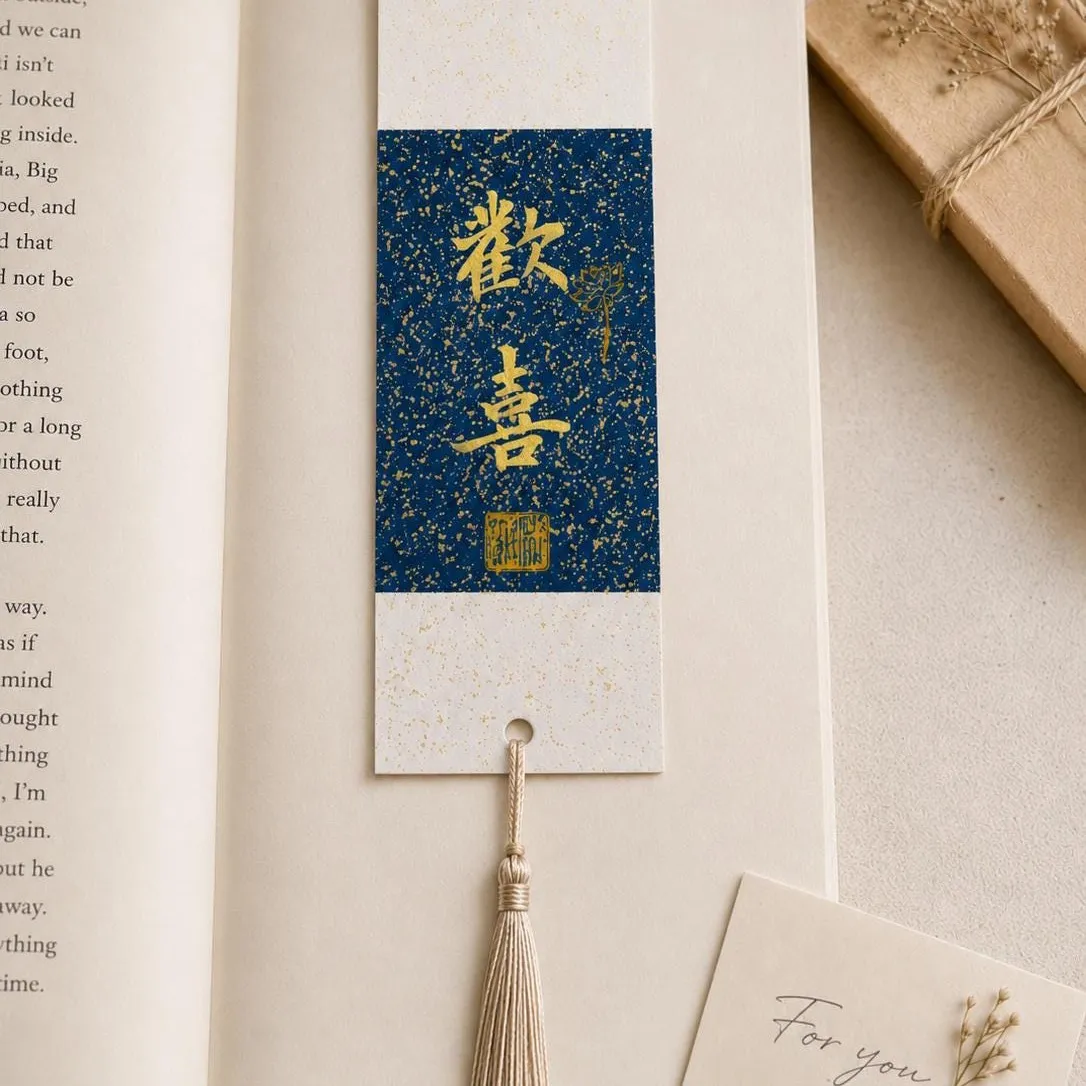
Photo shows a sample — yours will be brushed with 志, or any character you choose.
Bookmark — for readers & small thank-yousfrom $14→

What people said after it arrived.
-
The item is fantastic. The customer service was genuine. Thanks!
— M.Verified purchase · from our Etsy shop reviews · -
They were great they gave me exactly what I asked for and then some. Thank you!!
— G.Verified purchase · from our Etsy shop reviews · -
It is well designed and customized. My daughter loves it. Amazing gift for family’s d friends
— S.Verified purchase · from our Etsy shop reviews ·
Each "志" is hand-brushed by FuBlessings on rice paper.
See 志 (Zhì) on Etsy →