吉 (jí) — Auspicious · The Favorable Reading · A Date That Is Right
A single character.
The Chinese almanac is still in print — 黄历 on the mainland, 通勝 in Hong Kong — and it gives every day of the year two columns, 宜 and 忌: what this date is fit for, and what it is not. 宜嫁娶, good for marrying. 忌动土, not for breaking ground. A date that clears for the thing you have in mind is a 吉日, and that is where this character does nearly all of its living work. It does not describe a person, and it does not describe a life. It describes a slot in the calendar and says: this one, go ahead.
That job is old enough to be visible on the bones themselves, where 吉 is the answer a Shang scribe cut beside a crack, and it survives in places most people no longer notice as divination at all. The traditional wedding runs on six steps, 六礼, and the third of them is named after this character: 纳吉, submitting the 吉 — the groom’s family takes the bride’s name, obtained at the step before, to the ancestral temple, divines, and, if the answer comes back 吉, sends word that the match may proceed. 吉期 is still the word for a wedding date once the two families have fixed it. At the turn of the year 大吉 goes on the paper, and in Guangdong and Hong Kong it also goes on a plant, since 桔 and 吉 are the same syllable in Cantonese and a potted kumquat in the doorway is 大吉 growing. And when something went badly and then stopped, the phrase is 逢凶化吉 — met the 凶, turned it into 吉 — which only holds together as a sentence because the two words are one procedure’s two answers. See 吉祥 →
A hand-brushed 吉 by Artist Lina Sun goes to people standing in front of a date. For the couple who have just fixed theirs, since the character is already inside the ceremony that fixes it. For the friend whose year ahead has a lot booked into it. And for a grandparent, where the character carries something the sweeter blessings cannot: 吉 is the word Chinese ritual uses for the whole ordinary side of life, the side that is not a funeral, and saying it plainly is a kindness at an age when everyone else has started speaking carefully.
- auspicious — the favorable half of 吉凶
- a date that is right for the thing you mean to do on it
- the answer that clears you to proceed
- the celebratory category — 吉事, 吉礼, 吉服
- lucky Luck has nothing behind it and nobody consulted. 吉 is the result of a procedure somebody carried out, and the same procedure issues 凶 just as readily — which is why the word can be graded and luck cannot.
- blessing A blessing is issued; 吉 is only ever found. It is read off something — a crack, a date, a person's way of speaking — and whoever reads it has no say in which of the two answers comes back.
- happy 吉 makes no claim about how anyone feels. 吉服 is what you wear once mourning is over, which says only that a period has ended, not that the household is glad.
The short arms are the point: these readings don’t reach it.
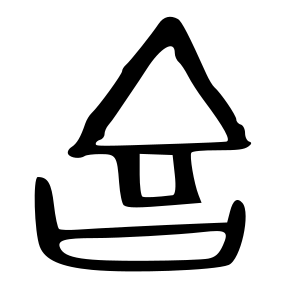
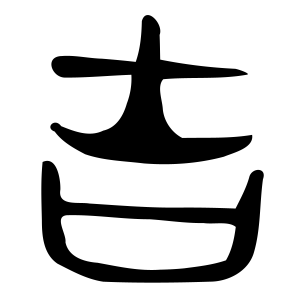
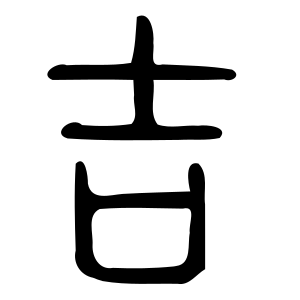
- 士 the element standing over the mouth — and the place where the readings disagree说文解字 takes the seal graph apart as 士 over 口 and stops there. The bone forms show something else on top: 于省吾 read it as a hafted weapon set point-down into its rack, others as a plug or a clay stopper closing a vessel. Nothing about the upper element is settled. In 楷书 the shape is 士, with the top horizontal longer than the one beneath it.
- 口 a mouth — or the thing being closed说文 files 吉 in the 口 section, among characters about speech and what comes out of it, which fits its gloss 善也 read as a pronouncement. The competing readings take the same square as a receptacle: a stand, a jar, a container with something set into its opening.
character
- 吉祥 jí xiáng auspiciousness — the fused pair, the everyday form the single character mostly lives inside
- 吉利 jí lì favorable and to one's benefit — the ordinary adjective, said of a number, a name, a date
- 吉日 jí rì a chosen day — the date picked as right for the thing being done on it
- 大吉大利 dà jí dà lì great 吉, great benefit — the loud New Year form, and the shopfront one
- 逢凶化吉 féng xiōng huà jí to meet the ill and turn it into the good — the phrase for a bad thing that stopped
- 择吉 zé jí to pick the date — the name of the practice itself; the man paid to do it is a 择日先生
The Story Behind the Character
A Shang diviner drilled a row of hollows into the back of an ox shoulder blade or a turtle's underside, touched a hot point to one of them, and read the crack that opened on the front. What the scribe then cut into the bone beside it follows a fixed shape, and the answer is frequently one character: 吉 — set beside the crack on its own, or closing the king's own reading, 王占曰:吉. That is the earliest work this character is known to have done, and it was technical work. 吉 is the favorable answer in a two-answer system, and the language later fixed its opposite as 凶. By the time of the 周易 the two were welded into a pair, and 吉凶 is still how Chinese refers to the two possible outcomes of anything at all. 说文解字 (c. 100 CE) files 吉 in the 口 section and defines it in two characters, 吉,善也 — good — then takes the seal graph apart as 士 over 口. The bone forms do not support that. 于省吾 read the upper element as a hafted weapon set point-down into its rack — 置句兵于卢之上 — and took the sense from the solidity of a weapon stowed rather than carried; others have read the same shape as a plug or a clay stopper closing a vessel's mouth. The graph is not settled. The word's job never has been in question.
What the character then attached itself to is time. 《诗经》 contains a hunting poem titled simply 吉日, and its first line names the date by its cyclical sign rather than by any quality of the weather: 吉日维戊. 《礼记·曲礼上》 goes further and writes down the manners of picking one — 丧事先远日,吉事先近日, for a funeral take the further date, for a 吉 occasion the nearer. That single line does two things at once. It shows that days were chosen rather than accepted, and it shows the word already serving as a category label: 吉事 covers the whole class of occasions that are not a death. The ritual codes run the same split through everything they touch. 《周礼》 sorts state ceremony into five kinds with 吉礼 at the head and 凶礼 immediately after it, and 吉服 is the dress a household is entitled to again once a mourning period is over. To be back in 吉服 is not a claim to be happy. It records only that the household has come out the other side.
The 周易 marks its line statements with a small recurring set of judgements — 吉, 凶, 悔, 吝, 厉, 无咎 — and 吉 sits at the top of it. Inside the book it is also the only one of the six that comes in grades. 元吉, the highest grade, is what the fifth line of 坤 receives for yellow lower robes: 黄裳元吉. The habit of grading outlived the book: a Chinese temple sorts its hundred slips into 大吉, 上吉, 中吉, 中平 and 下下, and a Japanese shrine prints 大吉, 中吉, 小吉 and 末吉 on its omikuji. Grading is possible at all because the word reports a reading rather than a wish, and no reading is ever guaranteed to come back favorable. That is also the sense in which 吉 differs from the character it eventually fused with. 祥 named the sign as it turned up in the world; 吉 named how the sign was answered. When the two ran together into 吉祥 the compound kept the good side of both and left the other one to 不祥.
Classical lines
- roughly 600 years
- c. 9th–7th c. BCE 《诗经·小雅·吉日》
- c. 300 BCE 《周易·系辞下》
- c. 200 BCE 《礼记·曲礼上》
吉日维戊,既伯既祷。田车既好,四牡孔阜。 The good day is the day wù
the horse-ancestor has had his offering, the prayer is said, the hunting chariot is in order and the four stallions are in condition. — The poem is named after its date rather than after its hunt, and the date is identified by its cyclical sign, not by a season or a mood. This is 吉 at its oldest and plainest: not a description of what the day was like, but a finding that this is the one to go on.
吉人之辞寡,躁人之辞多。 The 吉 person says little; the restless one says a great deal.
The passage around it is a short manual for reading people off their speech — the man about to betray you sounds ashamed, the man in two minds branches. It is the place where the character steps off the calendar and onto a person, and here it comes closest to the 善也 gloss 说文 gives it — the commentators read 吉人 as a good man. What the passage adds is that the goodness is legible from outside, off nothing but how much someone talks.
丧事先远日,吉事先近日。 For a funeral take the further date first; for a 吉 occasion, the nearer.
A working rule for divining a day, and the reasoning under it is human rather than technical: a burial should not be hurried, and everything else should not be put off. The line also catches 吉 doing duty as a category — 吉事 is the blanket term for the whole celebratory side of Chinese ritual life.
Why This Character Matters
Every Lunar New Year, the flower markets of Guangzhou and Hong Kong sell potted kumquat trees by the truckload, and the reason is a sound. The character on the pot is 桔, gat in Cantonese — and so is 吉. A tree covered in 桔 is 大吉 made physical and left standing in a doorway for the length of the season, and a matched pair at a shop entrance is read as 大吉大利. The same substitution runs in the other direction in ordinary Cantonese speech, where 空 (empty) is avoided because it sounds like 凶: a vacant flat advertised for rent is a 吉屋, an empty parking bay is a 吉位. The word for the good answer is doing duty as a polite way of saying nothing is there.
The other half of the pair is never far away. 逢凶化吉 — to meet the 凶 and turn it into 吉 — is among the most-used four-character phrases in the language, and it only parses because both words are answers produced by the same procedure. That is what makes 吉 sayable after something has already gone wrong, which most of this vocabulary is not. Choosing the date was also a trade. The 通书 almanac is printed annually and still sold, and the specialist a family hired to read its 宜 and 忌 columns for a wedding or an opening day is a 择日先生. What survives most widely now is the short version of the same practice: two people checking a handful of dates against a calendar before they book anything.
吉 rarely stands alone in modern Chinese — it lives inside 吉祥, 吉利, 吉日, 大吉. A Chinese reader will understand a bare 吉 on skin instantly and may still find it slightly unfinished, the way a single word lifted out of a set phrase reads. It is also the word printed at the top of a temple divination slip, so on its own it can land as a grade rather than as a wish. Paired — 大吉, or the full 吉祥 — it settles.
Calligraphy Styles for Tattoos
- Regular script (楷书 kǎishū) Best for tattoos
6 strokes, two components stacked. The whole character rests on the top horizontal being longer than the one below it, and regular script keeps that difference visible. Minimum recommended size: 1.5 inches.
- Seal script (篆书 zhuànshū) Good at larger sizes, with a caveat
The seal form is nearly symmetrical and reads as a shape before it reads as a word. It is the handsomest version of this character at 2+ inches, but most Chinese readers will need a moment with it, and some will not place it at all.
- Cursive script (草书 cǎoshū) Only with an expert calligrapher
At 6 strokes there is almost nothing left to abbreviate. Cursive 吉 collapses quickly into a mark that could be read as several other stacked-on-口 characters. Only attempt it with a calligrapher who specializes in cursive.
Common Mistakes to Avoid
- Writing 土 on top instead of 士Intended: 吉 (jí) — auspicious
士 has the longer horizontal on top; 土 has the longer one on the bottom. Swap them and you get 𠮷 — a variant real enough to be listed in 《汉语大字典》 and encoded in Unicode, though it survives mainly as a Japanese name glyph, in 𠮷野家 and on family registers. In Chinese it is not the character anybody means. A reader sees a slip rather than a word, which is the worst outcome available for a tattoo.
- Confusing 吉 with 古 (gǔ, old) or 舌 (shé, tongue)Intended: 吉
All three are a small component stacked on 口. 古 has 十 above, 舌 has 千. At tattoo scale a heavy line or a wet-healed top stroke closes the gap between them, so the top component needs room and a clear stroke count.
Notes for Your Tattoo Artist
6 strokes in two stacked components. The top horizontal is the longest stroke in the character and sets the width for everything under it; the 口 should stay small and square rather than stretching out to match the 士 above. A 口 as wide as the top component is the most common proportion error and leaves the character looking bottom-heavy. Plan for at least 1.5 inches.
A few characters live near "吉" but mean something quieter, sharper, or more specific. Here's how to tell them apart.
the reading — how a sign was answered, with 凶 always available as the other answer
the sign itself, turning up in the world before anyone has ruled on it
an answer that can be issued about an entirely ordinary Tuesday
a rare showing — the thing had to be unusual before it counted at all
the date being right at the start, before anything has been attempted
the road staying clear the whole way through, which is only knowable afterwards
The first working decision of a Chinese new year is which day to reopen on.
- The first working decision of a Chinese new year is which day to reopen on. 开市 — a shop's first day of trading after the holiday — is picked rather than assumed: the almanac rules some days 宜开市 and others 忌, and a family with a business checks before the shutters go up. That is this character doing its ordinary work at the exact moment it is most visible on the door. Printed on red paper 吉 is nearly always wearing a compound; on its own it does the plainest job available to a piece of New Year paper — not asking that the year be generous, only that the household choose its days well.
- A birthday is the one date a person carries around with them, and in Chinese practice it is the date other dates get measured against: a 择日 specialist choosing a wedding day or a moving day checks it against the 生辰 of whoever the day is for. That makes 吉 an unusually exact thing to hand someone on one. It is not flattery and not arithmetic — it is a word about the calendar ahead of them, and whether the days they pick out of it turn out right. For the elder or the friend who will be asked, sometime this year, to pick a day.
Friend · Grandparent · New Couple · or yourself
Looking for a name? See Western names written in Chinese →
-
What does 吉 (jí) mean?
吉 (jí) is the Chinese character for auspicious, the favorable reading, a date that is right. The Chinese almanac is still in print — 黄历 on the mainland, 通勝 in Hong Kong — and it gives every day of the year two columns, 宜 and 忌: what this date is fit for, and what it is not. 宜嫁娶, good for marrying. 忌动土, not for breaking ground. A date that clears for the thing you have in mind is a 吉日, and that is where this character does nearly all of its living work. It does not describe a person, and it does not describe a life. It describes a slot in the calendar and says: this one, go ahead. Every Lunar New Year, the flower markets of Guangzhou and Hong Kong sell potted kumquat trees by the truckload, and the reason is a sound. The character on the pot is 桔, gat in Cantonese — and so is 吉. A tree covered in 桔 is 大吉 made physical and left standing in a doorway for the length of the season, and a matched pair at a shop entrance is read as 大吉大利. The same substitution runs in the other direction in ordinary Cantonese speech, where 空 (empty) is avoided because it sounds like 凶: a vacant flat advertised for rent is a 吉屋, an empty parking bay is a 吉位. The word for the good answer is doing duty as a polite way of saying nothing is there.
-
What occasions is 吉 given for?
吉 is traditionally given for Chinese New Year, Birthday. The first working decision of a Chinese new year is which day to reopen on. 开市 — a shop's first day of trading after the holiday — is picked rather than assumed: the almanac rules some days 宜开市 and others 忌, and a family with a business checks before the shutters go up. That is this character doing its ordinary work at the exact moment it is most visible on the door. Printed on red paper 吉 is nearly always wearing a compound; on its own it does the plainest job available to a piece of New Year paper — not asking that the year be generous, only that the household choose its days well. A birthday is the one date a person carries around with them, and in Chinese practice it is the date other dates get measured against: a 择日 specialist choosing a wedding day or a moving day checks it against the 生辰 of whoever the day is for. That makes 吉 an unusually exact thing to hand someone on one. It is not flattery and not arithmetic — it is a word about the calendar ahead of them, and whether the days they pick out of it turn out right. For the elder or the friend who will be asked, sometime this year, to pick a day.
-
Is 吉 a good Chinese tattoo?
吉 rarely stands alone in modern Chinese — it lives inside 吉祥, 吉利, 吉日, 大吉. A Chinese reader will understand a bare 吉 on skin instantly and may still find it slightly unfinished, the way a single word lifted out of a set phrase reads. It is also the word printed at the top of a temple divination slip, so on its own it can land as a grade rather than as a wish. Paired — 大吉, or the full 吉祥 — it settles.
-
Who brushes the 吉 calligraphy?
Each 吉 (Jí) is hand-brushed to order by Artist Lina Sun in ink on rice paper — never printed, never repeated.
Bring 吉 home — choose how you'd like it brushed.
-
Photo shows a sample — yours will be brushed with 吉, or any character you choose.
Wall Scroll — for walls & housewarmingsfrom $38→ -
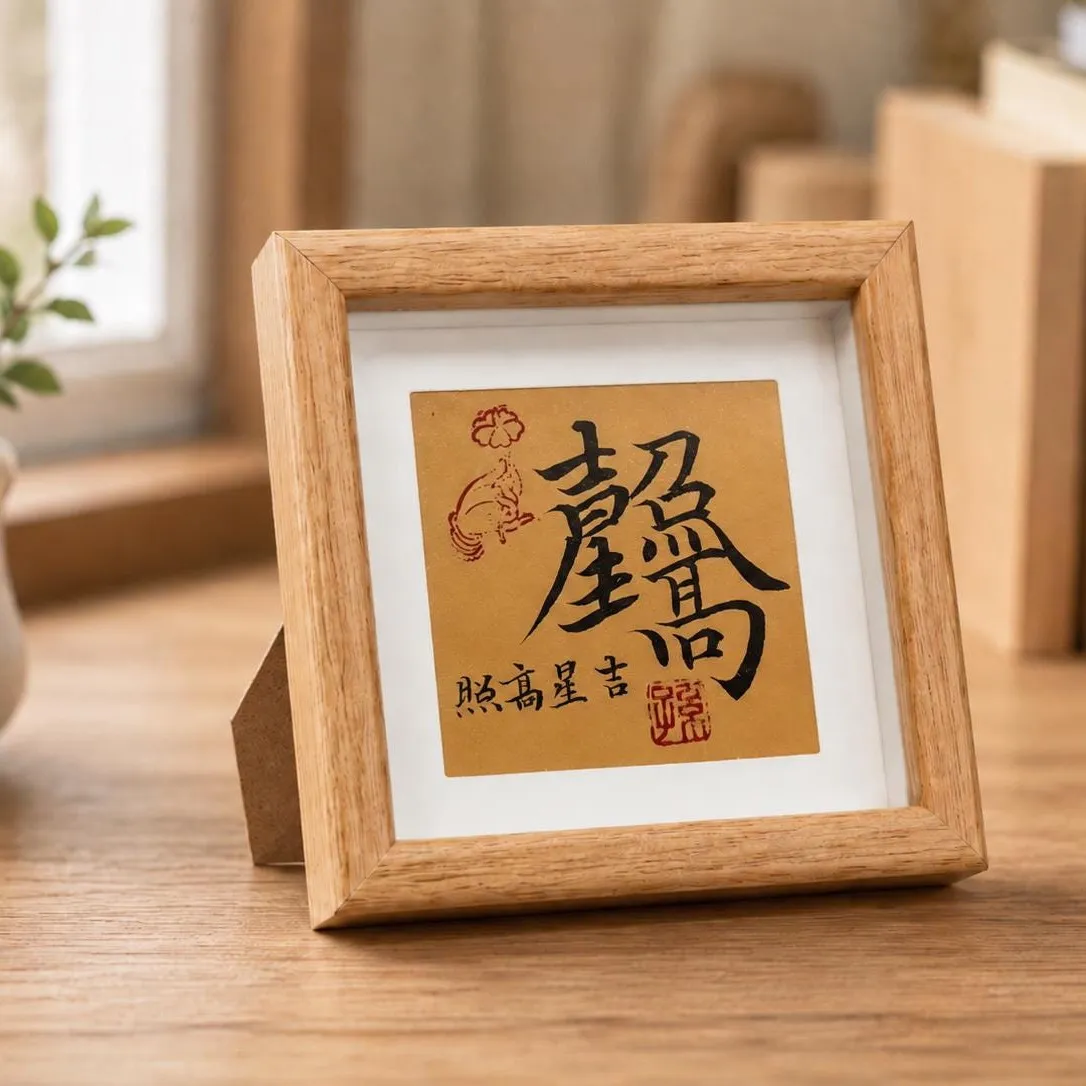
Photo shows a sample — yours will be brushed with 吉, or any character you choose.
Desk Frame — for desks, studies & studiosfrom $44→ -
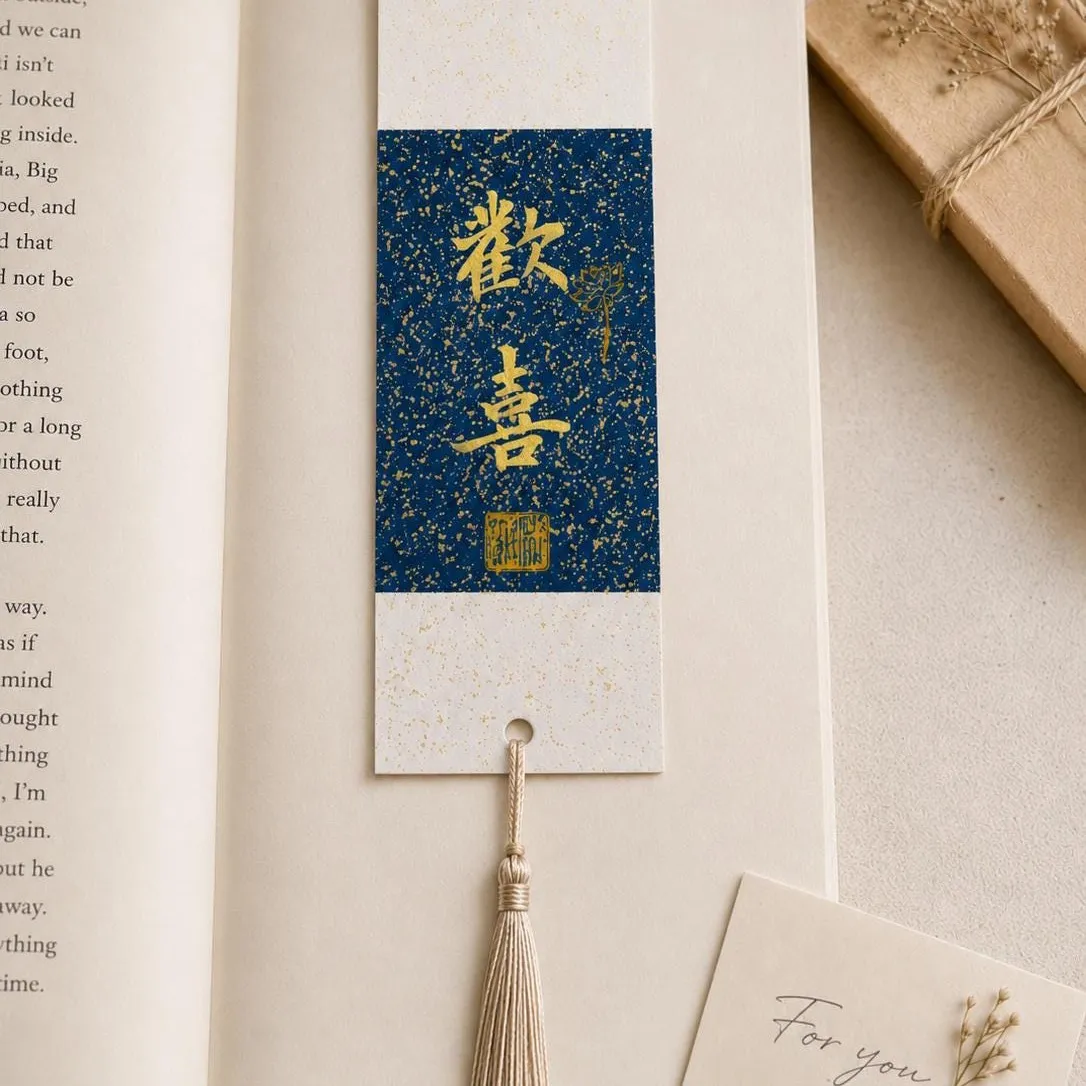
Photo shows a sample — yours will be brushed with 吉, or any character you choose.
Bookmark — for readers & small thank-yousfrom $17→
What people said after it arrived.
-
The item is fantastic. The customer service was genuine. Thanks!
— M.Verified purchase · from our Etsy shop reviews · -
They were great they gave me exactly what I asked for and then some. Thank you!!
— G.Verified purchase · from our Etsy shop reviews · -
It is well designed and customized. My daughter loves it. Amazing gift for family’s d friends
— S.Verified purchase · from our Etsy shop reviews ·
Each "吉" is hand-brushed by Artist Lina Sun on rice paper.
See 吉 (Jí) on Etsy →