祥云 (xiáng yún) — Auspicious Cloud · A Sky Read as Evidence · The Pattern That Runs the Border
Two characters, and the second is not a reduction of anything: 云 is the older graph, and 雲 the later one built on top of it once 云 had been borrowed for the verb to say.
A 祥云 has a location. Over that roof, low in the east, in the top corner of a printed sheet — the word arrives with a place attached, and whatever is being claimed is claimed about that patch of sky rather than about the person standing under it. That is what separates it from the weather. 云 on its own is what the sky happens to be doing; 祥 is the finding that what it is doing reads in your favor. See 祥 → Neither half claims a mechanism, and the compound does not claim one either. What it names is not good fortune. It is the mark good fortune leaves on the sky before it gets here.
The word never thinned out into pure decoration, which is unusual for a pattern this heavily used. 祥云缭绕 describes a temple hall on a festival morning with the incense still hanging in it. 祥云瑞气 is what people say of a sky that looks, for no stated reason, like a good day to do something. New Year prints run the scroll around the edge of the scene rather than through the middle of it, and the placement carries the argument: the cloud is the condition the scene is taking place in, not an event inside it. None of these uses names a cause. They report a condition, which is the habit the compound has never lost.
A hand-brushed “祥云” by Artist Lina Sun suits the friend with a blank twelve months in front of them, the couple who have just been handed a set of keys, or the grandparent for whom the pattern needs no introduction. It makes no forecast. It says the sky over this house has been looked at, and found favorable.
- an auspicious cloud — weather taken as evidence
- the cloud-scroll motif that runs through Chinese ornament
- a favorable sky, reported rather than requested
- the sign that arrives ahead of the thing it signs
- good luck Luck is an outcome, named after the fact. 祥云 is an instrument reading taken before the fact, and 《史记》 prints the calibration — four clauses a cloud has to satisfy before it counts as one. A cloud that misses them is weather.
- a silver lining The English figure needs a bad thing first — the cloud is the trouble, the lining is the consolation inside it. 祥云 has no trouble in it at all. The cloud is the good news, not the packaging it came in.
- aura 光环 and 佛光 attach to a person and are read off that person. 祥云 hangs in a sky nobody owns, which is why it goes over a doorway or along a border rather than around a head.
- rainbow 彩虹 has one shape and one set of conditions, and early omen literature was wary of it: 虹 is written with the insect radical, and 《诗经》 has 蝃蝀在东,莫之敢指 — the rainbow in the east, and nobody dares point at it. 祥云 is tied to no one shape, which is why the same name covers a thing in the sky and a scroll running the length of a border.
The short arms are the point: these readings don’t reach it.
- 祥 auspicious — the reading, already returned祥 here is not describing how the cloud looks. 白云, 乌云 and 彩云 all report appearance; 祥 reports a judgment somebody has already returned on it. That is why nobody ever asks what a 祥云 portends — the question it would answer was closed before the word was used.
- 云 cloud — vapor with a head and a tail说文 files it under 雨 as 雲,山川气也, the breath of hills and rivers, and records 云 — the same graph without rain on top — as the archaic form. The two turning strokes at the bottom are the vapor curling back on itself as it climbs.
characters
- 祥云瑞气 xiáng yún ruì qì auspicious cloud and favorable air — the set phrase for a whole sky, and the only compound here that lights both characters
- 庆云 qìng yún the five-colored cloud of the portent registers, also written 卿云 — this word's ancestor on the official side
- 云气 yún qì cloud-vapor — the term used for the streaming cloud bands painted on Han lacquer and woven into Han silk
- 呈祥 chéng xiáng to present a favorable sign — the verb half of the pairing, as in 龙凤呈祥
- 瑞霭 ruì ǎi auspicious haze — the same reading taken in thicker weather; related by sense and sharing no character with 祥云
- 氤氲 yīn yūn vapor massing and mingling — how the sky looks before anything has been read out of it; again no shared character, related only by sense
Cinnabar marks the characters 祥云 actually contains. The dark row is a relative by meaning or by sound, not one shared stroke.
The Story Behind the Character
司马迁 put clouds in the astronomy chapter. 《史记·天官书》 works through the five planets, the comets, the eclipses and the haloes, and then, without changing register, describes a cloud: 若烟非烟,若云非云,郁郁纷纷,萧索轮囷 — like smoke and not smoke, like cloud and not cloud, dense and teeming, drawn out and coiling. 是谓卿云, that is called 卿云; 卿云,喜气也, and it is a sign of gladness. The definition repays a slow reading, because not one clause in it is a compliment. Two are refusals and two are shapes: the two ways the thing declines to behave like a cloud, and the two forms it takes instead. What qualifies it is not that it is beautiful. 祥云 is the everyday descendant of that catalogue entry, and it inherited the test rather than the poetry.
云 was the cloud first. 说文解字 files the full character under 雨 as 雲,山川气也, the breath of hills and rivers, and records the form without rain on top as the archaic one, its two turning strokes drawing vapor curling back on itself as it climbs. The rain got added because the plain graph was already busy: 云 had been borrowed for the verb to say, the 云 of 子曰诗云, and it held that second job through most of the literary tradition while the cloud went about in 雲. The 1956 simplification handed the character back its first meaning. That is why the word is written 祥云 on the mainland now and 祥雲 wherever traditional characters are still written — a case where the simplified form is the older of the two rather than the newer.
祥 supplies the reading. Its earliest use covered any anomaly at all, benign or dire, and sorting which was which took a court official and several centuries of ordinary speech; by the time the word fastened onto 云 that argument was over, and 祥云 means a cloud whose reading has already come back. What 云 supplies is the reason a mark in the sky counts as evidence and not as ornament. 《周易·乾·文言》 files it among the plain facts of like answering like — 云从龙, the cloud follows the dragon. The cloud is not the dragon and does not produce it; it is what the dragon's presence produces, which makes it the visible half of something otherwise unseen. The compound itself is the latecomer in this company. The Han registers catalogue the object under 卿云 and 庆云, and 祥云 is the name it took once it had stopped being a matter for the court — the form that survives in later narrative, where it is what an immortal or a bodhisattva arrives on, and on paper and cloth, where it is simply the pattern.
Classical lines
- roughly 200 years
- c. 4th–3rd c. BCE 《周易·乾·文言》
- c. 2nd c. BCE 《尚书大传·虞夏传》
- c. 91 BCE 《史记·天官书》
同声相应,同气相求。水流湿,火就燥,云从龙,风从虎。 Like notes answer one another; like breaths seek one another. Water runs to the wet, fire goes to the dry, the cloud follows the dragon, the wind follows the tiger.
The sentence that explains why anyone bothered to look up. It arrives in a list of things nobody argues about, which is the rhetorical move: the cloud is being filed next to water running downhill. The sign and the thing it signs are of one kind, so the sign can be read off rather than guessed at.
卿云烂兮,糺缦缦兮。日月光华,旦复旦兮。 The auspicious cloud blazes; it twists and spreads and spreads. Sun and moon in their radiance
dawn, and again dawn. — Sung, the text says, by Shun and his hundred officers in the fourteenth year of his reign, on the day he set Yu to act in his place: the ceding rather than the handover. Its subject is a cloud, not a ruler, a battle or a harvest, which did not stop the Republic of China from putting the four lines to music and using them as a national anthem.
若烟非烟,若云非云,郁郁纷纷,萧索轮囷,是谓卿云。卿云,喜气也。 Like smoke and not smoke, like cloud and not cloud; dense and teeming, drawn out and coiling
this is called the auspicious cloud. It is a sign of gladness. — Sima Qian is writing a field guide, not a poem, and the entry sits between the comets and the solar haloes. 《汉书·天文志》 copies it out with the name changed to 庆云 and one word added, 庆云见, when it appears — which is how a 见 found its way into most modern quotations of the 史记 line.
Why This Character Matters
In 1913 the Republic of China took its provisional national anthem from four lines about a cloud. 汪荣宝 lifted them out of the 卿云歌, appended an adapted line from the same story — 时哉夫,天下非一人之天下也, reworking Shun's 「明哉,天下非一人之天下也」 a few sentences earlier — and a Belgian musician, Jean Hautstont, set the result. In 1921 the four lines were adopted again on their own, now with music by 萧友梅, and kept until 1928. The song contains no state, no army, no founder and no river. It describes a bright vapor spreading over the sky and then says 旦复旦兮, dawn and again dawn; 复旦大学 takes its name from those four characters. 卿云 is also written 庆云, and it is the same object the Han sky-watchers catalogued: a five-colored cloud, the top grade of the favorable sky. 祥云 is what the term became after it came down off the register of state portents and onto paper, cloth and wood, where it no longer had to be five-colored or rare to count.
On the decorative side the cloud acquired a grammar. It is drawn with a head and a tail — 云头, a tight spiral, with a streak trailing behind it that can be pulled to whatever length the object needs — so it always reads as a cloud going somewhere rather than a mass sitting still, and that is what lets it run a hem, climb a pillar or turn a corner without appearing to stop. The head is the same curl that tops a 如意 scepter, and the figure that sets four of them back to back has a name of its own, 四合如意云. Cut that figure in silk and you have the 四合如意 form of the 云肩, four cloud heads joined at the neck and falling over the shoulders — one shape among several the collar takes, and the one a bride is most often painted in. Carve it in stone and you get the 云板 driven through the 华表 columns outside 天安门. The resulting sky has its own four-character name, 祥云瑞气, and it is worth noticing that neither half of it names an event. Both name conditions, and the phrase stops before it says what is coming.
A few characters live near "祥云" but mean something quieter, sharper, or more specific. Here's how to tell them apart.
the sign itself, with a shape somebody could draw
the finding, which needs no object at all — 祥 can rest on an ordinary year with nothing in it to point at
nobody issues it and nobody checks it — you look up, and it is there or it is not
the jade credential a lord carries up and has checked at the audience — 说文 says only 以玉为信也, a token of trust in jade, and nothing whatever about the sky
observed overhead, before anything in particular has happened
a verdict returned on a date or a choice — the oracle's yes, delivered about a question somebody asked
the part that shows first, and shows overhead
the good itself, arrived and settled on a household
The paper on the doorframe that reports instead of asking.
- A New Year doorframe is mostly instructions to the year — 福 upside down over the door, 大吉 across the lintel, a couplet telling the twelve months what to do. The cloud curling down the border of that same red sheet is not instructing anything. It reports that the sky is already well-disposed, which is a finding rather than a request, and a finding needs somebody to have done the looking. Nobody asks for the cloud; somebody notices it, and the noticing is the whole content of the word. Given at New Year it is a quieter thing to hang than the wishes on either side of it, and a steadier one, because it is about something that has happened rather than something that still has to.
- A new address has no history in it yet, and a gift that promises thirty good years is making a claim about time nobody has lived. 祥云 makes no claim about the years at all. It says what the sky over the address is doing, and then stops. It is also, quietly, already in the building — cloud scrolls turn the corners of a coffered 藻井 ceiling, wrap the shaft of a column, edge the panel of a door — so hanging the word at a new threshold is less a forecast for the household than a note on the weather it is starting in, which for a couple three weeks into a mortgage tends to be the more welcome of the two.
Friend · New Couple · Grandparent · or yourself
Looking for a name? See Western names written in Chinese →
-
What does 祥云 (xiáng yún) mean?
祥云 (xiáng yún) is a two-character Chinese word for auspicious cloud, a sky read as evidence, the pattern that runs the border. A 祥云 has a location. Over that roof, low in the east, in the top corner of a printed sheet — the word arrives with a place attached, and whatever is being claimed is claimed about that patch of sky rather than about the person standing under it. That is what separates it from the weather. 云 on its own is what the sky happens to be doing; 祥 is the finding that what it is doing reads in your favor. See 祥 → Neither half claims a mechanism, and the compound does not claim one either. What it names is not good fortune. It is the mark good fortune leaves on the sky before it gets here. In 1913 the Republic of China took its provisional national anthem from four lines about a cloud. 汪荣宝 lifted them out of the 卿云歌, appended an adapted line from the same story — 时哉夫,天下非一人之天下也, reworking Shun's 「明哉,天下非一人之天下也」 a few sentences earlier — and a Belgian musician, Jean Hautstont, set the result. In 1921 the four lines were adopted again on their own, now with music by 萧友梅, and kept until 1928. The song contains no state, no army, no founder and no river. It describes a bright vapor spreading over the sky and then says 旦复旦兮, dawn and again dawn; 复旦大学 takes its name from those four characters. 卿云 is also written 庆云, and it is the same object the Han sky-watchers catalogued: a five-colored cloud, the top grade of the favorable sky. 祥云 is what the term became after it came down off the register of state portents and onto paper, cloth and wood, where it no longer had to be five-colored or rare to count.
-
What occasions is 祥云 given for?
祥云 is traditionally given for Chinese New Year, Housewarming. A New Year doorframe is mostly instructions to the year — 福 upside down over the door, 大吉 across the lintel, a couplet telling the twelve months what to do. The cloud curling down the border of that same red sheet is not instructing anything. It reports that the sky is already well-disposed, which is a finding rather than a request, and a finding needs somebody to have done the looking. Nobody asks for the cloud; somebody notices it, and the noticing is the whole content of the word. Given at New Year it is a quieter thing to hang than the wishes on either side of it, and a steadier one, because it is about something that has happened rather than something that still has to. A new address has no history in it yet, and a gift that promises thirty good years is making a claim about time nobody has lived. 祥云 makes no claim about the years at all. It says what the sky over the address is doing, and then stops. It is also, quietly, already in the building — cloud scrolls turn the corners of a coffered 藻井 ceiling, wrap the shaft of a column, edge the panel of a door — so hanging the word at a new threshold is less a forecast for the household than a note on the weather it is starting in, which for a couple three weeks into a mortgage tends to be the more welcome of the two.
-
Who brushes the 祥云 calligraphy?
Each 祥云 (Xiáng Yún) is hand-brushed to order by Artist Lina Sun in ink on rice paper — never printed, never repeated.
Bring 祥云 home — choose how you'd like it brushed.
-
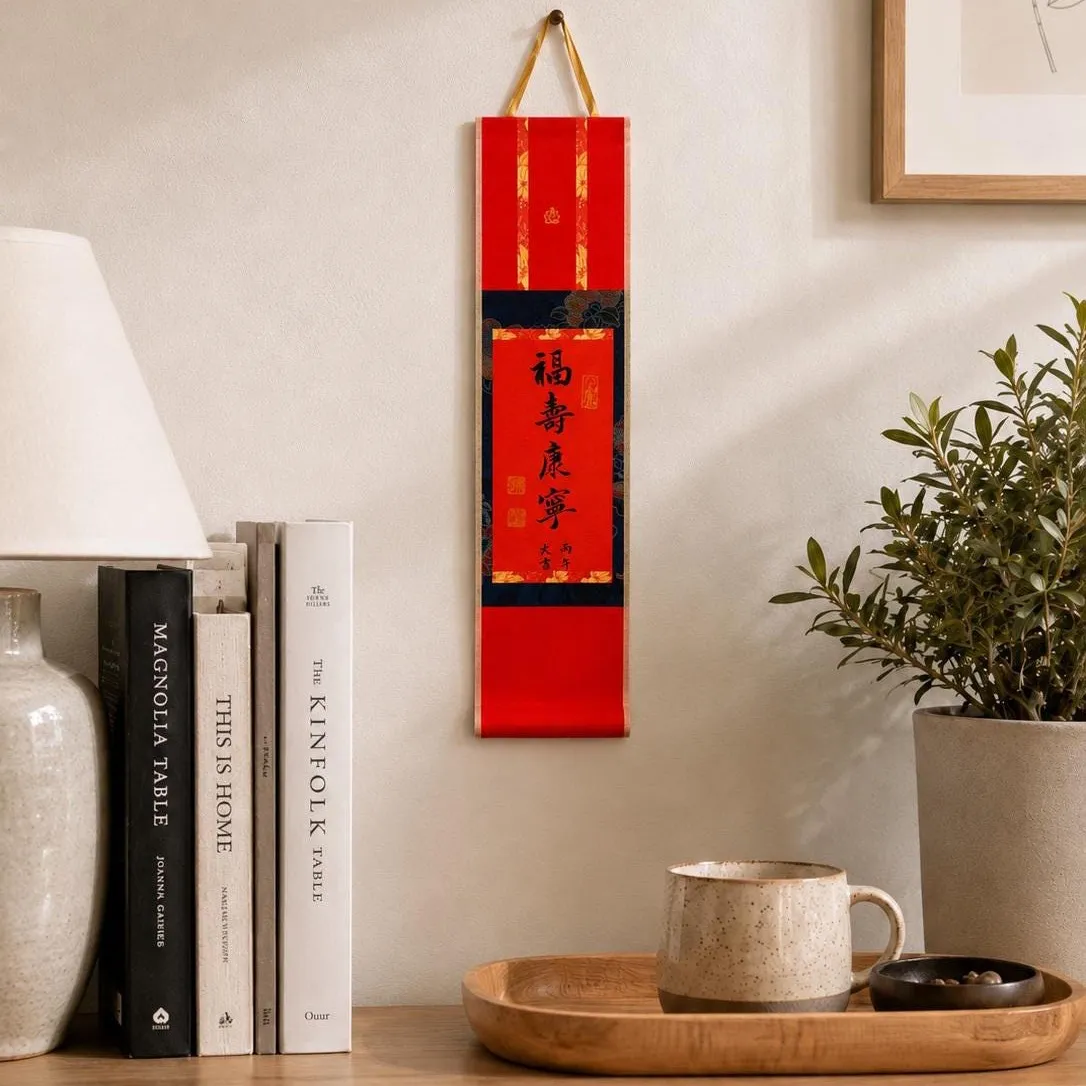
Photo shows a sample — yours will be brushed with 祥云, or any character you choose.
Wall Scroll — for walls & housewarmingsfrom $38→ -
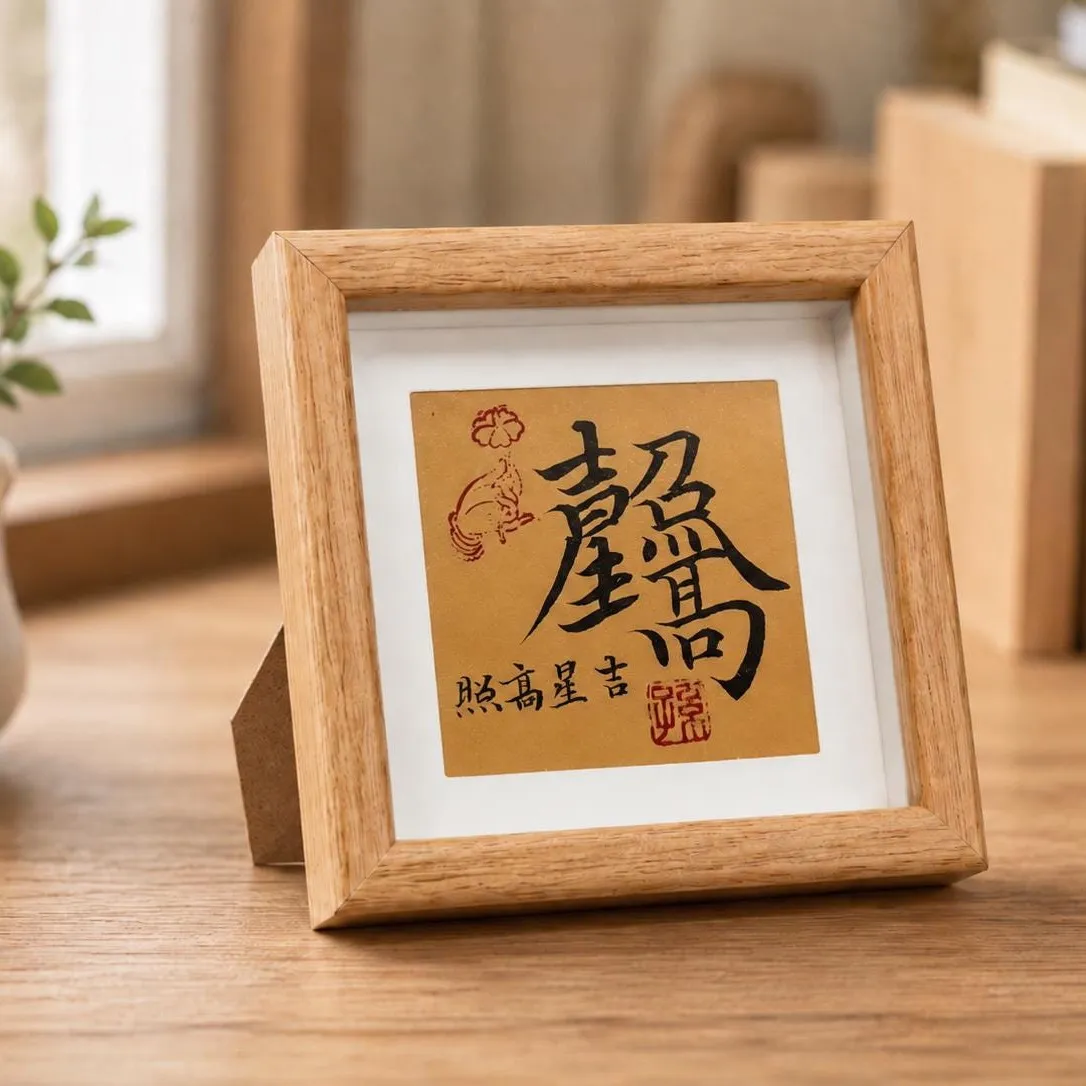
Photo shows a sample — yours will be brushed with 祥云, or any character you choose.
Desk Frame — for desks, studies & studiosfrom $44→ -
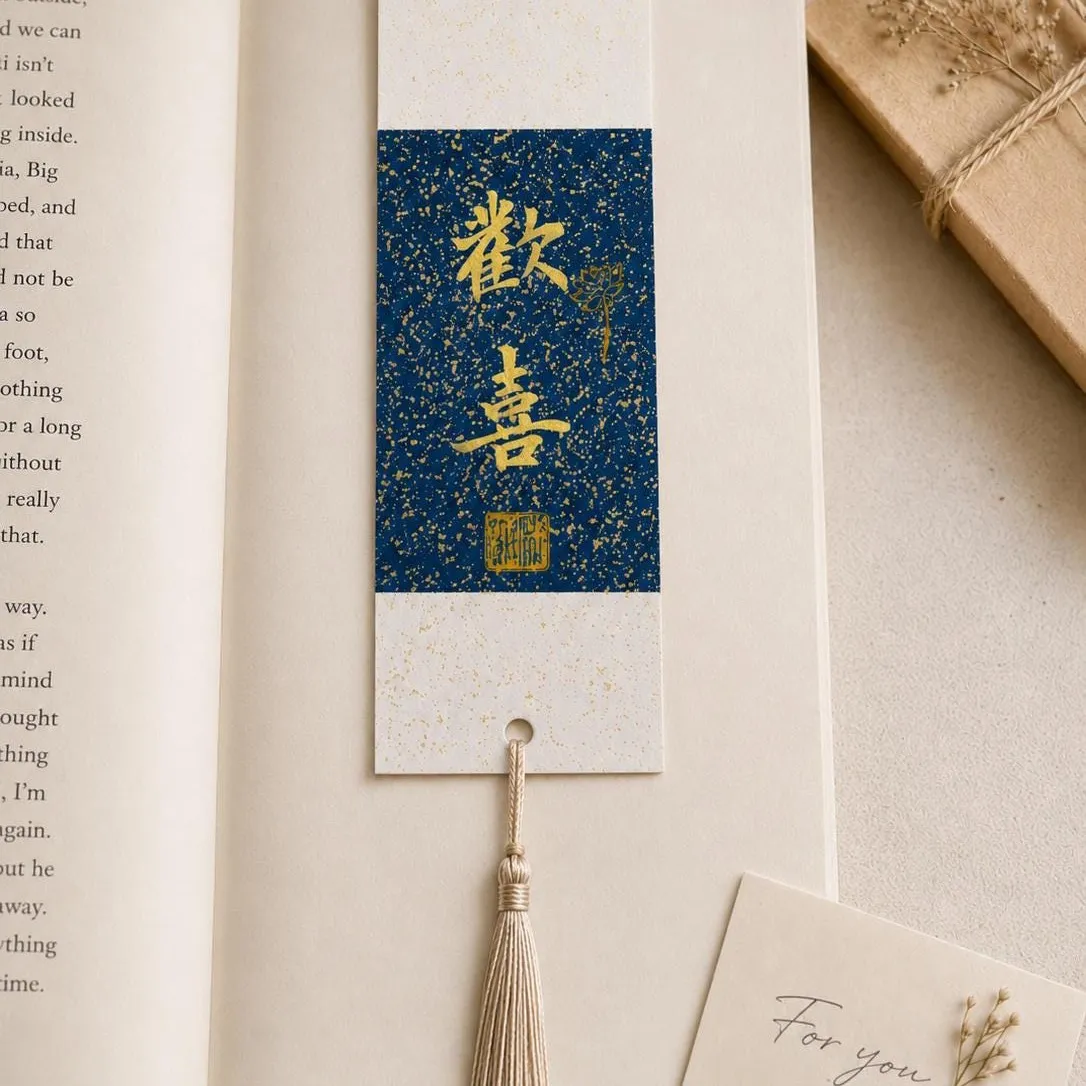
Photo shows a sample — yours will be brushed with 祥云, or any character you choose.
Bookmark — for readers & small thank-yousfrom $17→
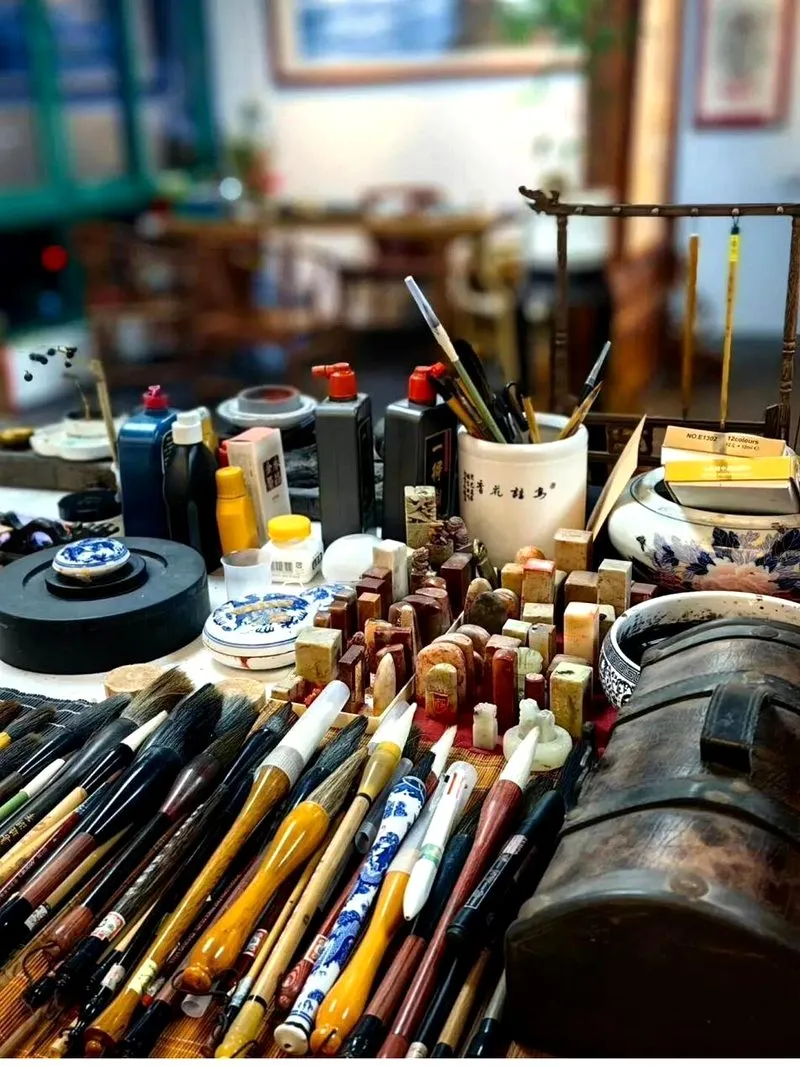
What people said after it arrived.
-
The item is fantastic. The customer service was genuine. Thanks!
— M.Verified purchase · from our Etsy shop reviews · -
They were great they gave me exactly what I asked for and then some. Thank you!!
— G.Verified purchase · from our Etsy shop reviews · -
It is well designed and customized. My daughter loves it. Amazing gift for family’s d friends
— S.Verified purchase · from our Etsy shop reviews ·
Each "祥云" is hand-brushed by Artist Lina Sun on rice paper.
See 祥云 (Xiáng Yún) on Etsy →