祥 (xiáng) — Auspicious · A Sign Read as Benign · The Ordinary Good
A single character.
In the spring of 644 BCE five meteorites fell inside the state of Song, and six birds were seen flying backwards over the capital. Duke Xiang sent for a Zhou court historian who happened to be visiting and put two questions to him in a row — 是何祥也?吉凶焉在? What 祥 is this, and where in it does the good or the bad lie? The second question is the one to notice, because it would be redundant if the first word had already settled the matter. 祥 named the sign; which way the sign pointed was a separate finding, and somebody had to make it. The historian gave the duke a courtier’s answer in public and then remarked privately that the question had been wrong from the start: these were matters of yin and yang, not the source of anyone’s fortune — 吉凶由人, good and ill come from people. Chinese eventually closed the gap by welding 吉 onto the front of the word, which is why 吉祥 is what people reach for now, and the old two-way sense survives in exactly one place: 不祥. See 瑞 →
What the character kept, once 吉 had taken over the pointing, is the thing 瑞 never had — permission to be unremarkable. 瑞 must be rare to register at all: the jade tablet, the snow that lands at the right moment. 祥 was free to settle onto anything. It ended up in the background of things: 祥云, the auspicious-cloud scroll, is drawn as a repeating ground rather than a subject, filling the field around the dragon on a court robe and wrapping the paper of a lantern. 祥和 describes the settled atmosphere of a season or a room. 慈祥 describes a face that has had forty years to settle. None of these is an event, and that is the whole of the difference: 祥 is the blessing in this family that does not wait for something to happen.
A hand-brushed 祥 by Artist Lina Sun goes to the person whose life has not produced an occasion lately and does not need one to be worth marking. At New Year it is the least demanding paper on the wall — not that the coming year deliver anything, only that it be well-disposed. For a friend it is what you send in the year when nothing in particular happened to them. For a grandparent’s birthday it says what a family rarely finds words for: that things around them have been as they should be, for a very long time.
- auspicious — reading as well-disposed
- a benign sign, observed rather than granted
- the ordinary good — the kind that needs no occasion
- well-omened
- luck Luck is what happens with nothing to read it off. 祥 is a reading — 吉事有祥 claims the good thing was legible before it arrived, which is the opposite of chance.
- blessing A blessing is asked for, or handed down by somebody with standing to hand it down. Nobody grants 祥. Someone notices it.
- omen The closest English word, and it went the other way. An English omen leans dark and needs a qualifier to point at anything good; 祥 kept its dark sense only inside 不祥 and let the bare word settle on the good.
The short arms are the point: these readings don’t reach it.
- 礻 (示) the showing of signs示 is the element of visible portents, and 说文 defines it as 見吉凶,所以示人也 — how good and ill are shown to people. Both directions live in it: the same element carries 福, blessing, and 祸, disaster.
- 羊 sheep — the sound, and once the entire word羊 (yáng) is here to carry the sound xiáng, and it did more than that for a long time: Han bronzes write the wish 大吉羊 with the plain sheep standing in for the whole character, and 说文 glosses 羊 as 祥也.
character
- 吉祥 jí xiáng auspicious — the compound that fixed the direction 祥 alone had left open
- 祥和 xiáng hé well-disposed and in accord — the settled atmosphere of a season or a room
- 慈祥 cí xiáng kindly — 祥 applied to a face, the tenderness that has become visible
- 祥云 xiáng yún auspicious clouds — the repeating cloud scroll that fills the background of Chinese ornament
- 不祥 bù xiáng ill-omened — the one corner where the old two-way sense of the word survives
The Story Behind the Character
Han dynasty bronze mirrors and washbasins carry a three-character wish, 大吉羊, and the third character is a sheep. It is not an error and not a pun. Before 祥 had settled into a graph of its own, 羊 was cast where 祥 was meant, and 说文解字 (c. 100 CE) records the identity running the other way too, glossing 羊 itself as 祥也. The full character sets 示 in front of the animal, and 说文 defines that element with unusual directness — 天垂象,見吉凶,所以示人也: heaven hangs out its images, good and ill become visible, and this is how they are shown to people. A later and very common reading takes the sheep as the offering whose condition disclosed the answer. It is a good story and it is not the origin; 羊 is in the character to carry the sound xiáng. What 示 contributes is the apparatus of showing — good and ill together, in the same element. 说文 then defines 祥 itself in two characters, 祥,福也, blessing, and appends a second gloss without choosing between them: 一云善, or else, simply, good.
Somebody had to do the sorting. 《周礼》, which lays out an idealized Zhou bureaucracy rather than a documented one, lists an officer titled 眡祲 whose brief was 掌十煇之法,以观妖祥,辨吉凶 — master the method of the ten solar vapors, watch for 妖祥, and sort out which is which. The job description separates two operations English tends to collapse into one. Seeing the sign is the first. Deciding whether it is a good one is the second, and the second is the part that took an official.
What tipped the word permanently toward the good was ordinary use rather than any ruling. 吉 fused onto the front and 吉祥 became the everyday form; the negative was left to 不祥, where it still sits. Freed of the job of predicting, 祥 drifted downward — off the sky, onto things. 瑞 could never make that move, because a portent that turns up every day has stopped being a portent, and 瑞 stayed tied to the rare and the well-timed. 祥 had no such requirement. By the time it reached 祥和 and 慈祥 it had stopped forecasting anything at all and was describing what a room felt like and how an old woman's face looked: the good that does not need an occasion.
Classical lines
- roughly 600 years
- 644 BCE 《左传·僖公十六年》
- c. 300 BCE 《周易·系辞下》
- c. 91 BCE 《史记·殷本纪》
是何祥也?吉凶焉在? What sign is this, and where in it does the good or the ill lie?
Duke Xiang of Song (宋襄公, a different xiāng), after meteorites fell in his territory and birds were seen flying backwards over the capital. 杜预's commentary on the passage glosses the word with no direction in it at all: 祥,变异之气 — 祥 is the qi of an anomaly.
变化云为,吉事有祥。 In change and movement, in what is said and done
a good outcome has its signs. — The claim is about legibility rather than about luck. Something observable comes before the good thing, and 祥 is the name for the observable part. It is why the word sits nearer to evidence than to chance.
亳有祥桑穀共生於朝,一暮大拱。 In Bo a portent mulberry and a paper mulberry grew together in the court, and in a single evening they were thick enough to span two hands.
This is a 祥 nobody wanted: the word is attached to the thing that frightened the king. His minister Yi Zhi refused to treat it as a forecast at all — 妖不胜德, a portent cannot outweigh conduct — and told him to go and check his own government instead.
Why This Character Matters
祥云 may be the most-drawn pattern in Chinese decorative art that nobody looks at directly. The auspicious cloud is a scroll — a repeating curl of vapor used as a ground, filling the field around the dragon on a court robe, running the rim of a porcelain dish, wrapping the paper of a lantern. By design it is not the subject. When Beijing designed the torch for the 2008 Olympics it named the object 祥云 and ran the cloud up the handle in lacquer red, which is a fair summary of how the character behaves: everywhere, continuous, never the thing in the middle.
The ritual code put the same word somewhere unexpected. 《礼记》 sets two sacrifices after a death — 期而小祥 at the first anniversary, 又期而大祥 at the second — each one returning the household a step further toward ordinary clothes and ordinary food, with the last of the restrictions lifted at 禫, in the twenty-seventh month. The character the ritual specialists chose for that walk back was this one. It is the most exact definition of 祥 the language offers: not an improvement on an ordinary life but the recovery of one. It is also why the character sits better given to a household than to a career. 祥 makes no claim about how well anything is going. It says that things are as they should be, which is worth saying and is almost never an occasion.
A Chinese reader's first association with a lone 祥 is often a name — it is very common in given names, and 祥子 is the protagonist of Lao She's 骆驼祥子, one of the best-known novels in modern Chinese. That does not make it a poor choice, but it does mean the character reads as warm and unpretentious rather than as a statement. Nobody would find it strange or foreign; it sits in the same everyday register as 福 and 安, without 福's ubiquity.
Calligraphy Styles for Tattoos
- Regular script (楷书 kǎishū) Best for tattoos
祥 is a left-narrow, right-wide character and regular script is the only style that reliably keeps that proportion. The three horizontals of 羊 need even spacing to stay legible; give them room and the character reads cleanly from 1.5 inches up.
- Running script (行书 xíngshū) Good for larger pieces
Running script lets the brush carry the last stroke of 礻 straight across into the top of 羊, which suits a character about continuity. At small sizes the horizontals close up, so plan for 2.5 inches or more.
- Cursive script (草书 cǎoshū) Only with an expert calligrapher
In cursive both halves reduce to a few quick strokes and 祥 becomes hard to tell from 详 or 样. Attempt only with a calligrapher who works in cursive regularly.
Common Mistakes to Avoid
- Writing the left side as 衤 (clothing) instead of 礻Intended: 祥 with the sign element 礻
礻 has one dot at the bottom; 衤 has two. The extra dot moves the character out of the 示 family entirely, and it is the most common error on any character built this way — 福 has the same failure mode.
- Tattooing 详 instead of 祥Intended: 祥 (xiáng), auspicious — not 详 (xiáng), detailed
详 is 讠 (speech) plus the same 羊, pronounced identically, tone included. It means detailed or thorough, as in 详细. A reference image found by searching romanized pinyin alone can easily be the wrong one of the two, so check the left-hand element before the needle goes in.
Notes for Your Tattoo Artist
10 strokes, identical in simplified and traditional Chinese, so there is no form decision to make. Keep 礻 to roughly a third of the width and let 羊 have the rest. The usual proportion failure is crowding the three horizontals of 羊 — they should be evenly spaced, with the vertical running through all three and finishing below the lowest. Minimum legible size around 1.5 inches; the left-right structure suits a forearm or a ribcage better than a wrist.
A few characters live near "祥" but mean something quieter, sharper, or more specific. Here's how to tell them apart.
does not have to be rare to count — an ordinary continuing life qualifies
has to be exceptional to register at all — a jade tablet, a snow that lands at the right moment
conditions that are well-disposed — the sign, not the substance
the life itself, with nothing important missing from it
things read as well-disposed — a positive finding, not only the absence of trouble
a place that works — settledness as a fact about the household rather than a reading of it
祥 is New Year vocabulary at its plainest — 吉祥 printed across the red envelope, 祥云 curling around the border of the paper it is printed on.
- 祥 is New Year vocabulary at its plainest — 吉祥 printed across the red envelope, 祥云 curling around the border of the paper it is printed on. What a single 祥 asks for is narrower than the compound, though. 吉祥 wants the signs to point at good things; 祥 requires no event at all. It asks only that the coming year be well-disposed — no delivery, nothing that has to happen before the wish counts as granted. Where 祥和 names two conditions at once, the season favorable and the household in accord, 祥 names only the first and leaves the second alone.
- A birthday is organized entirely around an occasion, and 祥 is the one thing you can hand over that does not need one. It reports a condition instead of a count: that things around this person are well-disposed, and have been, without anything in particular having had to happen to make it so. For an elder that is often the truest thing available — most of a long life is the ordinary part, and this is the character that praises it rather than skipping past it to the milestones.
Grandparent · Friend · or yourself
Looking for a name? See Western names written in Chinese →
-
What does 祥 (xiáng) mean?
祥 (xiáng) is the Chinese character for auspicious, a sign read as benign, the ordinary good. In the spring of 644 BCE five meteorites fell inside the state of Song, and six birds were seen flying backwards over the capital. Duke Xiang sent for a Zhou court historian who happened to be visiting and put two questions to him in a row — 是何祥也?吉凶焉在? What 祥 is this, and where in it does the good or the bad lie? The second question is the one to notice, because it would be redundant if the first word had already settled the matter. 祥 named the sign; which way the sign pointed was a separate finding, and somebody had to make it. The historian gave the duke a courtier's answer in public and then remarked privately that the question had been wrong from the start: these were matters of yin and yang, not the source of anyone's fortune — 吉凶由人, good and ill come from people. Chinese eventually closed the gap by welding 吉 onto the front of the word, which is why 吉祥 is what people reach for now, and the old two-way sense survives in exactly one place: 不祥. See 瑞 → 祥云 may be the most-drawn pattern in Chinese decorative art that nobody looks at directly. The auspicious cloud is a scroll — a repeating curl of vapor used as a ground, filling the field around the dragon on a court robe, running the rim of a porcelain dish, wrapping the paper of a lantern. By design it is not the subject. When Beijing designed the torch for the 2008 Olympics it named the object 祥云 and ran the cloud up the handle in lacquer red, which is a fair summary of how the character behaves: everywhere, continuous, never the thing in the middle.
-
What occasions is 祥 given for?
祥 is traditionally given for Chinese New Year, Birthday. 祥 is New Year vocabulary at its plainest — 吉祥 printed across the red envelope, 祥云 curling around the border of the paper it is printed on. What a single 祥 asks for is narrower than the compound, though. 吉祥 wants the signs to point at good things; 祥 requires no event at all. It asks only that the coming year be well-disposed — no delivery, nothing that has to happen before the wish counts as granted. Where 祥和 names two conditions at once, the season favorable and the household in accord, 祥 names only the first and leaves the second alone. A birthday is organized entirely around an occasion, and 祥 is the one thing you can hand over that does not need one. It reports a condition instead of a count: that things around this person are well-disposed, and have been, without anything in particular having had to happen to make it so. For an elder that is often the truest thing available — most of a long life is the ordinary part, and this is the character that praises it rather than skipping past it to the milestones.
-
Is 祥 a good Chinese tattoo?
A Chinese reader's first association with a lone 祥 is often a name — it is very common in given names, and 祥子 is the protagonist of Lao She's 骆驼祥子, one of the best-known novels in modern Chinese. That does not make it a poor choice, but it does mean the character reads as warm and unpretentious rather than as a statement. Nobody would find it strange or foreign; it sits in the same everyday register as 福 and 安, without 福's ubiquity.
-
Who brushes the 祥 calligraphy?
Each 祥 (Xiáng) is hand-brushed to order by Artist Lina Sun in ink on rice paper — never printed, never repeated.
Bring 祥 home — choose how you'd like it brushed.
-
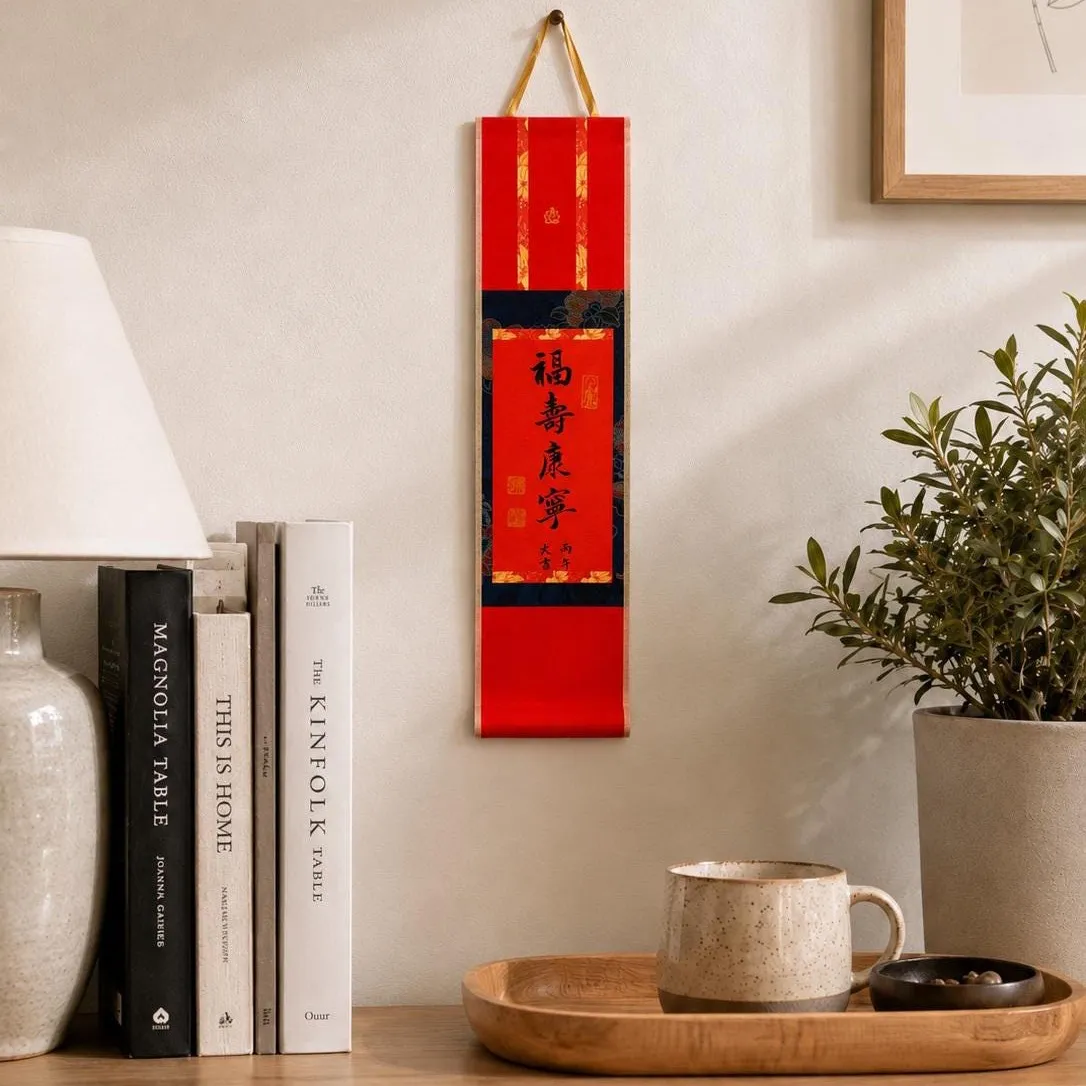
Photo shows a sample — yours will be brushed with 祥, or any character you choose.
Wall Scroll — for walls & housewarmingsfrom $38→ -
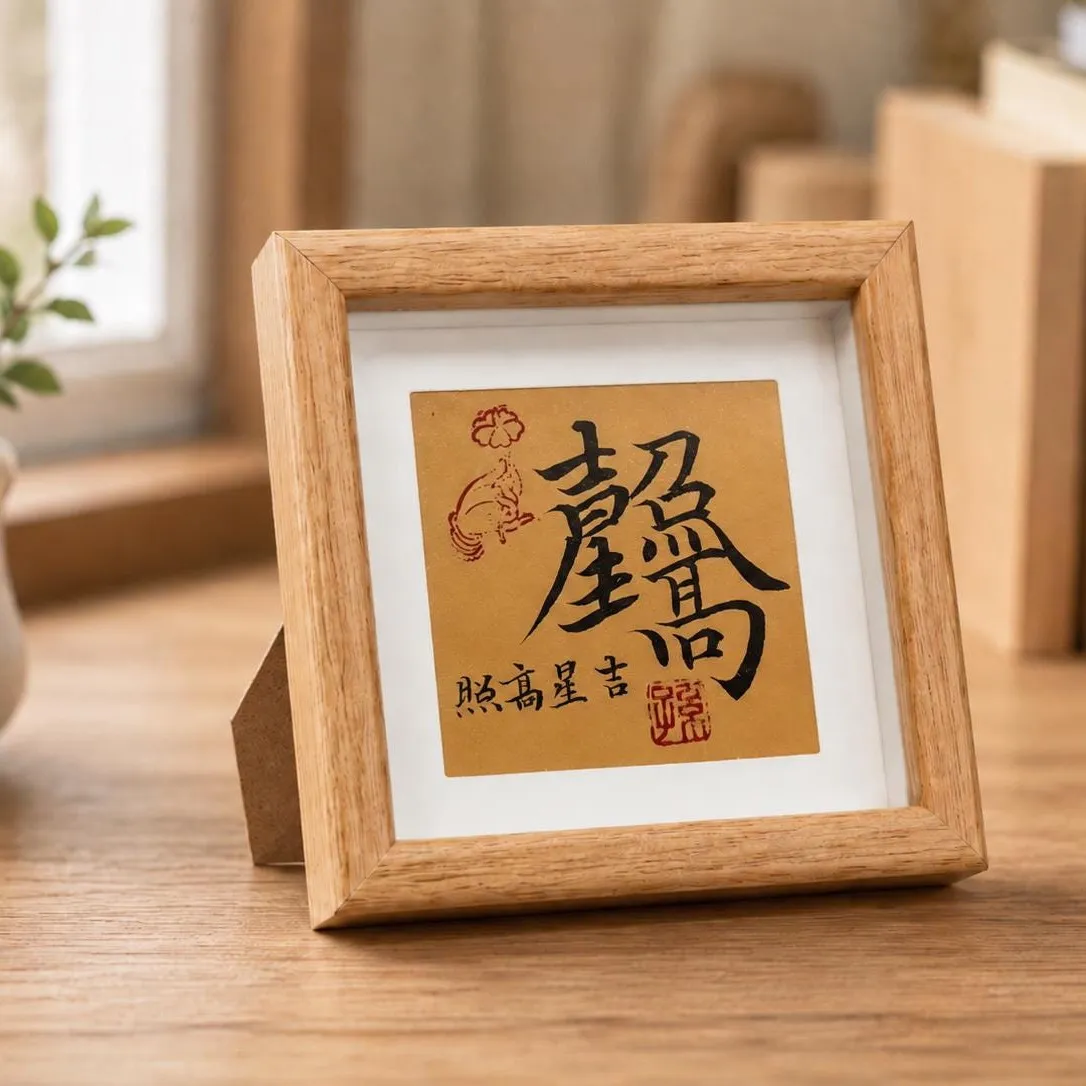
Photo shows a sample — yours will be brushed with 祥, or any character you choose.
Desk Frame — for desks, studies & studiosfrom $44→ -
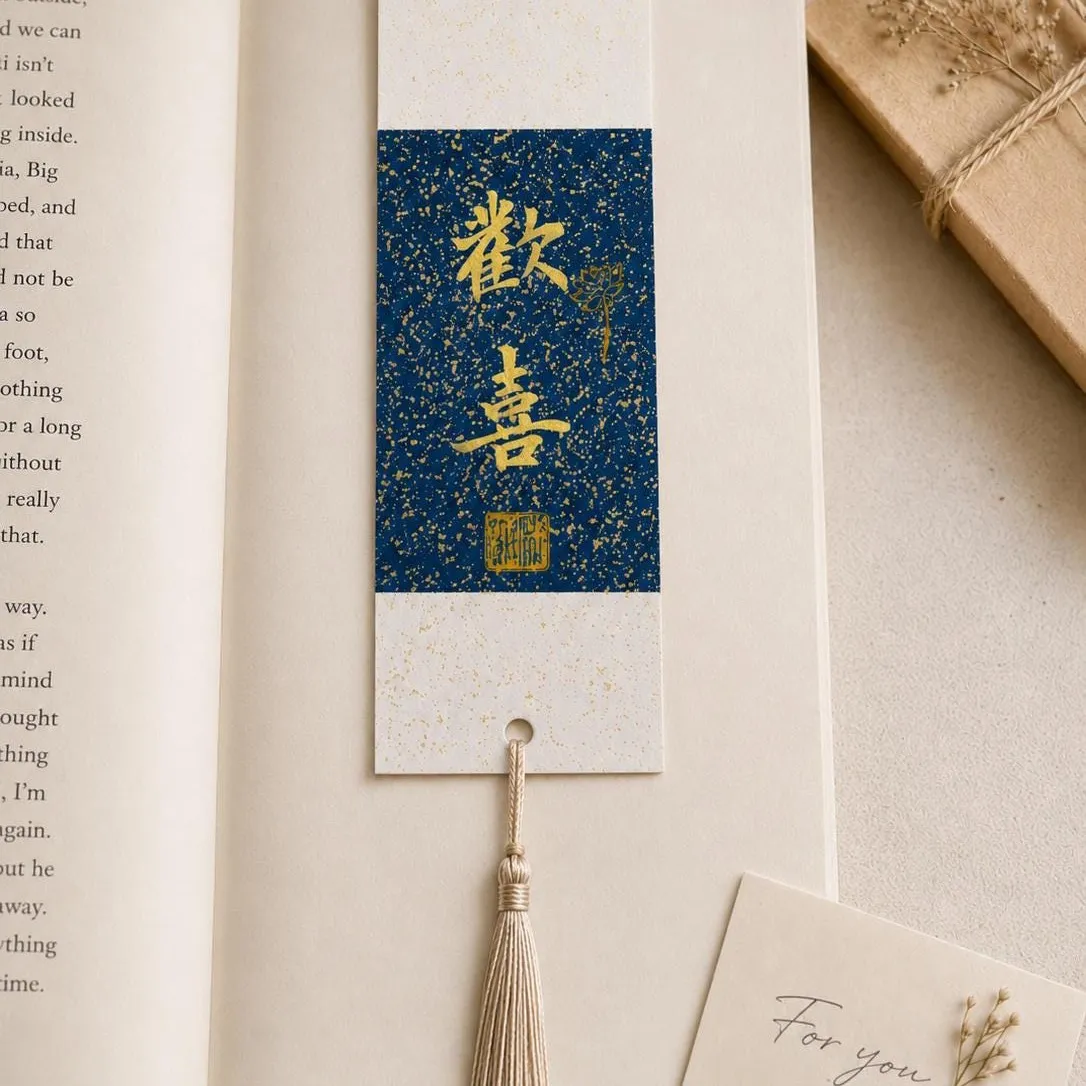
Photo shows a sample — yours will be brushed with 祥, or any character you choose.
Bookmark — for readers & small thank-yousfrom $17→
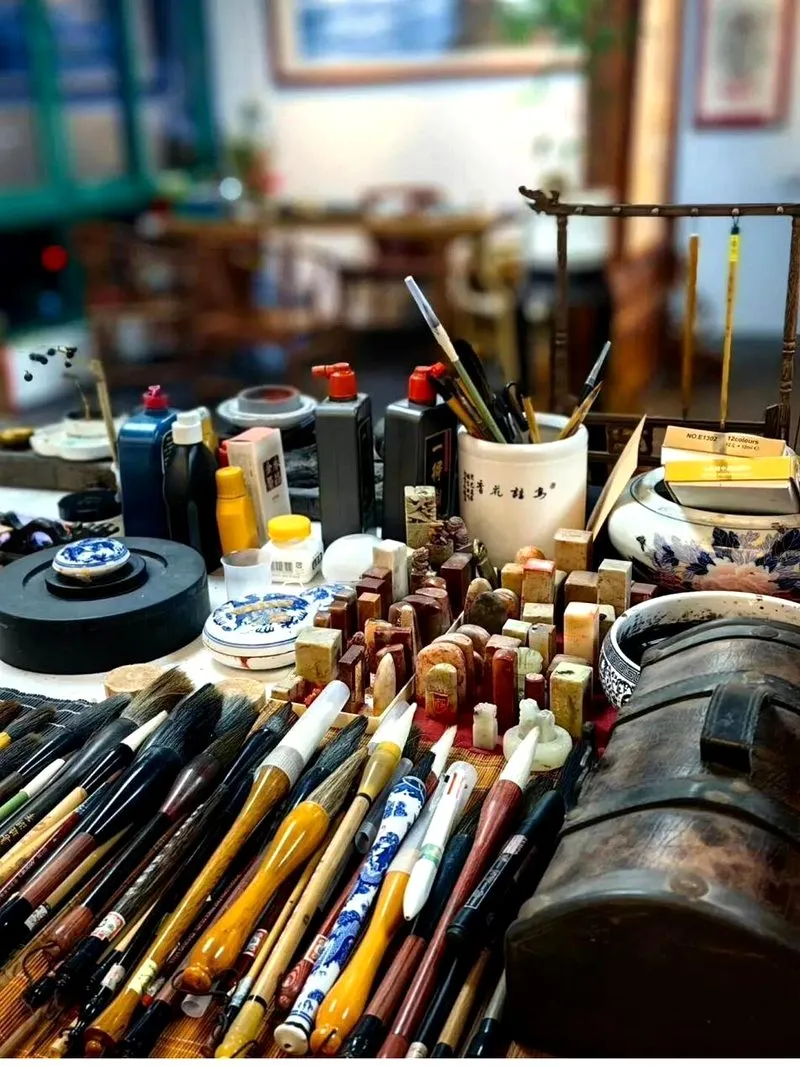
What people said after it arrived.
-
The item is fantastic. The customer service was genuine. Thanks!
— M.Verified purchase · from our Etsy shop reviews · -
They were great they gave me exactly what I asked for and then some. Thank you!!
— G.Verified purchase · from our Etsy shop reviews · -
It is well designed and customized. My daughter loves it. Amazing gift for family’s d friends
— S.Verified purchase · from our Etsy shop reviews ·
Each "祥" is hand-brushed by Artist Lina Sun on rice paper.
See 祥 (Xiáng) on Etsy →