开门大吉 (kāi mén dà jí) — Open the Door onto a Great Auspicious Reading · The Threshold Graded 大吉
A 4-character phrase, not a single character.
开门大吉 puts a grade on a door. The last two characters are the top mark a Chinese reading can return — 大吉, the same ladder the 《周易》 already grades as 元吉 and that temple slips still sort above 上吉 and 中吉. The first two characters say where the mark is taken: 开, the latch lifted; 门, the door those leaves belong to. Swap 门 for 业 and the phrase becomes 开业大吉, said when a business begins to trade. Keep 门, and the grade falls on a door opening, whoever’s door it is: a household on New Year’s morning, a shop on its first day back after the holiday. See 吉 →
That is why the four characters live as a 横批 — the short horizontal board above a Spring Festival couplet, or, by folk habit, the line chosen for a new address’s first morning. 出入平安, on the same doorframe, watches traffic: go out and come in whole. 五福临门 inventories five named blessings arriving at the threshold. 吉星高照 names a light already overhead and never mentions a door. 开门大吉 does none of those jobs. It grades the opening itself and stops. The custom is older than this wording — 宗懔 already has 立春 households pasting up 宜春, and 孟昶’s 964 peach-board couplet is the first spring couplet the histories bother to record — but the folk four-character form is what people actually hang when they want the door’s first motion named and scored.
A hand-brushed “开门大吉” by Artist Lina Sun suits a friend or a new couple at Chinese New Year or a housewarming — the gift for the lintel, not for the rooms. It does not watch the road or inventory the year. It says the door is open, and the reading on that opening is the top one.
- the door's opening graded 大吉
- a 横批 that names the first motion of a year or a new address
- any door's first opening — a home's at New Year, a shop's on the first morning back
- a reading taken at the threshold, not an inventory of what arrives
- good luck Luck is a run of outcomes with no location. 开门大吉 locates the verdict at a door and grades one opening. It says nothing about what happens after the latch is lifted.
- safe travels That is 出入平安 — traffic named in both directions. This phrase never mentions leaving or returning; it grades the opening itself.
- shop opening That is 开业大吉 or 开张大吉, which name a business beginning to trade. A shop can hang 开门大吉 too — on the first morning back after New Year, for instance — but the phrase lands on the door opening, not on the founding of a trade.
- five blessings arriving That is 五福临门 — an inventory descending on the threshold. 开门大吉 names no blessing by name; it only grades the door's first motion.
The short arms are the point: these readings don’t reach it.
- 开 to open — the latch liftedThe verb of the phrase. Swap 门 for 业 or 张 and the phrase moves onto the business itself: 开业大吉, 开张大吉.
- 门 the door — the threshold that opensAny door that opens on a good start: a home's front door at New Year, a shop's door on the first trading morning after the holiday. Paired with 开 it names the motion; the rooms behind it are not in the sentence.
- 大 great — top of the grade ladderIntensifies 吉 into the top rung temples still sort above 上吉 and 中吉.
- 吉 auspicious — the favorable readingThe diviner's favorable answer. See the library's 吉 page for the grade reading kept separate from luck.
characters
- 开业大吉 kāi yè dà jí open for business onto a great auspicious reading — said when a business begins to trade; the grade falls on the venture rather than the door
- 开门见喜 kāi mén jiàn xǐ open the door and meet joy — a related 横批; joy sighted, not a grade returned
- 大吉大利 dà jí dà lì great auspiciousness and great benefit — the doubled grade without a door
- 出入平安 chū rù píng ān come and go in peace — the traffic blessing on the same doorframe; related by place, shares no character with the opening grade
- 乔迁之喜 qiáo qiān zhī xǐ the joy of moving to a higher perch — spoken congratulations for a move
Cinnabar marks the characters 开门大吉 actually contains. The dark row is a relative by meaning or by sound, not one shared stroke.
The Story Behind the Character
The last two characters are older than the door. 大吉 is already in the 《周易》: the fourth line of 家人, the Family hexagram, reads 富家,大吉 — enrich the household, greatly auspicious — on a ladder of readings whose top rung is 元吉. Temples kept the ladder, sorting a hundred slips into 大吉, 上吉, 中吉, 中平 and 下下, and a Japanese shrine prints a similar one on its omikuji. The library's 吉 page tells that history in full; here it is enough that 大吉 names the top rung of the temple ladder.
What the first two characters add is the place the reading is taken. 开 is the verb for lifting a latch or parting a pair of leaves; 门 is the threshold those leaves belong to. Put together with 大吉, the phrase does not invent a classical sentence. It grew up on lintels, the way 出入平安 did — folk vocabulary people could hang over a door without needing a book to license it. Chinese idiom dictionaries that hunt for a 出处 tend to land on living speech rather than a pre-Qin line, and the gap is informative: these four characters assembled themselves out of a door and a grade everyone already knew.
Its nearest neighbours show where the weight falls. 开张大吉 and 开业大吉 are said for a business: the Taiwan Ministry of Education dictionary glosses 开张大吉 as the auspicious phrase for a shop beginning to trade, or reopening after a closure. 开门大吉 sets the grade on the door instead, and so travels wider. A shop says it on the first morning back after New Year, when the doors open for the year's trade; a household says it as the year's first door opens; and it also turns up over the front door of a new flat, a folk habit rather than a rule. The phrase follows the door wherever it opens, which is why it sits so naturally as a 横批.
Classical lines
- roughly 1,500 years
- c. 9th–3rd c. BCE 《周易·坤·六五》
- 6th c. CE 宗懔《荆楚岁时记》
- 964 CE 《宋史·卷四百七十九》
黄裳元吉。 Yellow lower robes
supremely auspicious. — The highest grade the Changes prints on a single line. 元吉 is the top rung of the book's ladder of readings, and 大吉 in living speech keeps the same sense of rank: the phrase's last two characters say where an opening scores on that ladder.
立春之日,悉剪彩为燕以戴之,帖宜春二字。 On the day of 立春, everyone cuts coloured silk into swallows to wear, and pastes the two characters 宜春.
The earliest surviving seasonal note that has auspicious writing put up as a spring custom. Two characters then; four characters later. The turn of the year was already the moment such words got written.
新年纳余庆,喜节号长春。 The new year takes in leftover blessing; the glad festival is named Long Spring.
Written on peach boards at the sleeping-chamber doors when a courtier's draft would not do. Later ages treat the pair as the first spring couplet on record. The gesture — auspicious words hung on the door at the turn of the year — is exactly the slot 开门大吉 still fills as a 横批.
Why This Character Matters
Spring-couplet culture has always needed a short horizontal line above the two vertical strips. The 横批 is four characters wide on most doors, and its job is general rather than specific — the couplet underneath does the detailed wishing. 开门大吉 is one of the lines that fills that slot because it names the door's own first motion and then stops. 吉星高照 names what is overhead; 五福临门 names five arrivals; 出入平安 names traffic in both directions. This one names the opening graded.
The custom is older than the four-character form. 宗懔's sixth-century 《荆楚岁时记》 already has households at 立春 pasting up the two characters 宜春. Four centuries later, on the last New Year's Eve of Later Shu, 孟昶 rejected a courtier's draft and wrote his own pair on peach boards — 新年纳余庆,喜节号长春 — the couplet later histories treat as the earliest recorded spring couplet. The boards were hung at the sleeping-chamber doors. Door, grade, and the turning of the year have been one gesture for a very long time; 开门大吉 is the compressed folk form of that gesture.
A few characters live near "开门大吉" but mean something quieter, sharper, or more specific. Here's how to tell them apart.
grades the opening of the door
watches every crossing in both directions
names no blessing — only the door's first motion, graded
names five, itemized, arriving at the threshold
the door, open, scored 大吉
a good star already overhead — no door in the sentence
the top grade attached to a door's opening
the favorable reading on one date or one act, without a door
At New Year the household's first act is to open the door onto the year.
- At New Year the household's first act is to open the door onto the year. 开门大吉 is one of the four-character 横批 that sit across the lintel above the couplet — shorter than the vertical strips, and more general. Where 出入平安 asks that everyone who crosses come and go whole, and 五福临门 inventories five named blessings arriving at the threshold, this phrase grades the opening itself: the door is open, and the reading on that opening is 大吉. It does not name what will fill the rooms, and it does not watch the traffic. It says the first motion of the year has already been scored well.
- A housewarming is the first time a particular door opens onto a life that will be lived behind it. 开门大吉 is said wherever a door opens on a good start — a household at New Year, a shop on its first morning back — and hanging it over a new front door is a folk habit that takes the phrase at its word: keys turned, latch lifted, the grade on that first opening named 大吉. 出入平安 will watch every later crossing; 金玉满堂 will picture the hall stocked; 家和 will ask whether the people inside fit. This one is spent on the moment before any of those questions start — the door, open, graded.
Friend · New Couple · or yourself
Looking for a name? See Western names written in Chinese →
-
What does 开门大吉 (kāi mén dà jí) mean?
开门大吉 (kāi mén dà jí) is a 4-character Chinese phrase for open the door onto a great auspicious reading, the threshold graded 大吉. 开门大吉 puts a grade on a door. The last two characters are the top mark a Chinese reading can return — 大吉, the same ladder the 《周易》 already grades as 元吉 and that temple slips still sort above 上吉 and 中吉. The first two characters say where the mark is taken: 开, the latch lifted; 门, the door those leaves belong to. Swap 门 for 业 and the phrase becomes 开业大吉, said when a business begins to trade. Keep 门, and the grade falls on a door opening, whoever's door it is: a household on New Year's morning, a shop on its first day back after the holiday. See 吉 → Spring-couplet culture has always needed a short horizontal line above the two vertical strips. The 横批 is four characters wide on most doors, and its job is general rather than specific — the couplet underneath does the detailed wishing. 开门大吉 is one of the lines that fills that slot because it names the door's own first motion and then stops. 吉星高照 names what is overhead; 五福临门 names five arrivals; 出入平安 names traffic in both directions. This one names the opening graded.
-
What occasions is 开门大吉 given for?
开门大吉 is traditionally given for Chinese New Year, Housewarming. At New Year the household's first act is to open the door onto the year. 开门大吉 is one of the four-character 横批 that sit across the lintel above the couplet — shorter than the vertical strips, and more general. Where 出入平安 asks that everyone who crosses come and go whole, and 五福临门 inventories five named blessings arriving at the threshold, this phrase grades the opening itself: the door is open, and the reading on that opening is 大吉. It does not name what will fill the rooms, and it does not watch the traffic. It says the first motion of the year has already been scored well. A housewarming is the first time a particular door opens onto a life that will be lived behind it. 开门大吉 is said wherever a door opens on a good start — a household at New Year, a shop on its first morning back — and hanging it over a new front door is a folk habit that takes the phrase at its word: keys turned, latch lifted, the grade on that first opening named 大吉. 出入平安 will watch every later crossing; 金玉满堂 will picture the hall stocked; 家和 will ask whether the people inside fit. This one is spent on the moment before any of those questions start — the door, open, graded.
-
Who brushes the 开门大吉 calligraphy?
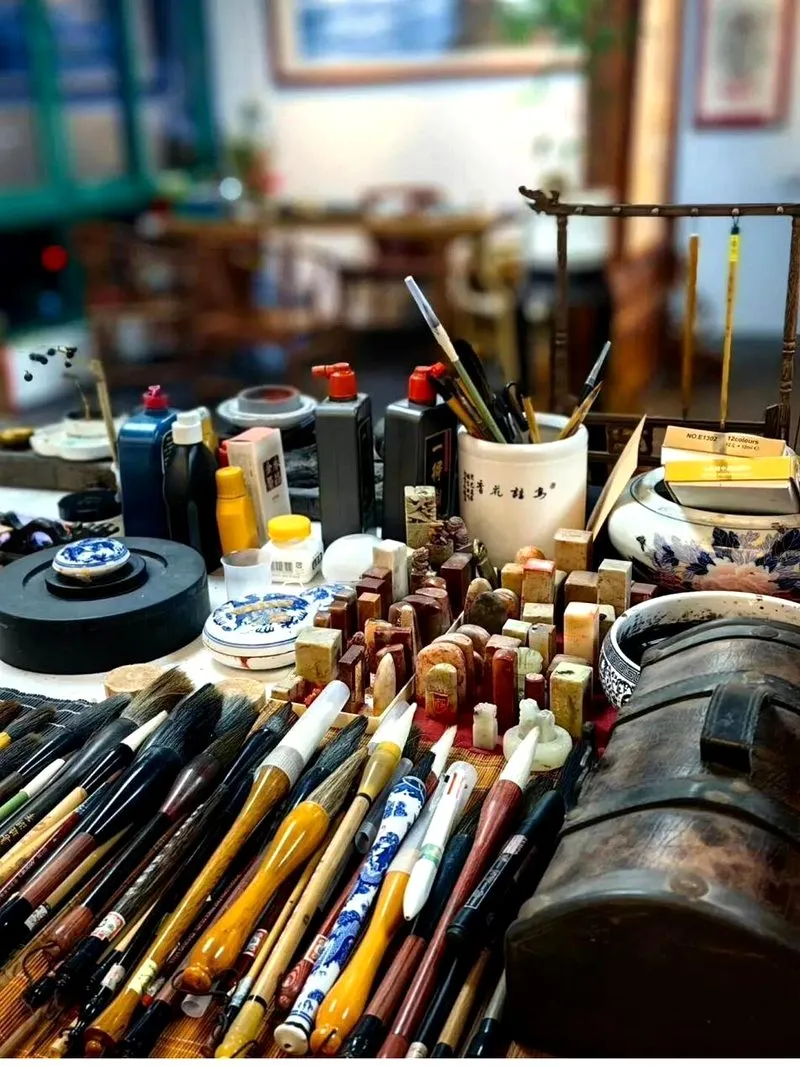
Each 开门大吉 (Kāi Mén Dà Jí) is hand-brushed to order by Artist Lina Sun in ink on rice paper — never printed, never repeated.
Bring 开门大吉 home — choose how you'd like it brushed.
-
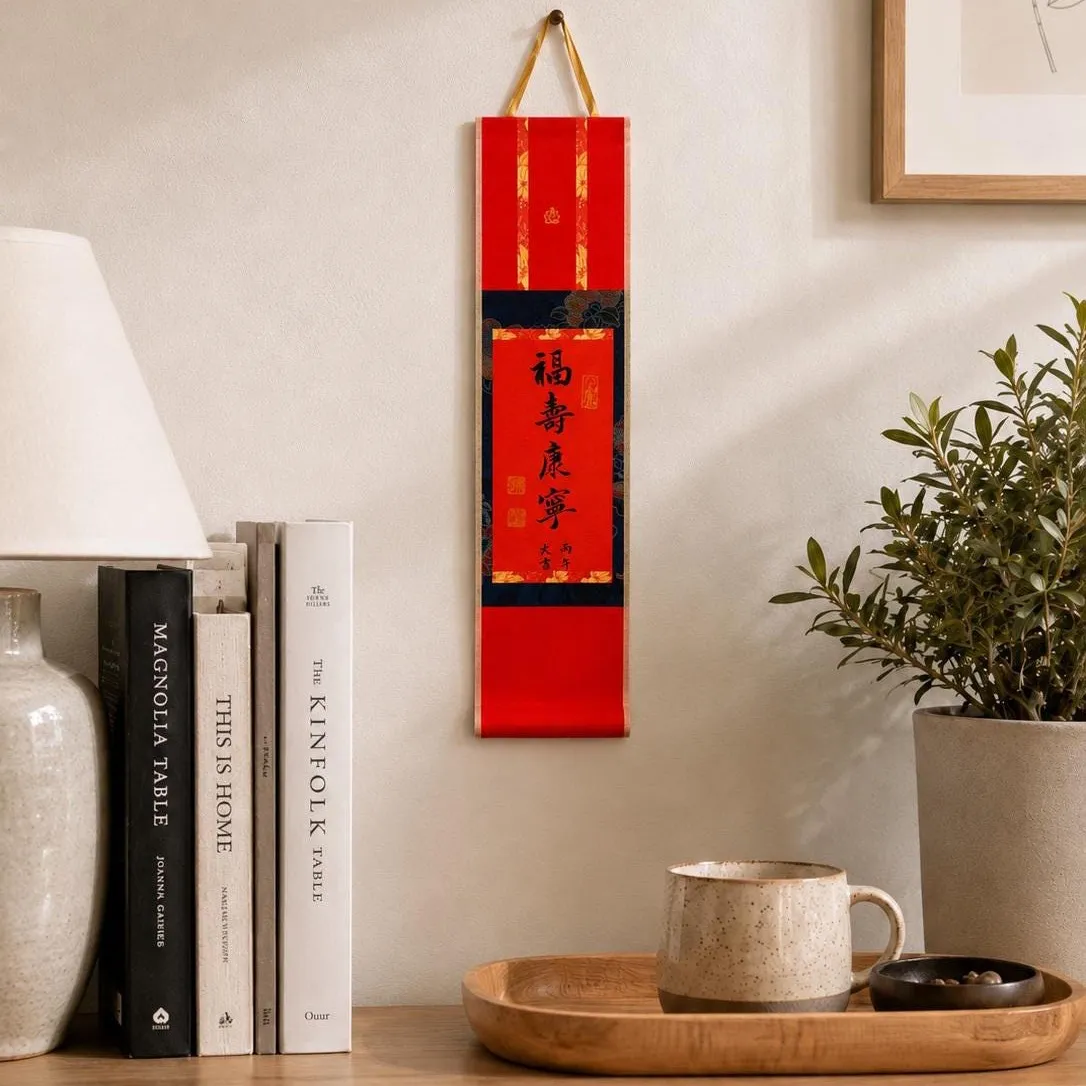
Photo shows a sample — yours will be brushed with 开门大吉, or any character you choose.
Wall Scroll — for walls & housewarmingsfrom $38→ -
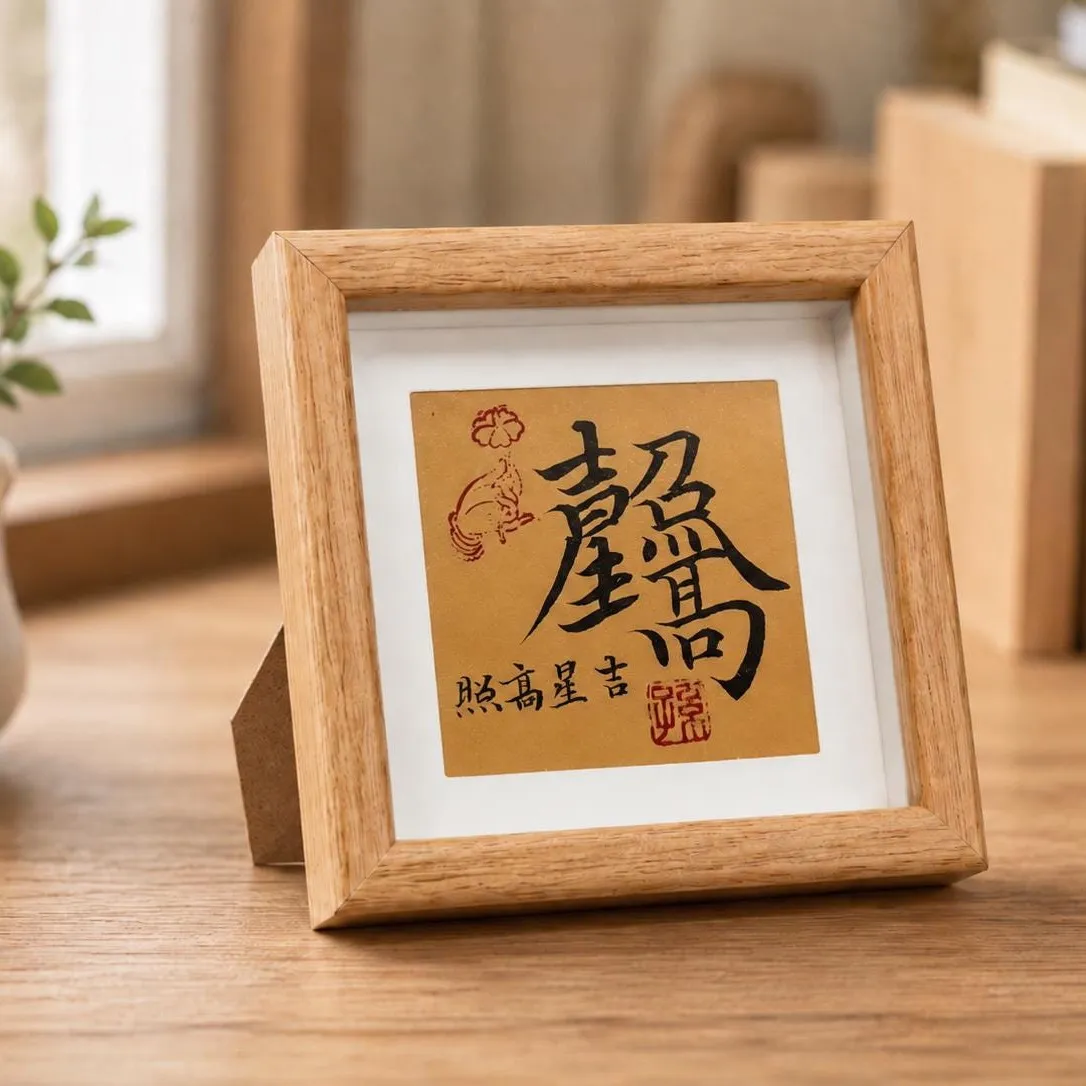
Photo shows a sample — yours will be brushed with 开门大吉, or any character you choose.
Desk Frame — for desks, studies & studiosfrom $44→ -
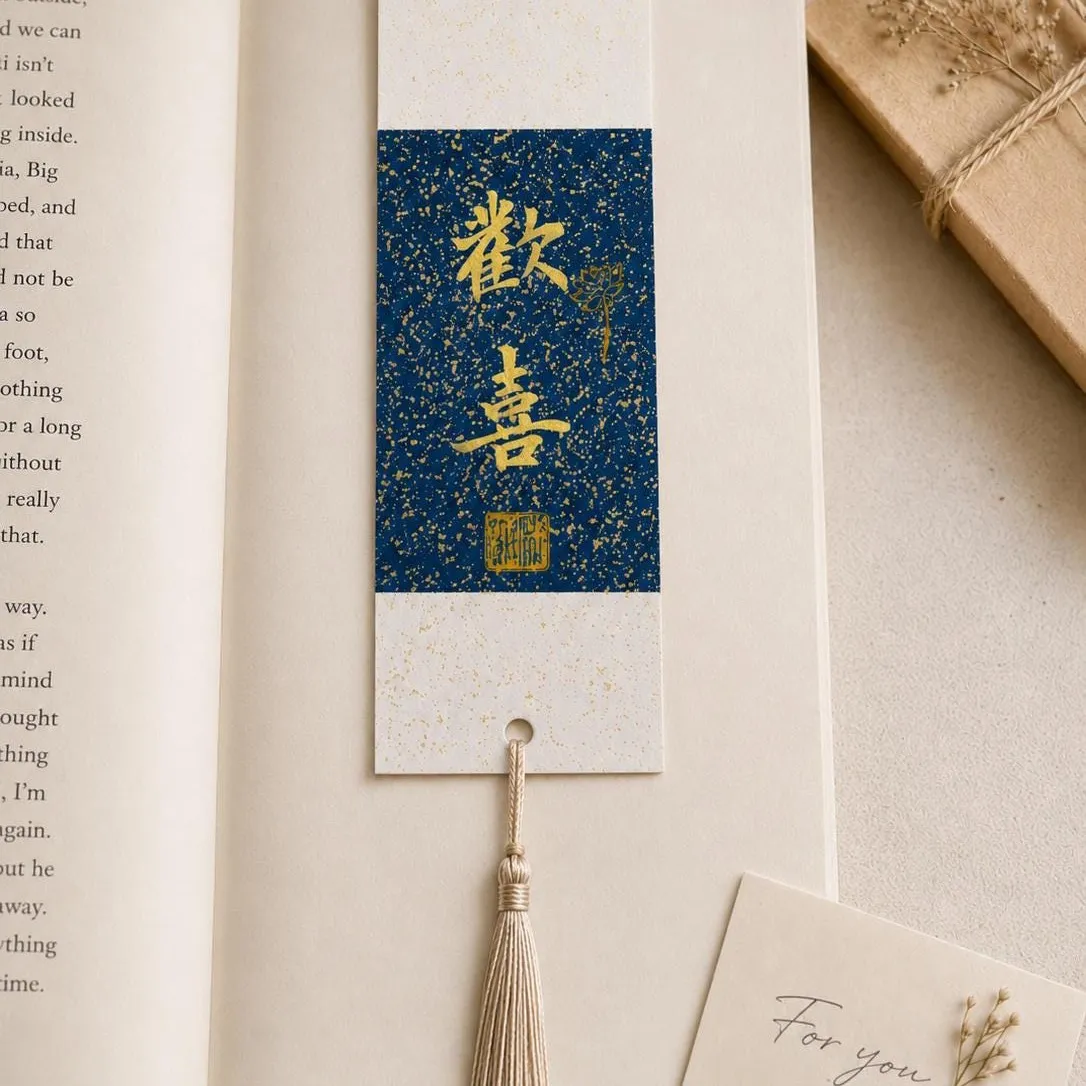
Photo shows a sample — yours will be brushed with 开门大吉, or any character you choose.
Bookmark — for readers & small thank-yousfrom $17→
What people said after it arrived.
-
The item is fantastic. The customer service was genuine. Thanks!
— M.Verified purchase · from our Etsy shop reviews · -
They were great they gave me exactly what I asked for and then some. Thank you!!
— G.Verified purchase · from our Etsy shop reviews · -
It is well designed and customized. My daughter loves it. Amazing gift for family’s d friends
— S.Verified purchase · from our Etsy shop reviews ·
Each "开门大吉" is hand-brushed by Artist Lina Sun on rice paper.
See 开门大吉 (Kāi Mén Dà Jí) on Etsy →