寸草春晖 (cùn cǎo chūn huī) — An Inch of Grass · The Light of Spring · A Parent's Kindness Too Large to Repay
A 4-character phrase, not a single character.
An inch of grass cannot pay back a spring of sunlight, and the four characters do not pretend it can. 寸草春晖 sets two measures side by side, the small green blade and the light of three spring months, and leaves out the verb between them. The comparison comes from Meng Jiao’s 《游子吟》, where a mother sews her son’s coat close on the eve of his leaving; the child is the grass and her care is the sun. 春 here is the season whose light the grass lives on, the same character the library treats on its own as the start of the year. See 春 →
It is a sentence for the grown child to say. A Qing secretary used it in a letter thanking a friend for good wishes sent on his mother’s birthday, apologizing that he had done too little to make his inch-of-grass return. In 1813 a Joseon official wrote 寸草难报, the inch of grass is hard to repay, when he asked his king for a post that would let him support the mother who had raised him without his father, in the year of her sixtieth birthday. 恩 names the favor and 孝 the duty owed for it. This phrase only measures, and the measurement is the point.
A hand-brushed 寸草春晖 by FuBlessings is a Mother’s Day or birthday gift for a mother, or for a grandparent from the children they raised. It does not wish for anything and does not claim the debt is paid. It names the proportion and lets the giver stand on the small side of it.
- a child's love admitted to be smaller than what a parent gave
- the inch of grass and the spring sun of 《游子吟》, compressed to two measures
- thanks that concedes the debt instead of claiming to settle it
- a line for grown children to say to a mother, or of both parents
- the favor itself That is 恩, the kindness that landed, with or without an answer. 寸草春晖 is the answer, sized honestly against it.
- filial duty That is 孝, a practice with obligations attached. This phrase promises no conduct; it only admits the proportion.
- English "thanks for everything, Mom" The English closes the account in a sentence. The Chinese leaves it open on purpose: grass cannot pay the sun back, and the phrase says so.
The short arms are the point: these readings don’t reach it.
- 寸 an inchThe unit of length, and, in the dictionary's adjective sense, something extremely small, short or few. Here it sizes the grass. No library single for 寸.
- 草 grassThe plant that grows in spring light and has nothing to give back to it. In the poem it is the child. No library single for 草.
- 春 springPart of 三春, the three months of spring: first, middle and last. The library's single 春 page treats the character as the start of the year; here it is the season whose light the grass lives on.
- 晖 sunlightTraditional 暉. The dictionary's first sense is sunlight, with a verb sense of shining. In the poem it is a mother's care. No library single for 晖.
characters
- 寸草心 cùn cǎo xīn a child's small heartfelt intent, in the dictionary's gloss; shares 寸草 with this phrase
- 三春晖 sān chūn huī spring sunlight, figuratively a mother's love; shares 春晖 with this phrase
- 游子 yóu zǐ the son far from home in Meng Jiao's poem; related by sense, sharing no character with 寸草春晖
- 报恩 bào ēn to repay a kindness; the verb the phrase leaves out, related by sense and sharing no character with it
Cinnabar marks the characters 寸草春晖 actually contains. The dark row is a relative by meaning or by sound, not one shared stroke.
The Story Behind the Character
A man of about fifty finally holds a minor county post at Liyang and sends for his mother. Han Yu's epitaph for Meng Jiao records the move in four characters, 迎侍溧上, he brought her to Liyang to care for her there, and a note printed under the title of 《游子吟》 reads 迎母溧上作, written on bringing my mother to Liyang. The Wikisource text from 《唐诗三百首》 prints the place as 漂上, and some scholars date the poem earlier, to his years of travel, so the setting is the usual reading rather than a certainty. The poem itself is six lines: thread in a loving mother's hands, a coat on the wandering son's back, stitches sewn close on the eve of leaving for fear he will be slow to come home. Then comes the question the four characters compress, 谁言寸草心,报得三春晖: who says the heart of an inch of grass can repay the sunlight of three springs? Some texts open the line with 难将 instead of 谁言, which turns the question into a flat statement that it is hard to do.
The phrase keeps the two measures and drops the verb. The Taiwan Ministry of Education dictionary gives 寸草 as small grass, with a figurative sense of something very small for which it cites this poem, and glosses 寸草心 as a child's small heartfelt intent. 三春 is the three months of spring, first, middle and last; 晖 is sunlight. The dictionary's figurative sense for 春晖 is a loving mother's kindness, and for 三春晖 a mother's love. With 报, to repay, gone, what is left is the scale set side by side, grass beside sun. Nobody has to say that the repayment falls short; the proportions say it.
By the fourteenth century the couplet could be cited by these four characters alone. Yang Weizhen's record of a studio named Spring Grass, written for a family whose parents were both living and old, says that a son of the house, holding that the debt could not be repaid, would from time to time recite 孟贞曜寸草春晖之句, Meng Zhenyao's lines of the inch of grass and the spring light; 贞曜 was the private posthumous name Zhang Ji gave Meng Jiao. The dictionary entry for the idiom now reads 寸草 as children and 春晖 as parents, and defines the phrase as parents' kindness so deep that children cannot repay it even with every effort. The poem's sunlight belonged to one mother; the idiom's entry extends it to both parents.
Classical lines
- roughly 2,200 years
- c. 400 BCE 《论语·里仁》
- c. 800 CE 孟郊《游子吟》
- c. 1788–1831 CE 许思湄《秋水轩尺牍》
临行密密缝,意恐迟迟归。 Close, close she sews on the eve of his leaving, afraid that he will be slow to come home.
The middle couplet of the poem, and the work that the four characters weigh. The next line, 谁言寸草心,报得三春晖, is quoted on this library's page for 恩; here it is the stitching that stands for the spring light, a mother's care made in the last hours before a departure.
父母之年,不可不知也。一则以喜,一则以惧。 A parent's age must not go unknown: on one side it is a cause for joy, on the other for fear.
Confucius on counting a parent's years, joy that they have reached them and fear of how few may be left. A Joseon official in 1813 echoed it beside 寸草难报 in the same passage when his mother turned sixty, the kind of birthday this phrase suits.
家慈之寿,以弟依人碌碌,不克稍博显扬,为寸草春晖之报。 For my mother's birthday, since I spend my days busy in another man's service, I could not win even a little distinction to offer as the inch of grass repaying the spring light.
A Qing private secretary thanks a friend who sent good wishes from afar for his mother's birthday. He uses the four characters as a fixed phrase and admits that his return fell short, the son measuring his own gift against the light.
Why This Character Matters
In the ninth lunar month of 1813, the 校理 李沆 petitioned the Joseon king for a small county post so that he could support his mother. He had lost his father young and had few brothers; mother and son, he wrote, had depended on each other. That year her sixtieth birthday came round: 喜惧之深, joy and fear both deep, his echo of the Analects line on knowing a parent's age, and then 夕晖易下,寸草难报, the evening light goes down easily, the inch of grass is hard to repay. A thousand years after Meng Jiao, the grass and the light had become the vocabulary of a son asking for time, with the sun now setting.
That admission is what separates 寸草春晖 from its neighbours. 恩 is the favor that landed, named on its own. 感恩 adds the heart that feels it. 孝 is the practice owed in return, and 母慈子孝 names both roles at once, the mother's tenderness and the child's duty. This phrase measures: it puts the child's return next to what was given and concedes the gap, which is why it reads best from a grown child to a mother, or to a grandparent from the generation they raised.
A few characters live near "寸草春晖" but mean something quieter, sharper, or more specific. Here's how to tell them apart.
the return, admitted to be too small
the favor that landed
an admission of scale
a practice owed
the child's half, measured
both roles named together
Mother's Day is a day set aside for thanking her, and this phrase is honest about the size of the thanks.
- Mother's Day is a day set aside for thanking her, and this phrase is honest about the size of the thanks. The poem behind it shows a mother sewing a coat close for a son about to leave, and its last line asks who could claim that a heart the size of an inch of grass repays three months of spring sun. Given on the day, the four characters say that the card is the grass and that the giver knows it. It is a thank-you that does not pretend to settle anything.
- A parent's birthday is a natural place for it. A Qing private secretary, thanking a friend for good wishes sent from afar for his mother's birthday, wrote that he had not risen far enough to make his 寸草春晖之报, his inch-of-grass return for the spring light. The Analects says a parent's age must be known, as a cause for joy and for fear at once. For a mother's birthday, or a grandparent's from the children they raised, when the gift should admit how much is owed rather than count the years.
Mom · Grandparent · or yourself
Looking for a name? See Western names written in Chinese →
-
What does 寸草春晖 (cùn cǎo chūn huī) mean?
寸草春晖 (cùn cǎo chūn huī) is a 4-character Chinese phrase for an inch of grass, the light of spring, a parent's kindness too large to repay. An inch of grass cannot pay back a spring of sunlight, and the four characters do not pretend it can. 寸草春晖 sets two measures side by side, the small green blade and the light of three spring months, and leaves out the verb between them. The comparison comes from Meng Jiao's 《游子吟》, where a mother sews her son's coat close on the eve of his leaving; the child is the grass and her care is the sun. 春 here is the season whose light the grass lives on, the same character the library treats on its own as the start of the year. See 春 → In the ninth lunar month of 1813, the 校理 李沆 petitioned the Joseon king for a small county post so that he could support his mother. He had lost his father young and had few brothers; mother and son, he wrote, had depended on each other. That year her sixtieth birthday came round: 喜惧之深, joy and fear both deep, his echo of the Analects line on knowing a parent's age, and then 夕晖易下,寸草难报, the evening light goes down easily, the inch of grass is hard to repay. A thousand years after Meng Jiao, the grass and the light had become the vocabulary of a son asking for time, with the sun now setting.
-
What occasions is 寸草春晖 given for?
寸草春晖 is traditionally given for Mother's Day, Birthday. Mother's Day is a day set aside for thanking her, and this phrase is honest about the size of the thanks. The poem behind it shows a mother sewing a coat close for a son about to leave, and its last line asks who could claim that a heart the size of an inch of grass repays three months of spring sun. Given on the day, the four characters say that the card is the grass and that the giver knows it. It is a thank-you that does not pretend to settle anything. A parent's birthday is a natural place for it. A Qing private secretary, thanking a friend for good wishes sent from afar for his mother's birthday, wrote that he had not risen far enough to make his 寸草春晖之报, his inch-of-grass return for the spring light. The Analects says a parent's age must be known, as a cause for joy and for fear at once. For a mother's birthday, or a grandparent's from the children they raised, when the gift should admit how much is owed rather than count the years.
-
Who brushes the 寸草春晖 calligraphy?
FuBlessings hand-brushes each 寸草春晖 (Cùn Cǎo Chūn Huī) to order, in ink on rice paper — never printed, never repeated.
Bring 寸草春晖 home — choose how you'd like it brushed.
-
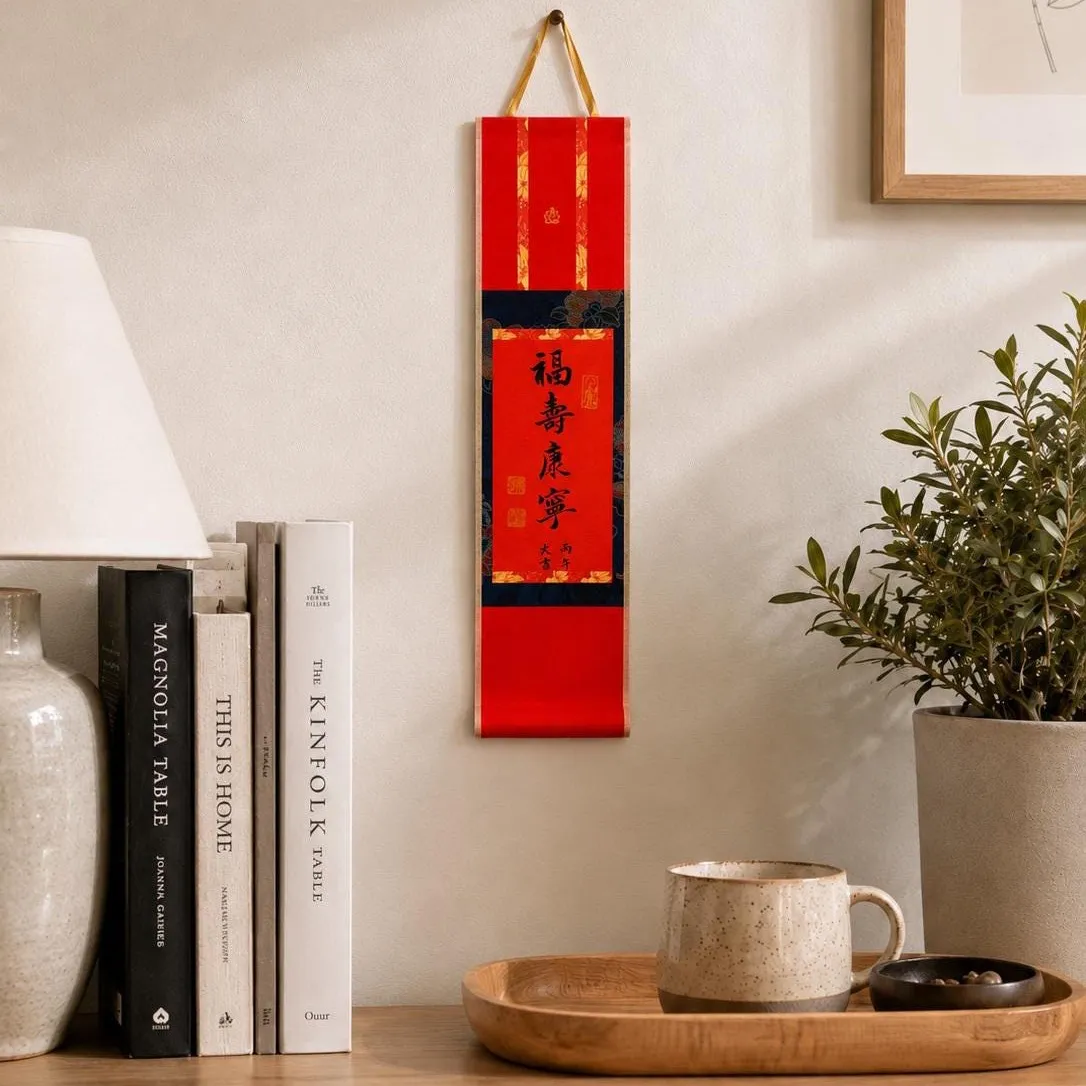
Photo shows a sample — yours will be brushed with 寸草春晖, or any character you choose.
Wall Scroll — for walls & housewarmingsfrom $38→ -
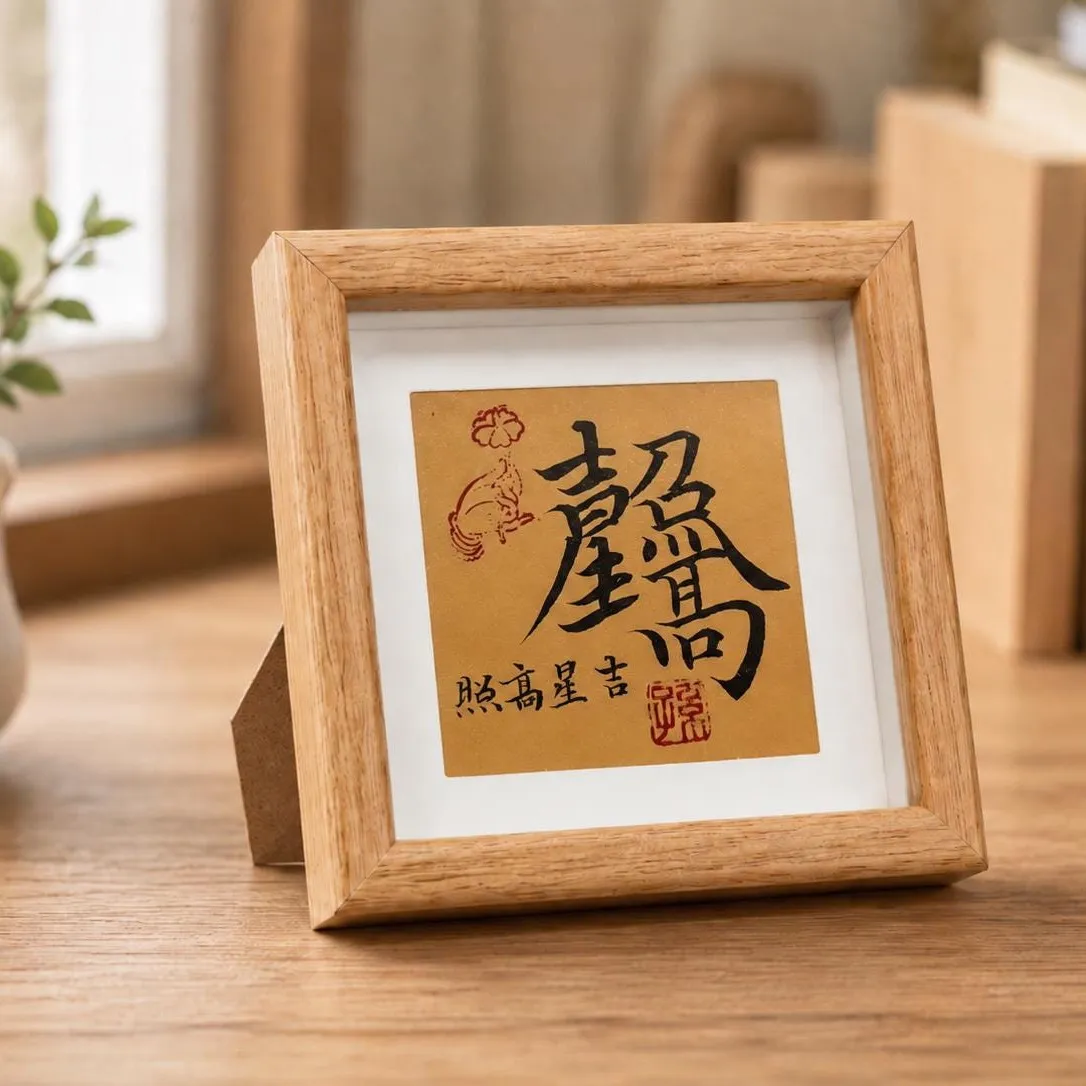
Photo shows a sample — yours will be brushed with 寸草春晖, or any character you choose.
Desk Frame — for desks, studies & studiosfrom $44→ -
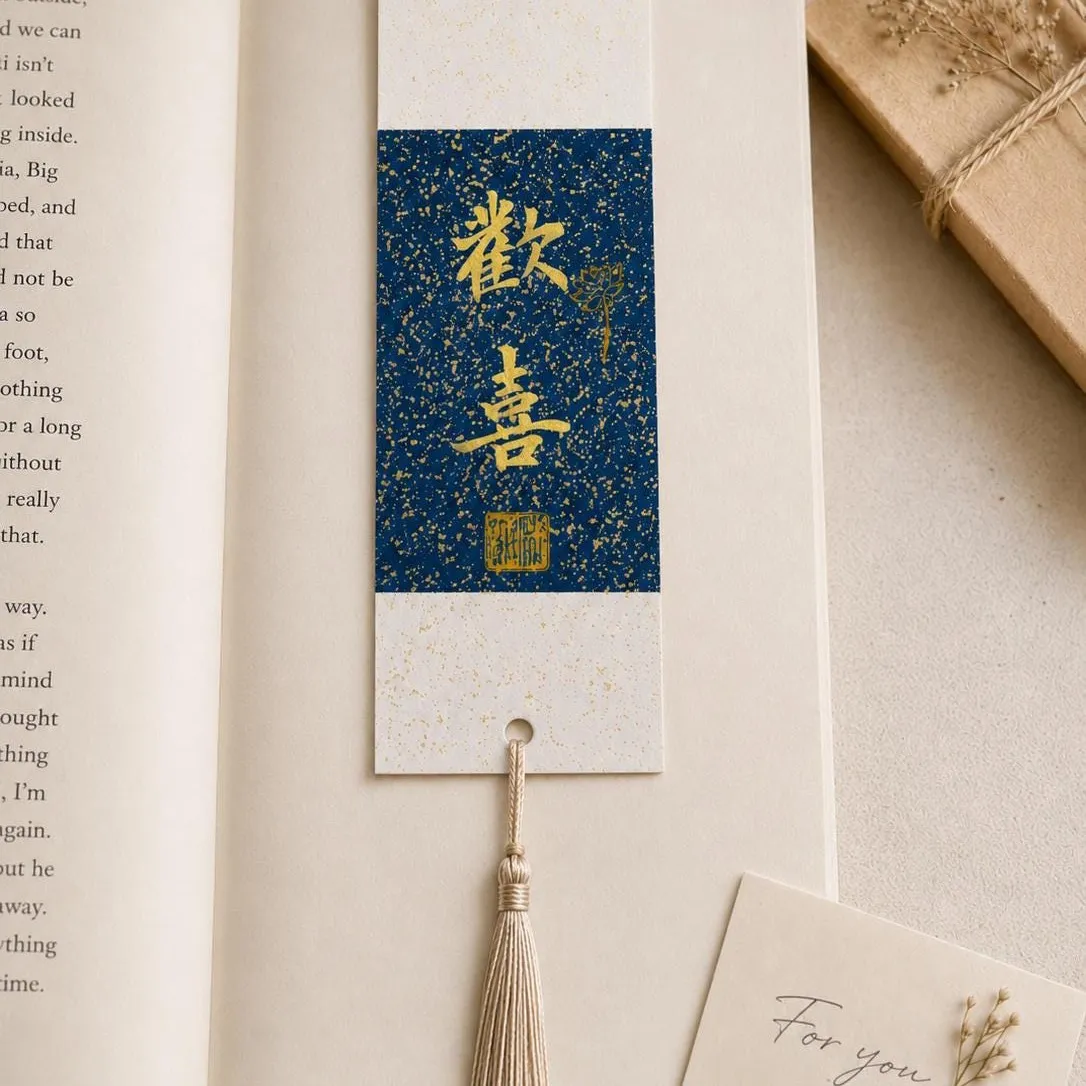
Photo shows a sample — yours will be brushed with 寸草春晖, or any character you choose.
Bookmark — for readers & small thank-yousfrom $14→
What people said after it arrived.
-
The item is fantastic. The customer service was genuine. Thanks!
— M.Verified purchase · from our Etsy shop reviews · -
They were great they gave me exactly what I asked for and then some. Thank you!!
— G.Verified purchase · from our Etsy shop reviews · -
It is well designed and customized. My daughter loves it. Amazing gift for family’s d friends
— S.Verified purchase · from our Etsy shop reviews ·
Each "寸草春晖" is hand-brushed by FuBlessings on rice paper.
See 寸草春晖 (Cùn Cǎo Chūn Huī) on Etsy →