母慈子孝 (mǔ cí zǐ xiào) — The Mother Is Kind, the Child Is Devoted
Not 慈母孝子 — these are two clauses, not two noun phrases. 母慈, then 子孝, each with its own subject, and the one named first is the parent.
母慈子孝 has two subjects and two verbs, which is one more of each than a blessing usually carries. 母慈 is a finished sentence; 子孝 is another one; nothing links them but the fact that they are written side by side. What that buys is an order, and the order is not decorative — the parent is named first, and the household manuals later read the sequence as a cause, the first clause the condition of the second rather than its polite companion. Set that against the single character. 孝 is an obligation that runs one way and has been argued about on exactly those grounds for two thousand years; these four put something upstream of it. See 孝 →
There is a version with 父 in the first slot, and people sometimes take it for the original and this one for a modern softening. The relationship is not that. The 《左传》 carries two separate rosters: the 五教, the five household teachings Shun is said to have sent out through the four quarters, which assigns 慈 to the mother and 孝 to the child; and the 六顺, 石碏’s list of what runs with the grain, which hands 慈 to the father. 父慈子孝 comes from the second and set as a fixed four characters early — 晏子 is already reciting it in the same book. 母慈子孝 comes from the first, and its earliest cited use as a set phrase is Tang: later as a word, but not a softening of the other one. It was quoting a different list. See 慈 → The phrase’s liveliest home now is a joke: 不写作业母慈子孝,一写作业鸡飞狗跳, no homework and it is 母慈子孝, homework and the chickens are flying. The joke needs it to be a report on a state of affairs rather than a wish, which is exactly what it is — and what makes it observable, hourly, in most houses with a nine-year-old in them.
A hand-brushed “母慈子孝” by FuBlessings suits a mother, a grandmother, or a new parent, at Mother’s Day, a birthday, or the start of a family. What a grown child hands a mother is usually addressed to her from outside — how she is, or how they feel about her. These four characters are built the other way round: she is the subject of the first sentence, the giver is the subject of the second, and the order is load-bearing. Hung on a wall, it leaves both halves of the assessment standing where anyone in the family can check them.
- the mother kind, the child devoted
- a household reported on from both ends at once
- two duties named in the order they fall due
- the parent's half stated first
- filial piety That is the second clause only. Half of this phrase is about the parent, and it is the half that comes first — which is the entire reason the four characters exist rather than the one.
- family harmony 和 words describe a whole house with no friction in it. This one names exactly two people and gives each of them something to do; it is an assessment, not an atmosphere.
- unconditional love Two independent clauses can fail independently, and the phrase is built so that either one can. Nothing in it is unconditional — it reports that both halves are currently holding, which is a different and more checkable claim.
The short arms are the point: these readings don’t reach it.
- 母慈 the mother is kindA complete sentence: 母 is the subject, 慈 the predicate. 慈 is the character the 五教 assigns to the mother's position specifically, and the kindness it names runs downhill — toward what is smaller and younger. A child's feeling for a parent is almost never called 慈; that direction has its own word.
- 子孝 the child is devotedThe second sentence, and grammatically independent of the first. 子 covers a child of any age and either sex here; the clause is about a grown one, since a three-year-old has nothing to be 孝 with yet.
characters
- 父慈子孝 fù cí zǐ xiào the father kind, the child devoted — the twin, quarried from the 六顺 list rather than the 五教
- 慈母 cí mǔ the kind mother — the compound that kept 慈 on the maternal side of the house in ordinary speech
- 母子平安 mǔ zǐ píng ān mother and child both well — the sentence a family waits for at a birth, and the earliest verdict passed on this same pair
- 孝子 xiào zǐ a devoted child — in praise while the parents live, and the word for the chief mourner after
- 舐犊情深 shì dú qíng shēn the old ox licking its calf — related by sense rather than by any shared character: the same downward love as 母慈, named through an animal instead of a virtue
Cinnabar marks the characters 母慈子孝 actually contains. The dark row is a relative by meaning or by sound, not one shared stroke.
The Story Behind the Character
In 609 BCE a Lu scribe named 太史克 had to justify throwing a refugee out of the country, and the refugee was a prince who had murdered his own father. 莒太子仆 had killed 莒纪公, taken the state treasures and fled to Lu; the Lu court first rewarded him and then, on 季文子's insistence, expelled him. Asked to explain the reversal, 太史克 went back to the sage-king Shun, and what he reached for was a curriculum. Shun promoted the eight worthy men and 使布五教于四方 — sent them out to spread the five teachings through the four quarters. The 《左传》 lists them: 父义,母慈,兄友,弟共,子孝. Five slots, one for each position in a household, and each one issued a single character to fill it. The father gets 义, rightness. The elder sibling gets 友 and the younger 共. The mother's assignment is 慈, and the child's is 孝. That is the list 母慈子孝 comes out of — not a compliment anyone paid a particular mother, but two line items lifted out of a job description for a family, drawn up one slot at a time.
There is a second list in the same book, filed a hundred and eleven years earlier, and it is the reason the phrase has a twin. Under its entry for 720 BCE the 《左传》 records a Wei minister named 石碏 going to his ruler about an indulged prince, 州吁, and setting out six things that run against the grain of a household or a state and six that run with it. The second set reads 君义,臣行,父慈,子孝,兄爱,弟敬 — and here 慈 has been reassigned to the father. From that list Chinese got 父慈子孝; from the 五教, 母慈子孝. The two are not one phrase and a substitution but two descendants of two different rosters, and neither is a corruption of the other. They did not set as words at the same time — 父慈子孝 is already running as a fixed four characters in the 《左传》 itself, where 晏子 recites 君令臣共,父慈子孝,兄爱弟敬 among the things propriety consists of, while the earliest cited use of 母慈子孝 as a set phrase is Tang. What separates the two rosters is not age — the 六顺 is the earlier entry — but standing: the 五教 is credited to Shun and recited as an institution already long in place, while the 六顺 is one minister's own formulation, made on the spot. The Wei story does not end well, and it left a second phrase behind: the counsel was ignored, 州吁 killed his brother and took the throne, and 石碏 eventually arranged the executions of both the usurper and his own son 石厚, who had backed him. Chinese kept the name 大义灭亲 for what he did — putting the greater duty above one's own kin — so the same episode that gave the language its coldest phrase about family also gave it one of its warmest.
What made either pairing durable is that it is two sentences rather than one idea. 母慈 has a subject and a predicate; 子孝 has its own subject and its own predicate; nothing joins them but position. The order is the argument. 颜之推, writing a household manual for his descendants around 590 CE after living through the collapse of three dynasties, made the sequence explicit by putting it in the negative: 父不慈则子不孝 — where the parent is not kind, the child will not be devoted. That turns the order into a cause, and it runs downward. 孝 on its own is a one-way obligation and has been argued about on exactly those grounds for two thousand years; four characters put an obligation upstream of it, on the generation that goes first. [See 孝 →](/library/xiao/) [See 慈 →](/library/ci/)
Classical lines
- roughly 1,300 years
- 720 BCE 《左传·隐公三年》
- 609 BCE 《左传·文公十八年》
- c. 400 BCE 《论语·阳货》
- c. 590 CE 《颜氏家训·治家》
举八元,使布五教于四方,父义,母慈,兄友,弟共,子孝,内平外成。 He promoted the eight worthy men and sent them to spread the five teachings through the four quarters
the father righteous, the mother kind, the elder brother friendly, the younger respectful, the child devoted — and there was peace within and order without. — The 五教, the five household teachings, and the list this phrase is quarried from. Read the assignments: every position gets exactly one character, and the mother's is 慈 while the child's is 孝. The pairing was a matter of allocation long before it was a matter of sentiment.
君义,臣行,父慈,子孝,兄爱,弟敬,所谓六顺也。 The ruler righteous, the minister carrying it out, the father kind, the child devoted, the elder sibling loving, the younger respectful
these are called the six things that run with the grain. — 石碏's warning to the Duke of Wei about an indulged prince, and the roster the other twin, 父慈子孝, comes from. Note the shape of it: every pair names both parties, and in each one the senior is named first.
子生三年,然后免于父母之怀。 A child is three years old before it leaves its parents' arms.
Confucius, arguing with a disciple who thought three years of mourning excessive. He opens by calling the disciple unfeeling and closes by counting. Three years carried, three years mourned. It is the most literal statement in the classics of what the second clause of this phrase is answering, and it makes the exchange a matter of arithmetic rather than sentiment.
父不慈则子不孝,兄不友则弟不恭,夫不义则妇不顺矣。 Where the parent is not kind the child will not be devoted; where the elder brother is not friendly the younger will not be respectful; where the husband is not upright the wife will not be agreeable.
颜之推 wrote for his own descendants, and here he states the order of the clauses as a causal one. Read this line and the four characters stop being a matched pair of virtues and become a sequence: the first clause is the condition of the second.
Why This Character Matters
The most common place a Chinese person meets these four characters today is the first half of a joke about homework. 不写作业母慈子孝,一写作业鸡飞狗跳 — no homework, and it is 母慈子孝; homework, and it is chickens flying and dogs leaping. The couplet is everywhere parents talk to each other online, and it works for a grammatical reason rather than a comic one. The phrase reports a state of affairs, not a wish, so it can be switched on at six o'clock and off at seven. Nobody makes that joke with 平安 or 长寿, because you cannot watch those failing in the next room. This one you can, nightly, which is also why it stays warm instead of turning pious.
Chinese counts a mother and a child as one unit at the moment they are most separable. 母子平安 — mother and child both well — is the sentence a family waits for at a birth, and it is a single verdict on two people; there is no version that reports on one of them. 母慈子孝 is the same unit assessed decades later, when the two are fully separate people with separate lives and the pairing has to be earned rather than assumed. That is the distance the four characters cover, and the reason the phrase suits a grown child giving it to a mother better than it suits anyone giving it to anyone else.
A few characters live near "母慈子孝" but mean something quieter, sharper, or more specific. Here's how to tell them apart.
names both directions, and the elder's first
names the child's duty alone, and leaves the parent unmeasured
a working relationship, reported from both ends
one person's disposition, wherever it happens to point
two people, and what each of them owes the other
the whole house, and everything that follows once it holds
This is the only thing on the Mother's Day table that names a duty for her before it names one for you.
- This is the only thing on the Mother's Day table that names a duty for her before it names one for you. Most of the day's vocabulary is addressed to her condition — 身体健康 to her health, 长寿 to her years — or to the account between you, which is what 孝 settles. 母慈子孝 does neither. It is two sentences, and the first one has her as its subject: she was kind, and that is stated as a finding rather than asked for. What follows is the second clause, and the grammar puts it second on purpose. Hand it over on a day built almost entirely out of things you can say about your own feelings, and it says something those cannot: that the relationship had two people in it, working, and that you are willing to be assessed alongside her.
- The 五教, the roster of household duties the 《左传》 credits to the sage-king Shun, treats 慈 as a position rather than a feeling — the character allotted to the mother's slot, the way 义 is allotted to the father's. A shower is the week somebody takes up that position, which is the narrow sense in which these four characters belong at one. They are not addressed to the baby and they wish it nothing. They name the two posts and what each is expected to produce, and the one that starts producing first belongs to the adults in the room.
- For a mother or a grandmother whose birthday is the one day a year the family says out loud what it usually leaves implied. 慈 on its own credits her disposition; 母慈子孝 credits the arrangement she built and keeps her inside it rather than up on a plinth. Best for the birthday of an elder with grown children in the room, where the second clause has people it can point at.
Mom · Grandparent · New Parent · or yourself
Looking for a name? See Western names written in Chinese →
-
What does 母慈子孝 (mǔ cí zǐ xiào) mean?
母慈子孝 (mǔ cí zǐ xiào) is a 4-character Chinese phrase for the mother is kind, the child is devoted. 母慈子孝 has two subjects and two verbs, which is one more of each than a blessing usually carries. 母慈 is a finished sentence; 子孝 is another one; nothing links them but the fact that they are written side by side. What that buys is an order, and the order is not decorative — the parent is named first, and the household manuals later read the sequence as a cause, the first clause the condition of the second rather than its polite companion. Set that against the single character. 孝 is an obligation that runs one way and has been argued about on exactly those grounds for two thousand years; these four put something upstream of it. See 孝 → The most common place a Chinese person meets these four characters today is the first half of a joke about homework. 不写作业母慈子孝,一写作业鸡飞狗跳 — no homework, and it is 母慈子孝; homework, and it is chickens flying and dogs leaping. The couplet is everywhere parents talk to each other online, and it works for a grammatical reason rather than a comic one. The phrase reports a state of affairs, not a wish, so it can be switched on at six o'clock and off at seven. Nobody makes that joke with 平安 or 长寿, because you cannot watch those failing in the next room. This one you can, nightly, which is also why it stays warm instead of turning pious.
-
What occasions is 母慈子孝 given for?
母慈子孝 is traditionally given for Mother's Day, Baby Shower, Birthday. This is the only thing on the Mother's Day table that names a duty for her before it names one for you. Most of the day's vocabulary is addressed to her condition — 身体健康 to her health, 长寿 to her years — or to the account between you, which is what 孝 settles. 母慈子孝 does neither. It is two sentences, and the first one has her as its subject: she was kind, and that is stated as a finding rather than asked for. What follows is the second clause, and the grammar puts it second on purpose. Hand it over on a day built almost entirely out of things you can say about your own feelings, and it says something those cannot: that the relationship had two people in it, working, and that you are willing to be assessed alongside her. The 五教, the roster of household duties the 《左传》 credits to the sage-king Shun, treats 慈 as a position rather than a feeling — the character allotted to the mother's slot, the way 义 is allotted to the father's. A shower is the week somebody takes up that position, which is the narrow sense in which these four characters belong at one. They are not addressed to the baby and they wish it nothing. They name the two posts and what each is expected to produce, and the one that starts producing first belongs to the adults in the room.
-
Who brushes the 母慈子孝 calligraphy?
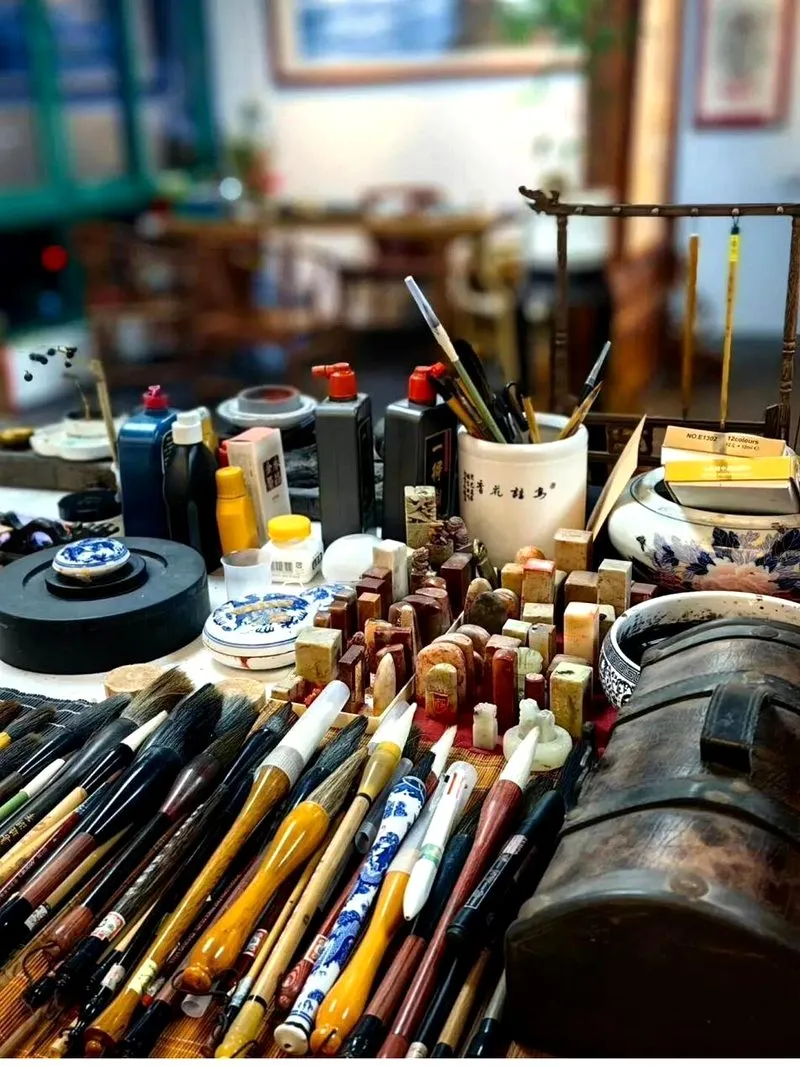
FuBlessings hand-brushes each 母慈子孝 (Mǔ Cí Zǐ Xiào) to order, in ink on rice paper — never printed, never repeated.
Bring 母慈子孝 home — choose how you'd like it brushed.
-
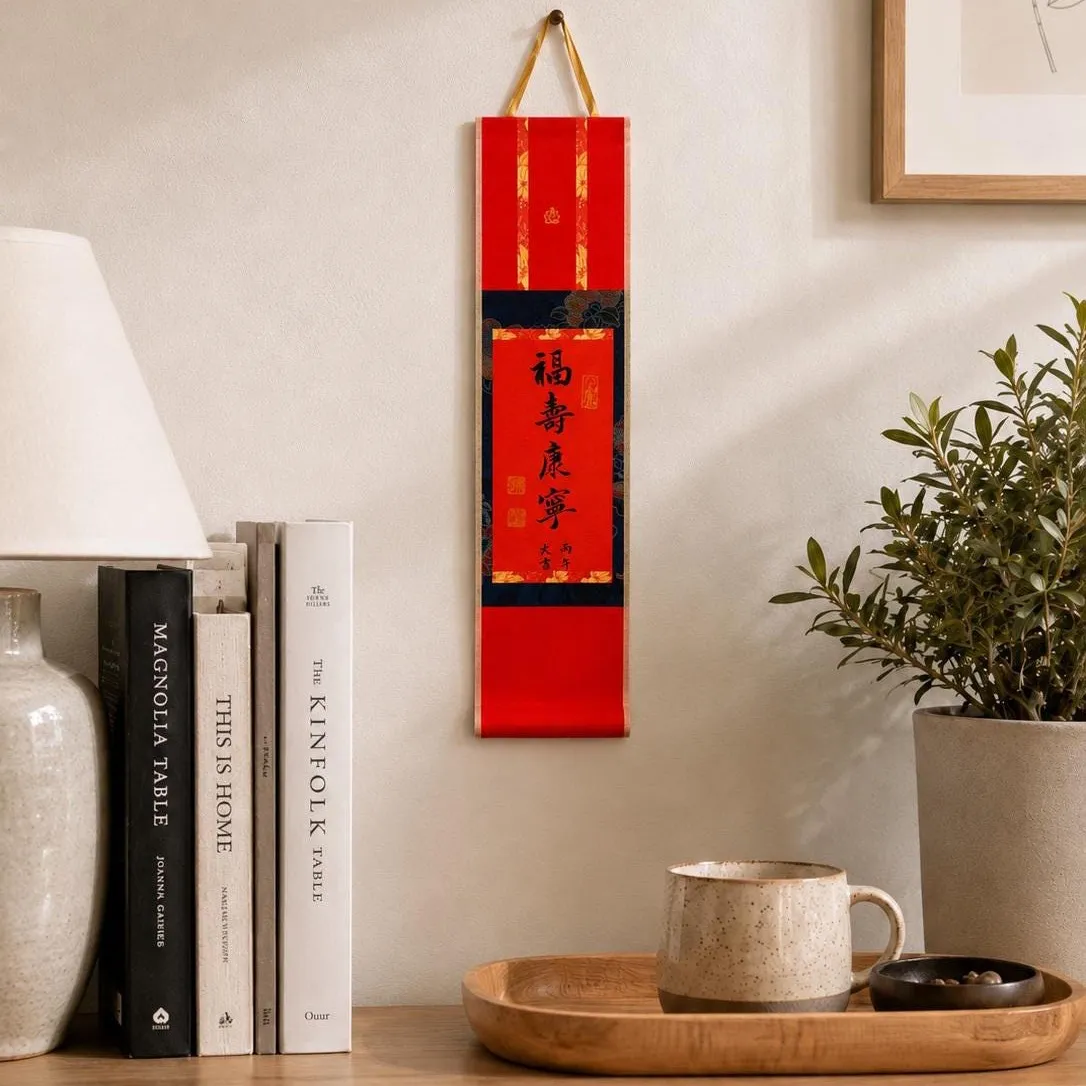
Photo shows a sample — yours will be brushed with 母慈子孝, or any character you choose.
Wall Scroll — for walls & housewarmingsfrom $38→ -
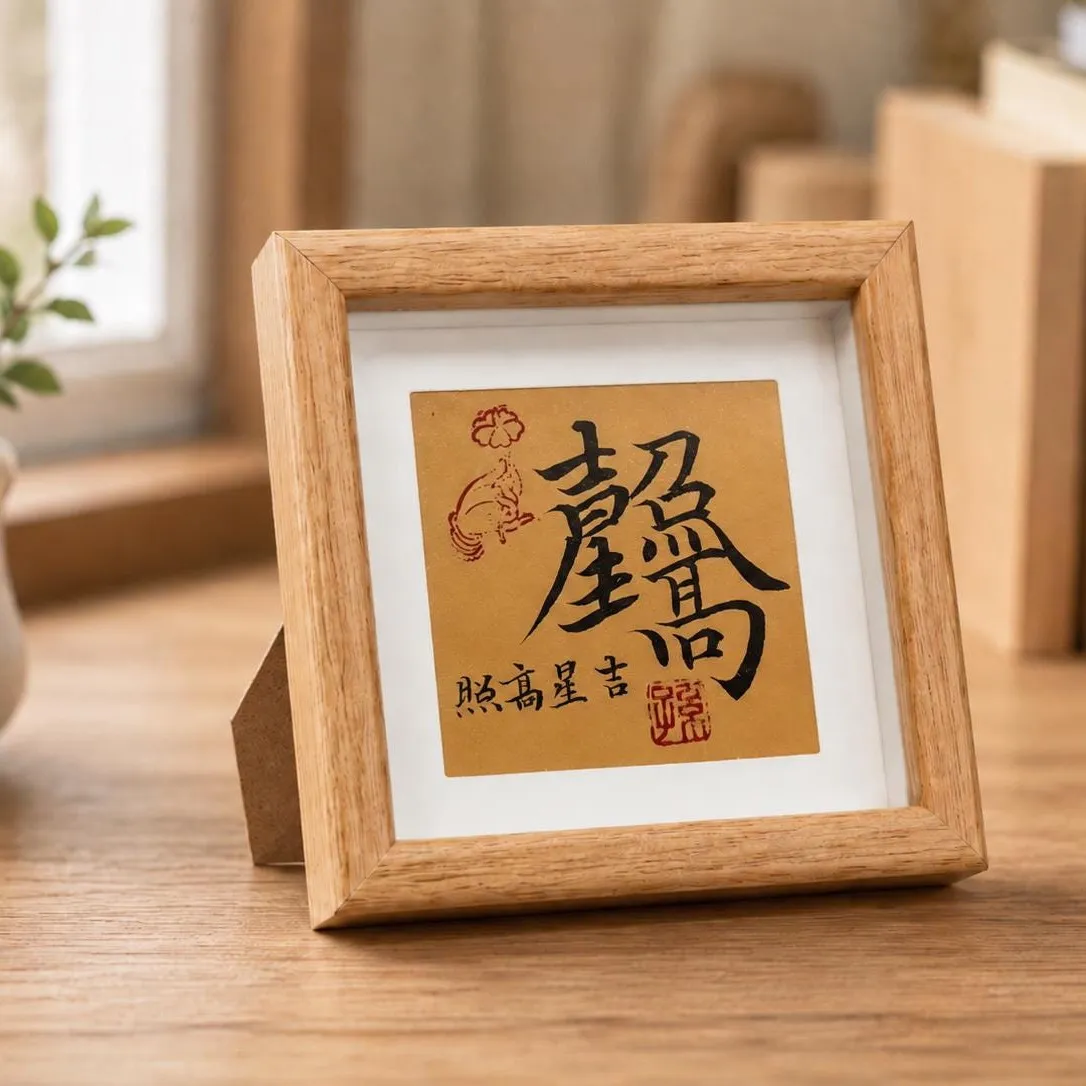
Photo shows a sample — yours will be brushed with 母慈子孝, or any character you choose.
Desk Frame — for desks, studies & studiosfrom $44→ -
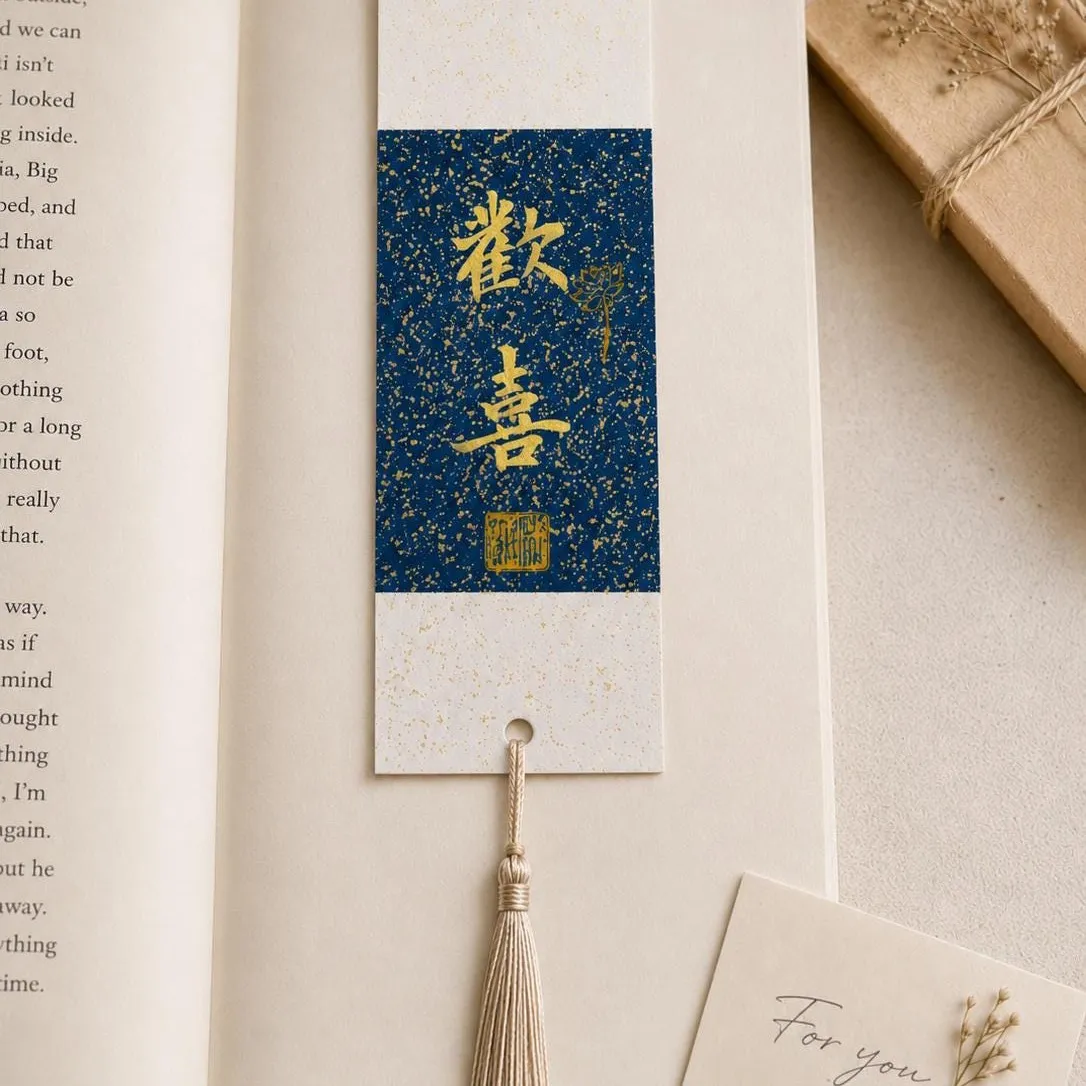
Photo shows a sample — yours will be brushed with 母慈子孝, or any character you choose.
Bookmark — for readers & small thank-yousfrom $14→
What people said after it arrived.
-
The item is fantastic. The customer service was genuine. Thanks!
— M.Verified purchase · from our Etsy shop reviews · -
They were great they gave me exactly what I asked for and then some. Thank you!!
— G.Verified purchase · from our Etsy shop reviews · -
It is well designed and customized. My daughter loves it. Amazing gift for family’s d friends
— S.Verified purchase · from our Etsy shop reviews ·
Each "母慈子孝" is hand-brushed by FuBlessings on rice paper.
See 母慈子孝 (Mǔ Cí Zǐ Xiào) on Etsy →