春 (chūn) — Spring · The Turn of the Year · Where Something Starts Again
A single character.
立春 — the date the Chinese calendar names as the beginning of spring — falls on the 3rd, 4th or 5th of February. In most of North China the rivers are still hard on that date, and the folk rhyme that counts the winter off in blocks of nine days puts 立春 at the head of the sixth block, with 七九, 八九 and 九九 still ahead of it. Nothing has come up. The date arrives anyway, and 春 (chūn) is the character for it: not a description of the weather but a position in the year, declared on schedule and ahead of the evidence. 丰 (fēng) is answerable to the harvest — write it in a bad year and the granary contradicts you. Nothing can contradict 春. See 丰 → · See 旺 → · See 瑞 →
The character is everywhere in the first month of the year, and almost always on paper. The festival is named for it and so are the couplets: 春节, 春联, the red strips flanking every door in the country. On the door itself goes the smallest paper of all — a single 春 brushed and hung as a diamond. In Fujian and Taiwan one goes on the rice bin as well, and for an entirely different reason: in Hokkien 春 is a homophone of 剩, what is left over, so a 春 pasted on a full bin reads as a wish for grain still in it when the year ends. Elsewhere in the language the character does the job the calendar gave it: 妙手回春 for the doctor whose patient was not going to recover and did, 枯木逢春 for the dead tree that meets a spring. 一年之计在于春 — the year’s plan is laid in the spring — is a proverb about timing, and its point is that the planning happens when there is still nothing to go on.
A hand-brushed “春” by Artist Lina Sun goes to the beginning of something rather than the middle of it. The friend whose next year you would rather mark than forecast. The couple with the keys, the boxes, and an empty kitchen. The grandparent who has watched this date arrive eighty times and knows better than anyone that it precedes the evidence — which is the whole reason it is worth putting on the wall.
- the start of the year's cycle, fixed to a date
- the push a plant makes against the ground
- the point at which something dormant starts again
- youth, by extension — 青春
- spring (the English season) English spring begins when it feels like it. 春 begins at 立春, an astronomical date in the first week of February, and across most of China that date falls in the cold. One word waits for the thaw; the other is fixed to a degree of solar longitude — 立春 is the sun at 315°, whatever the ground is doing.
- renewal Renewal claims something was restored. 春 claims only that the cycle has come round to its beginning. Chinese has to add a character to get restoration — 回春 — and reserves it for cases where something had genuinely failed.
- hope 春 forecasts nothing and is not optimistic. It is a date, and it arrives whether or not the year goes well. All it asserts is that the year has started, which is a far smaller claim and a much more reliable one.
- new 新 describes a state of a thing — unused, just made. 春 describes a position in something that turns: it has come round before and will come round again, which is why it can be said of a person's eightieth year as easily as a household's first.
The short arms are the point: these readings don’t reach it.
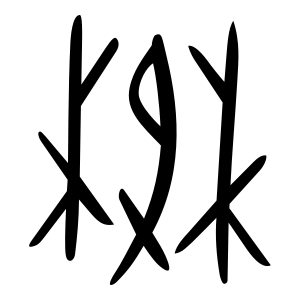
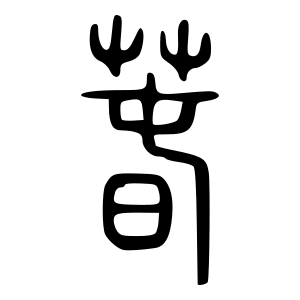
- 𡗗 plants and sprout, flattened togetherIn the seal form the character was written 萅: 艸 (growing plants) across the top and 屯 beneath it — a sprout pushing against a line that is the ground, supplying the sound and, as it turns out, the difficulty. The clerical reforms of the Han crushed both into the three horizontals and the crossed strokes written today. Nothing in the modern top can be read as a picture. Everything in it was once a plant.
- 日 the sun (meaning)The only component that survived legibly, and the one 许慎's gloss turns on: 艸春时生也 — plants are what grow in the spring season. The sun is the reason they do. It is also what separates 春 from 舂 (chōng, to pound grain), which is the same character with a mortar 臼 in place of the sun.
character
- 春节 chūn jié the Spring Festival — the lunar new year, named for a season that has not visibly arrived when it is celebrated
- 立春 lì chūn spring stands up — the first of the twenty-four solar terms, around February 3rd to 5th
- 春联 chūn lián the red couplets pasted on either side of a door at New Year, named after this character
- 青春 qīng chūn youth — for most of its history simply the green season, and only later a stretch of a life
- 回春 huí chūn to turn the spring back on — said of a doctor, in 妙手回春, and of nothing trivial
- 春秋 chūn qiū spring and autumn — Confucius's annals, and the ordinary way to count the years a person has behind them
The Story Behind the Character
On the oracle bones the graph is a small thicket. Two or three sprouts or young trees stand together, and set among them is the component later read 屯; in some of the forms a sun sits in the middle of the growth and in a good many it does not. By the time 许慎 closed the 《说文解字》 around 100 CE the arrangement had settled into 萅 — plants across the top, and beneath them the 屯 with its curling tail and the sun — and his definition of it is not a season at all. 萅,推也 — a push. It is a sound-gloss, the dictionary's habit of explaining a word with another that sounded close to it in the pronunciation of 许慎's day and names something you can do, and it is worth noticing what he reached for: not warmth, not green, but force.
The 屯 was there for the sound. But 许慎 gives 屯 — read zhūn in this sense, not the tún of 屯兵 — its own entry a few pages away, and the entry is not encouraging: 屯,難也 — hard going. He then describes what the graph shows, a plant at the moment of first growth pushing 屯然而難, against a single horizontal stroke it has to pierce, which he identifies as the ground, and with a tail left bent by the effort. Then he quotes the 《周易》, where 屯 is the third hexagram, and the line he picks is 剛柔始交而難生 — the firm and the yielding first meet, and difficulty is born. The 序卦传 disposes of the same hexagram in seven characters: 屯者,物之始生也, 屯 is the beginning of things being born. The sound that the character for spring borrowed is the character for how hard it is to start.
None of this survives in the shape a person writes today. Modern 春 is nine strokes, identical in simplified and traditional, and its top — 𡗗 — is what was left after the clerical-script reforms of the Han flattened the plants and the 屯 into each other. Only the 日 at the bottom is still doing the job it started with. The collapse also produced a small family of characters that look related and are not: 秦 with grain underneath, 奉 with hands, 泰 with water, 舂 with a mortar, all of them wearing the same crushed top for reasons that have nothing to do with one another. Before the Han they were distinct pictures. 春 is the one that kept its sun.
Classical lines
- roughly 600 years
- c. 800 BCE 《诗经·豳风·七月》
- c. 400 BCE 《论语·先进》
- c. 200 BCE 《礼记·月令》
春日载阳,有鸣仓庚。 In the spring days the sun grows warm, and the orioles are singing.
七月 is the longest poem in the 国风 and the most practical: a farming year walked through month by month, what to cut, what to store, when to haul the ice into the cellar. This is the moment the year turns, and the poem does not stop to celebrate it. It notes the warmth and the birds and moves straight on to the girls going out with deep baskets for mulberry leaves. In the oldest layer of the language spring is a working season, not a mood.
立春之日,天子亲帅三公九卿诸侯大夫以迎春于东郊。 On the day spring begins, the Son of Heaven personally leads the Three Excellencies, the Nine Ministers, the lords and the great officers out to the eastern suburb to meet the spring.
The court's entire senior staff walks out of the city on a fixed calendar date to greet a season that, that far north in early February, has produced almost nothing you could point at. The verb is 迎, the one used for meeting a guest at the gate. Spring was not waited for. It was received, on the day it was due.
莫春者,春服既成,冠者五六人,童子六七人,浴乎沂,风乎舞雩,咏而归。 Late spring, the spring clothes finished; five or six grown men, six or seven boys; bathe in the Yi river, take the wind on the terrace of the Rain Altar, and come home singing.
Confucius has gone round the room asking four students what they would do if someone finally gave them a post. Three answer with states to govern and ceremonies to run. 曾点, who has been playing his zither through the entire conversation, sets it down and describes an afternoon. 夫子喟然叹曰:吾与点也 — the Master sighed and said, I am with 点. It is among the most quoted passages in the book, and the only thing it asks for is a season.
Why This Character Matters
Until the early twentieth century the arrival of spring in a Chinese county town was announced by the public destruction of a cow. The animal was clay, built over a frame of wood and straw and painted in colors the year's almanac specified, and on 立春 the magistrate struck it with a decorated whip, after which the crowd broke it apart and carried the fragments off to scatter on their own fields. 孟元老 records the Kaifeng version in his memoir of the Northern Song capital — the 春牛 brought into the palace on the eve of 立春 to be whipped — and the custom outlived that dynasty by some eight hundred years. In much of the north the everyday name for the day is still 打春: hitting the spring. The season was not something you waited on. It was something you went out and struck.
A lone 春 comes with two footnotes. The first is that its romantic sense is not a modern slide. The Classic of Poetry already has 有女怀春,吉士诱之 — a girl with spring in her, and a fine young man making his approach — and the line of descent runs from the harmless (春心, 怀春) to the frankly erotic (春宫, 春药). None of it touches the door character, which has been the plainest New Year paper in China for centuries and is read by everyone as the season; that sense lives in compounds and does not attach to a single 春 standing by itself. The second footnote is how far the character travels from the calendar while going on doing the same job. 青春 meant the green season for most of its life — 杜甫 uses it that way, of the weather he would travel home in — and only later became the word for youth. 妙手回春 is what you say about a doctor: skilled hands, and the spring turned back on. 枯木逢春 is a dead tree meeting one. 春秋 is both the name of Confucius's annals and the ordinary way to speak of the years a person has behind them. In each of them 春 names the point at which something starts over.
What comes to mind for a Chinese reader is the door: 春 on red paper, hung as a diamond, is one of the two or three most familiar sights of the New Year. As a tattoo it reads as plain and unpretentious — closer to getting the word 'spring' than to getting a virtue, and none the worse for it. It is also common in given names of both genders (春花, 春生, and 立春 as a name for someone born on the day), so it may read as a name to some. The one thing worth knowing is that 春 carries a romantic and sometimes erotic sense inside compounds — 怀春, 春宫 — which a single 春 standing alone does not pick up. Hung on a wall rather than inked, it is seasonal by nature: most households put it up in the first month and take it down when it fades, and a permanent framed 春 reads as a deliberate choice to keep the turn of the year in view all year.
Calligraphy Styles for Tattoos
- Regular script (楷书 kǎishū) Best for tattoos
春 is a well-balanced nine strokes and regular script suits it: three evenly spaced horizontals, a long left-falling and right-falling pair crossing all three, and a compact 日 sitting square underneath. Everything stays legible small. Reliable from about 1.5 inches.
- Clerical script (隶书 lìshū) Excellent for tattoos
Clerical script is where this character looks best. The style broadens the horizontals and flares the falling stroke to the right, and the crushed top — which is a Han-era shape to begin with — reads as deliberate rather than compressed. Wants width more than height; good on a forearm read across.
- Cursive script (草书 cǎoshū) With care
Cursive 春 is elegant but the top and the 日 can merge into a single loop, and the characters that share this top (秦, 奉, 泰, 舂) collapse toward the same shape. Legible cursive here depends entirely on the calligrapher. Ask to see the character written before it goes on skin.
Common Mistakes to Avoid
- Writing a mortar 臼 at the bottom instead of the sun 日Intended: 春 (chūn), spring
That character is 舂 (chōng), to pound grain in a mortar. It differs from 春 in one component and nothing else, and it is a real character, so nothing about the result looks wrong — it simply says 'husking rice.' The bottom of 春 is a plain closed rectangle with one stroke across the middle.
- Letting the falling strokes stop short of the horizontalsIntended: The 𡗗 top written as one connected unit
The left-falling stroke must cross all three horizontals, and the right-falling stroke springs off it rather than resting on top of them. An artist copying the shape as a picture often draws three separate lines with a small 人 sitting above them. The result is not a character, and it is a common way this one goes wrong in the hands of someone who does not read Chinese.
Notes for Your Tattoo Artist
9 strokes, with no traditional variant to choose between. The proportions are the whole job: the three horizontals want even spacing and a slight rightward rise, the falling pair should cross them low and spread wide enough to shelter what is underneath, and the 日 must sit narrow and centered under that crossing — a wide 日 makes the character bottom-heavy and starts to read as 曰. Slightly wider than it is tall. Legible from about 1.5 inches; suits a horizontal placement better than a vertical one.
A few characters live near "春" but mean something quieter, sharper, or more specific. Here's how to tell them apart.
the start of the cycle, named on a date when nothing has come up yet
the crop standing thick — a fullness you can only claim once it is there to look at
the turn, before there is anything burning
the heat coming off something already lit — a measurement, and good only for as long as it holds
a date on the calendar, which does not need the year's permission
a favorable sign read off the world — and the world does not have to give one
The festival is named after this character and so are the papers on the door — 春节, 春联 — and the odd thing about both is the timing.
- The festival is named after this character and so are the papers on the door — 春节, 春联 — and the odd thing about both is the timing. 春节 falls somewhere between January 21st and February 20th, never more than about two weeks from 立春, which is to say in the cold. The greeting everyone sends is 新春, the new spring, and it goes out while the rivers are still hard. That gap is the whole point of the character rather than a flaw in the calendar: 春 was never a report on the weather. It is the name of a slot in the calendar, and the slot fills on the day it is due. For the friend whose coming year you would rather mark than predict.
- Housewarming · A New HomeThere is a shrub that flowers in Chinese courtyards while the beds around it are still bare — small, yellow, on wood with no leaves on it yet — and the name it was given is 迎春花, the flower that goes out to meet the spring. It is not admired for being beautiful. It is admired for being early, which is a different compliment and a harder one to earn. A household in its first weeks somewhere is in that position: the keys, the boxes, a place that has not yet done anything to deserve being called a home. 春 is the right thing to put on that wall precisely because nothing has been established. It marks the date the place started counting from, and asks for no evidence that the counting will come to anything.
Friend · New Couple · Grandparent · or yourself
Looking for a name? See Western names written in Chinese →
-
What does 春 (chūn) mean?
春 (chūn) is the Chinese character for spring, the turn of the year, where something starts again. 立春 — the date the Chinese calendar names as the beginning of spring — falls on the 3rd, 4th or 5th of February. In most of North China the rivers are still hard on that date, and the folk rhyme that counts the winter off in blocks of nine days puts 立春 at the head of the sixth block, with 七九, 八九 and 九九 still ahead of it. Nothing has come up. The date arrives anyway, and 春 (chūn) is the character for it: not a description of the weather but a position in the year, declared on schedule and ahead of the evidence. 丰 (fēng) is answerable to the harvest — write it in a bad year and the granary contradicts you. Nothing can contradict 春. See 丰 → · See 旺 → · See 瑞 → Until the early twentieth century the arrival of spring in a Chinese county town was announced by the public destruction of a cow. The animal was clay, built over a frame of wood and straw and painted in colors the year's almanac specified, and on 立春 the magistrate struck it with a decorated whip, after which the crowd broke it apart and carried the fragments off to scatter on their own fields. 孟元老 records the Kaifeng version in his memoir of the Northern Song capital — the 春牛 brought into the palace on the eve of 立春 to be whipped — and the custom outlived that dynasty by some eight hundred years. In much of the north the everyday name for the day is still 打春: hitting the spring. The season was not something you waited on. It was something you went out and struck.
-
What occasions is 春 given for?
春 is traditionally given for Chinese New Year, Housewarming · A New Home. The festival is named after this character and so are the papers on the door — 春节, 春联 — and the odd thing about both is the timing. 春节 falls somewhere between January 21st and February 20th, never more than about two weeks from 立春, which is to say in the cold. The greeting everyone sends is 新春, the new spring, and it goes out while the rivers are still hard. That gap is the whole point of the character rather than a flaw in the calendar: 春 was never a report on the weather. It is the name of a slot in the calendar, and the slot fills on the day it is due. For the friend whose coming year you would rather mark than predict. There is a shrub that flowers in Chinese courtyards while the beds around it are still bare — small, yellow, on wood with no leaves on it yet — and the name it was given is 迎春花, the flower that goes out to meet the spring. It is not admired for being beautiful. It is admired for being early, which is a different compliment and a harder one to earn. A household in its first weeks somewhere is in that position: the keys, the boxes, a place that has not yet done anything to deserve being called a home. 春 is the right thing to put on that wall precisely because nothing has been established. It marks the date the place started counting from, and asks for no evidence that the counting will come to anything.
-
Is 春 a good Chinese tattoo?
What comes to mind for a Chinese reader is the door: 春 on red paper, hung as a diamond, is one of the two or three most familiar sights of the New Year. As a tattoo it reads as plain and unpretentious — closer to getting the word 'spring' than to getting a virtue, and none the worse for it. It is also common in given names of both genders (春花, 春生, and 立春 as a name for someone born on the day), so it may read as a name to some. The one thing worth knowing is that 春 carries a romantic and sometimes erotic sense inside compounds — 怀春, 春宫 — which a single 春 standing alone does not pick up. Hung on a wall rather than inked, it is seasonal by nature: most households put it up in the first month and take it down when it fades, and a permanent framed 春 reads as a deliberate choice to keep the turn of the year in view all year.
-
Who brushes the 春 calligraphy?
Each 春 (Chūn) is hand-brushed to order by Artist Lina Sun in ink on rice paper — never printed, never repeated.
Bring 春 home — choose how you'd like it brushed.
-
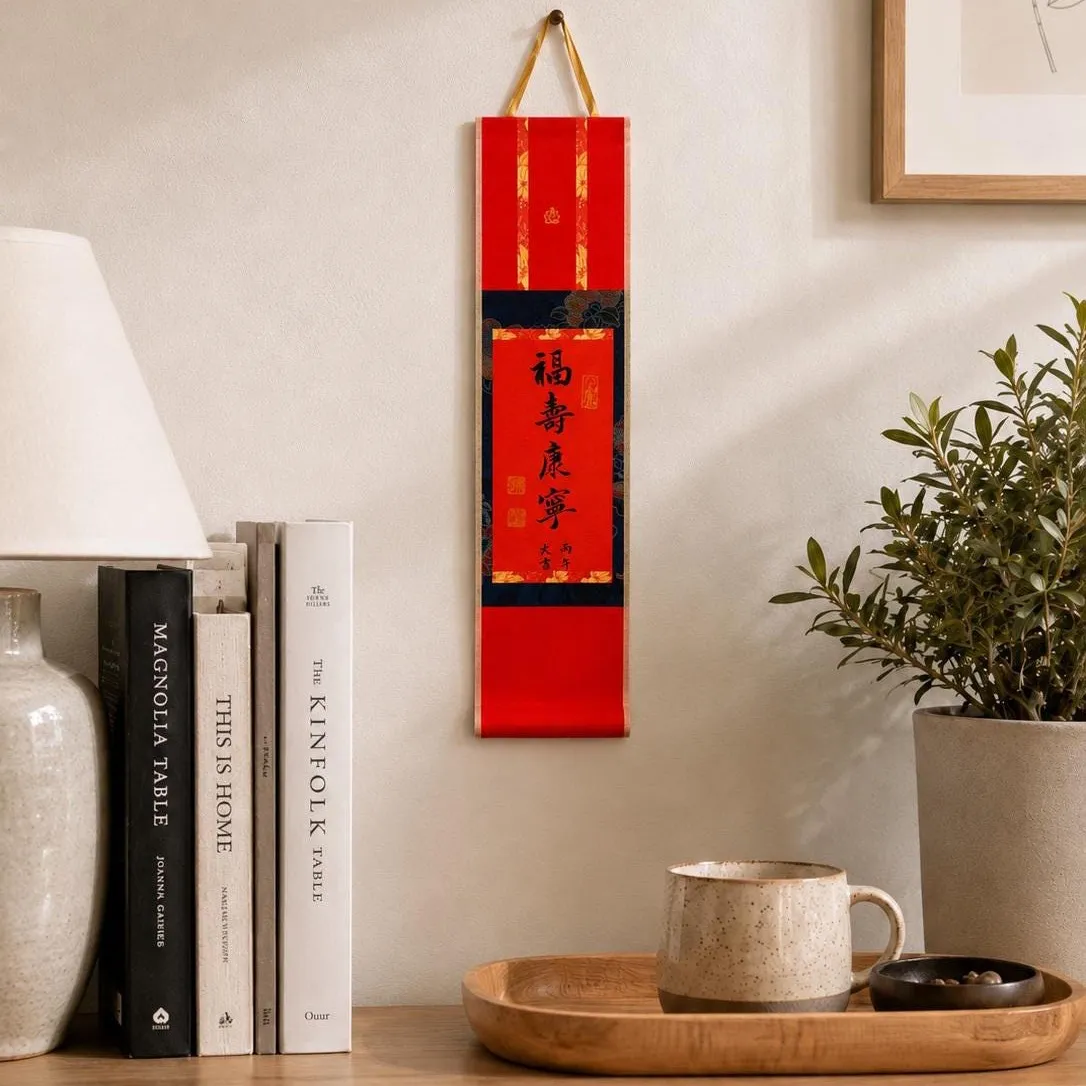
Photo shows a sample — yours will be brushed with 春, or any character you choose.
Wall Scroll — for walls & housewarmingsfrom $38→ -
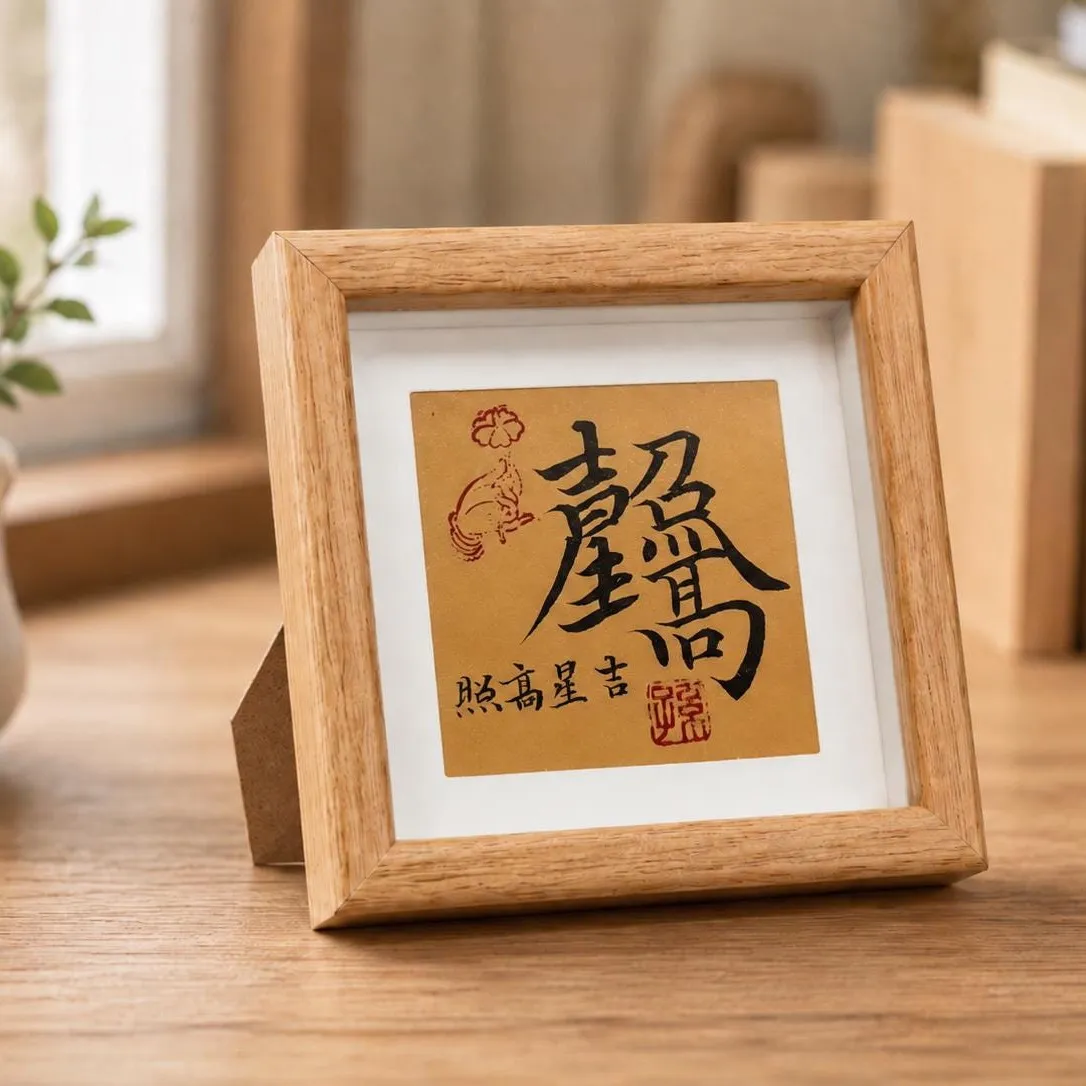
Photo shows a sample — yours will be brushed with 春, or any character you choose.
Desk Frame — for desks, studies & studiosfrom $44→ -
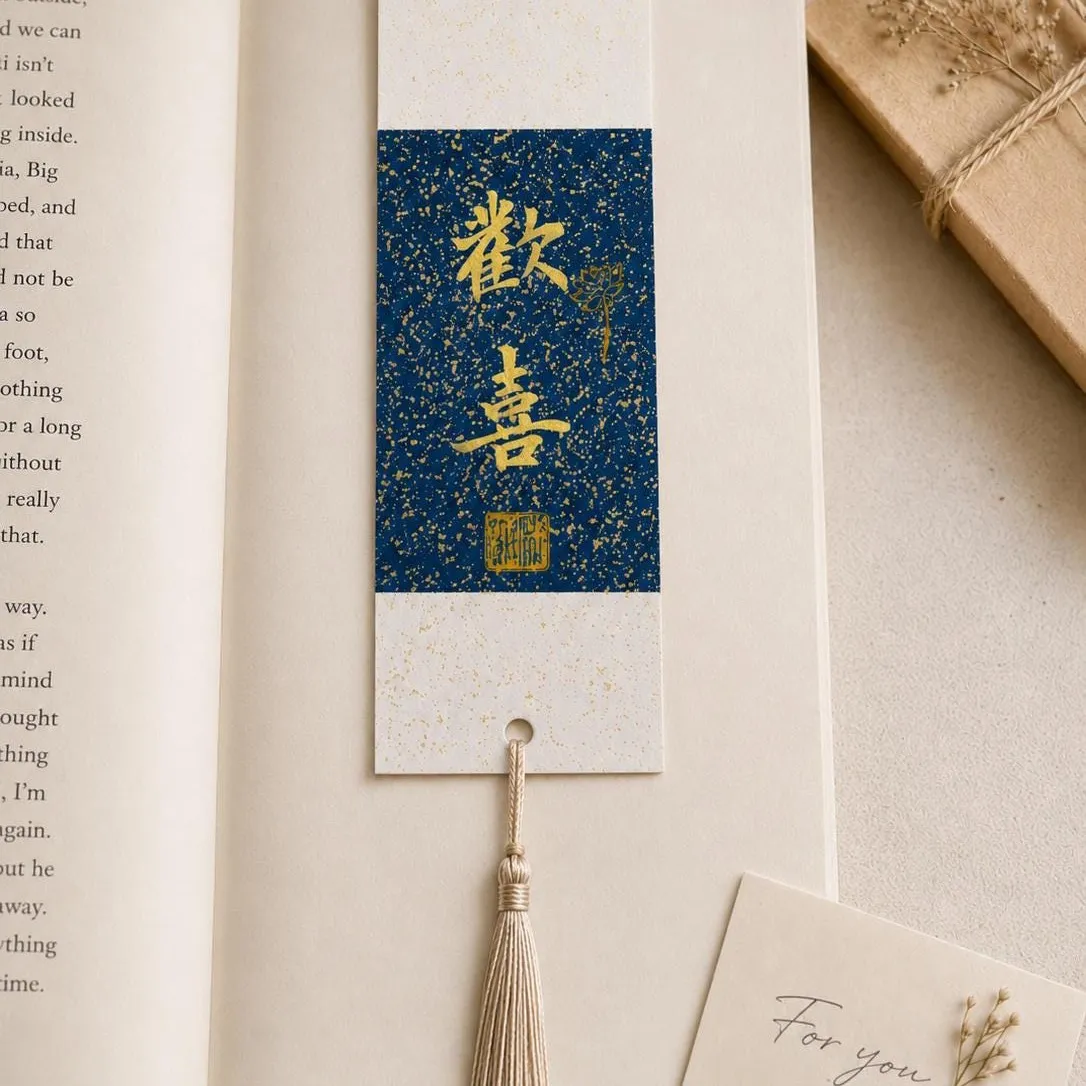
Photo shows a sample — yours will be brushed with 春, or any character you choose.
Bookmark — for readers & small thank-yousfrom $17→
What people said after it arrived.
-
The item is fantastic. The customer service was genuine. Thanks!
— M.Verified purchase · from our Etsy shop reviews · -
They were great they gave me exactly what I asked for and then some. Thank you!!
— G.Verified purchase · from our Etsy shop reviews · -
It is well designed and customized. My daughter loves it. Amazing gift for family’s d friends
— S.Verified purchase · from our Etsy shop reviews ·
Each "春" is hand-brushed by Artist Lina Sun on rice paper.
See 春 (Chūn) on Etsy →