一元复始 (yī yuán fù shǐ) — The Count Comes Back to Its Head · The Year Begins Again
A four-character phrase, and 一元 is not a sum of money — 元 here is the head of a count, the sense behind 元年 and 元首, not the modern unit of currency.
Until 1912 the Chinese name for New Year’s Day was 元旦, and it meant the lunar one. That January the Republic put the country onto the Gregorian calendar and moved the name to the first of January, leaving the festival it had been taken from with no name at all; by 1914 the government had issued a replacement, 春节, and the oldest day in the calendar has been called the Spring Festival ever since. What was in the word that got reassigned is what is in this phrase. 元 is not the ordinal first — it is the head of a count, the sense still doing the work in 元首 and 状元 — so 一元复始 (yī yuán fù shǐ) claims something narrower than the arrival of a new year. It says the marker is back at the head of its count. See 泰 → · See 春 →
On a door the four characters are the 上联, the right-hand line of a pair every household can recite: 一元复始 on the right, 万象更新 answering on the left, with a separate four-character strip across the top. Of the two lines this is the one whose claim can be checked. 万象更新 is the larger assertion by some distance; the other line says only where the marker is, and it carries a resonance its partner does not, since 复 is the name the 《周易》 gives the hexagram of the eleventh month — the month with the shortest day of the year in it.
A hand-brushed “一元复始” by Artist Lina Sun is for the wall that faces the room on the first morning of the year. As New Year papers go the sentence is unusually durable: it does not get truer when twelve months go well, and it does not have to come down when they do not, because it makes no claim about them at all. 元年 is followed by 二年. Nothing behind the marker has been wiped and nothing in front of it is promised — only that the count has come back to its head, which is the same place every time it gets there.
- the count come back to its head
- the year restarted from the darkest day rather than the first warm one
- a position in a cycle, reported rather than wished for
- the upper half of 一元复始,万象更新
- a fresh start A fresh start implies the slate was cleared. Nothing here is cleared: 元年 is followed by 二年, and everything behind the head of the count is still on the books. The phrase moves a marker; it does not erase anything behind it.
- recovery The wrong 复. 恢复 repairs something that had failed; 反复 is a cycle coming round again, and it is the second that this phrase uses. It can be said with equal truth of a year that went well and a year that did not.
- New Year's Day January 1st is a page turning on a fixed square of the grid. This is dated to an astronomical event — the solstice — and the count it restarts began as a reign-count, tied to whoever had newly taken the seat rather than to the almanac.
The short arms are the point: these readings don’t reach it.
- 一元 the head of the count元 is not the ordinal first. 《说文解字》 glosses it 始也 and the graph marks the head on a standing figure — the sense that survives in 元首 and 状元. 一元 names the head of a count, which is why the 《春秋》 dates a reign's opening year 元年 and never 一年.
- 复始 come back round to the beginning复 is the returning of 反复 rather than the repairing of 恢复 — a cycle arriving back where it starts, with nothing mended and nothing erased. It is also the name of the 《周易》 hexagram assigned to the month of the winter solstice, where a single unbroken line reappears at the bottom of five broken ones.
characters
- 万象更新 wàn xiàng gēng xīn all ten thousand appearances made new — the 下联, answering on the left, and the larger of the two claims
- 元年 yuán nián the head year of a count — what Chinese writes where English writes 'year one', and never 一年
- 冬至一阳生 dōng zhì yī yáng shēng at the winter solstice one yang is born — the observation the 复 hexagram encodes
- 三阳开泰 sān yáng kāi tài three yang lines open into 泰 — the same arithmetic two months further on, when the count reaches the first month
- 虚岁 xū suì the reckoning in which everyone was born at one and gained a year at the New Year rather than on a birthday
- 周而复始 zhōu ér fù shǐ round it goes and starts again — the plain cyclical phrase, with no head of a count in it
Cinnabar marks the characters 一元复始 actually contains. The dark row is a relative by meaning or by sound, not one shared stroke.
The Story Behind the Character
Five broken lines with a single unbroken one underneath them — that is 复, and in the system the Han calendarists used to lay twelve of the sixty-four figures of the 《周易》 over the twelve months, 复 is the eleventh, the month containing the shortest day of the year. The figure is read from the bottom, so the whole yang is the newest thing in it: one solid line come back at the base of a column of dark. What the assignment claims is not that the solstice is when conditions improve. It is that the solstice is when they stop deteriorating, and that this — not the thaw, not the first green — is the point a year should be counted from. The 象传 draws the practical conclusion and it is a startling one: 先王以至日闭关,商旅不行,后不省方. On the solstice the passes were shut, the merchants stayed off the roads, and the ruler did not go out to inspect his territories. The one return the calendar could identify was given silence rather than ceremony.
The other half of the phrase comes from a quarrel about a single word on the first line of a book. 《春秋》 opens by dating itself, and it writes 元年 where any ordinary count would write 一年. 《公羊传》 stops there — on the opening clause of the entire commentary — to ask why: 元年者何?君之始年也. 元 is not the ordinal. 《说文解字》 gives it as 始也, beginning, and the graph is a standing figure with the head marked out, which is why the character still means head everywhere else it appears: 元首 for a head of state, 状元 for the top of the examination list, 元凶 for the principal offender. 董仲舒, arguing before Emperor Wu for why the annals chose it, took the two characters apart and then put them back: 一者万物之所从始也,元者辞之所谓大也 — one is what all things begin from, and 元 is the word's way of saying great — 谓一为元者,视大始而欲正本也, and to call the one an 元 is to look to the 大始, the great beginning, and mean to set the root straight. That last clause is what carries 元 back to 始, and it is why 一元 is not "one unit" of anything. It is the head of a count, named as such.
The four characters together are not a quotation, and no classical text contains them in this order. They are a later assembly, made for the doorway, that puts the two claims side by side: the head of the count, and the return. The structure is subject and predicate rather than two matched pairs — 一元 is what is being spoken about and 复始 is what it does — and a reader who does not see that grammar will take 一元 for a quantity, which in a modern shop is one yuan. It also repays reading the second half narrowly. 复 is the 复 of 反复 — coming round again — and not the 复 of 恢复, repairing something that had broken. Nothing in the phrase has been mended and nothing has been wiped. The count has arrived back at the position counts are started from, which is a fact about where you are in a cycle rather than a claim about the condition of anything inside it.
Classical lines
- roughly 1,100 years
- c. 300 BCE 《周易·复卦·象传》
- c. 200 BCE 《公羊传·隐公元年》
- c. 766 CE 杜甫《小至》
元年者何?君之始年也。 What is meant by 元年? It is the ruler's first year.
The question is asked about the second and third characters of the 《春秋》, before the commentary has done anything else at all. It is worth asking because the annals could have written 一年 and did not: 元 marks the head of a count rather than its first item, and Chinese has kept the distinction ever since — a reign has an 元年, never a 一年.
雷在地中,复。先王以至日闭关,商旅不行,后不省方。 Thunder within the earth: return. On the solstice the former kings closed the passes; merchants and travellers did not move, and the ruler did not tour the regions.
The thunder is underground and inaudible, which is the point. The one moment in the year the calendar could name as a turn was met by shutting the country down for a day rather than by marking it, on the reasoning that something just beginning is best left alone.
天时人事日相催,冬至阳生春又来。 Season and human business drive each other on, day after day; at the winter solstice the yang is born and spring is on its way again.
Du Fu wrote this in his wandering years at Kuizhou, on or about the eve of the solstice — the commentators do not agree on which day 小至 names — and the second line is the whole calendar in seven characters. Note the order he puts them in: the yang appears first and the spring follows, six weeks behind it. The turn is dated to the dark part.
Why This Character Matters
For most of Chinese history nobody's age was counted from their own birthday. Under 虚岁 a baby was one year old at birth and gained a year at the New Year, so a child born in the last week of the twelfth month was two years old inside a fortnight, and the entire country grew older on the same morning. Age was a position in the public calendar rather than a private anniversary, which is why the New Year greetings for an elder and the birthday greetings for one are largely the same stock of phrases, and why this one carries between the two occasions without adjustment. The reckoning is now mostly retired — 周岁, the counted-from-birth age, is what appears on documents — but it survives in speech among older speakers, and it is the reason a grandmother may give two different numbers for her age without either being wrong.
杜甫's line about the solstice mentions a second thing going on that day: 吹葭六琯动飞灰, ash blown from the six pipes. The reference is to 候气, an apparatus described in the 《后汉书·律历志》 in which the twelve pitch-pipes of the musical system were packed with the ash of reed membrane at the inner end and stood upright in a sealed triple-walled chamber, one pipe for each month. The claim was that at the exact moment a solar term arrived the ash would puff out of the corresponding pipe. It did not work, and it took a very long time to say so: 沈括 raised the obvious objection in the 《梦溪笔谈》 — twelve pipes a few feet apart, and only one of them responds — and then talked himself back out of it, and the procedure survived another five centuries. 朱载堉 built pipes by the hundred in the Ming and concluded that everyone who had believed in it was either a fool or a fraud. The Kangxi emperor had the Bureau of Astronomy demonstrate the method in front of the Jesuits at court, watched nothing happen, and ruled it a fabrication. But it is worth knowing what was being attempted, because it says what kind of phrase this is. Somebody buried instruments in the ground to catch the year turning over. The turn was treated as a measurable event with a date on it, and 一元复始 reports the measurement rather than a mood.
A few characters live near "一元复始" but mean something quieter, sharper, or more specific. Here's how to tell them apart.
counts back to a turn that is already six weeks behind you
a position in the year declared on schedule, ahead of any evidence for it
where the count has got to — arithmetic, and true of a bad year as well as a good one
a condition a person or a country is actually in, which a bad year would contradict
the marker is back at the head of the count
the supply has not been used up — a report on what is left, not on where you are
The half of the pair that can be checked: it says where the count is, not how the year went.
- This is the 上联 of the pair every household can recite — 一元复始 on the right of the door, 万象更新 answering on the left — and of the two lines it is the one making the smaller claim. 万象更新 says all ten thousand appearances have been made new, which is a great deal to assert about a household at eight in the morning on 初一. 一元复始 says only that the count has come back round to where counts start. That is true of every year, including the ones that went badly, and it is true on the day the paper goes up rather than at some later point when the evidence comes in. For the household that would rather begin the year than be told about it.
- Under the old 虚岁 reckoning a Chinese person did not gain a year on their birthday but at the New Year, along with everybody else in the country — which is why the greeting stock for the two occasions still overlaps as heavily as it does. What these four characters say on either day is modest and does not flatter. The number in front of the person has gone back to the head of its own count, not to zero, with everything behind it still standing. For the elder for whom that count is long, and the friend for whom the interesting part is that it restarted at all.
Friend · Grandparent · New Couple · or yourself
Looking for a name? See Western names written in Chinese →
-
What does 一元复始 (yī yuán fù shǐ) mean?
一元复始 (yī yuán fù shǐ) is a 4-character Chinese phrase for the count comes back to its head, the year begins again. Until 1912 the Chinese name for New Year's Day was 元旦, and it meant the lunar one. That January the Republic put the country onto the Gregorian calendar and moved the name to the first of January, leaving the festival it had been taken from with no name at all; by 1914 the government had issued a replacement, 春节, and the oldest day in the calendar has been called the Spring Festival ever since. What was in the word that got reassigned is what is in this phrase. 元 is not the ordinal first — it is the head of a count, the sense still doing the work in 元首 and 状元 — so 一元复始 (yī yuán fù shǐ) claims something narrower than the arrival of a new year. It says the marker is back at the head of its count. See 泰 → · See 春 → For most of Chinese history nobody's age was counted from their own birthday. Under 虚岁 a baby was one year old at birth and gained a year at the New Year, so a child born in the last week of the twelfth month was two years old inside a fortnight, and the entire country grew older on the same morning. Age was a position in the public calendar rather than a private anniversary, which is why the New Year greetings for an elder and the birthday greetings for one are largely the same stock of phrases, and why this one carries between the two occasions without adjustment. The reckoning is now mostly retired — 周岁, the counted-from-birth age, is what appears on documents — but it survives in speech among older speakers, and it is the reason a grandmother may give two different numbers for her age without either being wrong.
-
What occasions is 一元复始 given for?
一元复始 is traditionally given for Chinese New Year, Birthday. This is the 上联 of the pair every household can recite — 一元复始 on the right of the door, 万象更新 answering on the left — and of the two lines it is the one making the smaller claim. 万象更新 says all ten thousand appearances have been made new, which is a great deal to assert about a household at eight in the morning on 初一. 一元复始 says only that the count has come back round to where counts start. That is true of every year, including the ones that went badly, and it is true on the day the paper goes up rather than at some later point when the evidence comes in. For the household that would rather begin the year than be told about it. Under the old 虚岁 reckoning a Chinese person did not gain a year on their birthday but at the New Year, along with everybody else in the country — which is why the greeting stock for the two occasions still overlaps as heavily as it does. What these four characters say on either day is modest and does not flatter. The number in front of the person has gone back to the head of its own count, not to zero, with everything behind it still standing. For the elder for whom that count is long, and the friend for whom the interesting part is that it restarted at all.
-
Who brushes the 一元复始 calligraphy?
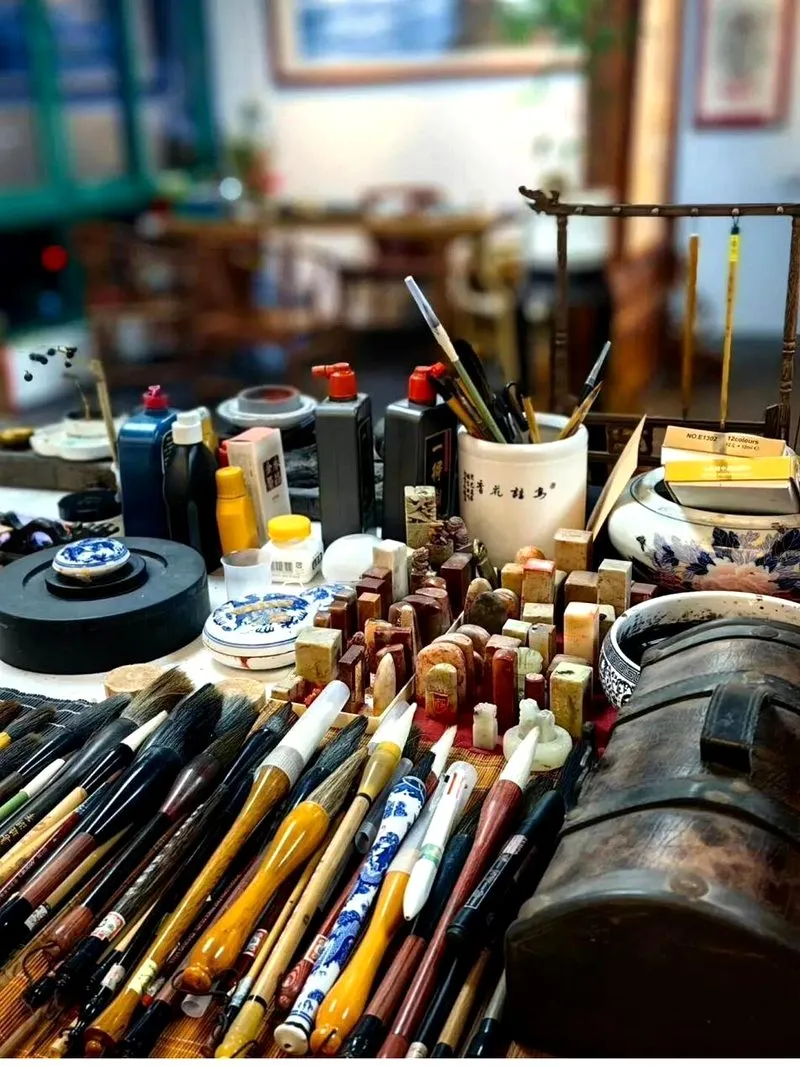
Each 一元复始 (Yī Yuán Fù Shǐ) is hand-brushed to order by Artist Lina Sun in ink on rice paper — never printed, never repeated.
Bring 一元复始 home — choose how you'd like it brushed.
-
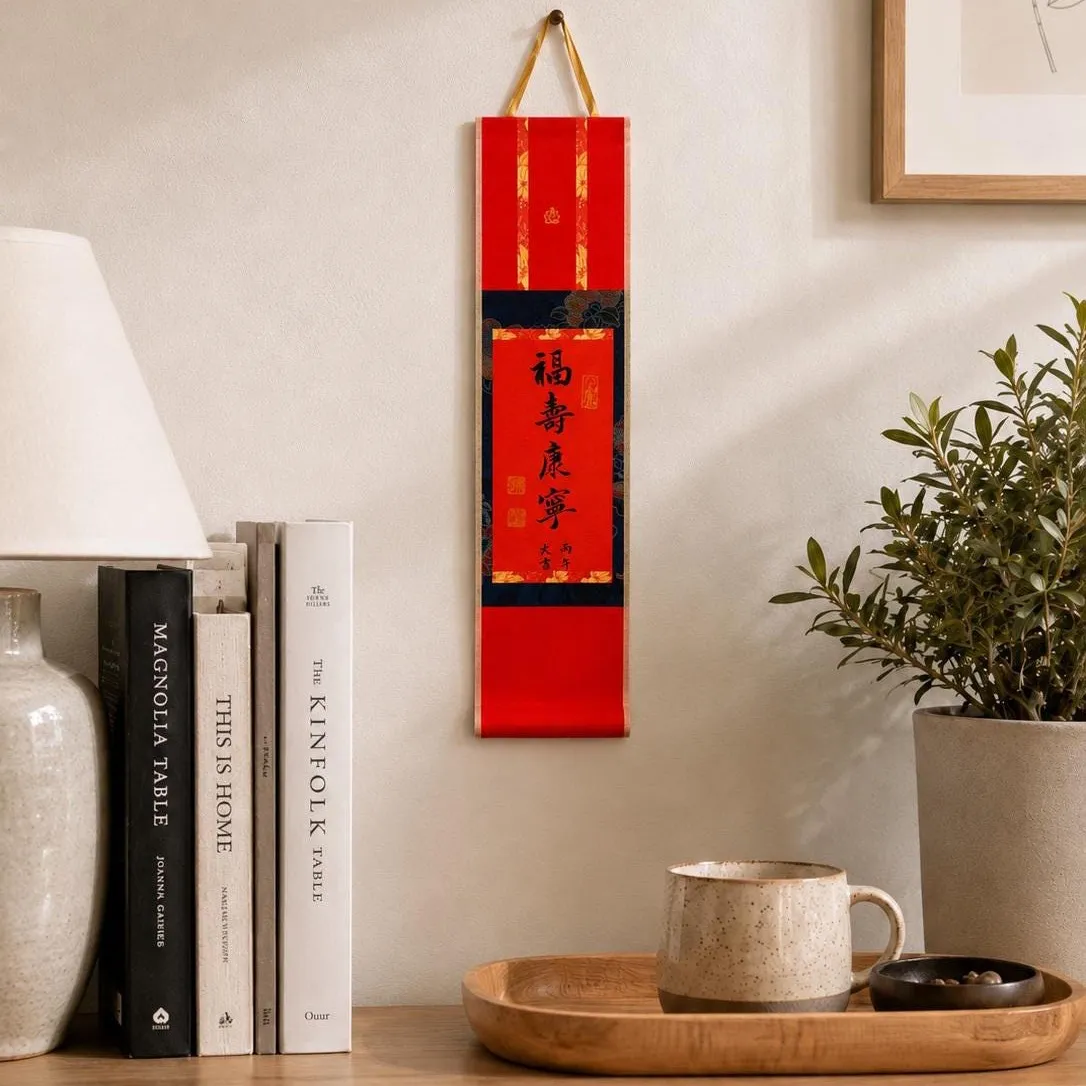
Photo shows a sample — yours will be brushed with 一元复始, or any character you choose.
Wall Scroll — for walls & housewarmingsfrom $38→ -
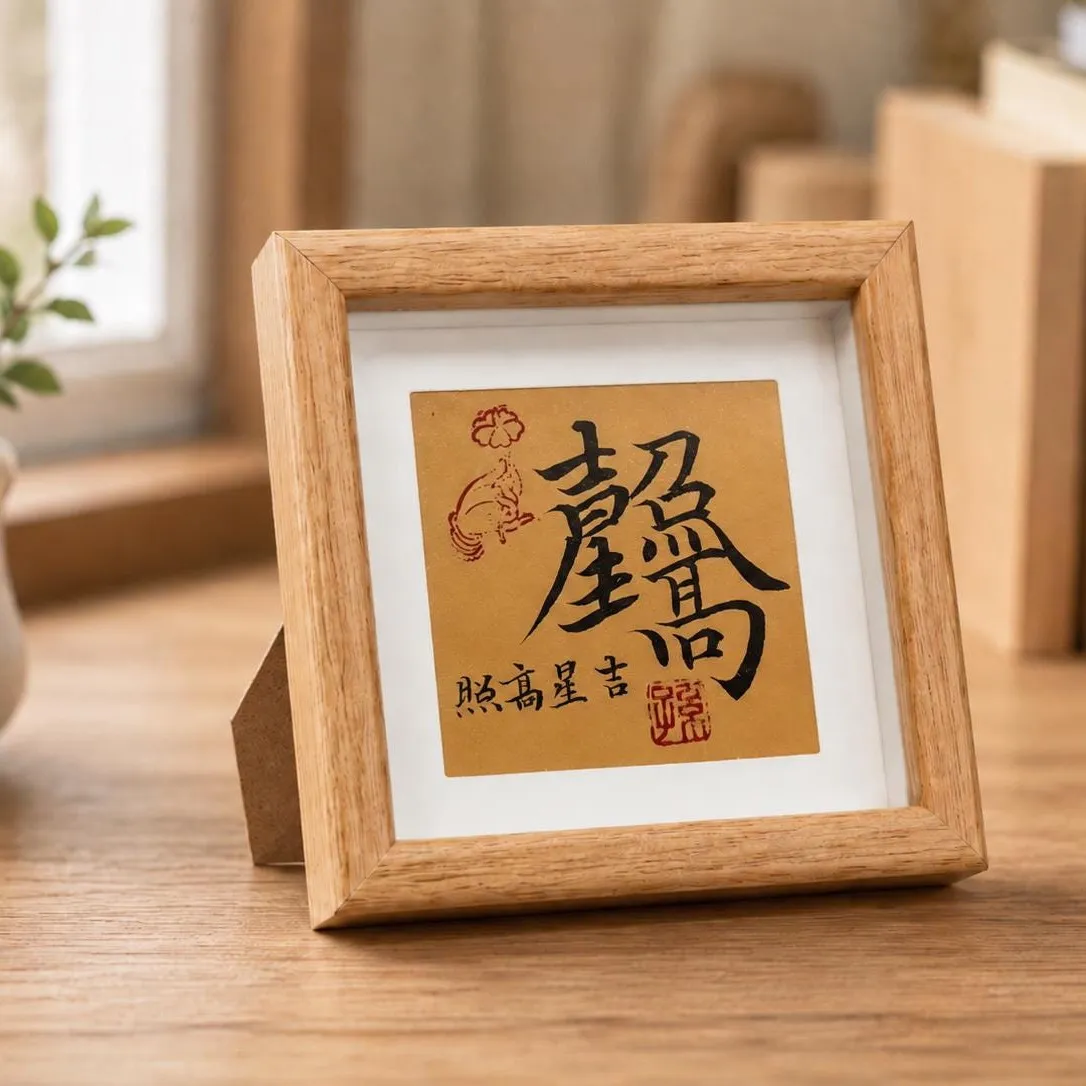
Photo shows a sample — yours will be brushed with 一元复始, or any character you choose.
Desk Frame — for desks, studies & studiosfrom $44→ -
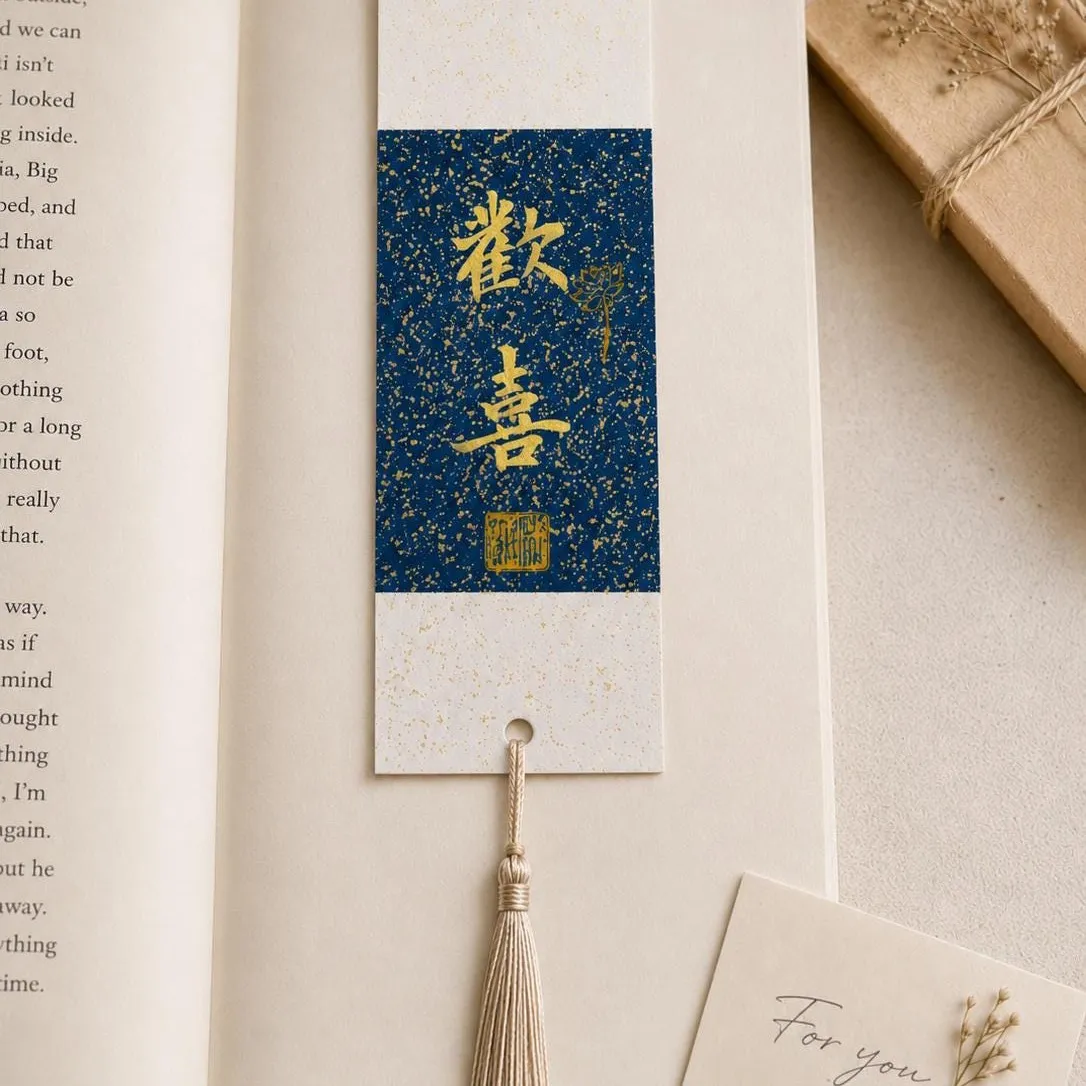
Photo shows a sample — yours will be brushed with 一元复始, or any character you choose.
Bookmark — for readers & small thank-yousfrom $17→
What people said after it arrived.
-
The item is fantastic. The customer service was genuine. Thanks!
— M.Verified purchase · from our Etsy shop reviews · -
They were great they gave me exactly what I asked for and then some. Thank you!!
— G.Verified purchase · from our Etsy shop reviews · -
It is well designed and customized. My daughter loves it. Amazing gift for family’s d friends
— S.Verified purchase · from our Etsy shop reviews ·
Each "一元复始" is hand-brushed by Artist Lina Sun on rice paper.
See 一元复始 (Yī Yuán Fù Shǐ) on Etsy →