博爱 (bó ài) — Universal Love · Broad Love · Love Without Borders
A two-character word, not a single character.
Most love runs deep before it runs wide — fiercest at the center, weaker at each remove. 博爱 is the word for the love that refuses to weaken as it widens. It is not 爱 — love complete in a single bond, one heart kept for one person through everything See 爱 → — and it is not 仁爱, the sustained, inward-facing devotion a parent pours into a child. 博爱 borrows the breadth of 博, reach spread in every direction See 博 →, and turns love loose across it: care extended wide, to everyone in range, including the people with no claim on you at all.
In practice 博爱 is legible less in what a person feels than in whom they include. It is the elder who fed the neighborhood’s children alongside their own, the mother every kid on the street called 阿姨, the friend who could not walk past a stranger’s trouble as if it were none of theirs. The word carries real institutional weight, too: it is the middle term in the Red Cross Society of China’s motto, 人道、博爱、奉献, and the Chinese name the French Revolution’s fraternité was given — 自由、平等、博爱. Wherever care is offered without first asking who the person is or what they are owed, 博爱 is the word waiting for it.
A hand-brushed “博爱” by FuBlessings names the large-hearted kind of person directly — not the one who loved a single someone deeply, but the one whose love was never a private supply. It is the gift for the grandparent, the mother, or the friend whose warmth reached past its own circle and kept reaching: a recognition that their heart was built wide, and that the reach did not go unnoticed.
The Story Behind the Character
Confucian love has a shape. It begins at the center — parents, children — and moves outward in rings that thin as they widen, love graded by nearness. Against that settled picture, the Tang essayist Han Yu opened one of the most consequential essays in Chinese thought with four blunt words: 博爱之谓仁 — universal love is what benevolence means. He was refusing the thinning. Benevolence, he argued, was not affection carefully apportioned by distance; it was love broad enough to reach everyone. The pairing did the arguing. 博 carried its own meaning of breadth — reach spread in every direction, leaving nothing out — and 爱 carried the love itself. Set together, they named a love measured not by how deeply it burned for one person but by how far it extended.
The idea was older than Han Yu's phrase for it. Confucius had already told his students 泛爱众 — love the multitude broadly — and the 孝经 had made 博爱 the thing a good ruler leads with, 先之以博爱, so that no one neglects their own kin. The most radical cousin was Mozi's 兼爱, love without favoritism, love owed to a stranger's parent exactly as to your own — a claim Confucians resisted for centuries as unnatural. 博爱 settled between the two poles. It did not deny that love starts at home, as 兼爱 seemed to; it insisted only that love which starts at home has no business stopping there.
What 博爱 contributes that 爱 alone cannot is direction and scale. 爱 is complete in a single relationship — one parent, one child, one bond kept through everything. 博爱 is love that has left the single relationship and gone wide, and it can only be said of a heart large enough to make the crossing. The pair names the rarest generosity: not loving one person more, but loving more people — including the ones with no claim on you at all.
Classical lines
- roughly 1,300 years
- c. 500 BCE 《论语·学而》
- c. 400 BCE 《孝经·三才章》
- c. 805 CE 韩愈《原道》
博爱之谓仁,行而宜之之谓义。 Universal love is what is called benevolence; to act on it fittingly is what is called righteousness.
The opening line of Han Yu's most famous essay, and the sentence that fused breadth into the very definition of benevolence. He was arguing that 仁 was never a feeling rationed by nearness but a love owed outward, to all — the claim that made 博爱 a moral ideal and not merely a wide feeling.
先之以博爱,而民莫遗其亲。 The former kings led the people with universal love, and so none neglected their own parents.
The classic's quiet paradox: it is broad love, not narrow, that keeps a person faithful to their own kin. Leading with 博爱 does not dissolve the family bond — it is what teaches people to honor it, by showing them love has no edge to hide behind.
泛爱众,而亲仁。 Love the multitude broadly, and draw near to those of benevolent heart.
Confucius's instruction to the young, and the seed of 博爱 centuries before Han Yu gave it a name. The breadth comes first — love widely — and only then the discernment of whom to keep close. Wide love and careful company were never opposed here; they were two halves of one upbringing.
Why This Character Matters
博爱 is the standard Chinese rendering of the third word in the French Revolution's motto: liberté, égalité, fraternité became 自由、平等、博爱 — liberty, equality, and universal love. When Sun Yat-sen sought a word for the fraternity at the base of a modern republic, this was the one he reached for, and he brushed 博爱 as a calligraphic inscription more often than almost any other phrase, giving the two characters away again and again as a gift. A Tang essayist's definition of benevolence had become, twelve centuries later, the Chinese name for a revolutionary ideal.
The compound also anchors the humanitarian vocabulary of the present day. The Red Cross Society of China gives its guiding spirit in three words — 人道、博爱、奉献: humanity, universal love, and dedication — with 博爱 as the middle term, the disposition that turns humane principle into care for strangers. Hospitals, schools, and charities across the Chinese-speaking world carry 博爱 in their names for the same reason: it names care offered without asking who the person is or what they are owed. From Han Yu's essay to a hospital gate, the through-line holds — 博爱 is love that does not first check the distance.
For the birthday of someone whose kindness was never rationed to their own circle — who helped the neighbor's child as readily as their own, who could not walk past trouble that belonged to a stranger.
- For the birthday of someone whose kindness was never rationed to their own circle — who helped the neighbor's child as readily as their own, who could not walk past trouble that belonged to a stranger. 博爱 names exactly that reach. Where 仁爱 names the sustained, inward-facing love of a parent for a child, 博爱 names love that widened past the household gate and kept widening. The recognition for the person whose heart was always the large kind — the one who made everyone in range feel included.
- For the mother whose love spilled past her own children — the one every kid on the street called 阿姨, who set an extra place without being asked, who mothered whoever needed it. 博爱 names what 慈 (a mother's tender love for her own young) and 仁爱 (sustained parental care) do not quite reach: love broad enough to hold people who were never hers to raise. Most apt for the mom whose warmth was never a private supply.
Grandparent · Mom · Friend · or yourself
Looking for a name? See Western names written in Chinese →
-
What does 博爱 (bó ài) mean?
博爱 (bó ài) is a two-character Chinese word for universal love, broad love, love without borders. Most love runs deep before it runs wide — fiercest at the center, weaker at each remove. 博爱 is the word for the love that refuses to weaken as it widens. It is not 爱 — love complete in a single bond, one heart kept for one person through everything See 爱 → — and it is not 仁爱, the sustained, inward-facing devotion a parent pours into a child. 博爱 borrows the breadth of 博, reach spread in every direction See 博 →, and turns love loose across it: care extended wide, to everyone in range, including the people with no claim on you at all. 博爱 is the standard Chinese rendering of the third word in the French Revolution's motto: liberté, égalité, fraternité became 自由、平等、博爱 — liberty, equality, and universal love. When Sun Yat-sen sought a word for the fraternity at the base of a modern republic, this was the one he reached for, and he brushed 博爱 as a calligraphic inscription more often than almost any other phrase, giving the two characters away again and again as a gift. A Tang essayist's definition of benevolence had become, twelve centuries later, the Chinese name for a revolutionary ideal.
-
What occasions is 博爱 given for?
博爱 is traditionally given for Birthday, Mother's Day. For the birthday of someone whose kindness was never rationed to their own circle — who helped the neighbor's child as readily as their own, who could not walk past trouble that belonged to a stranger. 博爱 names exactly that reach. Where 仁爱 names the sustained, inward-facing love of a parent for a child, 博爱 names love that widened past the household gate and kept widening. The recognition for the person whose heart was always the large kind — the one who made everyone in range feel included. For the mother whose love spilled past her own children — the one every kid on the street called 阿姨, who set an extra place without being asked, who mothered whoever needed it. 博爱 names what 慈 (a mother's tender love for her own young) and 仁爱 (sustained parental care) do not quite reach: love broad enough to hold people who were never hers to raise. Most apt for the mom whose warmth was never a private supply.
-
Who brushes the 博爱 calligraphy?
FuBlessings hand-brushes each 博爱 (Bó Ài) to order, in ink on rice paper — never printed, never repeated.
Bring 博爱 home — choose how you'd like it brushed.
-
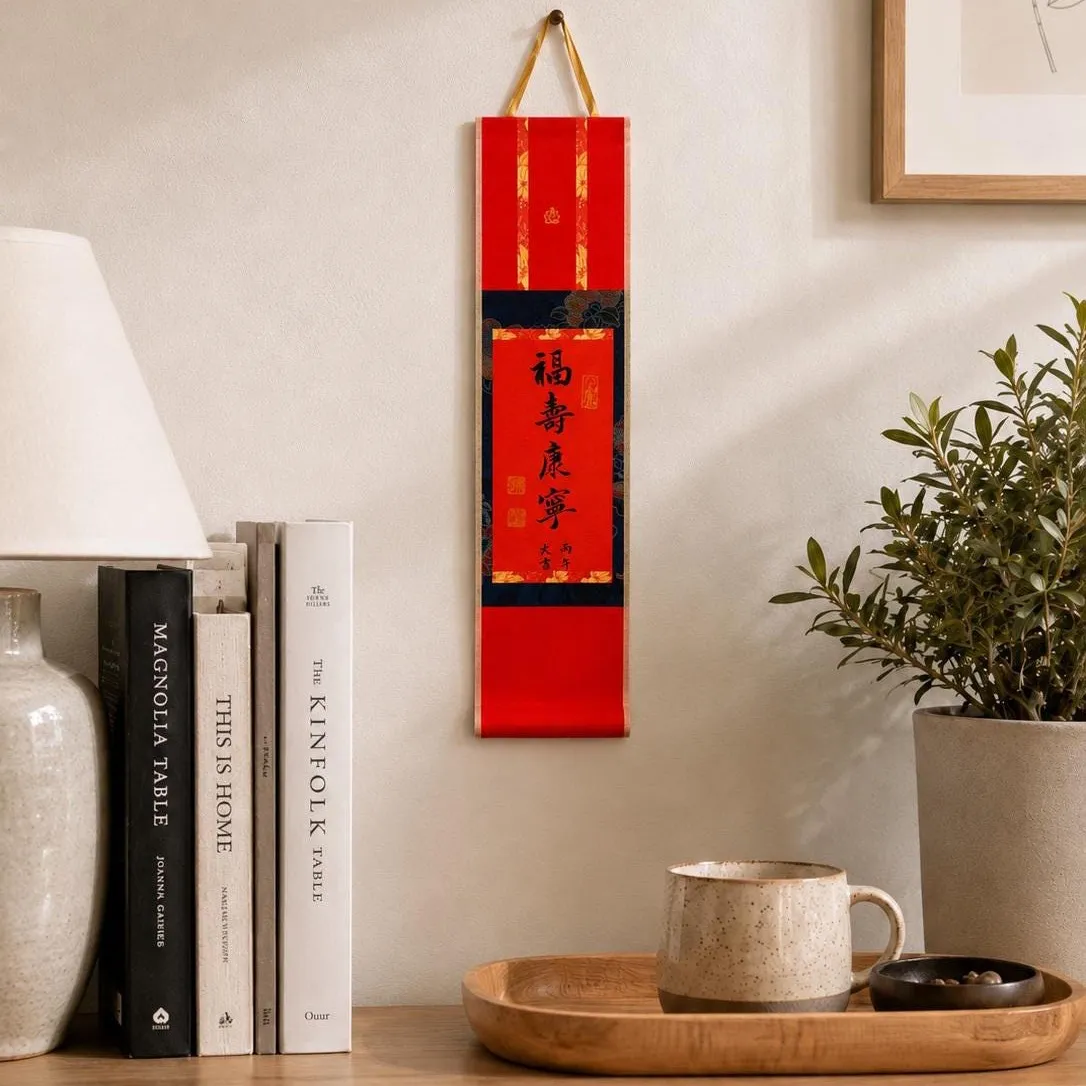
Photo shows a sample — yours will be brushed with 博爱, or any character you choose.
Wall Scroll — for walls & housewarmingsfrom $38→ -
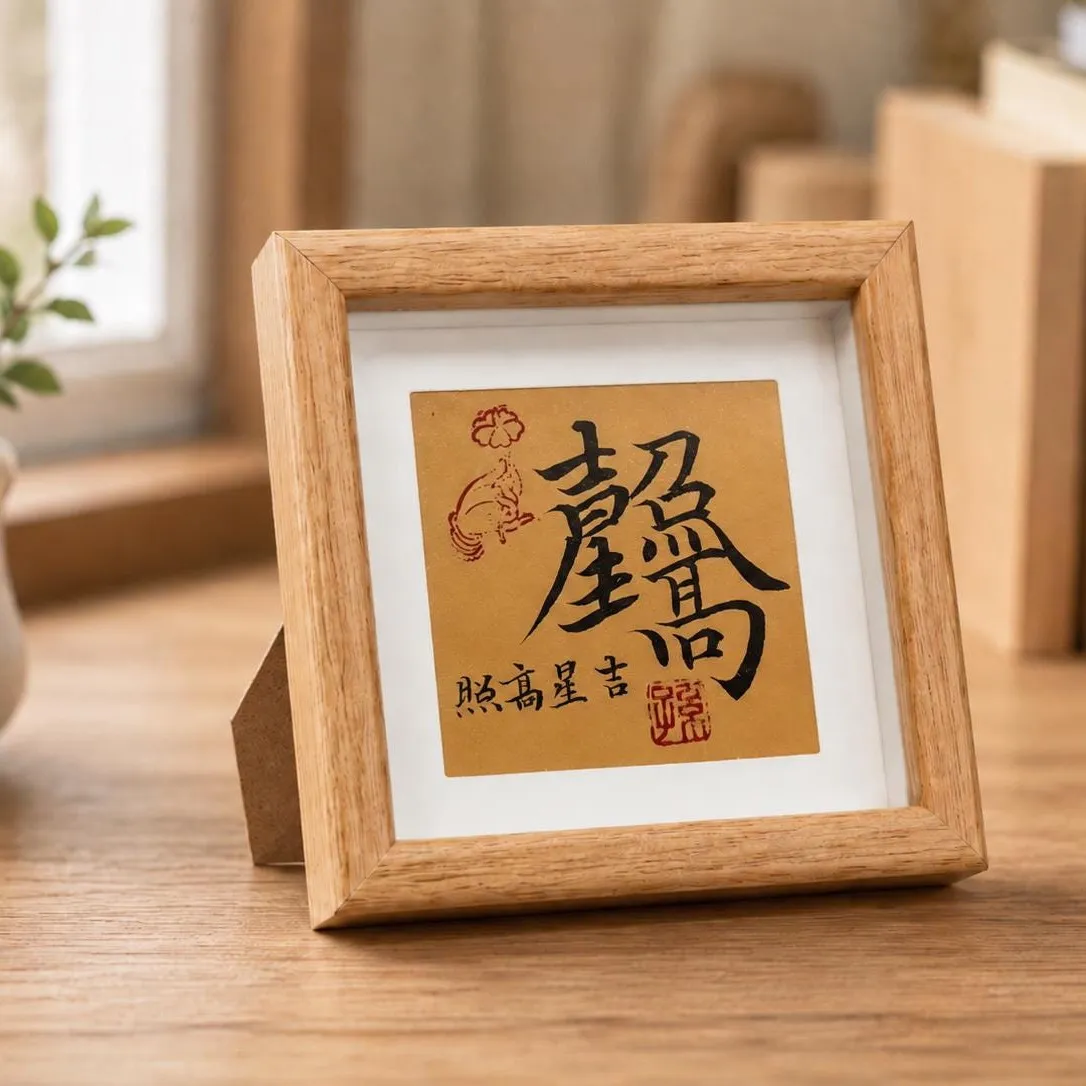
Photo shows a sample — yours will be brushed with 博爱, or any character you choose.
Desk Frame — for desks, studies & studiosfrom $44→ -
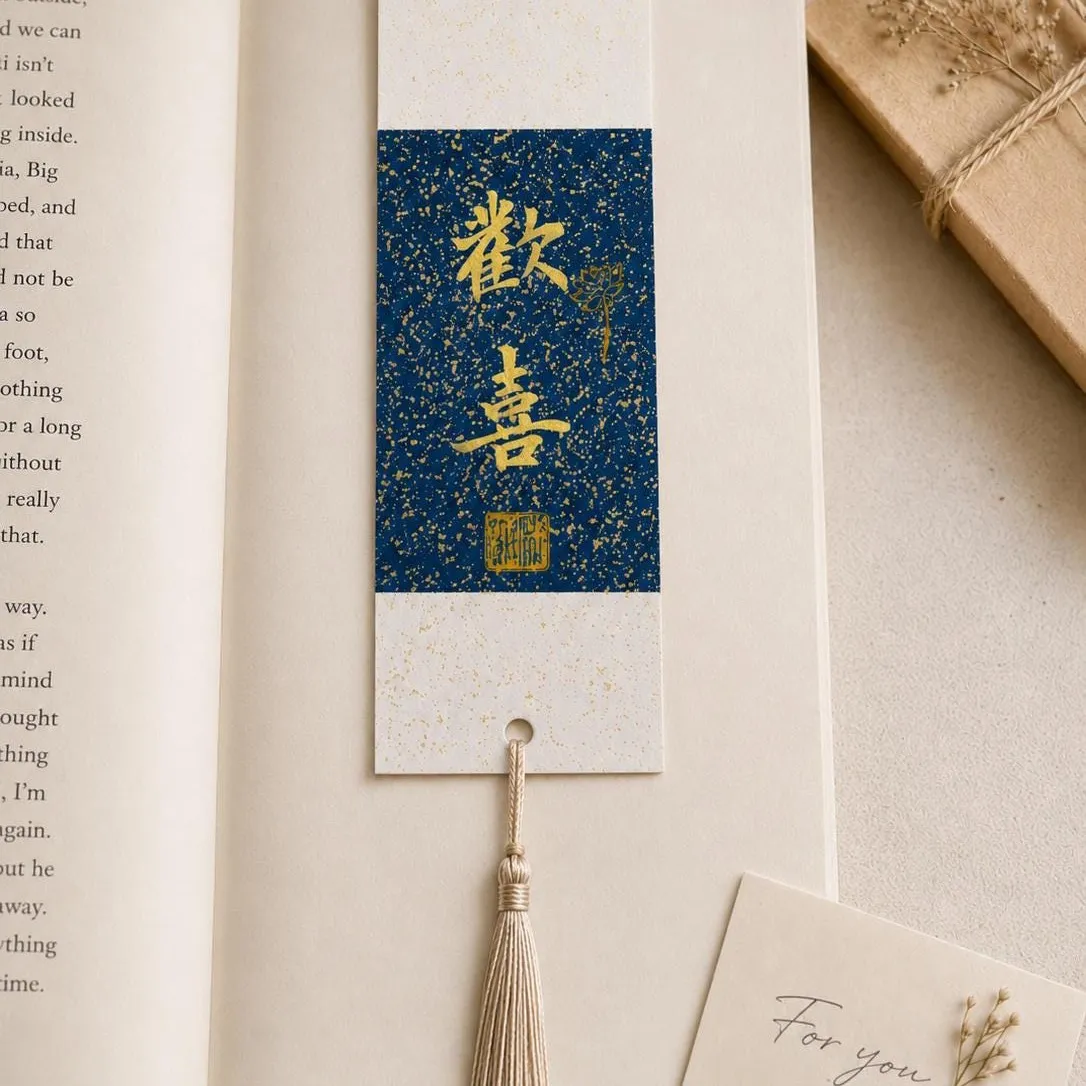
Photo shows a sample — yours will be brushed with 博爱, or any character you choose.
Bookmark — for readers & small thank-yousfrom $14→

What people said after it arrived.
-
The item is fantastic. The customer service was genuine. Thanks!
— M.Verified purchase · from our Etsy shop reviews · -
They were great they gave me exactly what I asked for and then some. Thank you!!
— G.Verified purchase · from our Etsy shop reviews · -
It is well designed and customized. My daughter loves it. Amazing gift for family’s d friends
— S.Verified purchase · from our Etsy shop reviews ·
Each "博爱" is hand-brushed by FuBlessings on rice paper.
See 博爱 (Bó Ài) on Etsy →